
Bee and Wasp Attacks on Farmworkers: Field Safety
Insect stings are a documented occupational hazard in American agriculture, not just a summertime annoyance. A fatality investigation by California's FACE Program, part of…
Fall is the best camping season in the desert Southwest: mild days, clear nights, and empty trails. It is also the season when scorpions are settling into the exact hiding…
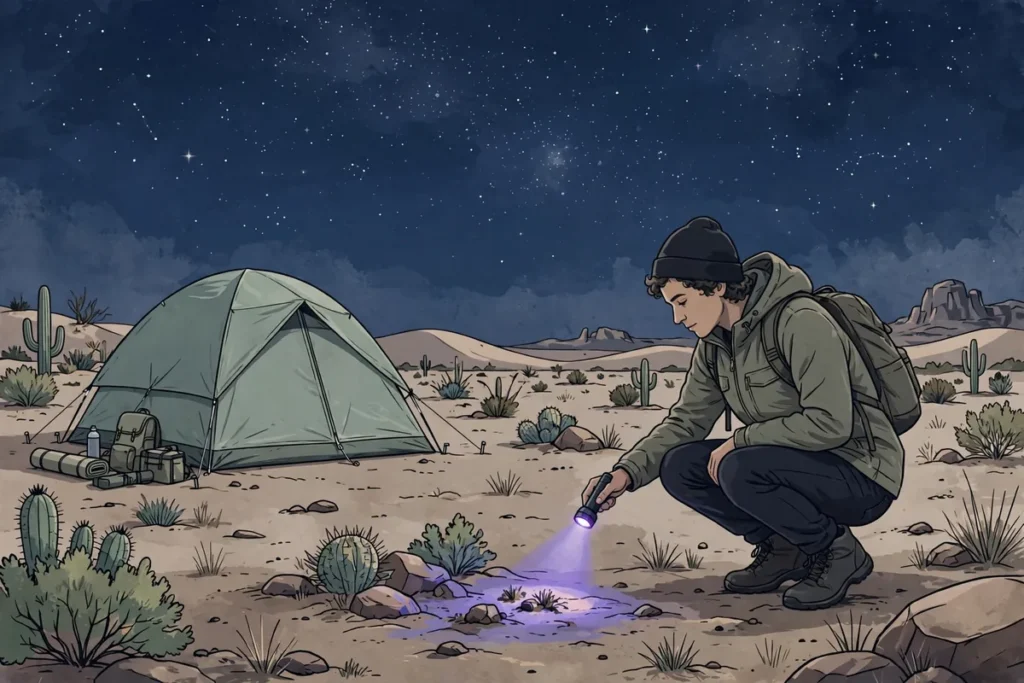
Fall is the best camping season in the desert Southwest: mild days, clear nights, and empty trails. It is also the season when scorpions are settling into the exact hiding spots campers offer them. The scenario of scorpion stings while camping desert southwest trips is not a freak accident. It is a predictable, preventable encounter, and the National Park Service’s own scorpion guidance for places like Big Bend boils down to a few habits that any camper can learn in five minutes.
Scorpions are defensive, not aggressive. Nobody gets hunted; people get stung when they press a foot into an occupied boot or roll onto a bedding visitor at night. This guide covers which desert scorpions matter, how to set up a low-risk camp, the shake-out rule that prevents most stings, the blacklight trick for night checks, and what to do when prevention fails.
Scorpions are desert specialists. They wait out the day in burrows, under rocks, and inside any dark, snug space, then hunt at night. Campsites are full of daytime hiding spots: boots, clothing piles, sleeping bags, coolers, firewood stacks, and the ground under a tent footprint. Most stings happen in two ways. A camper puts on a boot or shirt that a scorpion crawled into overnight. Or a camper reaches into a dark space, under a rock ledge, into a firewood pile, or beneath gear, and startles a sheltering scorpion.
The risk is real but modest. The National Park Service notes that very few park visitors ever see a scorpion, let alone get stung, and stings are defensive warnings, not attacks. For most healthy adults, a sting from the common desert species hurts badly for a few hours and then fades, similar to a severe bee sting with possible tingling. The exceptions that change the math are bark scorpions, whose venom is more potent, and small children, whose smaller body weight makes any scorpion sting more serious.
October and November matter because desert nights are cool enough that scorpions seek the warmth of sleeping bags, tent corners, and clothing left on the ground. Late-season campers get the best weather and the highest incentive for scorpions to share their gear.
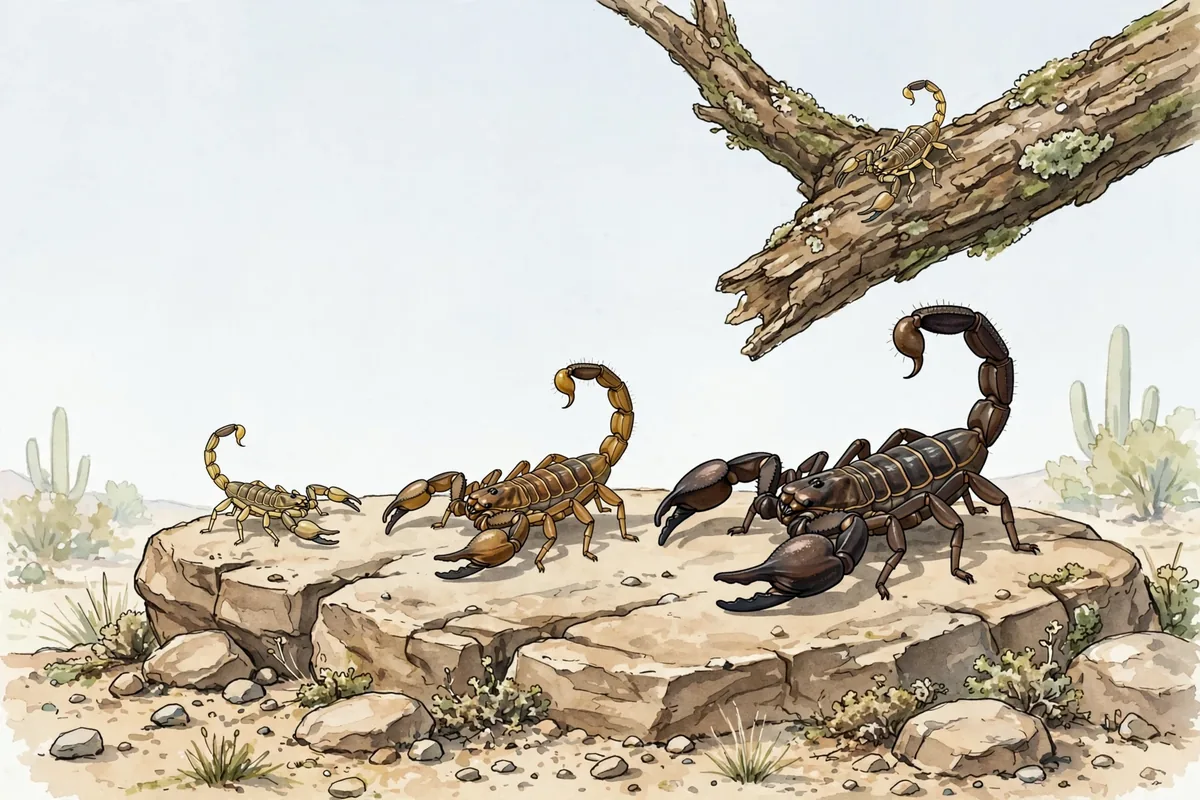
Not every scorpion in the Southwest is equal. The striped bark scorpion and the desert hairy scorpion are common across Texas, New Mexico, and Arizona, and their stings, while painful, are generally not medically dangerous for healthy adults. The Arizona bark scorpion (Centruroides sculpturatus) is the one that changes the plan. It is small, tan, and, unusually for scorpions, climbs readily, which means it shows up on tent walls, in sleeping bags hung off the ground, and on tree trunks at eye level.
| Scorpion | Size | Key traits | Sting concern |
|---|---|---|---|
| Arizona bark scorpion | About 2.5 inches, tan | Climbs walls and trees; slender tail | Most potent venom in North America; seek care for kids |
| Striped bark scorpion | About 2.5 inches, yellowish with dark stripes | Climbs; very common in Texas | Painful but usually not dangerous for adults |
| Desert hairy scorpion | Up to 5.5 inches, large and hairy | Ground-dweller; impressive but mild | Painful sting, low medical concern |
All scorpions share one feature campers can use: a substance in the outer exoskeleton, called the hyaline layer, fluoresces bright blue-green under ultraviolet light. That is the basis of the blacklight night check described below.
Never pick up a scorpion with your hands, even one that looks dead. Reflex stinging can still occur in a dead scorpion, and the venom remains active in the stinger. Use long tweezers, a stick, or simply leave it alone.
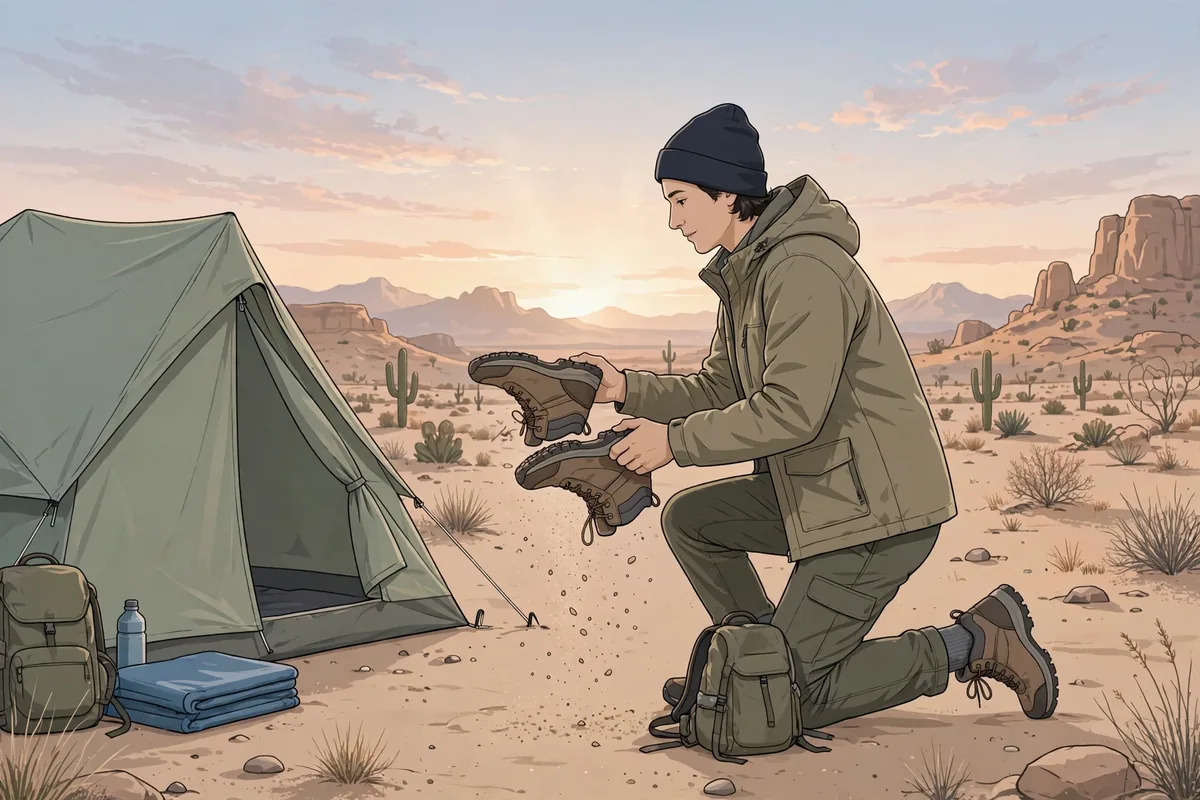
Prevention starts with how the camp is arranged. Scorpions enter tents through unzipped doors, mesh windows left open, and ground sheets that bunch up at the edges.
Zip every door and window fully closed whenever you enter or leave, including quick trips. A tent left open for two minutes at dusk is an invitation. Before sleeping, inspect the interior corners and the ground sheet edges with a flashlight.
Set up away from rock piles, log stacks, and dense brush where scorpions shelter. Clear the ground around the tent of debris, wood, and stones. Do not store firewood inside or directly against the tent; bring in only what you will burn immediately, and check each piece before carrying it.
Never leave boots, shoes, or clothing on the ground overnight. Hang clothes and footwear from a line or store them inside sealed bags or the vehicle. Damp towels are a favorite hiding spot, so hang them to dry rather than draping them over gear. These habits pair with the outdoor bite prevention checklist approach of denying pests easy shelter near sleeping areas.
This is the single most important scorpion habit, and it costs nothing. Most scorpion stings happen because someone puts on something a scorpion crawled into.
Pick up each boot, turn it upside down, and shake it hard several times. Then shine a flashlight, ideally a UV one, into the boot to check the toe box before putting it on. Never slide a hand inside to feel whether it is clear. If there is a scorpion in there, your fingers will find it, which is exactly the outcome you want to avoid.
Shake out pants, jackets, and shirts before dressing, especially anything left out overnight. Turn sleeves and pant legs inside out and shake again. Campers who hang their clothes instead of piling them on the ground rarely need this step at all.
Before unrolling a sleeping bag, shake it out and inspect it. Give blankets and pillows a quick once-over before turning in for the night, and check the bag again in the morning after a cool night, when a scorpion may have moved in seeking warmth. Outdoor safety guidance for stinging-insect country treats this bedtime inspection as part of the nightly routine, alongside guidance found in resources like the outdoor worker insect bite and sting prevention guide, which covers the same shake-out discipline for field crews.
Shake damp towels hard before use. Open backpacks and daypacks fully and shake them before reaching inside blindly.
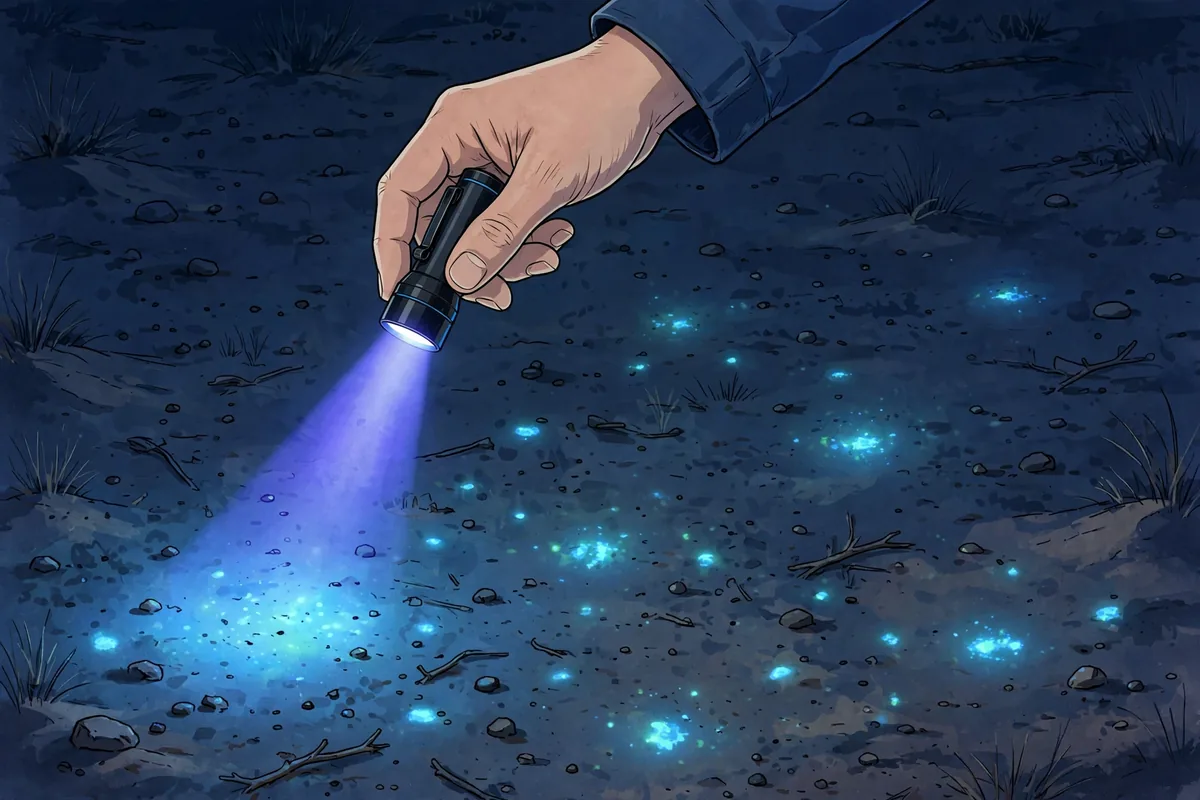
A small UV flashlight, sometimes sold as a blacklight, is one of the most useful pieces of desert camping gear, and it weighs almost nothing. Under ultraviolet light, scorpions glow bright green or blue-green from several feet away, thanks to the hyaline layer in their exoskeletons. Researchers are still debating why this fluorescence exists, but campers do not need the theory, only the effect.
Use it after dark when your eyes have adjusted. Sweep the beam slowly across the ground in overlapping passes, keeping it low. Prioritize the real scorpion zones: around and under the tent edge, beneath the awning, around firewood and stacked gear, near rocks and logs, and anywhere shoes were left out. Scan inside boots and folded clothing with it too.
Two cautions. First, a clear scan is not proof an area is empty, only that no scorpion was visible on the surface at that moment; keep boots shaken out and tent doors zipped regardless. Second, never shine the UV beam into anyone’s eyes, and keep the light away from small children. A longwave 365 nm flashlight is the common camping choice.
Stings usually announce themselves immediately: sharp, burning pain at the site, sometimes with numbness or tingling spreading outward. Here is the field sequence.
Move away from where the sting happened so you are not stung again. If you can see the scorpion, note what it looked like, size and color, without trying to catch it. This information helps medical staff later, especially for distinguishing bark scorpions.
Wash the sting site with soap and water. Apply a cold pack or a cloth-wrapped handful of ice for 10 to 15 minutes at a time. Keep the stung limb elevated and still. Do not cut the skin, do not try to suck out venom, and do not apply a tourniquet; none of these help and all can cause harm.
Over-the-counter pain relievers may take the edge off, used according to their package directions. Evidence for specific scorpion-sting home remedies is limited, so the honest approach is cooling, elevation, and monitoring rather than improvised treatments.
Scorpion stings are a classic reason to call Poison Control at 1-800-222-1222. Specialists can tell you whether the symptoms you describe fit a routine painful sting or something that needs urgent evaluation, which is especially valuable at a remote campsite. General first-aid sequencing for stings follows the same calm-clean-cool pattern described in StingHelp’s first 10 minutes after a sting guide.
Most adult stings from common desert species need no more than camp first aid and observation. Get medical help promptly, which may mean driving out or calling for assistance, if any of the following appear:
Arizona’s poison centers handle thousands of scorpion calls a year and are set up to advise both by phone and through emergency departments. When in doubt at a remote site, the call is free and the advice is specific.
Do scorpions glow under a blacklight?
Yes. A compound in their exoskeleton called the hyaline layer fluoresces bright blue-green under ultraviolet light. A small UV flashlight makes scorpions visible from several feet away after dark, which is why desert campers carry one.
What should I do if I find a scorpion in my tent?
Stay calm and do not touch it. Use a long stick or tweezers to guide it into a container, or simply open the tent and let it leave on its own. Wear shoes, keep the tent zipped afterward, and recheck bedding before sleeping.
Are scorpion stings deadly?
For healthy adults, stings from most US desert scorpions are painful but not life-threatening. The Arizona bark scorpion has the most potent venom in North America, and small children face the highest risk from any scorpion sting. Deaths are extremely rare with modern medical care.
Should I suck the venom out of a scorpion sting?
No. Cutting, suction, and tourniquets do not remove venom and can damage tissue or delay real care. Wash the site, apply cold, elevate the limb, and call Poison Control for guidance.
Can scorpions climb into a hammock or cot?
Bark scorpions climb well, so gear off the ground is not automatically safe. Shake out hammocks, cots, and their straps before use, and keep guylines and straps from touching rock walls or trees where scorpions travel.
Medically reviewed by Dr. Sarah Jones, MD.
This article is for informational purposes only and isn’t medical advice. If you’re worried about a bite or sting, talk to a healthcare professional.
Dr. Jones oversees StingHelp’s clinical verification process. Every guide is systematically evaluated against active Centers for Disease Control and Prevention (CDC), Environmental Protection Agency (EPA), and American Academy of Allergy, Asthma & Immunology (AAAAI) medical consensus standards to ensure symptom distinctions and care recommendations are clinically sound.
Explore physician-reviewed first-aid procedures, identification clues, and symptom comparisons for other common outdoor bites and stings.
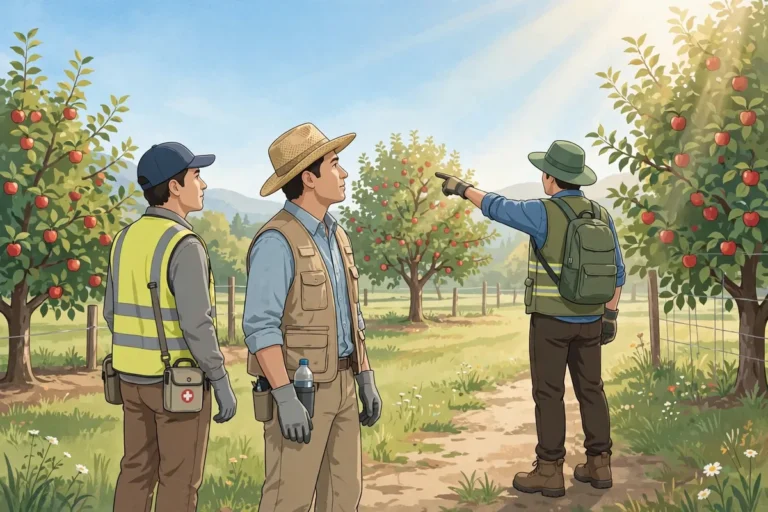
Insect stings are a documented occupational hazard in American agriculture, not just a summertime annoyance. A fatality investigation by California's FACE Program, part of…
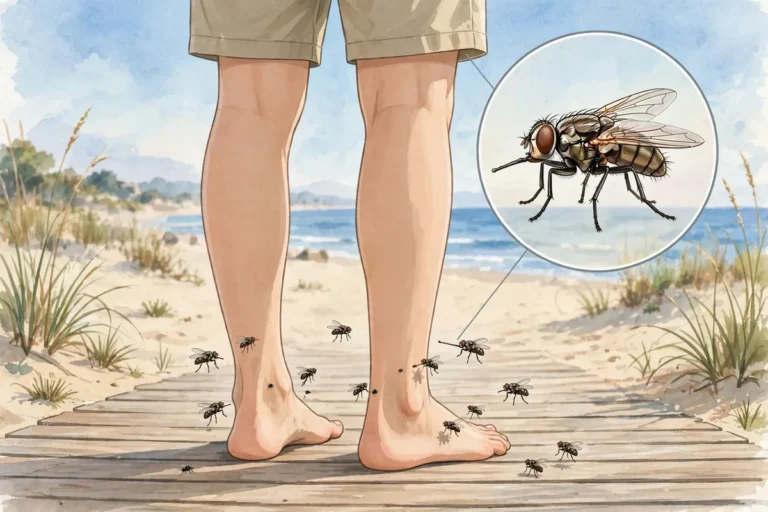
October, and your ankles are under attack. You're getting sharp, stabbing bites around your socks and sandals — at the beach, in the backyard,…

You booked the trip, packed the sunscreen, and picked the resort with the best sunset views. Then, on day two, your ankles and feet…