
Do Dark Colors Attract Mosquitoes? What Studies Say
Picture a backyard barbecue on a warm July evening. Two friends stand in the same yard, the same distance from the grill, for the…
Somewhere between the playground and the porch swing, most of us learned the same trick: when a mosquito bite starts itching, press your fingernail into it to make an X…
Somewhere between the playground and the porch swing, most of us learned the same trick: when a mosquito bite starts itching, press your fingernail into it to make an X — or a cross — right over the bump. Grandparents taught it, summer camps passed it around, and plenty of adults still do it without thinking. So let’s ask the obvious question: do x marks on mosquito bites work?
The honest answer is no — not in the way the folk remedy promises. Pressing a fingernail cross into a bite doesn’t neutralize the itch or speed healing. At best, it briefly distracts you from the itch with a little counter-pain. At worst, your fingernail breaks the skin and opens the door to bacterial infection. Here’s where the myth came from, why it feels convincing, why health authorities warn against it, and what to do instead.
The short version: it’s old, oral, and everywhere. The practice of pressing a fingernail into a mosquito bite — usually in the shape of an X or a cross — is a classic piece of folk medicine, passed down within families for generations. The USC Digital Folklore Archives documents this exact remedy: making a cross over a bite with a fingernail, taught by parents and grandparents as the thing you do when the itching starts.
Like most folk remedies, it spread by word of mouth in exactly the settings where mosquito bites are most miserable — summer camps, backyard barbecues, family vacations. A kid learns it from an older sibling, teaches it to a friend, and within a season a whole neighborhood is fingernail-carving crosses into their arms. The remedy feels authoritative because someone you trust taught it to you, not because anyone tested it.
There are variations, too. Some families teach a single hard dent with the thumbnail; others insist on the full X, claiming the “cross” shape has special power. None of these variations has any evidence behind them — they’re the natural drift of an oral tradition, like a game of telephone. The core claim stays the same: make the mark, and the itch stops.
The short version: mild pain briefly shouts louder than itch. There’s a real neurological reason the X-mark trick seems convincing, and it has nothing to do with curing the bite. When you press a fingernail hard into your skin, you create a small, sharp pain signal. Pain and itch travel through overlapping nerve pathways, and a fresh pain signal can temporarily drown out the itch — a phenomenon sometimes called counterirritation or sensory overload.
Your brain, faced with two competing sensations, pays attention to the louder one. For a few minutes, the itch genuinely fades. It feels like the X “worked.” But nothing about the bite has changed: the saliva is still in your skin, your immune system is still releasing histamine, and the itch is still queued up underneath. When the little burst of pain fades, the itch comes right back — which is why people end up re-pressing the X, sometimes harder each time.
This same mechanism explains why scratching feels satisfying for a moment and makes things worse overall. Any short, sharp sensation — a pinch, hot water, a fingernail dent — buys a few minutes of relief at the cost of irritating the skin further. The X isn’t special; it’s just one more way to trade itch for pain.
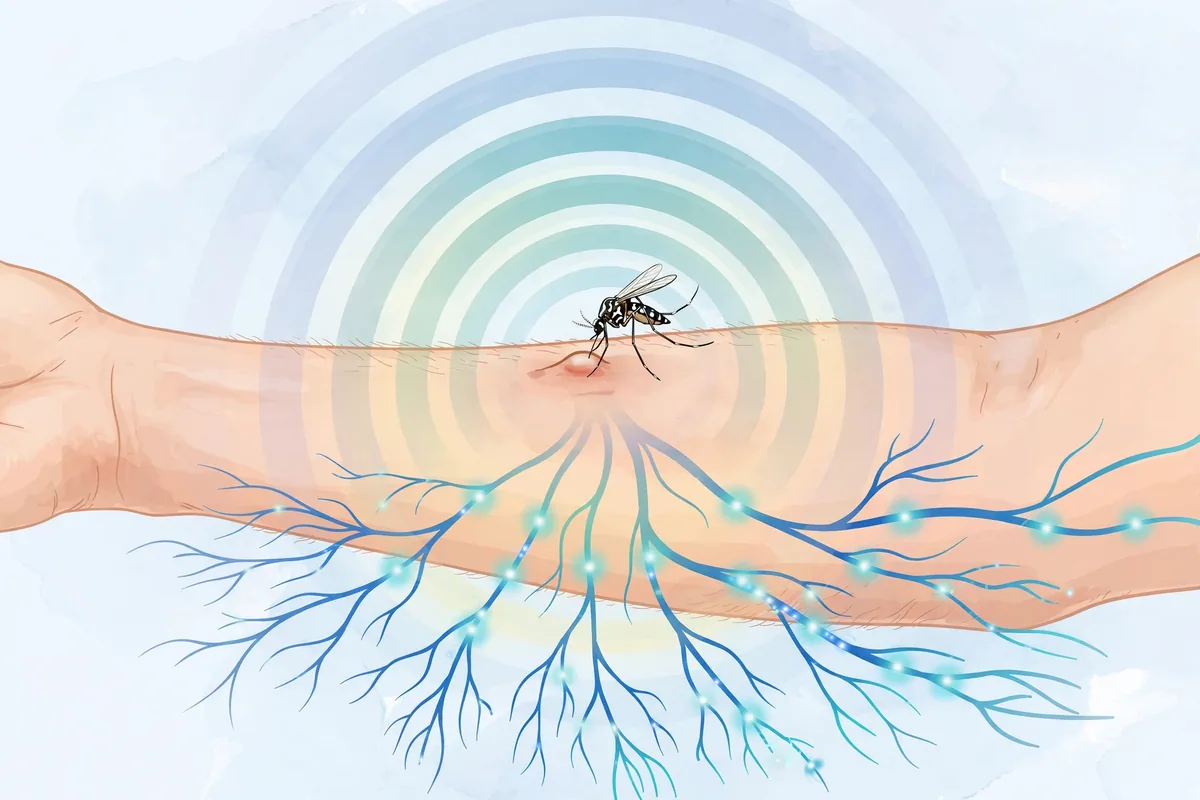
The short version: fingernails break skin, and broken skin invites infection. This is where a harmless-feeling folk habit turns genuinely risky. To make a visible X, most people press hard — and fingernails are thin, rigid edges. Press hard enough and you break the skin’s surface, even if you don’t notice a cut in the moment.
Once the skin barrier is broken, bacteria that live on your skin — or under your fingernails — can get into the tiny wound. The result can be a localized skin infection, and in some cases something more serious like staph infection or cellulitis, a spreading bacterial infection of the deeper skin layers that needs medical treatment. Hong Kong’s Centre for Health Protection runs an official myth-buster specifically warning against marking a cross on a bite with a fingernail, because it can break the skin and cause bacterial infection.
Fingernails are also far from clean. They harbor bacteria and debris from everything you’ve touched, and pressing them into irritated skin is the opposite of wound hygiene. Children are at particular risk — they press harder, their skin is more delicate, and they’re more likely to keep picking at the mark afterward.
There’s a broader principle here that dermatologists repeat constantly: don’t scratch, squeeze, or dig at bites. The itch is miserable, but the skin barrier is your best defense, and anything that compromises it — fingernails included — trades minutes of relief for days of risk. If you want the full rundown on why hands-off is the rule, read the guidance on not scratching or squeezing bites.
The short version: no evidence supports it; the mechanism argues against it. There are no clinical trials showing that fingernail X-marks reduce itching or do anything beneficial. The proposed mechanism doesn’t make biological sense: pressing a shape into the skin has no plausible way to neutralize mosquito saliva proteins or calm the histamine response behind the itch.
What the evidence does support is the counterirritation explanation — the brief distraction effect described above. That puts the X-mark alongside other pain-for-itch trades: scratching, very hot water, slapping the bite. All “work” for a few minutes and all irritate the skin, which is why medical guidance steers people toward treatments that address itch without damaging skin.
The evidence is thin on the remedy itself but solid on the downside: broken skin around a bite raises infection risk, and public health authorities explicitly advise against the practice. A folk remedy with no demonstrated benefit and a documented harm is an easy verdict — retire it.
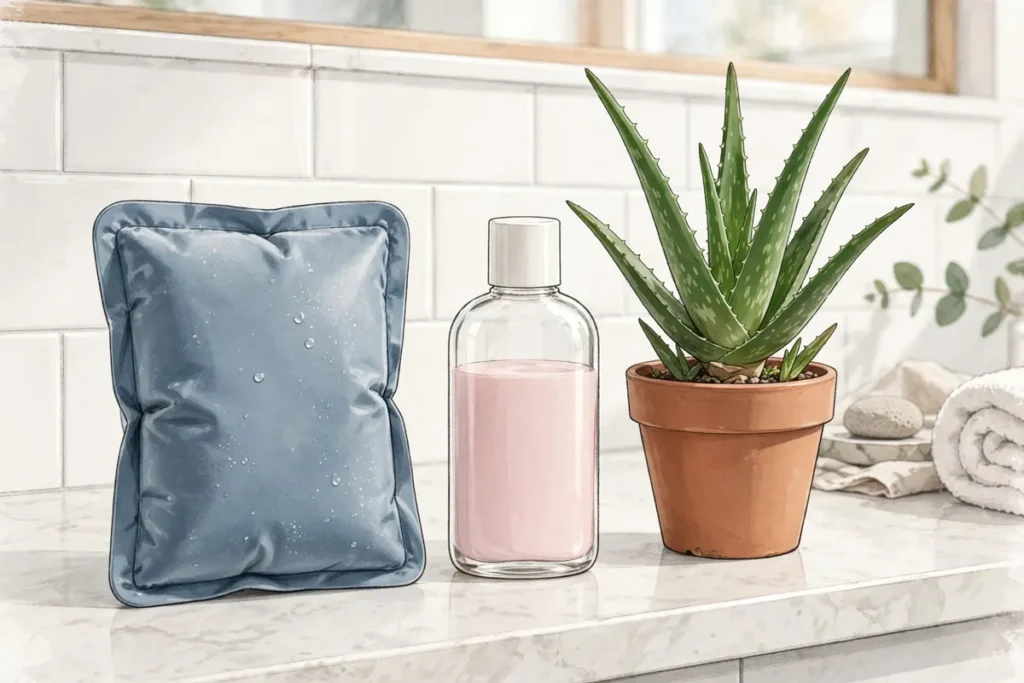
The short version: cool it, calm it, cover it. You don’t need a folk trick when real, simple options work better and don’t break the skin.
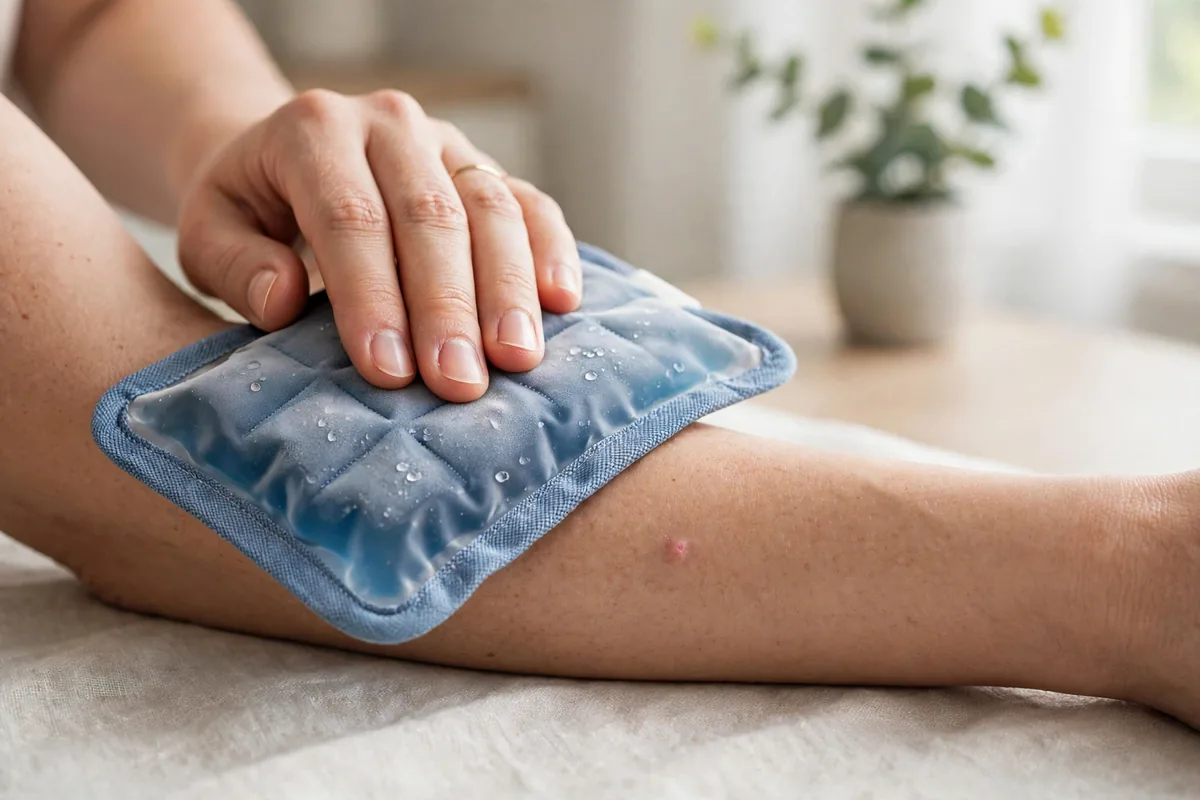
Cold first. A cold compress or an ice cube wrapped in a thin cloth, held on the bite for 10–15 minutes, numbs the area and calms itching and swelling. It’s the fastest drug-free relief available, and it can’t break the skin. For the full technique, see the cold compress guide.
Over-the-counter options. Calamine lotion and over-the-counter hydrocortisone cream are the classic pharmacy answers for a reason — they soothe itching without trauma to the skin. Follow the product label directions, and don’t apply anything to broken or oozing skin. For children or infants, check with a pediatrician before using any medicated product.
Leave it alone. The hardest and most effective advice: don’t scratch. Scratching feels good for seconds and prolongs the itch for hours, while raising infection risk every time the skin breaks. If a bite is somewhere you can’t stop touching, cover it with a small bandage — out of sight really does help.
Watch and wait. Most mosquito bites peak within the first day and fade over a few days. For more tactics, the guide on reducing bite itching covers the full toolkit.
For anything beyond basic over-the-counter care, your pharmacist or doctor is the right source — especially for young children, pregnant people, or anyone with a weakened immune system.
The short version: the X is in crowded company. Folk wisdom about mosquito bites is full of confident claims with thin evidence, and the X-mark is just the most hands-on of them. A few others worth retiring alongside it:
“Scratching helps it go away faster.” No — scratching damages skin, can introduce infection, and typically makes the itch last longer and the bump bigger. The relief is real and the cost is higher.
“Hot water or a hot spoon neutralizes the venom.” Mosquitoes don’t inject venom — they inject saliva, and heat doesn’t neutralize the immune reaction. Very hot water can scald, which is a worse problem than an itch.
“If it doesn’t itch, it wasn’t a real bite.” Itch intensity varies enormously between people and even between bites on the same person. Some people barely react; others develop large, swollen welts. Neither response says anything about the “quality” of the bite.
The pattern across all of these: a kernel of real sensation (pain distracts from itch, cold soothes, scratching feels good) wrapped in a story that overpromises. When a remedy sounds like magic, check whether it’s just counterirritation in disguise — and whether the price is your skin barrier.
Call 911 or seek urgent care if you notice:
For the full rundown of mosquito-specific warning signs, see mosquito bite warning signs.
Do X marks on mosquito bites work?
No. Pressing a fingernail X into a bite doesn’t treat it — the mild pain briefly distracts your brain from the itch (counterirritation), so it feels like it worked for a few minutes. The underlying histamine reaction is unchanged, the itch returns, and pressing hard enough to make a mark can break skin and invite bacterial infection.
Why does making an X feel like it stops the itching?
Pain and itch signals compete in your nervous system, and a fresh, sharp pain temporarily drowns out the itch. It’s the same reason scratching feels satisfying for a moment. But the effect is brief, the bite itself is unaffected, and repeated pressing irritates the skin — which is why the itch often comes back stronger.
Can pressing a fingernail into a bite cause infection?
Yes. Fingernails can break the skin even when you don’t see an obvious cut, and they carry bacteria from everything you’ve touched. Breaking the skin around an itchy bite opens a path for bacterial infection, including staph and cellulitis — which is exactly why Hong Kong’s Centre for Health Protection warns against the practice.
What should I do instead of the X trick for an itchy bite?
Use a cold compress for 10–15 minutes, try over-the-counter calamine lotion or hydrocortisone cream according to the label, and — hardest of all — don’t scratch. Covering the bite with a small bandage helps if you can’t leave it alone. If the itch is severe or the bite looks infected, talk to a pharmacist or doctor.
Is the X-mark myth dangerous for kids?
It carries more risk for children. Kids press harder, their skin is more delicate, and they’re more likely to pick at the mark afterward — all of which raise the chance of breaking the skin and introducing infection. Teach kids the cold-compress habit instead; it’s just as fast and far safer.
Medically reviewed by Dr. Sarah Jones, MD.
This article is for informational purposes only and isn’t medical advice. If you’re worried about a bite or sting, talk to a healthcare professional.
Dr. Jones oversees StingHelp’s clinical verification process. Every guide is systematically evaluated against active Centers for Disease Control and Prevention (CDC), Environmental Protection Agency (EPA), and American Academy of Allergy, Asthma & Immunology (AAAAI) medical consensus standards to ensure symptom distinctions and care recommendations are clinically sound.
Explore physician-reviewed first-aid procedures, identification clues, and symptom comparisons for other common outdoor bites and stings.
Picture a backyard barbecue on a warm July evening. Two friends stand in the same yard, the same distance from the grill, for the…

Learn how to reduce mosquito exposure while camping in a tent, protect children overnight, care for bites safely, and recognize symptoms that need medical attention.

You are two beers into a backyard barbecue when the mosquitoes find you — and only you. Coincidence, or is the beer actually calling…