
Does Salt Kill Fleas? What Research Shows
Somewhere between the third vacuum session and the second flea bath, most pet owners start googling the pantry. Salt is cheap, it's already in…
Standing in the pet aisle, the flea shampoo bottles promise a lot: kill fleas on contact, soothe itching, protect your pet. Do flea shampoos work? The honest veterinary answer is…
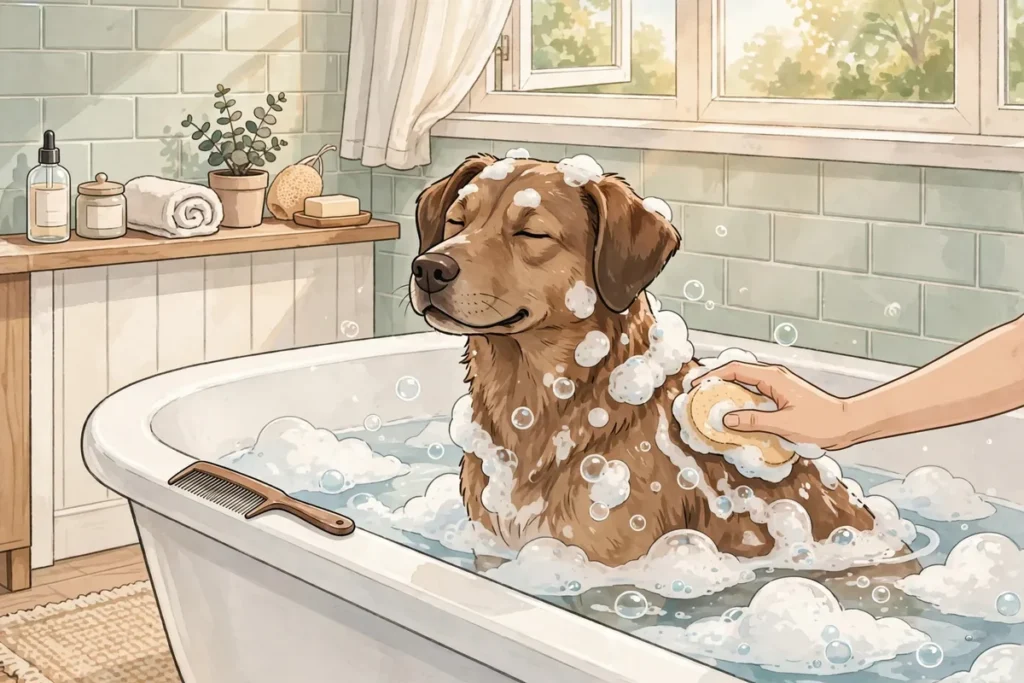
Standing in the pet aisle, the flea shampoo bottles promise a lot: kill fleas on contact, soothe itching, protect your pet. Do flea shampoos work? The honest veterinary answer is a split verdict — yes, they kill the adult fleas on your pet during the bath, giving fast relief in an active infestation. But the protection fades within days, they do nothing about the eggs and pupae in your home, and — critically — dog flea shampoos containing permethrin can be fatal to cats. A flea shampoo is a good first punch, never the whole fight.
This article breaks down what the evidence says, the residual problem nobody advertises, the cat-safety warning every multi-pet household must know, how to bathe effectively, and the complete plan that actually ends an infestation. While you work on your pet, protect your own skin too — our bite and sting first-aid checklist covers bite care basics.
What flea shampoos do well: kill adult fleas present on the animal during the bath. Veterinary references describe good curative efficacy — the majority of adult fleas on the pet die during a proper shampoo treatment — which is why vets often recommend a flea shampoo as the first step when a pet arrives crawling with fleas. For a heavily infested animal, that immediate knockdown brings real relief within minutes: fewer biting fleas, less frantic scratching, and a chance to assess the skin underneath.
What they don’t do: prevent reinfestation or treat the environment. Veterinary references consistently flag the short residual effect — typically just a day or two for most products — as the weak point. Once the shampoo is rinsed away, its protection is gone, and fleas from carpets, bedding, and the yard can recolonize your pet almost immediately. Vet-quoted product roundups and the Merck Veterinary Manual align on the same conclusion: shampoos are a reasonable first line for active infestations but not standalone flea control.
The myth to discard: “the shampoo will solve the infestation.” Veterinary sources routinely have to bust exactly this myth for their readers, because it’s the most common misunderstanding in pet care. Shampoo treats the animal; the infestation lives mostly in the environment. Expecting one bath to end the problem leads to the familiar cycle of repeated baths, frustration, and a pet with increasingly dry, irritated skin.
Two broad types exist. Insecticidal flea shampoos contain active ingredients (such as pyrethrins or permethrin in dog formulas) that kill fleas chemically on contact. Soap-based or “natural” flea shampoos rely on surfactants — the same drowning mechanism as dish soap — to kill fleas during the bath without a true insecticide. Both kill fleas present at bath time; the insecticidal versions tend to be more reliably lethal, while the soap-based ones are gentler but less certain.
The bath itself is part of the mechanism. Warm water, thorough lathering, and several minutes of contact time expose fleas hiding deep in the coat. The common technique — lathering a ring around the neck first, then working back — prevents fleas from fleeing to the head and face during the bath. A fine-toothed flea comb used after rinsing catches stragglers and lets you confirm the kill: comb over a white towel and check for flea dirt (tiny dark specks that turn reddish-brown on a damp paper towel — that’s digested blood).
“Kills fleas on contact” has a time limit. The label claim is true during the bath and misleading afterward. Contact killing happens while the product is wet on the coat; once rinsed, dried, and gone, so is the effect. This is the single most misunderstood line in flea product marketing.
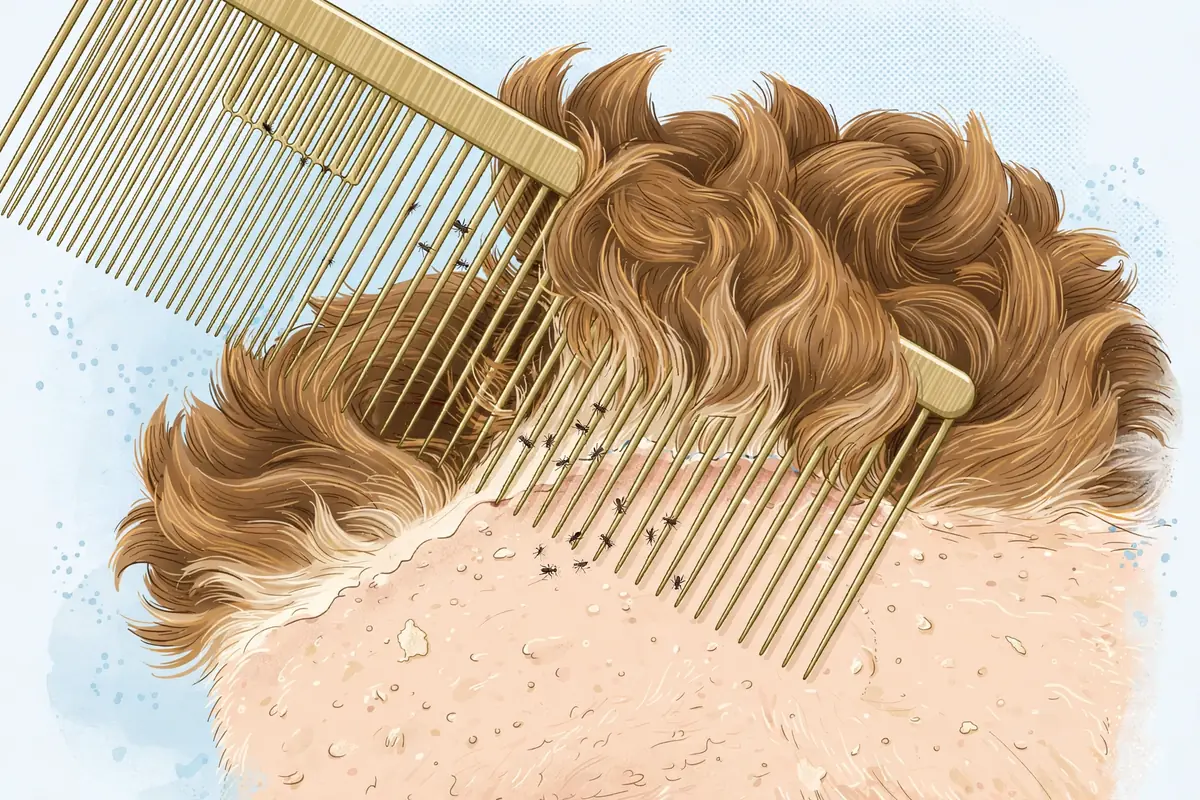
Protection measured in days, not weeks. Most flea shampoos offer little to no residual activity — commonly cited at around one to two days, versus the month-long protection of topical or oral preventatives. That gap is the whole story: a pet bathed on Saturday can be collecting new fleas from the living room carpet by Monday.
The environment is the reservoir. Flea eggs fall off the pet wherever it goes; larvae develop in carpet fibers, under furniture, and in pet bedding; pupae can lie dormant for weeks or months, then emerge when they detect vibration and warmth — like your footsteps. No shampoo reaches any of this. Every reinfestation wave comes from the environment, not from shampoo “failing.”
Why repeated shampooing backfires. Bathing weekly with flea shampoo seems logical — keep killing the new arrivals — but frequent shampooing strips coat oils, dries skin, and can worsen the itching you’re trying to stop. Meanwhile the environmental reservoir keeps supplying new fleas. It’s a treadmill: more baths, drier skin, same fleas. The exit is environmental control plus a real preventative, not a faster treadmill.
This section deserves its own heading because the consequences of getting it wrong are severe.
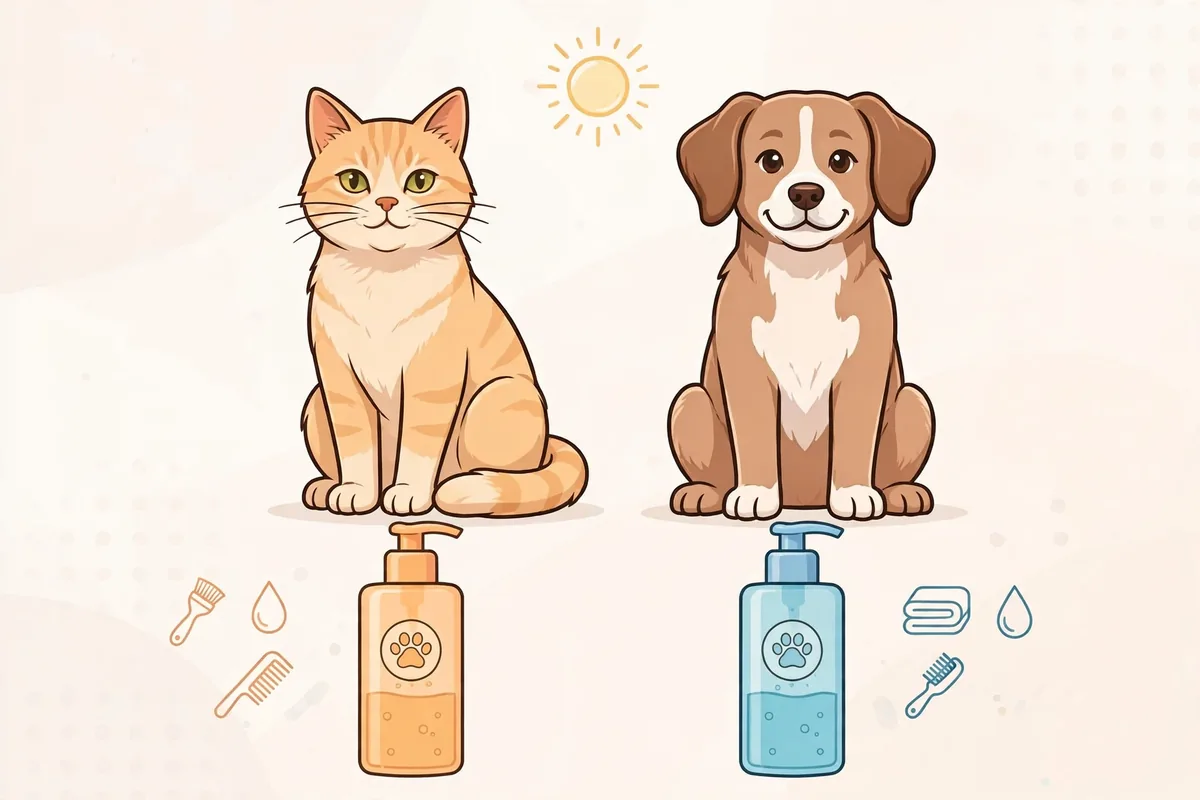
Permethrin, common in dog flea shampoos, is toxic — potentially fatal — to cats. Cats lack a liver enzyme pathway that dogs have for breaking down permethrin, so exposure that a dog tolerates can cause tremors, seizures, and death in a cat. This isn’t a mild-sensitivity warning; veterinary toxicology treats permethrin exposure in cats as an emergency. Never apply a dog flea shampoo — or any dog flea product — to a cat, and in multi-pet homes, keep treated dogs separated from cats until the product has fully dried, per label directions.
Read every label, every time. “For dogs only” warnings are there for this reason. If you’ve already applied a dog product to a cat by mistake, contact your veterinarian or an animal poison control hotline immediately — don’t wait for symptoms, and don’t try to “wash it off and see.” Rapid veterinary treatment dramatically improves outcomes.
Cat-safe options exist — ask your vet. Cats have their own flea shampoos and preventatives formulated for feline physiology. Given cats’ grooming habits (they ingest whatever is on their coat), product selection for cats deserves veterinary guidance rather than aisle improvisation. A vet visit can confirm whether your cat is even dealing with fleas before you treat.
If you’re going to use a flea shampoo, technique determines how much good it does.
Before the bath: brush out tangles, gather everything within reach (shampoo, towels, flea comb), and use lukewarm water — hot water irritates skin and cold water chills small animals. Protect the ears with gentle cotton placement only if your vet has shown you how; never force water into ears.
During the bath: wet the coat thoroughly, apply the shampoo per label directions (amount and contact time matter — follow them), lather the neck ring first, then work backward over the body, legs, belly, and tail base where fleas concentrate. Keep shampoo away from eyes. Maintain the full recommended contact time — rinsing early is the most common reason for a disappointing kill.
After the bath: rinse far longer than feels necessary; residue irritates skin and cats will ingest it grooming. Towel dry, then use the flea comb systematically over a white towel to catch survivors — drown them in soapy water. Dry small animals and kittens thoroughly and keep them warm; chilling is a real risk for tiny bodies.
Aftercare for the skin: a single flea-shampoo bath on healthy skin is fine, but if your pet’s skin looks dry or flaky afterward, mention it to your vet before repeating. Repeated medicated baths without guidance can turn a flea problem into a dermatitis problem.
Step one: a vet-recommended preventative. Monthly topical or oral flea preventatives appropriate to your pet’s species, weight, age, and health are the backbone of real control — they keep killing for weeks, breaking the life cycle. This is the single highest-value move, and it’s what vets prescribe instead of endless baths.
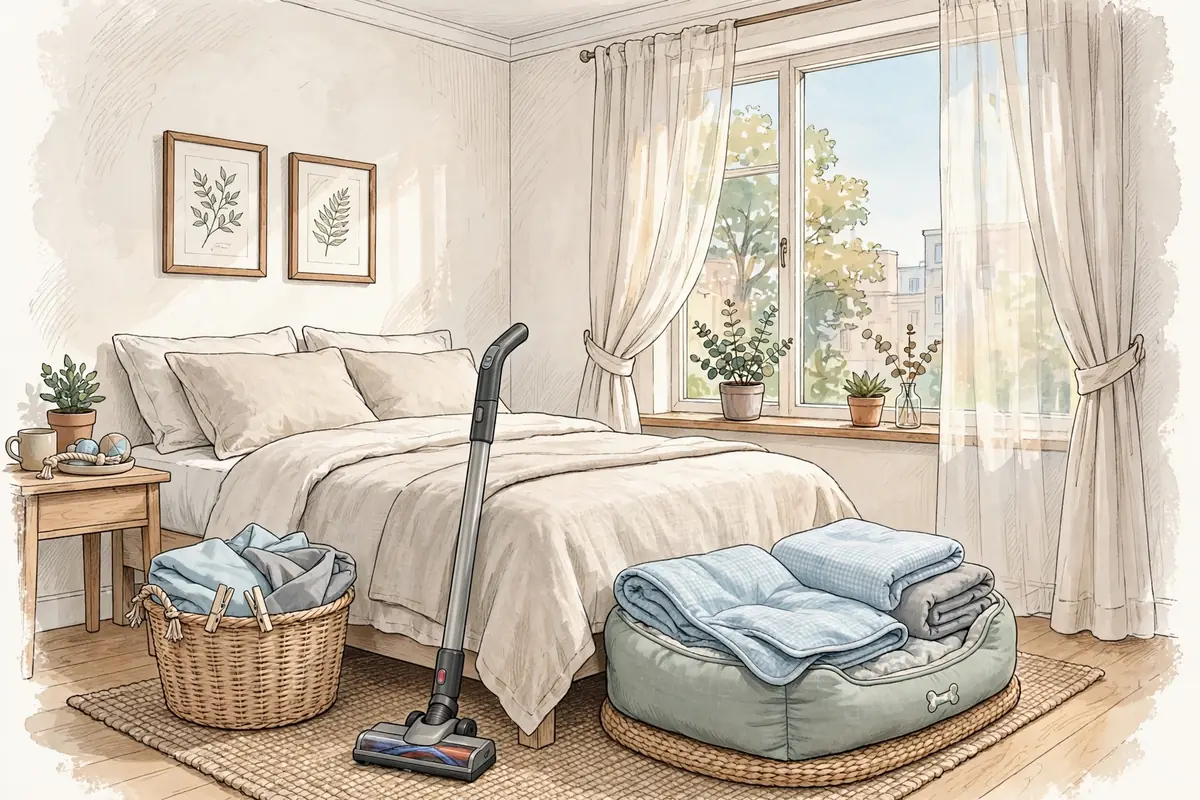
Step two: treat the environment. Wash all pet bedding — and your own bedding if pets share it — in hot water and dry on high heat; heat kills every flea life stage. Vacuum carpets, rugs, upholstery, and car interiors thoroughly and frequently, then empty or dispose of the vacuum bag or canister contents outside. For heavy infestations, discuss home treatment options with your vet or a pest professional.
Step three: monitor. Keep using the flea comb weekly during treatment — it’s the cheapest monitoring tool in existence. Check for flea dirt, and watch for tapeworm segments (tiny rice-like grains near the tail or in bedding), since fleas transmit tapeworms and their presence means the cycle is still turning.
Step four: protect the humans. While the plan takes effect, fleas will still bite people — typically around the ankles. Flea bites on humans need the standard care: don’t scratch, keep the area clean, and watch for infection. And remember that fleas can and do bite people even though they prefer furry hosts — your ankles are evidence.
Flea bites on humans usually resolve with basic care, but seek medical attention if:
How often can I use flea shampoo?
Follow the product label — most are not designed for weekly long-term use. If you find yourself needing frequent re-bathing, that’s a signal the underlying infestation isn’t controlled: talk to your vet about a monthly preventative and environmental treatment instead of more baths.
Is flea shampoo safe for puppies and kittens?
It depends on the product and the animal’s age — many flea shampoos carry minimum-age restrictions on the label. For very young or orphaned animals with fleas, vets sometimes recommend specific products because flea anemia is dangerous at that size. Don’t guess; ask your vet which product and what age cutoff applies.
Can I use dog flea shampoo on my cat just once?
No — never. Dog flea shampoos often contain permethrin, which can cause tremors, seizures, and death in cats. There is no safe “just once.” Use only cat-labeled products on cats, and if a dog product has already touched your cat, call your vet or animal poison control immediately.
Why do fleas come back days after the shampoo?
Because the shampoo only killed the adults on your pet at bath time. Eggs, larvae, and pupae in carpets, bedding, and upholstery were untouched, and pupae can emerge weeks later. Reinfestation after shampooing is the norm, not a product failure — it means the environment still needs treatment.
Do “natural” flea shampoos work as well as medicated ones?
Soap-based natural shampoos can kill fleas present during the bath through the drowning mechanism, but they generally lack the reliable knockdown of insecticidal formulas and have the same near-zero residual effect. Either way, neither type replaces a preventative and environmental control. Be cautious with essential-oil-based products around cats — several common oils are toxic to them.
Medically reviewed by Dr. Sarah Jones, MD.
This article is for informational purposes only and isn’t medical advice. If you’re worried about a bite or sting, talk to a healthcare professional.
Dr. Jones oversees StingHelp’s clinical verification process. Every guide is systematically evaluated against active Centers for Disease Control and Prevention (CDC), Environmental Protection Agency (EPA), and American Academy of Allergy, Asthma & Immunology (AAAAI) medical consensus standards to ensure symptom distinctions and care recommendations are clinically sound.
Explore physician-reviewed first-aid procedures, identification clues, and symptom comparisons for other common outdoor bites and stings.

Somewhere between the third vacuum session and the second flea bath, most pet owners start googling the pantry. Salt is cheap, it's already in…
Walk down the pet-care aisle and you'll see two very different products sharing one shelf: the $60-plus Seresto collar with its eight-month protection claim,…
# Can You Get Fleas Without Pets? It is one of the most bewildering household mysteries: you have no dog, no cat, no pets…