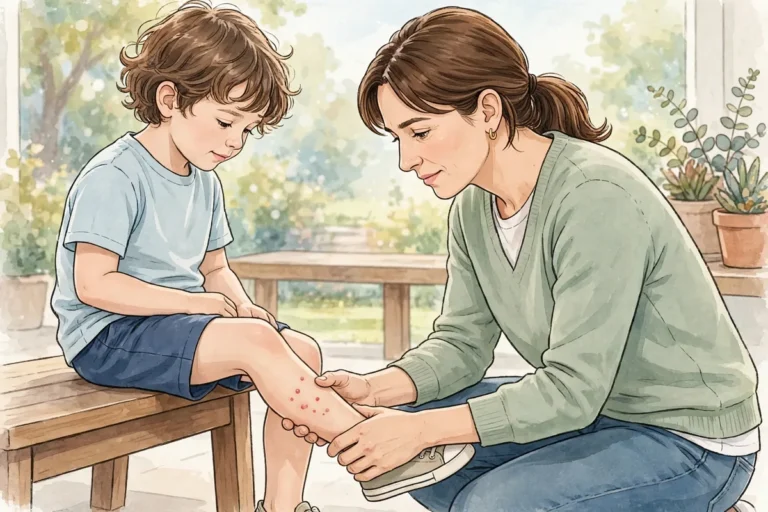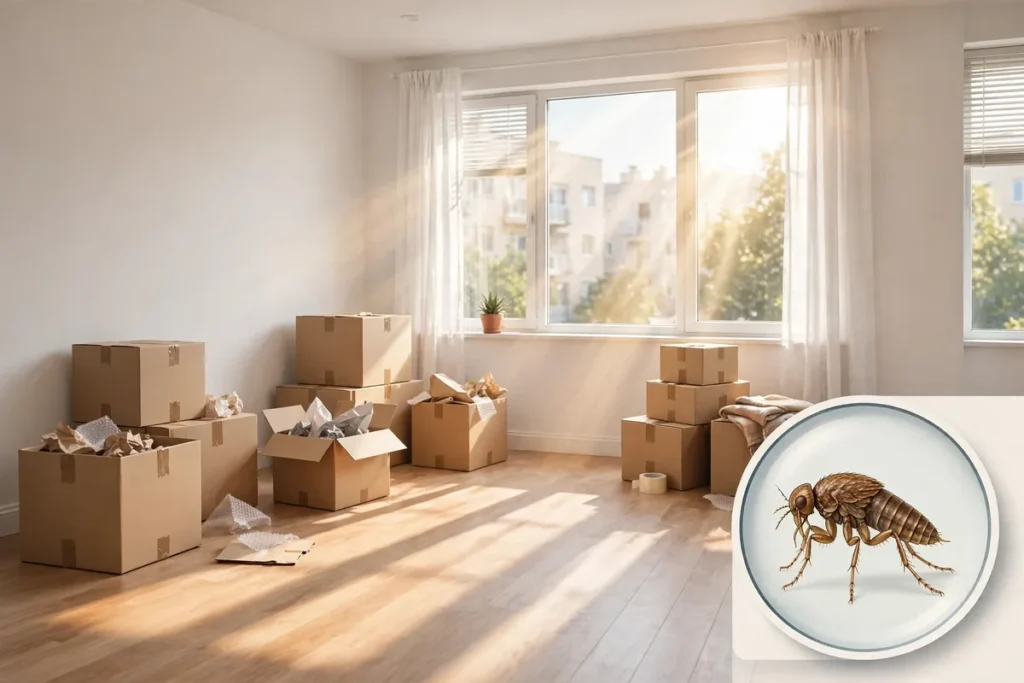
You just moved into a clean-looking apartment. You have no pets. And within days, your ankles are covered in itchy red bumps. It feels impossible — where would fleas come from? The answer is one of the most common move-in mysteries in rental housing: flea bites in a new apartment are frequently caused by the previous tenant’s pets, or more precisely, by what those pets left behind. Flea pupae — cocooned, dormant, and nearly indestructible — can wait in carpet for months, and your footsteps on move-in day are the wake-up call they have been waiting for.
This is not a reflection on your cleanliness. It is biology: the flea life cycle includes a pupal stage designed to outwait periods with no host. This guide explains the science, the timeline to expect, the vacuum-and-wait strategy that works, how to handle the landlord conversation, and when bites need medical attention.
The Hidden Inheritance: Pupae in the Carpet
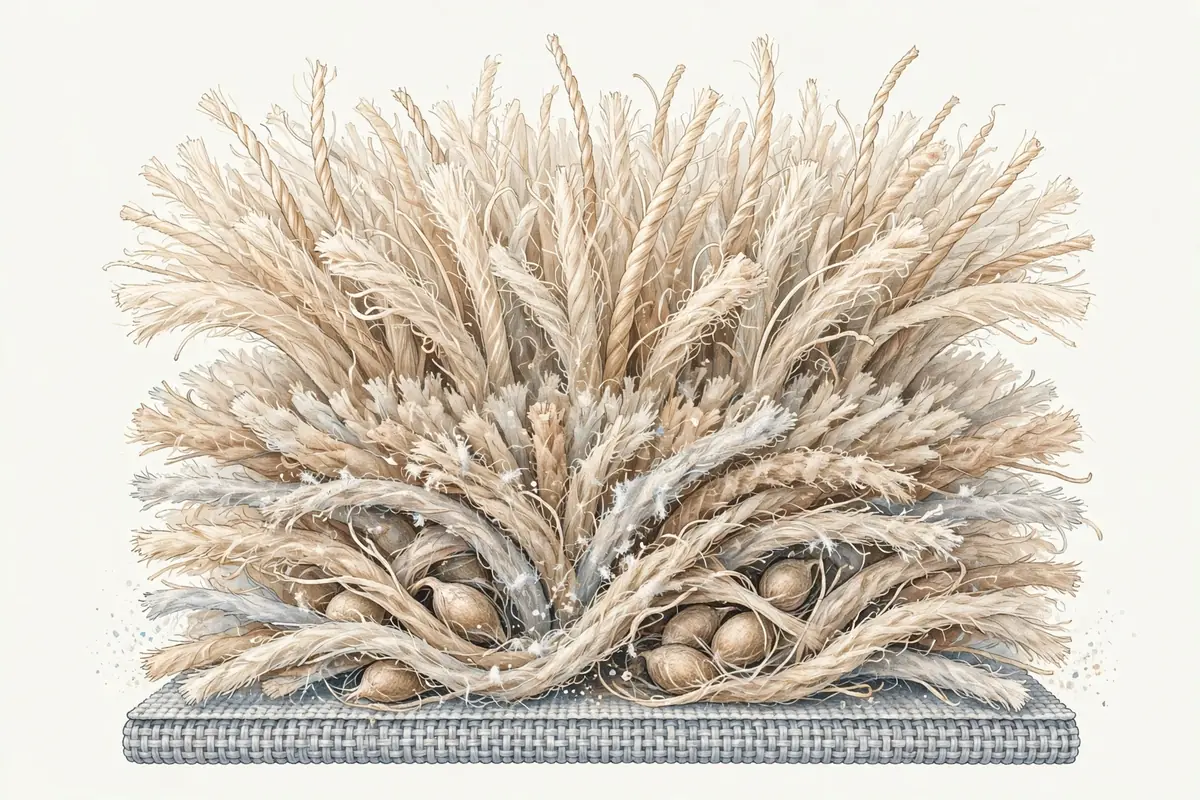
To understand your situation, you need the flea life cycle — specifically its most frustrating stage. Cat fleas (the species behind the vast majority of indoor flea problems, regardless of whether a cat was involved) pass through four stages: egg, larva, pupa, and adult. A female flea on a pet lays eggs that fall off into the environment — carpet, rugs, pet bedding, floor cracks. The eggs hatch into larvae, which feed on organic debris (including the dried blood droppings adult fleas leave behind), then spin silken cocoons and pupate.
Here is the critical part: inside that cocoon, a fully developed adult flea can wait. These “pre-emerged adults” remain dormant for weeks to several months — Mississippi State University Extension notes they can survive in this waiting state for many months, even up to a year — until they sense a host nearby. The triggers are body heat, carbon dioxide, and above all, vibration from movement.
This is why bites erupt days after move-in. Your movement triggers emergence — and pest researchers have shown how tough this stage is: pre-emerged fleas in cocoons have survived direct dunking in pesticide spray and still emerged to bite. The cocoon is armor. You cannot spray through it — but you can outlast it.
Why You’re Being Bitten With No Pets in Sight
A reasonable question: if fleas prefer pets, why are they biting you? In the absence of a pet, cat fleas will readily feed on people. A newly emerged adult is hungry and must feed quickly to survive — and you are the only warm-blooded option in the apartment, so you get the bites, typically around the ankles where fleas jumping from carpet level make first contact.
The bite pattern itself is a clue. Flea bites tend to appear as small, intensely itchy red bumps with a tiny central puncture mark, often in clusters of three or four (sometimes called “breakfast, lunch, and dinner”) around the ankles, feet, and lower legs. If your bites match this pattern and you recently moved into a carpeted unit previously occupied by pet owners, fleas are the leading suspect. If you are unsure, note the pattern — mosquitoes bite more randomly across exposed skin, while flea bites hug the lower legs.
One reassurance: without a pet, fleas cannot easily reproduce in your apartment, so the population is limited to the cocoons left behind. You are not starting a permanent infestation; you are weathering the emergence of one that already happened.
Confirming the Diagnosis Before You Treat
Before spending money or confronting your landlord, confirm that fleas are actually the problem. Misidentification wastes time — bed bugs, carpet beetles, and even dry-skin irritation get blamed on fleas regularly. A few simple checks:
- The white sock test: pull on white socks and walk slowly through the carpeted rooms, especially near baseboards and under windows. Fleas jumping onto the socks will be visible as tiny dark specks against the white fabric.
- Look for flea dirt: part carpet fibers near baseboards and look for tiny black specks (flea feces, essentially dried blood). Place suspect specks on a damp white paper towel — flea dirt dissolves into reddish-brown streaks.
- Check the pattern and location: ankle-focused clusters in a carpeted, previously pet-occupied unit strongly suggest fleas. Widespread bites including the torso, or bites in a unit with no carpet, point elsewhere.
- Ask about the previous tenant: if the landlord or neighbors confirm the prior occupants had a dog or cat, your hypothesis gains serious weight.
If you find live fleas or flea dirt, you have your answer. If the checks are inconclusive but bites continue, the pupae-emergence scenario remains the most likely explanation for post-move-in ankle bites in carpeted rentals. Extend the checks above to upholstered furniture, rugs, and pet bedding areas for a fuller inspection routine. When bites could be something else entirely, our bite-sting clue checklist walks through the general identification clues.
The Vacuum-and-Wait Strategy
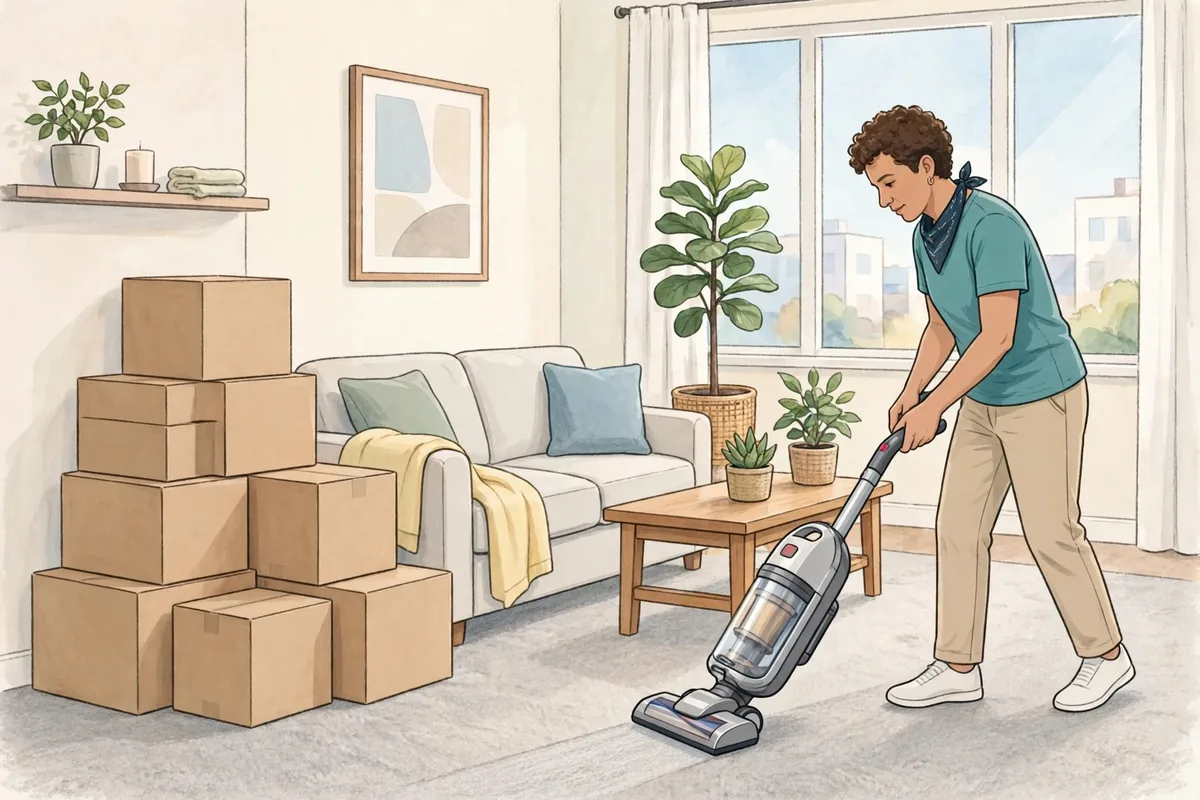
Vacuuming is the single most effective thing you can do, and it works for two reasons. First, it physically removes flea stages — eggs, larvae, flea dirt (larval food), and some adults — from the carpet. Second, and counterintuitively, the vibration and warmth of vacuuming triggers dormant pupae to emerge, which sounds bad but is actually the goal: an emerged flea can be vacuumed up or exposed to treatment, while a cocooned flea is invulnerable. You want them out of the armor.
The protocol, drawn from extension guidance:
- Vacuum daily during the active period: all carpeted areas, under furniture, along baseboards, and in closets. Use the beater-bar setting — agitation matters.
- Empty the vacuum immediately after each session, outdoors, into a sealed bag.
- Wash what you can in hot water and dry on high heat: throw rugs, blankets, and your own bedding.
Expect this to take weeks, not days. Pupae emerge on their own schedule, so activity often continues for six to eight weeks before fading. Bites may worsen in the first week or two — that is the emergence wave your vacuuming triggered, and it means the strategy is working, not failing.
If you want professional help, look for a pest company that uses insect growth regulators (IGRs) — these prevent eggs and larvae from developing and provide months of residual protection against the next generation. What you do not want is a total-release fogger (“bug bomb”) as the primary tool; the mist does not reliably reach the carpet depths where immature fleas live.
Talking to Your Landlord
This is, in most cases, your landlord’s problem to help solve — but how you approach it determines how smoothly it goes. Document everything before the conversation: dated photos of bites, notes on when they started relative to move-in, results of the white sock test or flea dirt check, and any information about the previous tenant’s pets. Written documentation beats verbal complaints.
Key points for the discussion:
- Report promptly and in writing. Email or your building’s maintenance portal creates a record. Describe the evidence factually.
- Pre-existing infestations are generally the landlord’s responsibility in most jurisdictions — you inherited this problem. (Specific obligations vary by state and lease.)
- Ask what was done between tenants. A unit previously occupied by pets should have been treated or deep-cleaned before re-rental.
- Request professional treatment if vacuuming is not resolving things within a few weeks; ask about IGR-based treatment specifically.
- Keep records of everything — your efforts, all communications, any expenses.
Treating the Bites While You Wait
The bites are miserable, but manageable while the vacuum-and-wait strategy runs its course. Wash bite areas with soap and water, do not scratch, and cool the itch with a cold compress — our guide covers safe technique. An over-the-counter anti-itch cream or oral antihistamine can help — follow package directions. Launder bedding frequently in hot water during the active period. Most flea bites resolve within a week or two; the real fix is the environmental strategy, since treating the apartment stops new bites from arriving.
Preventing a Repeat Performance

Once the emergence wave passes, a few habits keep the apartment flea-free:
- Keep vacuuming regularly (weekly is fine once the problem resolves) — it remains the best early-warning and control tool.
- If you get a pet later, start veterinarian-recommended flea prevention before the animal arrives, not after you see fleas. An untreated pet in a previously infested unit can restart the cycle from any surviving pupae.
- Be cautious with secondhand furnishings. Used rugs, upholstered furniture, and pet bedding can carry eggs and pupae. Inspect and clean secondhand items before bringing them in.
- Seal entry points if the building has a stray or feral animal issue — fleas can also arrive via wildlife in wall voids or under porches, though the previous-tenant scenario is far more common.
- Know the timeline. If bites persist beyond eight to ten weeks despite diligent vacuuming, the reservoir may be larger than expected (or there may be an ongoing source, such as animals in the building). That is the point to insist on professional assessment rather than continuing to wait.
When to See a Doctor for a Bug Bite
Flea bites are usually a nuisance rather than a medical emergency, but see a clinician if:
- Call 911 for anaphylaxis signs: difficulty breathing, throat swelling, dizziness, or fainting after bites (rare with fleas, but any severe reaction is an emergency).
- Bites show spreading redness, warmth, swelling, pus, or red streaks — possible secondary infection from scratching.
- You develop fever, swollen lymph nodes, or flu-like symptoms alongside the bites.
- Bites are extremely numerous, blistering, or not improving after two weeks — wash with soap and water, apply a cold compress, avoid scratching, and follow over-the-counter anti-itch label directions.
- You have a compromised immune system, or the bites are on an infant — get advice sooner.
- If scratching has broken the skin significantly, watch closely for infection and seek care at the first sign of worsening.
Frequently Asked Questions
How long do flea pupae survive in an empty apartment?
Pre-emerged adult fleas can remain dormant in their cocoons for several months — Mississippi State University Extension notes they can survive in this waiting state for many months, even up to a year, when no host is present. This is why a unit vacant for months can still produce a burst of bites the week new tenants move in.
Will the fleas go away on their own if I don’t have pets?
Largely, yes — without a furry host, fleas cannot reproduce efficiently, so the population is limited to the pupae left behind. Frequent vacuuming dramatically speeds up the process by triggering emergence and removing fleas. Expect substantial improvement within six to eight weeks, though some stragglers can appear longer.
Can I just use a flea fogger to kill them all at once?
Foggers are a poor choice here. The aerosol mist does not reliably penetrate carpet depths where eggs, larvae, and pupae live, and pupae are protected from insecticides regardless. Vacuuming plus an insect growth regulator treatment (which stops the next generation from developing) is far more effective than a bug bomb.
Should my landlord pay for flea treatment?
In most jurisdictions, a pre-existing pest problem that predates your tenancy is the landlord’s responsibility to address — you did not bring the fleas. Document the evidence, report in writing promptly, and request professional treatment. Check your lease and local tenant-rights resources for the specifics in your state.
Can fleas from the apartment infest my clothes and follow me?
Adult fleas may hitch a ride on clothing temporarily, but they do not infest clothing the way they infest carpet — they need a host or a suitable environment to persist. Washing clothes in hot water and drying on high heat eliminates any travelers. The far greater risk is simply being bitten at home until the emergence wave passes.
Medically reviewed by Dr. Sarah Jones, MD.
This article is for informational purposes only and isn’t medical advice. If you’re worried about a bite or sting, talk to a healthcare professional.