
You spend more nights in your sleeper than in your own bed. The mattress is warm, the cab is dark, and you are gone for days or weeks at a time — which is exactly why bed bugs in semi-truck sleeper cabs have become one of the industry’s worst-kept secrets. Driver forums carry multi-page threads of sleeper-berth infestations, the National Pest Management Association’s 2025 Bugs Without Borders survey listed the sleeper cabs of big-rig trucks among the unexpected places pest professionals are finding bed bugs, and driver communities keep reaching the same conclusion: real infestations, not hypotheticals.
The direct answer to the question every driver eventually asks: yes, bed bugs can and do infest sleeper cabs, they will ride with you for thousands of miles, and they can follow you home at the end of the run. But a cab infestation is beatable if you catch it early, treat it correctly, and protect everything you carry in and out. This guide covers how to spot the signs, run a fast inspection between loads, treat a cab without setting yourself back, and keep the bugs from reaching your family.
Why Sleeper Cabs Are Prime Bed Bug Territory
A bed bug’s wish list is short: a warm body that stays still for hours, tight hiding spots inches away, and regular turnover of people and belongings to hitchhike on. A team-run or slip-seated truck checks every box. The bunk is a heated, stationary target for 8 to 10 hours a night. Mattress seams, the gap behind the bunk, upholstery folds, curtain tracks, dashboard trim, and the hollow spaces behind cab panels are all ideal harborages — dark, tight, and close to the sleeper.
Turnover is the other half of the problem. Slip seating, shared company trucks, trainees rotating through cabs, and motel rooms on layovers all create bridges between infested and clean spaces. A bug that feeds on one driver in Texas can be in Oklahoma by morning, then transferred to a motel room, a terminal lounge couch, or another driver’s bag by the weekend. Unlike a bedroom, a cab has no “off season” — it is climate-controlled year-round, so populations never get the winter slowdown that helps outdoor infestations die back.
Perhaps the cruelest part: drivers are often the last to know. Bed bug bites do not always itch right away — reactions can take days to appear, and some people barely react at all. Many drivers attribute the first itchy welts to dry skin or allergies. By the time the pattern is obvious, the population has had weeks to establish. Learning to identify bed bug bites early is one of the highest-value skills a driver can pick up.
How to Spot Them: Signs in the Cab
Adult bed bugs are about the size of an apple seed, reddish-brown, and flat — easy to miss against dark upholstery but visible on a light-colored mattress or sheet. The nymphs are smaller and translucent. But you will usually see the evidence before you see the bug:
- Rust-colored or dark spots on the mattress seam, sheets, or bunk upholstery — digested blood droppings that smear when wiped with a damp cloth.
- Shed skins — translucent, empty bug-shaped husks in seams and crevices.
- Tiny pale eggs (about 1 millimeter) tucked into stitching and screw holes.
- A sweet, musty odor in heavy infestations, sometimes described as smelling like coriander or old raspberries.
- Bite patterns on your skin — clusters or lines of itchy welts on exposed areas, often described as “breakfast, lunch, and dinner” rows.
Check the usual suspects in order: mattress and bunk seams and tags, the headboard or bunk frame, behind and under the mattress, curtain folds, seat cushion seams, the gap where the bunk meets the wall, and any place where two surfaces meet. A phone flashlight is the only tool you need.
The 10-Minute Inspection Routine

Make this a habit the way you do a pre-trip walkaround. Once a week — and every time you take over a new or shared truck or stay in a motel — run this check:
- Strip the bunk to the mattress. Flashlight along every seam, piping, and tag.
- Lift the mattress; check the bunk platform, hinges, and the wall behind it.
- Run fingers along curtain hems and folds; check tracks and tie-backs.
- Inspect driver and passenger seat seams, especially where backrest meets cushion.
- Look behind loose trim, around sleeper outlets, and inside storage cubbies near the bunk.
- Check your gear: duffel seams, pillowcase, and blankets.
If you share the truck (slip seating, team driving, training), coordinate the routine with your co-driver — an infestation only needs one unsuspecting sleeper to keep feeding. And when you are sleeping off-duty in motels, run the same check before you unpack; motels remain one of the top pickup points, and the home-prevention habits — mattress encasements, regular inspections, bagging luggage — translate directly to life on the road.
What to Do If You Find Bed Bugs
First, do not panic — and do not set off a bug bomb. Over-the-counter “foggers” are one of the worst things you can do for bed bugs: the pesticide mist drives them deeper into wall voids and electronics where sprays cannot reach, while leaving chemical residue on every surface you touch. They do not eliminate infestations, and in a small enclosed cab, the fumes are a genuine health hazard.
Instead, treat it like a contamination event:
- Contain your belongings. Seal your duffel, bedding, and clothes in heavy-duty bags. Do not bring the bag into your house or the terminal lounge until it has been treated.
- Document it. Photograph the evidence and notify your dispatcher or fleet manager in writing. This is an occupational issue, and reputable carriers have protocols — some will authorize professional treatment or a cab swap. Keep a paper trail.
- Do not throw the mattress out on the spot unless your carrier provides a replacement immediately. A new mattress in an untreated cab gets reinfested within days. Treat the cab first, then decide.
- Start with heat on your gear. Everything fabric that can take it goes through a hot dryer — at least 30 minutes on the highest heat setting kills bugs and eggs at every life stage. This is the single most effective DIY step you have.
- Vacuum the cab thoroughly — seams, crevices, under the bunk — then empty the vacuum into a sealed bag outside the truck.
Can bed bugs bite through your clothes? They generally feed on exposed skin, but they will crawl under loose clothing to reach it — our article on whether bed bugs bite through clothes covers the details. The point for drivers: sleeping fully clothed slows them down but does not stop them.
Treating the Cab: Heat, Steam, and Professional Help
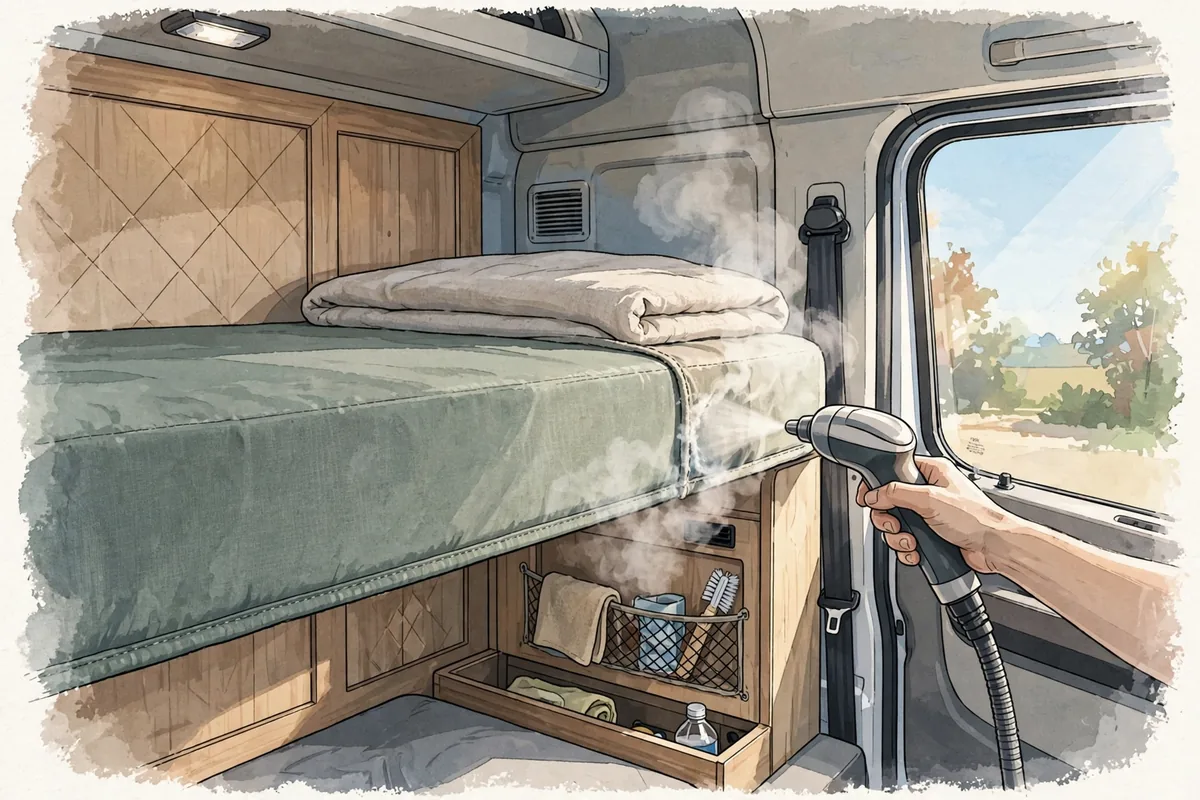
Heat is bed bugs’ greatest enemy — sustained temperatures around 120°F (49°C) and above are lethal to every life stage, including eggs. In a home, whole-room heat treatment is the gold standard. In a cab, your options are more constrained:
- Steam treatment is the best DIY cab option. A commercial-grade steam cleaner (not a garment steamer) applied slowly along mattress seams, upholstery folds, and crevices delivers lethal heat on contact. Move slowly — about an inch per second — and let surfaces dry fully afterward to avoid mold in the cab.
- Professional cab fumigation or heat treatment is the reliable route for established infestations. Some pest companies specialize in truck cabs; the process typically takes a day and may require the truck out of service. If your carrier balks at the cost, your written documentation helps make the case — one infested cab can seed motels and terminals across a fleet.
- Targeted residual products labeled for bed bugs can supplement heat, but read labels carefully: many are not approved for sleeping areas or vehicle interiors, and misuse in an enclosed cab is dangerous. When in doubt, leave chemicals to the licensed professional.
- Never use flammable liquids, kerosene, or rubbing alcohol as a “quick fix.” In a vehicle full of electronics and fuel systems, this is how tragedies happen — and alcohol sprays do not reliably kill eggs anyway.
After treatment, install mattress and box-spring-style encasements on the bunk if they fit, and add interceptor traps under the bunk legs. They will not treat an infestation, but they will tell you immediately if bugs return — which is half the battle.
Protecting Home and Terminal: Stop the Spread
The infestation that stays in the cab is a nuisance; the one that rides home in your duffel is a disaster. Build a firewall between the truck and your house:
- Keep a dedicated set of “truck clothes” and never bring the duffel past the garage or mudroom. Treat the entry point like a decontamination zone.
- Run the dryer protocol on all truck laundry before it goes in the hamper — 30 minutes on high heat, every time.
- Store luggage and gear in sealed hard cases or heavy bags, not open on the bedroom floor.
- If your home does get hit, the same heat-and-professional rules apply at larger scale — see our home prevention guide for the full playbook.
Drivers who run dedicated routes and sleep at home nightly have the lowest risk; long-haul and team drivers with heavy motel use sit at the top. Wherever you fall on that spectrum, the inspection habit is the cheapest insurance in the industry.
When to See a Doctor for a Bug Bite

Bed bug bites themselves do not transmit disease, but they can cause problems worth a clinician’s attention:
- Signs of anaphylaxis — trouble breathing, facial swelling, widespread hives, dizziness — are rare with bed bugs but always an emergency: call 911.
- Bites that develop increasing pain, spreading redness, warmth, pus, or red streaks may indicate a secondary skin infection from scratching.
- Severe itching that disrupts sleep for multiple nights, large blistering reactions, or bites that worsen after a week deserve medical evaluation.
- If you develop fever or the bite area keeps expanding, do not wait it out.
Frequently Asked Questions
Can bed bugs live in a truck through winter?
Yes. A sleeper cab is climate-controlled whenever the truck runs its bunk heater or idles, so the interior rarely drops to temperatures that would kill bed bugs. Unlike outdoor populations, cab infestations do not get a winter die-back — they can feed and breed year-round.
Will the company pay for treatment?
It depends on the carrier, but many larger fleets have bed bug protocols because one infested cab threatens the whole operation. Document the evidence with photos, report it in writing, and ask specifically about cab treatment or reassignment. Owner-operators should budget for professional treatment the way they budget for tires — it is a cost of doing business.
Do bed bug sprays from the truck stop work?
Mostly no. Contact sprays kill only the bugs they directly hit and do nothing to eggs hidden in seams; many populations also show pesticide resistance. They are not a substitute for heat treatment or professional service, and misusing them in a small cab exposes you to unnecessary chemicals.
Can I just sleep in motels until the cab is treated?
That trades one risk for another. Motels are a top pickup point for bed bugs, and moving between cab and motel without a decontamination routine can spread the problem to both. If you must motel it, inspect the room before unpacking, keep luggage in the bathroom or on a rack (never on the bed or floor), and run the dryer protocol on everything when you get home.
How long can bed bugs survive in a parked truck with no driver?
Months. The CDC notes that bed bugs can live several months without a blood meal, so parking the truck for a few weeks off-duty will not starve an infestation out. Time away may slow breeding, but it does not replace inspection and treatment.
Sources
- About Bed Bugs — Centers for Disease Control and Prevention (bed bugs are not known to spread diseases to people; signs and symptoms).
- Bed Bug Myths — U.S. Environmental Protection Agency (bed bugs and disease; public-health-pest status).
- Bed Bugs Found in TVs, School Buses, and Hospital ORs — NPMA press release via PestWorld (2025 Bugs Without Borders survey finding bed bugs in the sleeper cabs of big-rig trucks).
- Thermal death points for bed bugs — Virginia Tech/Virginia Department of Agriculture fact sheet (113°F/90 min and 118°F/20 min thresholds; 30-minute high-heat dryer guidance).
Medically reviewed by Dr. Sarah Jones, MD.
This article is for informational purposes only and isn’t medical advice. If you’re worried about a bite or sting, talk to a healthcare professional.