If you found a bed bug in your home, your first question is probably “how do I get rid of it” — not “which species is it.” But in 2015, a Florida entomologist confirmed something that made pest professionals pay attention: the tropical bed bug, long thought to be mostly someone else’s problem, was living in a home in Brevard County. It was the first confirmed Florida finding in 60 years.
The honest answer to tropical bed bug vs common bed bug is less dramatic than the headlines — and more useful. To the naked eye, the two species look identical. They behave similarly, feed on human blood the same way, and cause the same kinds of reactions. The differences show up under a microscope, in insecticide resistance, and in how fast the tropical species may develop. This article covers both species, the Florida discovery, how they differ, what that means for your health, and why professionals — not foggers — are the right call for either one.
Meet the Two Species
The common bed bug, Cimex lectularius, is the species behind the vast majority of US infestations — a temperate-climate insect well adapted to indoor life, and humanity’s unwanted roommate for centuries.
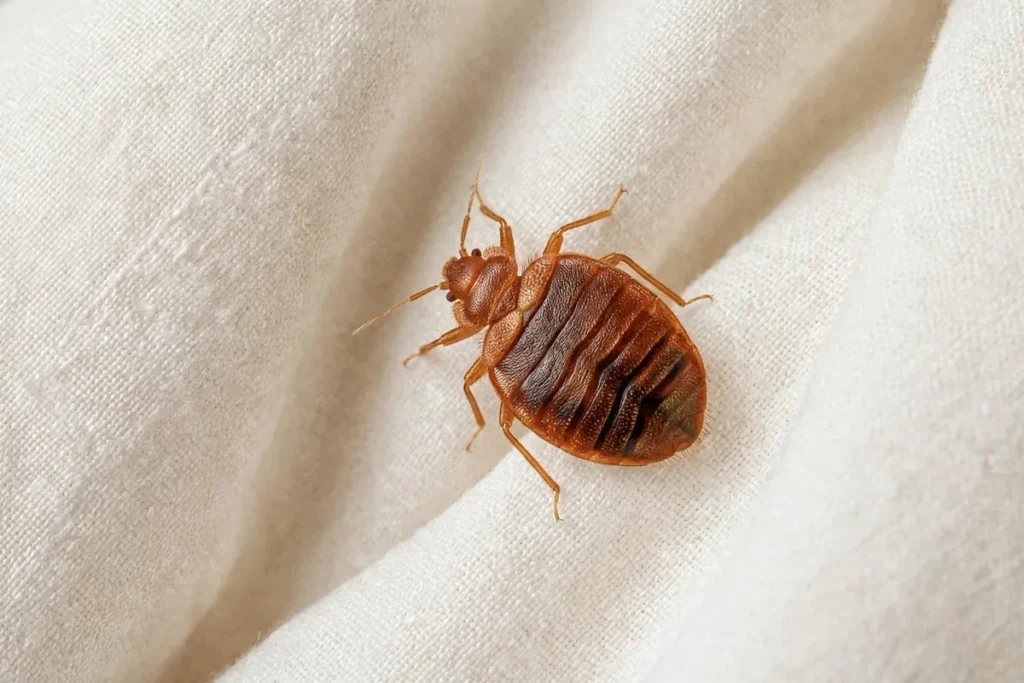
The tropical bed bug, Cimex hemipterus, is its close cousin. As the name suggests, it prefers warmer climates and has historically been associated with tropical and subtropical regions. Biologically, the two are near-twins: flat, reddish-brown, apple-seed-sized insects that hide by day and emerge at night to feed on human blood, passing through the same life stages — egg, five nymph stages, adult — and needing blood meals to develop and reproduce.
For decades, the working assumption in the US pest world was simple: bed bugs here meant lectularius, full stop. The tropical species was treated as a curiosity of warmer latitudes, occasionally intercepted but not established. That assumption cracked in 2015.
The 2015 Florida Discovery
In 2015, University of Florida IFAS entomologist Brittany Campbell confirmed tropical bed bugs in a home in Brevard County — specifically Merritt Island, Florida. It was the first confirmed Florida finding of Cimex hemipterus in 60 years, and the finding was published in the journal Florida Entomologist. Anecdotal reports had also placed tropical bed bugs in Hawaii, but the Brevard County case was the documented, specimen-confirmed record that forced the industry to update its assumptions.
Why did one house in Florida matter so much? Because it suggested the tropical species wasn’t just passing through — it was living and feeding in a US home. Campbell’s work highlighted a practical problem: since the two species look identical without magnification, tropical bed bugs could have been present in other locations all along, misidentified as the common species by homeowners and technicians alike.
The finding also arrived at an awkward moment. The US was already in the middle of a bed bug resurgence driven by insecticide resistance in the common species. Adding a second species — with its own resistance profile and a potentially faster development rate — complicated an already difficult fight. Researchers at UC Riverside later warned, in work published in the Annual Review of Entomology, about the spread of insecticide-resistant bed bugs across the US, underscoring that resistance is a moving target the industry is still chasing.
How to Tell Them Apart (Hint: You Probably Can’t)
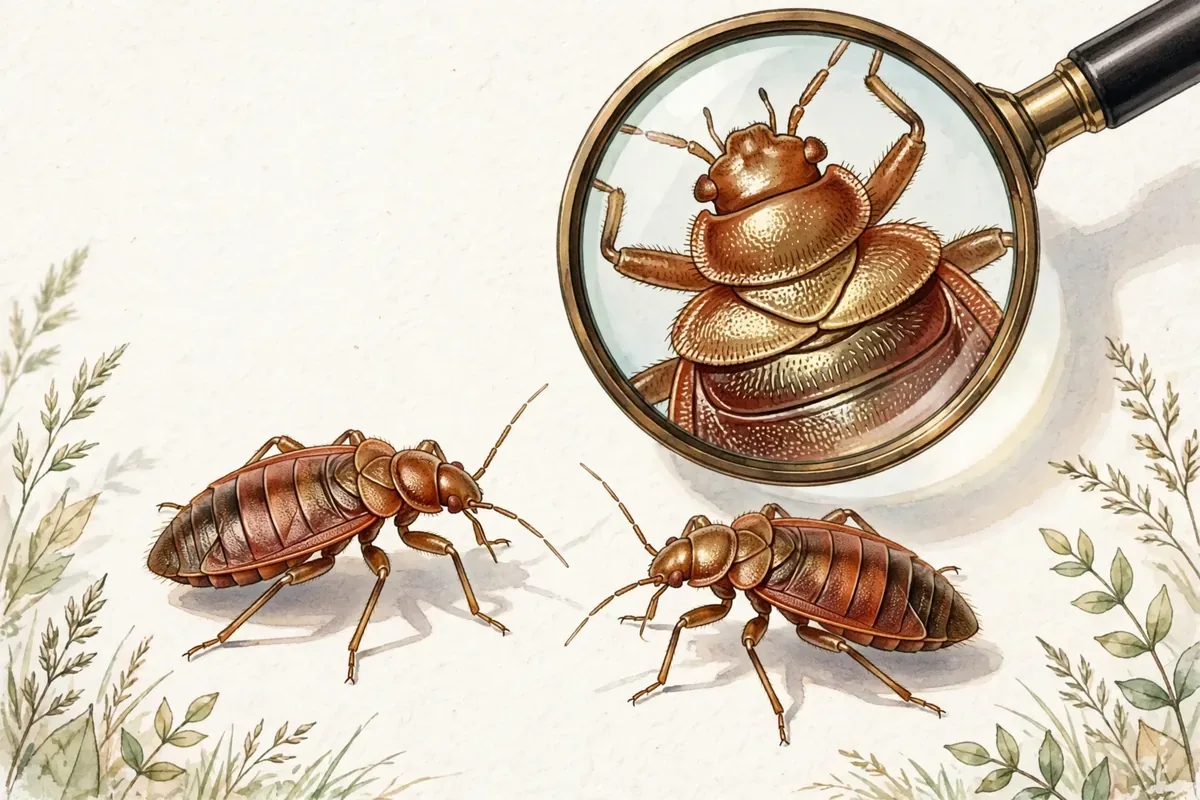
Here is the part most articles gloss over: you cannot reliably tell these two species apart with the naked eye. They are the same size, the same shape, the same color, with the same behavior. Anyone who tells you they identified a tropical bed bug by glancing at it is guessing.
The difference is visible only under magnification, and it comes down to the pronotum — the neck-like segment just behind the head. In the common bed bug, the sides of the pronotum curve inward to form a U-shape. In the tropical bed bug, that U-shape is absent. It’s a subtle structural detail, and it takes a trained eye with proper magnification to assess confidently.
What this means for you: don’t try to identify the species yourself. If you’ve found bed bugs, the species name changes almost nothing about your next steps. What matters is confirming that you actually have bed bugs — as opposed to fleas, carpet beetles, or bat bugs — and then getting professional help. Our what-bit-me page walks through how to investigate signs of an infestation.
If a pest professional wants to determine the species, they can collect specimens and have them examined under a microscope or sent to a university extension entomologist. Species-level ID is most useful for researchers tracking distribution and resistance patterns — not for deciding how to treat your bedroom, where the approach is the same either way.
Behavior, Bites, and Your Health
Biologically and behaviorally, the two species are near-twins. Both are nocturnal feeders that hide in mattress seams, box springs, headboards, nightstands, and furniture cracks by day, emerging at night to feed on sleeping people. Both are attracted by body heat and carbon dioxide, feed for several minutes, then retreat to digest and lay eggs. A single female can lay hundreds of eggs in her lifetime, which is why small problems become big ones fast.
Bite reactions are similar for both species — and highly individual. Some people show no reaction at all. Others develop itchy red welts, sometimes in lines or clusters; sensitive individuals can blister. The reaction depends far more on your immune system than on which Cimex species did the biting, so there’s no distinctive “tropical bed bug bite” look. If you’re trying to sort out what bit you, the signs of an infestation are a more useful starting point than species ID.
Severe or prolonged infestations take a toll beyond the skin. Research and clinical reports have linked heavy infestations to anxiety, sleeplessness, and significant psychological distress — people describe dreading bedtime and feeling unclean in their own homes. These effects are real and deserve to be taken seriously; they’re a legitimate reason to seek help quickly rather than trying to tough it out.
One thing to state plainly: bed bugs are not proven disease vectors. Despite decades of study, neither species has been shown to transmit infectious disease to humans under natural conditions. That sets them apart from mosquitoes and ticks. Bed bugs are a miserable, stubborn, psychologically taxing pest — but they are not giving you a disease. Keep the fear where it belongs: on the infestation, not on phantom illnesses.
If you’re wondering how long the marks last, our guide on how long insect bites last covers typical timelines — and when a lingering mark deserves a second look.
Insecticide Resistance: Why Professionals Matter

Here’s where the tropical bed bug genuinely differs in a way that affects you: resistance. Tropical bed bugs have shown resistance to common insecticides, including the pyrethroid class behind many over-the-counter products. The common bed bug is already famously resistant in many US populations — a major reason the national resurgence has been so hard to reverse — and the tropical species brings its own resistance profile.
Research also suggests the tropical species may develop faster than the common bed bug in warm conditions, meaning populations could build more quickly in heated homes. Combined with resistance, that’s a recipe for infestations that shrug off DIY treatments.
This is why entomologists, including Campbell, advise professional pest control for bed bugs — tropical or otherwise. Licensed professionals have access to tools consumers don’t: targeted heat treatments that kill all life stages, non-repellent insecticides from classes still effective against resistant populations, and the training to find hidden harborages. Just as importantly, they know what not to do.
What not to do: don’t set off a total-release fogger (“bug bomb”). Foggers rarely reach the cracks and seams where bed bugs hide, and the repellent ingredients can scatter the bugs deeper into walls and neighboring rooms. Don’t move an infested mattress to another room or sleep on the couch — the bugs will follow you. Don’t put unwrapped infested furniture on the curb; it spreads the problem to neighbors. And don’t assume one treatment finishes the job; effective bed bug work almost always requires follow-up visits.
Prevention is identical for both species: inspect hotel rooms before settling in, keep luggage off beds and floors, wash and heat-dry travel clothing promptly, and be cautious with secondhand furniture — our bed-bug bites in hotels guide walks through that inspection routine step by step.
Will Tropical Bed Bugs Spread to Colder States?
The tropical bed bug prefers warmer climates — that’s the historical pattern. But bed bugs don’t live outdoors; they live in climate-controlled buildings, where it’s always summer. Your heated apartment in Minneapolis is as tropical as a house in Miami from a bed bug’s perspective. Temperature alone may not stop the tropical species from establishing wherever humans carry it.
Spread happens the way it always has: in luggage, on clothing, in used furniture, through shared walls in multi-unit buildings. The question isn’t really whether the climate allows it — indoors, it does — but whether the species gets transported there and whether anyone notices, given that it looks exactly like the bug everyone already expects.
When to See a Doctor for a Bug Bite
Bed bug bites themselves rarely need medical care, but see a healthcare provider if you notice:
- Signs of infection: increasing redness, warmth, swelling, or pain around bites; pus or drainage; red streaks spreading from a bite; fever. Scratching bites open is the usual route to infection — see our guide on warm, painful, draining bites for when that needs a clinician.
- Severe or blistering reactions: large blisters, intense swelling, or hives spreading well beyond the bite sites.
- Signs of a severe allergic reaction — call 911: trouble breathing, swelling of the lips or tongue, dizziness, or fainting. True anaphylaxis to bed bug bites is rare, but any of these symptoms is an emergency regardless of cause.
- Bites that don’t follow the usual timeline: most bed bug bite reactions fade within a week or two; marks that keep worsening deserve evaluation.
- Sleep loss, anxiety, or distress affecting daily life — a clinician can help with both the skin and the psychological toll.
Frequently Asked Questions
Are tropical bed bug bites worse than common bed bug bites?
No evidence suggests the bites differ. Reactions depend on the individual, not the species — some people don’t react at all, others develop itchy welts or blisters. There’s no distinctive “tropical bed bug bite” appearance. Severe reactions reflect your sensitivity, and they’re worth discussing with a clinician.
Do bed bugs spread disease?
No. Bed bugs are not proven disease vectors — neither species has been shown to transmit infectious disease to humans. They can cause itchy reactions, secondary skin infections from scratching, and real psychological distress, but not vector-borne illness.
How do I know which species is in my home?
You almost certainly can’t tell on your own — the species look identical without magnification. The distinguishing feature is the shape of the pronotum (the segment behind the head), visible only under a microscope. A pest professional or university extension entomologist can confirm the species if it matters for research or resistance tracking. For treatment, the approach is the same either way.
Can tropical bed bugs survive in colder states?
Probably yes, because they live indoors. Bed bugs inhabit heated, climate-controlled buildings where temperatures stay warm year-round, so outdoor winter cold is largely irrelevant. They spread through luggage, clothing, used furniture, and shared building walls — the same as common bed bugs.
What’s the first thing to do if I suspect bed bugs?
Confirm before you panic: look for live bugs in mattress seams, box springs, and headboards, plus rust-colored fecal spots and shed skins. Don’t use foggers and don’t move sleeping locations. Call a licensed pest management professional, and follow their preparation instructions exactly. Early professional intervention is consistently cheaper and more effective than months of DIY attempts.
Medically reviewed by Dr. Sarah Jones, MD.
This article is for informational purposes only and isn’t medical advice. If you’re worried about a bite or sting, talk to a healthcare professional.