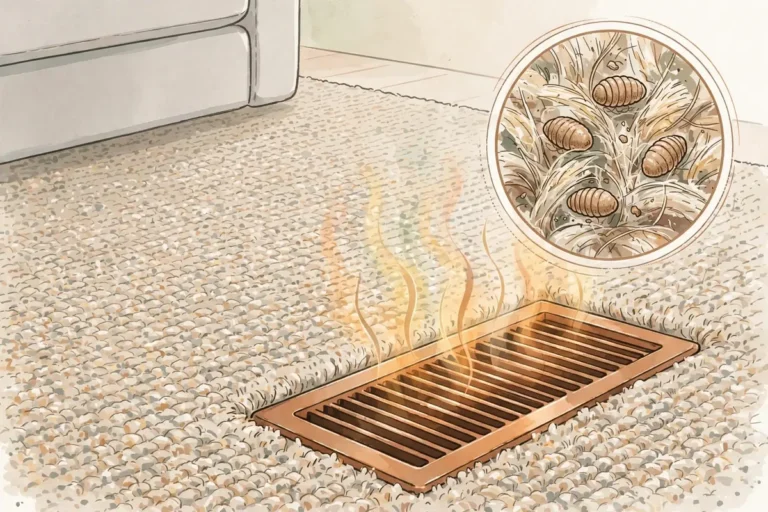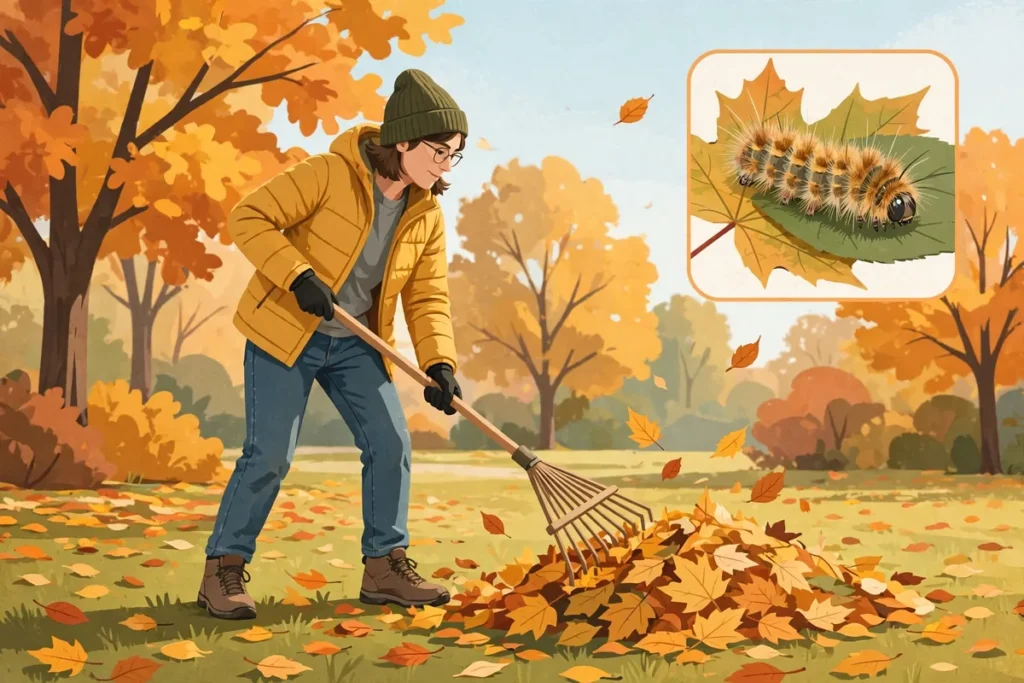
Every October, leaf-rakers across the Southeast and Mid-Atlantic meet a special pain: reaching bare-handed into a pile, feeling a sudden burning sting, and finding a small, innocent-looking caterpillar — or nothing at all, just reddening skin. A stinging caterpillar rash from raking leaves is one of fall’s classic yard injuries, and forestry officials in caterpillar-heavy regions explicitly warn residents to rake carefully in high-caterpillar years. The caterpillars are at their largest in autumn, leaf litter is where many of them feed, pupate, or shelter, and your ungloved hands are going directly into their habitat.
The reassuring part: with the right first aid, most stinging caterpillar encounters resolve at home within hours to a day. The important part is knowing which caterpillars sting, how to get the venomous spines out of your skin, and which symptoms mean the situation has escalated beyond home care. This guide covers the species behind the stinging caterpillar rash raking leaves problem, the tape-and-wash first aid that poison control centers recommend, and how to make leaf season safe for kids and pets.
Why Leaf Piles Are Caterpillar Country in Fall
Stinging caterpillars are the larvae of various moths, and autumn is their season. By October, the year’s caterpillars have reached full size — some over an inch long — after a summer of feeding, and many species are at their most numerous right when leaf raking peaks. Several behaviors put them directly in the path of your rake.
First, many stinging species feed on the very trees dropping the leaves you are raking: oaks, elms, maples, and hickories. Caterpillars dislodged by wind, or descending to pupate, end up in the leaf litter beneath their host trees. Second, some species spin their cocoons in leaf litter or attach them to fallen debris, and the hairs of those cocoons can remain irritating long after the moth has emerged. Forestry guidance in New England has specifically flagged rash-causing cocoons in leaf litter as a raking hazard. Third, leaf piles are simply where things accumulate: a caterpillar that fell from an oak branch on Tuesday is still in the pile on Saturday when small hands go digging in.
Stinging caterpillars do not bite — they are covered in hollow, barbed spines connected to venom glands. When skin brushes against them, spines snap off, lodge in the skin, and release venom. More contact means more venom, which is why grabbing a leaf pile bare-handed is the worst-case exposure, and why treatment starts with removing spines rather than rubbing.
Meet the Usual Suspects
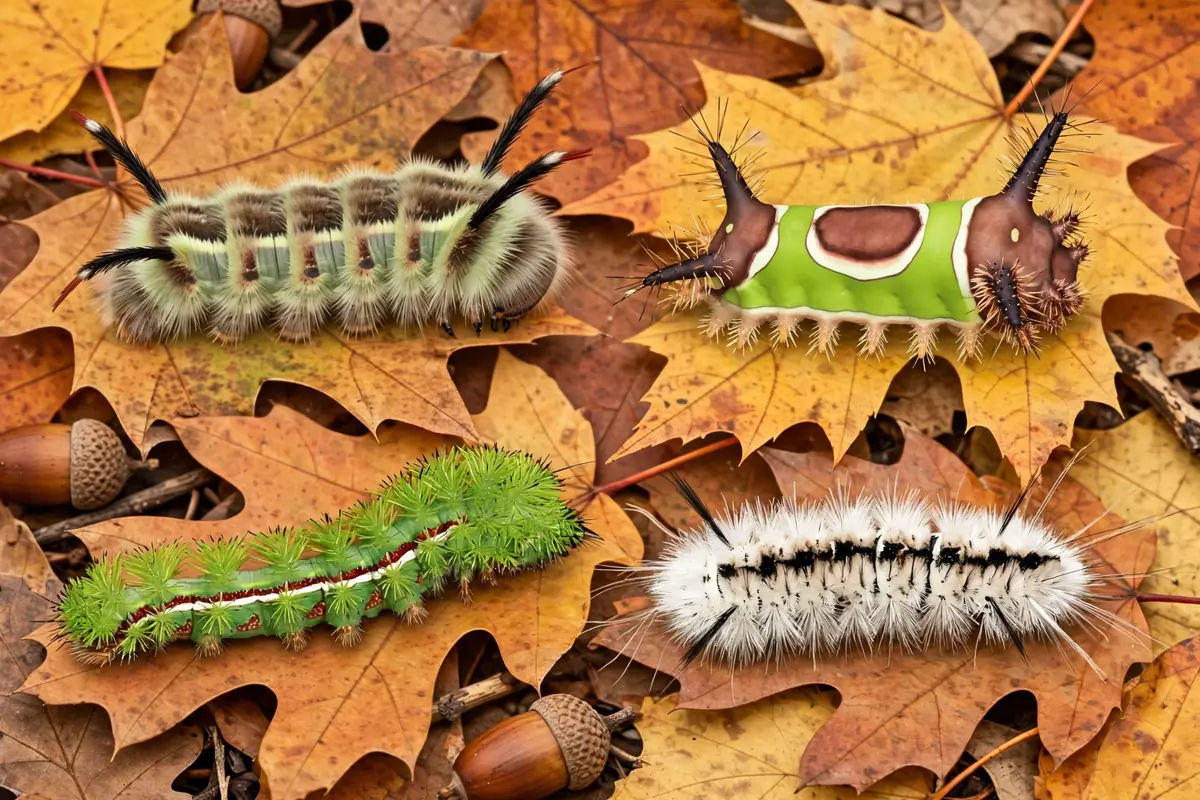
You do not need to become an entomologist, but recognizing the main offenders helps you teach kids what “do not touch” looks like. Never handle a caterpillar to identify it — observe from a distance, and if you are unsure, assume it stings.
The puss caterpillar (southern flannel moth larva). The most venomous caterpillar in the US and the one behind the worst raking-season stories. About an inch long, teardrop-shaped, covered in soft-looking tan to grayish fur hiding venom-filled spines. Found from New Jersey to Florida and west to Texas, usually near oaks and elms. Its sting is famously excruciating, a burning that can radiate through the limb, and it most often sends people to urgent care.
The saddleback caterpillar. Unmistakable: bright green with a brown oval “saddle” marking on its back, fringed with stinging spines. Common in the eastern US on a wide range of trees and shrubs. Its sting is intensely painful and can cause nausea and headache, though typically less severe than the puss caterpillar’s.
The io moth caterpillar. Pale green with red-and-white stripes along its sides and clusters of black-tipped spines. Widespread in the eastern US. Its sting produces immediate burning pain and localized swelling.
The hickory tussock moth caterpillar. Black and white with distinctive black tufts, common in the Northeast and Midwest in fall. Its hairs are more irritating than truly venomous for most people, but they cause a bothersome rash, especially in children, and the hairs can become airborne. If this is your region’s main offender, there is a dedicated guide to hickory tussock caterpillar rash with species-specific detail.
A note on range: stinging caterpillars are most diverse and abundant in the South, but tussock and dagger moth caterpillars reach well into the northern states. Wherever you rake under oaks in October, gloves are cheap insurance.
What a Stinging Caterpillar Rash Feels Like
The signature is immediacy. Unlike a mosquito bite that itches minutes later, a stinging caterpillar announces itself the instant spines enter skin: a sharp burning or stinging pain, often with visible redness developing within minutes. Depending on the species and the number of spines, the aftermath can include an itchy red rash, small bumps or pustules, localized swelling, and in sensitive individuals, numbness or aching that radiates beyond the contact site.
With the puss caterpillar, the reaction can be dramatically worse: severe radiating pain, swollen lymph nodes, headache, nausea, and in rare cases, difficulty breathing. Most encounters, though, follow a milder arc — intense for the first hour, then settling into an itchy rash that fades over a day or two.
Two things complicate the picture. First, you may never see the caterpillar: spines break off into clothing or gloves and cause a delayed rash when you redress. Second, people vary enormously — one person gets a red mark that fades by dinner, another develops welts from the same species. No rash appearance can tell you with certainty which caterpillar was responsible. Treat the symptoms and the exposure, not your guess at the ID.
First Aid: Tape, Wash, Cold

Poison control centers are consistent on the first-aid sequence for stinging caterpillar exposure, and the order matters. Do this as soon as possible after contact:
Step 1: Remove the spines with tape. Press strips of adhesive tape — cellophane tape, packing tape, or a lint roller — firmly over the affected area and peel them away, repeating with fresh strips several times. This lifts the barbed spines out of the skin. Do not rub the area, scratch it, or try to pull spines out with your fingers or tweezers; rubbing spreads the spines and fingers can squeeze more venom from them. Poison control centers and public-health agencies (including the CDC’s guidance on caterpillar-associated rashes) recommend tape removal followed by gentle washing.
Step 2: Wash gently with soap and water. Once the visible spines are out, wash the area to remove residual venom and irritants. Be gentle, the skin is already inflamed.
Step 3: Cold and soothing. Apply a cold compress or ice pack wrapped in cloth to reduce pain and swelling. Poison control guidance also supports a paste of baking soda and water, or an over-the-counter hydrocortisone or antihistamine cream for itching, for people who are not allergic to those products. (No doses are given here — follow the product label.)
Step 4: Watch and wait. Most stings improve markedly within a few hours. An oral antihistamine may help with itching for those who tolerate them, per product labeling.
What not to do: do not apply heat, do not scrub with alcohol, do not cover the area with airtight bandages, and do not “tough it out” if pain is escalating rather than fading. Escalating pain, spreading redness, or any systemic symptom — nausea, headache that worsens, dizziness, difficulty breathing, or swelling beyond the contact site — means it is time for medical care, not more home treatment. Eye exposure (from rubbing eyes with contaminated hands or from airborne hairs) also warrants prompt medical attention. For general cold-therapy technique, cold compress basics apply here as they do to other bites and stings.
Protecting Kids and Pets During Leaf Season
Children are the classic victims, for predictable reasons: they are drawn to fuzzy caterpillars, they play bare-handed in leaf piles, and they rub their eyes. The prevention conversation is simple and worth having before the first big raking weekend: fuzzy does not mean friendly, never pick up a caterpillar, and gloves stay on during leaf play. Show them photos of the local offenders (from a safe screen, not a jar) so the “do not touch” rule has a face.
For leaf-pile play specifically, the beloved autumn ritual of jumping into the pile, a few modifications keep the fun and cut the risk. Rake the pile yourself first, wearing gloves, and give it a visual scan. Keep the pile away from the drip line of oak trees where caterpillars are most likely to have fallen. And establish the rule that anything found in the pile gets shown to an adult, not picked up.
Pets face a parallel risk. Dogs nose through leaf litter and can get spines on their muzzle or paws; cats prowl under the same trees. A pet that is pawing at its face, drooling, or yelping after time in the leaves may have had a caterpillar encounter — check paws and muzzle visually (do not probe with your fingers), and call your veterinarian if swelling, drooling, or distress continues. Keep pets out of fresh leaf piles until you have scanned them.
Gloves deserve a final emphasis for the adults doing the actual raking. Sturdy garden gloves, not thin latex — are the single most effective prevention. Long sleeves, and a habit of not touching your face until gloves are off and hands are washed, close the remaining gaps. The full kit for a prepared yard worker overlaps heavily with a general bite and sting first-aid checklist, worth reviewing before the season.
When to See a Doctor for a Bug Bite

Most stinging caterpillar encounters resolve with home first aid, but seek medical care for:
- Difficulty breathing, throat tightness, dizziness, or widespread hives — possible anaphylaxis, which the puss caterpillar’s sting has been known to trigger in rare cases. Call 911.
- Eye exposure — spines or hairs in the eyes require prompt medical evaluation; do not rub.
- Escalating pain or spreading redness — pain that intensifies hours after the sting, red streaks, increasing swelling, or pus suggest a complication beyond the venom itself.
- Systemic symptoms — persistent nausea, vomiting, headache, or swollen glands that do not ease.
- Stings on young children, a lower threshold for calling the pediatrician is reasonable, especially with puss caterpillar exposure or any breathing difficulty.
Bring what you know: the time of exposure, what the caterpillar looked like (a photo taken from a safe distance is ideal), and what first aid you already tried.
Frequently Asked Questions
Can a dead caterpillar or an empty cocoon still sting?
Yes, and this is the raking-specific trap. The venomous spines and irritating hairs remain potent after the caterpillar is gone, and cocoon hairs in leaf litter are a documented cause of rashes. Treat leaf litter, cocoons, and dead caterpillars with the same no-touch rule as live ones.
How long does a stinging caterpillar rash last?
For most species and most people, the intense pain fades within a few hours and the residual rash resolves in one to three days. Puss caterpillar stings can ache longer. A rash that is worsening after 48 hours, rather than improving, should be seen by a doctor.
Can caterpillar hairs get into the air and cause problems?
Some species’ hairs do become airborne, particularly tussock moth caterpillars, and can irritate skin, eyes, and airways, which is another reason not to blow leaf piles around with force or let children bury their faces in them. If you develop eye irritation or breathing difficulty after yard work in a high-caterpillar area, seek medical care.
Does the tape method really work?
It is the method poison control centers recommend first, because the spines are barbed and designed to stay in skin — pulling with fingers or tweezers often breaks them or squeezes more venom out. Fresh tape strips, pressed firmly and peeled away repeatedly, lift the spines cleanly. It feels almost too simple, but it is the evidence-backed step.
Medically reviewed by Dr. Sarah Jones, MD.
This article is for informational purposes only and isn’t medical advice. If you’re worried about a bite or sting, talk to a healthcare professional.