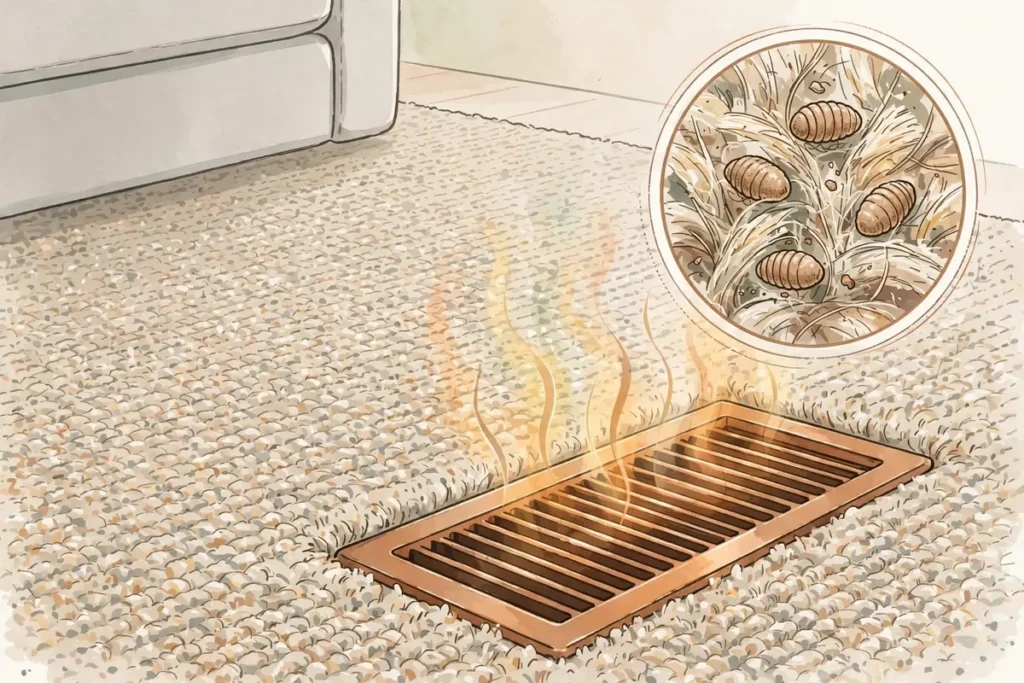
Every October, the same mystery lands in veterinary waiting rooms and pest-control inboxes: a home with no new pets, no recent travel, and suddenly — fleas. Ankles itch at the couch. The dog scratches at 2 a.m. Tiny dark specks appear on light-colored socks. The direct answer is the fall flea outbreak indoors heating pattern that veterinarians see every year: flea pupae that have been lying dormant in your carpets for weeks or months hatch all at once when the furnace kicks on and the house fills with warmth, vibration, and carbon dioxide, the signals that tell a waiting pupa a host is near.
You did not suddenly “get” fleas in October — they were already there, sleeping. Panic-spraying will not fix a pupal bloom; a calm routine of vacuuming, laundering, and year-round pet prevention breaks the cycle in a few weeks. This guide explains the biology, the health angle, and the plan that works.
What Really Happens: Pupae, Heat, and the Sudden Swarm
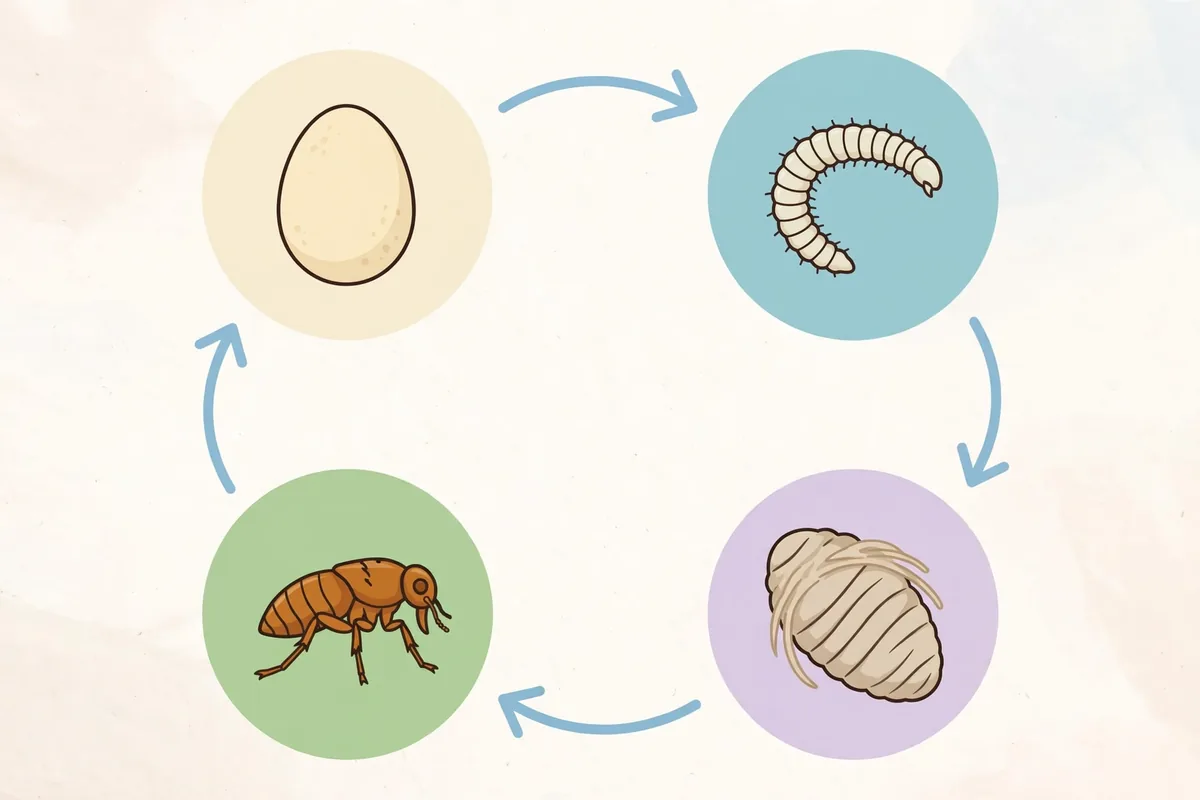
The flea life cycle has four stages: egg, larva, pupa, and adult. Most people only ever notice the adult, the jumping, biting stage. But the stage that rules your October is the pupa, and it is built like a bunker. After feeding on organic debris in your carpet, the larva spins a sticky silk cocoon coated with dust and carpet fibers, making it nearly invisible and remarkably tough. Inside that cocoon, the developing flea can wait.
This waiting can stretch for weeks or even months when conditions are cool and quiet, a spare bedroom, a basement carpet, the rug under a rarely moved couch. The pupa is not dead and not developing; it is simply paused, sometimes called a “pharate adult” waiting for its cue. The cues that end the pause are exactly what a heated home delivers in October: warmth through floorboards, the vibration of footsteps and the furnace, and the carbon dioxide of people and pets returning indoors. To a dormant pupa, that reads as “a host has arrived.”
So the adults emerge in a synchronized wave — sometimes hundreds within days, which is why the infestation feels overnight. The pupal cocoon also shrugs off most insecticides, which is why a single spray treatment disappoints every fall. The strategy: let vibration and warmth trigger the hatch (daily life does this), then remove emerging adults faster than they can reproduce.
Why October Catches Pet Owners Off Guard
Three quiet mistakes set up the October surprise, and almost every affected household has made at least one of them.
Mistake one: stopping pet prevention in September. Many owners treat flea prevention as a summer product. By early fall the last dose wears off, and the dog or cat becomes an unprotected blood source at exactly the moment dormant pupae are waking. Veterinary guidance is consistent on this point: in most of the United States, flea season does not end when the pool closes. Year-round prevention is the standard recommendation.
Mistake two: assuming fleas die in the cold. Outdoors, a hard freeze does suppress flea activity. Indoors, your carpet never freezes. The 68-to-72-degree living room you maintain all winter is a flea nursery with the lights on. Pupae that entered dormancy in August can hatch in November into a perfectly warm environment.
Mistake three: the “no pets” blind spot. Homes without pets can still host a pupal reservoir — from a previous tenant’s cat, a visiting dog, or wildlife that denned under the porch. When the heat comes on, those pupae hatch and the adults bite the humans instead. The ankle-focused pattern plus October timing points to fleas; flea bites versus mosquito bites shows how flea bites typically present.
The common thread: nothing about October creates fleas from nothing. It only wakes the ones already waiting.
Flea Bites on People: What the Health Angle Is
Flea bites on humans are, in the large majority of cases, a nuisance rather than a medical crisis — but “nuisance” undersells what a bad bloom feels like. The classic presentation is clusters of small, red, intensely itchy bumps concentrated around the ankles and lower legs, where fleas emerging from carpet meet the first available skin. Some people develop larger hive-like welts; a smaller number barely react at all, which is why one family member can be covered in bites while another insists nothing is happening.
The honest health picture: the itch itself is the main issue, because scratching bites open invites secondary skin infection — children are the most likely to scratch. Some people and pets are hypersensitive to flea saliva and react strongly to a handful of bites. Fleas can also pass tapeworm larvae to pets (and occasionally small children who ingest a flea), and heavy, prolonged infestations can cause anemia in very young or small animals. Human disease from fleas in the US is uncommon.
What flea bites do demand is a medical eye when the pattern breaks: bites that become increasingly painful, develop pus, show red streaks, or come with fever are describing a skin infection, not a flea problem. Treat the infection and keep working the flea plan in parallel.
The Calm, Effective Response Plan
Forget the fogger. Total-release foggers are the most common October mistake: they coat exposed surfaces with pesticide while missing the protected harborages under furniture and inside carpet backing, and they can scatter fleas into wall voids. The effective plan is mechanical, sustained, and unglamorous.
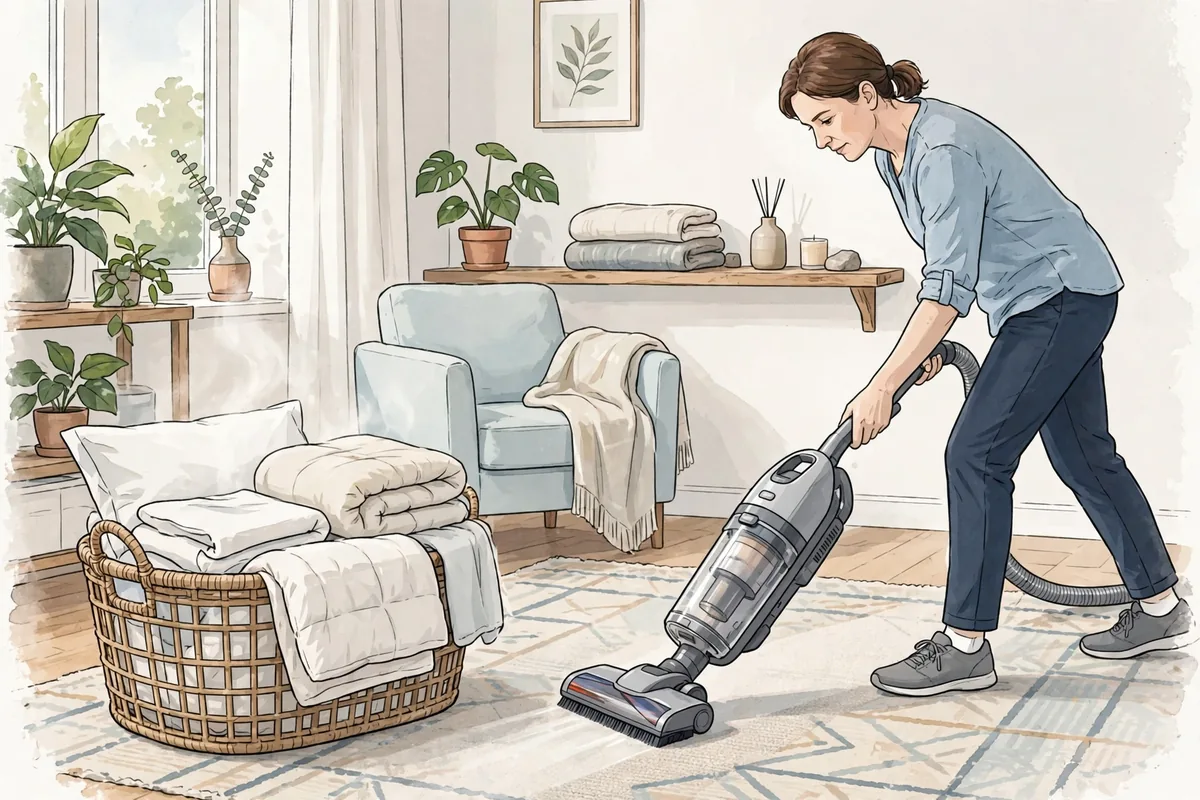
Vacuum like it is your job. Vacuum every carpeted room slowly and thoroughly, including under furniture, along baseboards, and under couch cushions. The vibration stimulates pupae to hatch — exactly what you want, and the suction removes eggs, larvae, and emerging adults. Empty the bag or canister into an outdoor bin immediately.
Launder the hot spots. Wash pet bedding, throw blankets, and washable rugs in the hottest water the fabric allows, then dry on high heat. Repeat weekly during the bloom. For items that cannot take hot water, the high-heat dryer cycle alone does heavy lifting against eggs and larvae.
Repeat for three to four weeks. Pupae hatch on their own schedule — one heroic weekend is never enough. Two to three thorough vacuums per week for a month breaks the cycle: each wave of newly hatched adults is removed before it can reproduce. Most blooms collapse within three weeks.
Consider professional help for heavy infestations. If bites continue at the same intensity after a month, or the home is fully carpeted, a pest management professional can apply targeted treatments, including insect growth regulators that prevent larvae from maturing — in the places foggers never reach. That is a targeted escalation, not a defeat.
Pet Protection: Vet Guidance and Year-Round Prevention
Your pet is both the victim and the vehicle in a fall flea bloom, and the veterinary guidance is straightforward: keep every dog and cat in the household on a year-round flea preventive, and restart immediately if you lapsed. Your veterinarian may discuss monthly topicals, oral chewables, or collars, the right choice depends on your pet’s species, age, weight, health, and lifestyle. This is a vet conversation, not a pet-store aisle decision, the wrong product for the wrong animal can be dangerous.
That danger deserves its own emphasis, because October’s panic-buying season is when it happens most. Never use a dog flea product on a cat. Many dog products contain permethrin, a compound that dogs tolerate but that can be fatal to cats — even from casual contact with a recently treated dog, let alone direct application. If your household has both species, tell your veterinarian explicitly, and keep treated dogs separated from cats until the product has fully dried, per the label. The same caution runs in reverse for dosing: never guess at doses, never split large-dog doses for a small dog, and never apply a product to a species it is not labeled for.
A fine flea comb run through your pet’s coat a few times a week catches adults and shows whether the population is falling. Direct your real effort at the environment, the carpet is where the next generation waits, not the pet. Kids play on the floor at flea height; the pediatric side of itching and sleep disruption is covered in flea bites on babies.
The Dog-Product-on-Cats Danger (Read This Twice)
This warning gets its own section because it kills cats every year. Permethrin-based flea products formulated for dogs — spot-ons, sprays, and shampoos — are the leading cause of feline pesticide poisoning reported to animal poison control centers. Cats lack a liver enzyme pathway that dogs and humans use to break permethrin down, so a dose a dog shrugs off can cause a cat to drool, tremble, twitch, seize, and in severe cases die.
Exposure routes are sneakier than direct application: a cat that rubs against or grooms a recently treated dog, or sleeps on the dog’s bedding. In October, the classic trap is the well-meaning owner who applies the dog’s leftover preventive to the cat “just this once.”
The rule is absolute: dog flea products stay on dogs. Cat products stay on cats. If an accident happens, the wrong product applied, or a cat showing tremors after contact with a treated dog — bathe the cat with mild dish soap and lukewarm water if you can do so safely, and call your veterinarian or an animal poison control center immediately. Do not wait to see if it gets better. With prompt veterinary care, most cats recover fully, but time matters.
When to See a Doctor for a Bug Bite

Flea bites rarely need a doctor, but these situations do:
- Infection signs: increasing pain, spreading redness or red streaks, warmth, swelling that worsens after several days, pus, or fever. These describe cellulitis from scratching, and they need medical treatment.
- Severe allergic reaction: difficulty breathing, swelling of the face or lips, or hives spreading well beyond the bite sites — call 911.
- Bites that will not heal: sores that linger beyond two to three weeks, or a rash that keeps spreading, should be evaluated in person.
- Infants and immunocompromised family members: a lower threshold for calling the pediatrician or doctor is reasonable when the immune system is vulnerable or the patient cannot describe symptoms.
- Sleep disruption and distress: weeks of itching that wreck sleep are a legitimate health issue. Mention it — doctors hear this more often than you think.
Frequently Asked Questions
Why do fleas appear in fall even though I treat my yard in summer?
Because the pupae were already indoors. Yard treatments target outdoor stages, but the pupal reservoir lives in your carpets, where summer’s eggs settled months ago. The furnace, not the yard — is what wakes them. Indoor vacuuming and on-animal prevention are the tools that matter in October.
How long does a fall flea bloom last?
With disciplined vacuuming two to three times a week plus laundering and restored pet prevention, most household blooms collapse within three to four weeks. Without intervention, the cycle sustains itself: each hatched female lays eggs that become the next wave, and the “bloom” becomes the new normal through winter.
Can fleas live on humans?
No, not as a sustained infestation. Fleas bite humans readily, especially ankles and lower legs, but they cannot complete their life cycle on human blood alone and do not establish breeding populations on people. If you are the only one being bitten in a pet-free home, the fleas are living in the environment and using you as an emergency host.
Are bug bombs effective against a fall flea outbreak?
They are one of the least effective options. Foggers deposit pesticide on exposed horizontal surfaces while the pupal reservoir sits protected under furniture, deep in carpet, and inside the cocoon, which insecticides barely penetrate. Worse, the propellant blast can drive fleas into wall voids. Sustained vacuuming outperforms foggers in nearly every comparison pest professionals make.
Medically reviewed by Dr. Sarah Jones, MD.
This article is for informational purposes only and isn’t medical advice. If you’re worried about a bite or sting, talk to a healthcare professional.