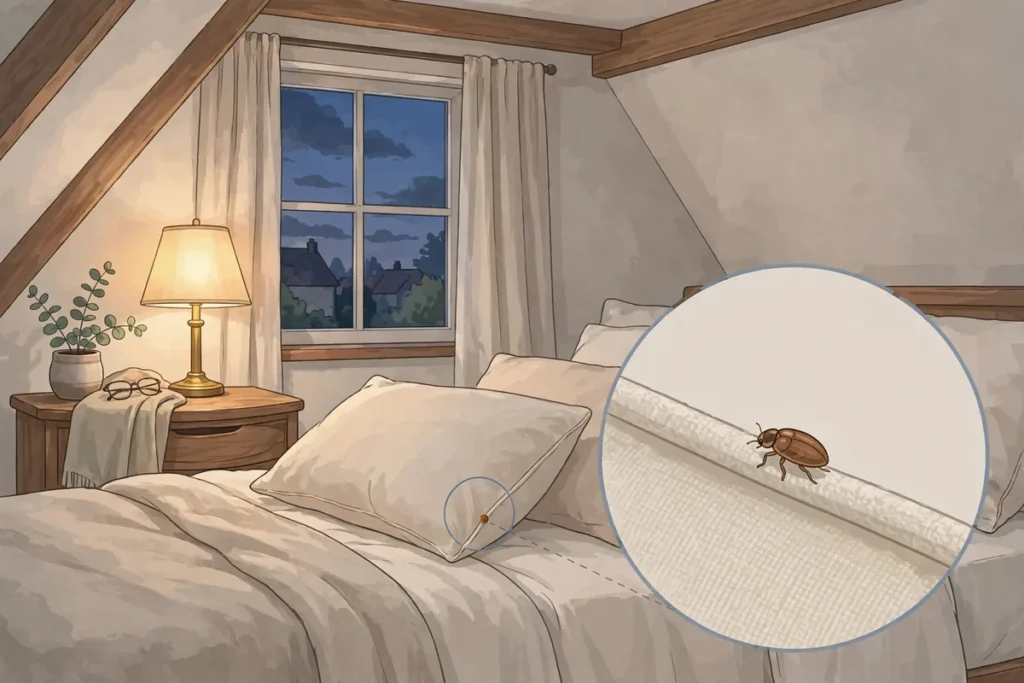
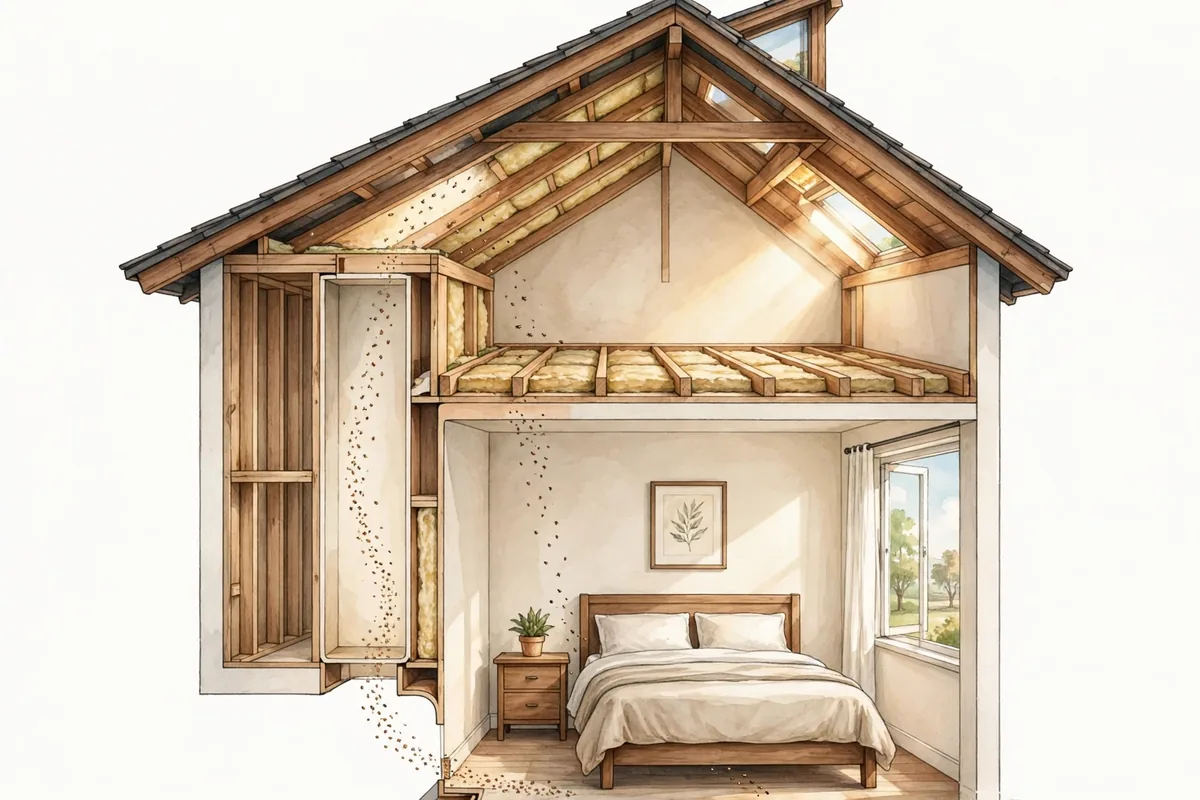
The bats are gone. The wildlife company sealed the entry points, the scratching in the walls stopped, and you finally slept well — for about two weeks. Then the itching started: small red bites on your arms and shoulders, worst in the upstairs bedrooms. If this sounds familiar, you are experiencing one of the most common and least understood aftermaths of bat removal. Bat bugs after bat exclusion in attic spaces are a well-documented phenomenon: with their bat hosts gone, the bat bugs that lived alongside the colony come down looking for a new blood meal, and sleeping humans are the nearest option.
This is not a sign that the exclusion failed. Bat bugs are close relatives of bed bugs that can survive for months without feeding. Once the bats leave, hungry bugs migrate from the attic into living spaces, most often the bedrooms directly below.
What Bat Bugs Are: Bed Bug Cousins From the Attic
Bat bugs belong to the same insect family as bed bugs, the Cimicidae, and to the untrained eye they are nearly identical: small, brown, oval, wingless insects about a quarter inch long as adults. In the eastern United States the most common species is the eastern bat bug (Cimex adjunctus); in the West it is Cimex pilosellus. Both feed primarily on bats.
They live where the bats live. Bat bug populations build up in attics, wall voids, and chimneys wherever bats roost for extended periods — sometimes for years without anyone noticing, because the bugs stay close to their hosts. A single established colony can support a large hidden population in the insulation and framing around the roost.
They are built to wait. Adult bat bugs can survive up to a year without a blood meal, and nymphs can last for months in cooler conditions. A starving population does not grow, but it does not die off quickly either — which is why the problem surfaces weeks after the bats leave rather than days. They are not known to transmit diseases to humans, but their bites itch, disrupt sleep, and scratching can lead to secondary skin infection.
Why Bites Start After the Bats Are Gone
Under normal conditions, bat bugs stay loyal to their primary hosts. Pest-management literature documents that bat bugs typically begin attacking humans when a bat colony has been excluded from a building and the bugs go hungry for an extended period. There are dozens of documented cases of bat bugs descending from attics to feed on sleeping people, most often in upstairs bedrooms close to the attic.
Exclusion creates the trigger. A proper exclusion uses one-way devices over entry points that let bats exit at night but not re-enter, left in place for one to two weeks before openings are sealed. Once the last bat is out, the bat bugs left behind begin to go hungry. Carbon dioxide and warmth from sleeping humans draw them down through wall voids, gaps around pipes and wiring, and attic hatches. The bedrooms closest to the attic are hit first and hardest.
Seasonal migration can do the same thing. Even without an exclusion, bats that leave a structure for the winter leave hungry bat bugs behind — one reason fall is a peak season for these complaints.
The Post-Exclusion Timeline: What to Expect Week by Week
Knowing the typical timeline helps you recognize what is happening and act before the problem becomes entrenched.
Weeks 1–2: quiet. Bat bugs in the attic still have residual energy reserves, and you may notice nothing at all. This quiet period is why many homeowners assume the job is fully done.
Weeks 3–6: bites begin. As hunger builds, bat bugs start migrating downward at night. Bites typically appear on exposed skin — arms, shoulders, neck, face — in upstairs bedrooms. Because bat bugs feed at night and hide by day, you will see the bites long before you see a bug. This is when most homeowners first call a pest professional, often convinced they have bed bugs.
Weeks 6–12: resolve or entrench. Without bat hosts, bat bugs cannot sustain reproduction — females need blood meals to lay eggs. In practice, a large initial population with year-long starvation tolerance can keep producing biters for many weeks. Waiting it out is a miserable strategy; active treatment shortens the ordeal dramatically.
The takeaway: bites starting two to six weeks after bat exclusion, concentrated upstairs, point strongly toward bat bugs. Tell your pest professional about the recent bat work — that history changes the treatment plan.
Where the Bites Show Up and What They Look Like
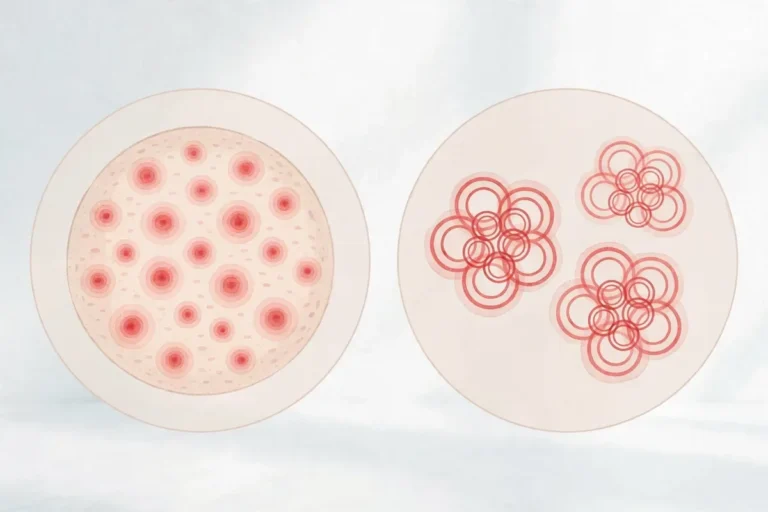
Bat bug bites look like bed bug bites: a painless nighttime bite that develops into an itchy red welt, sometimes in a line or cluster. You cannot identify the culprit from the bite alone — which is why capturing a specimen matters so much.
Location is the biggest clue. Bat bug bites cluster in upstairs bedrooms, especially rooms directly below or adjacent to the attic where the bats roosted. If bites are concentrated on the second floor while the ground floor is untouched, bat bugs should be high on the suspect list. Bed bug infestations, by contrast, center on wherever people sleep most and arrive via luggage, furniture, or neighboring units rather than descending from above.
Timing is the second clue. Bites that begin weeks after bats were excluded or migrated, in a home with a known bat history, fit the bat bug pattern. Our bite and sting clue checklist walks through documenting welts and other clues, but the history — bats in the attic, then quiet, then bites — is what separates this from an ordinary bed bug introduction.
What to do about the bites: avoid scratching, keep the skin clean, and watch for signs of secondary infection. Eliminating the bugs — not treating each bite — is what ends the problem.
Bat Bugs vs Bed Bugs: How Pros Tell Them Apart
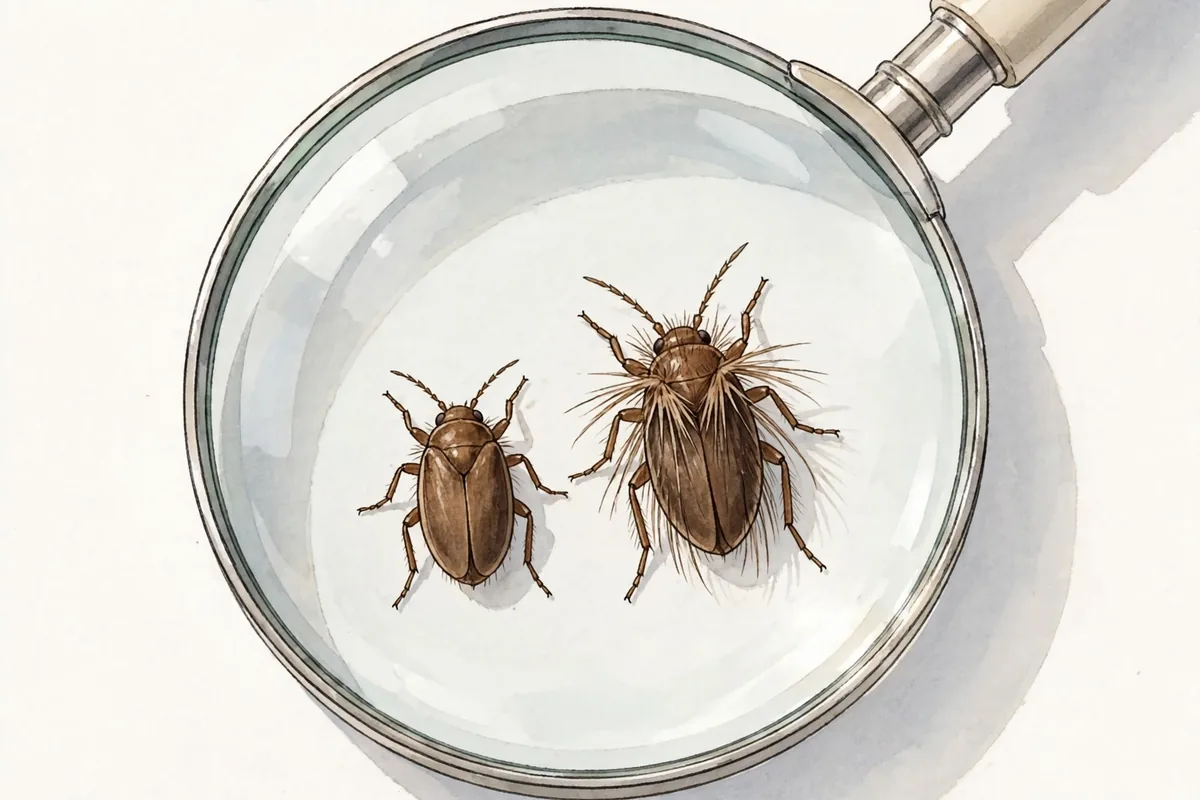
This distinction matters because it determines the treatment plan. Spraying the bedroom for bed bugs while the real reservoir sits untreated in the attic wastes money.
To the naked eye, they are twins. Both are small, brown, oval, and wingless. The definitive difference is microscopic: bat bugs have fringe hairs on the pronotum (the shield behind the head) at least as long as the width of the bug’s eye; in bed bugs those hairs are distinctly shorter. A pest professional or extension entomologist with a microscope can make the call from a single specimen.
Behavior and history separate them in practice. Bed bugs arrive with people and belongings — travel, used furniture, adjacent apartments — and cluster around sleeping areas on any floor. Bat bugs arrive with bats, live in the attic and wall voids near the roost, and descend only when the bats are gone. A pest professional or your state extension service can help work through other lookalike biting pests with a microscope.
Why not just treat for bed bugs and hope? Because the reservoir is different. A bed bug treatment focuses on bedrooms and furniture near sleeping areas. A bat bug treatment must include the attic void and the wall spaces connecting it to the bedrooms — areas a bedroom-only treatment never reaches. Misidentification is the most common reason these cases drag on.
Getting Rid of Them: Why Professionals Should Handle It
Bat bug elimination is a job for a licensed pest professional, ideally one who also understands bat exclusion work.
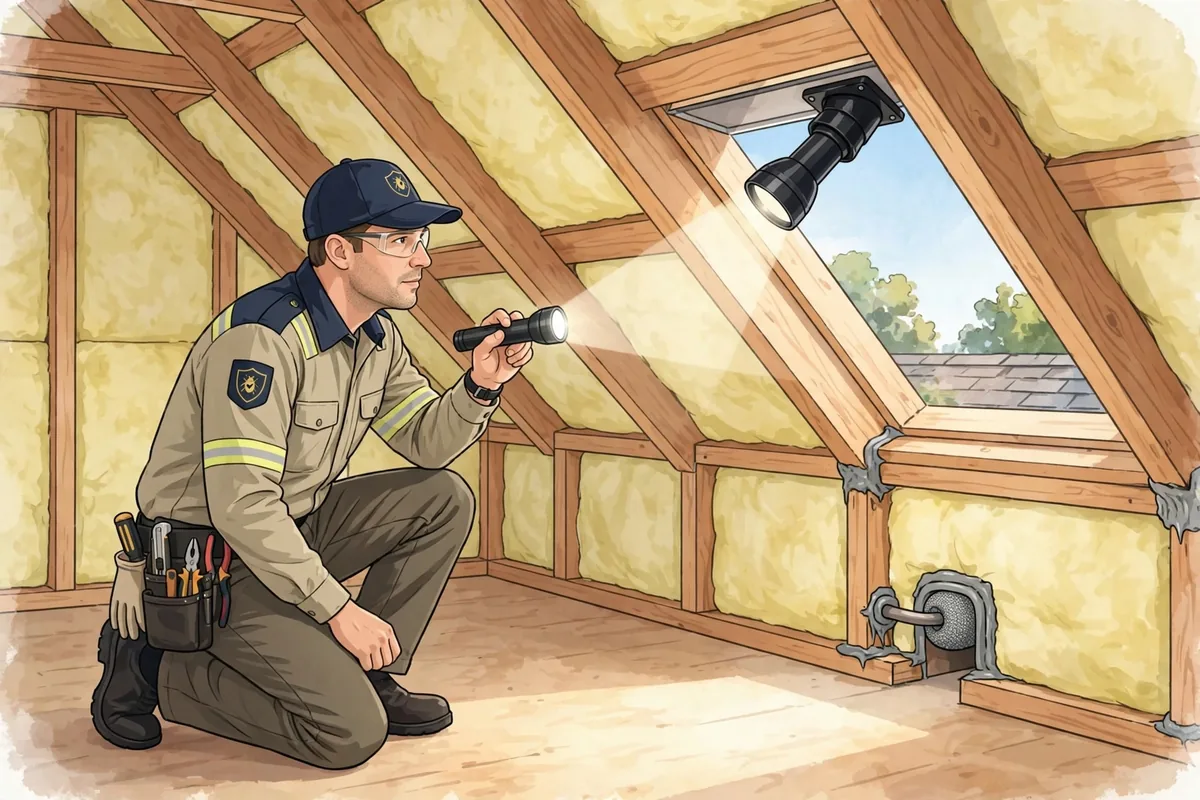
Treat the attic void and the bitten rooms together. Effective control requires treating all infested sites at the same time — the attic and wall voids where the population lives, plus the bedrooms where bites occur. Professionals combine vacuuming of accessible voids with targeted insecticide applications into cracks, crevices, and wall voids. The attic’s insulation, tight framing, and limited access are exactly why do-it-yourself sprays fail: they cannot reach the reservoir.
Confirm the bats are truly gone first. Treatment should only begin after the exclusion is complete and verified — devices left in place long enough, all entry points sealed, no bats remaining inside. Your wildlife operator and pest professional should coordinate timing.
Do not seal bats in. The only legal and humane approach is exclusion with one-way devices, and timing is regulated. Excluding during maternity season — roughly spring through mid-summer, when flightless pups are in the roost — can trap and kill young bats and is restricted or prohibited in many states; fall, after the young can fly, is the standard window. If someone proposes sealing entry points immediately with bats inside, find a different operator.
Prevent a repeat. Once the bugs are eliminated, keep the bats from returning: maintain the sealed entry points, cap the chimney, screen attic and gable vents with quarter-inch mesh, and inspect the roofline annually. For transferable prevention basics, see our home and yard bite-prevention guide.
When to See a Doctor for a Bug Bite
Bat bug bites are a nuisance rather than a medical emergency, and bat bugs are not known to transmit diseases to people. Still, see a clinician if any of the following apply. Call 911 for signs of a severe allergic reaction — trouble breathing, swelling of the lips, face, or throat, dizziness, or widespread hives.
- Spreading redness, warmth, swelling, pus, or red streaks around bites, with or without fever — possible bug bite infection or cellulitis, which needs medical treatment.
- Bites that do not improve after two weeks or keep multiplying — get evaluated rather than waiting.
- Signs of a strong allergic reaction — large local swelling, intense itching that disrupts sleep for nights on end.
- Anyone in the home is immunocompromised, elderly, or very young and being bitten repeatedly — lower your threshold for calling.
Frequently Asked Questions
Are bat bugs the same as bed bugs?
No, but they are close relatives in the same insect family. Bat bugs (Cimex adjunctus in the eastern US, Cimex pilosellus in the West) feed primarily on bats; bed bugs (Cimex lectularius) feed on humans. They look nearly identical without a microscope — the difference is in the fringe hairs on the thorax.
How long after bat removal do bat bug bites start?
Typically two to six weeks. Adult bat bugs can survive up to a year without feeding, so the population does not die off when the bats leave. Hunger builds over weeks, then the bugs migrate down from the attic at night toward sleeping humans. Bites in upstairs bedrooms a few weeks after an exclusion are the classic pattern.
Can bat bugs live without bats?
Not indefinitely. Females need a blood meal to lay eggs and nymphs need one to molt, so a hostless population cannot sustain itself. But “not indefinitely” can still mean many months of biting, because adults tolerate starvation for up to a year. Professional treatment of the attic void shortens that timeline dramatically.
Will bat bugs go away on their own?
Eventually — but waiting is measured in months of continued bites. Active professional treatment of the attic and affected rooms is faster, more reliable, and far less miserable than waiting out a starvation-tolerant insect.
Is it legal to remove bats from my attic myself?
Bats are protected in many states, and exclusion timing is regulated — maternity-season exclusions that trap flightless pups are restricted or prohibited in much of the country. The safe route is a licensed wildlife professional who knows your state’s rules. And never handle bats with bare hands: any direct bat contact raises rabies concerns and should be reported to your local health department.
Medically reviewed by Dr. Sarah Jones, MD.
This article is for informational purposes only and isn’t medical advice. If you’re worried about a bite or sting, talk to a healthcare professional.