Direct answer: The main asian tiger mosquito bite vs honey bee sting treatment differences are immediate pain, stinger removal, and allergy risk. Asian tiger mosquito bites usually need itch relief and mosquito prevention. A honey-bee sting can cause sharp pain, may leave a barbed stinger in the skin, and requires rapid assessment for anaphylaxis.
An Asian tiger mosquito and a honey bee can both cause a red, swollen skin reaction, but the exposure is usually very different. A mosquito lands, feeds, and flies away. A worker honey bee may leave its stinger and attached venom apparatus behind after stinging. That makes checking for—and promptly removing—a visible stinger one of the most important practical differences.
Fastest practical clue
A sudden sharp or burning sting followed by a visible stinger strongly favors a honey bee. A later itchy bump after a brief outdoor feeding event, especially after seeing a black-and-white mosquito, favors Asian tiger mosquito exposure. Skin appearance alone is less reliable than the arthropod and the timing.
Asian tiger mosquito bite vs honey bee sting: quick comparison
| Clue | Asian tiger mosquito | Honey bee |
|---|---|---|
| Arthropod | Aedes albopictus, black-and-white mosquito | Apis mellifera, robust hairy bee that carries pollen |
| Typical sensation | Tiny prick or unnoticed feeding; itching often dominates later | Immediate sharp, burning, or painful sting is common |
| Stinger left behind | No | Often possible after a worker honey-bee sting |
| Usual skin reaction | Itchy red bump or wheal | Pain, redness, swelling; sometimes a large local reaction |
| Major emergency risk | Severe allergy is possible but uncommon; disease risk depends on local transmission | Venom allergy can trigger potentially life-threatening anaphylaxis |
| Immediate action | Basic bite care and prevent more mosquito bites | Move away, remove visible stinger promptly, wash, cool, monitor for allergy |
The table is a practical guide, not a diagnosis. Reactions vary greatly between people, and a person with a known insect-venom allergy may react very differently from someone who has only local swelling.
What an Asian tiger mosquito looks like
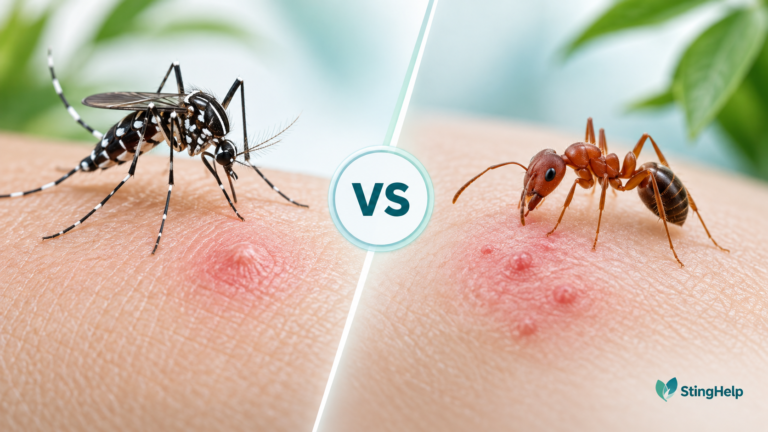
The Asian tiger mosquito, Aedes albopictus, is a small dark mosquito with conspicuous white bands on the legs and white markings on the body. It commonly uses small containers of standing water around homes and can be active in yards, gardens, and vegetation.
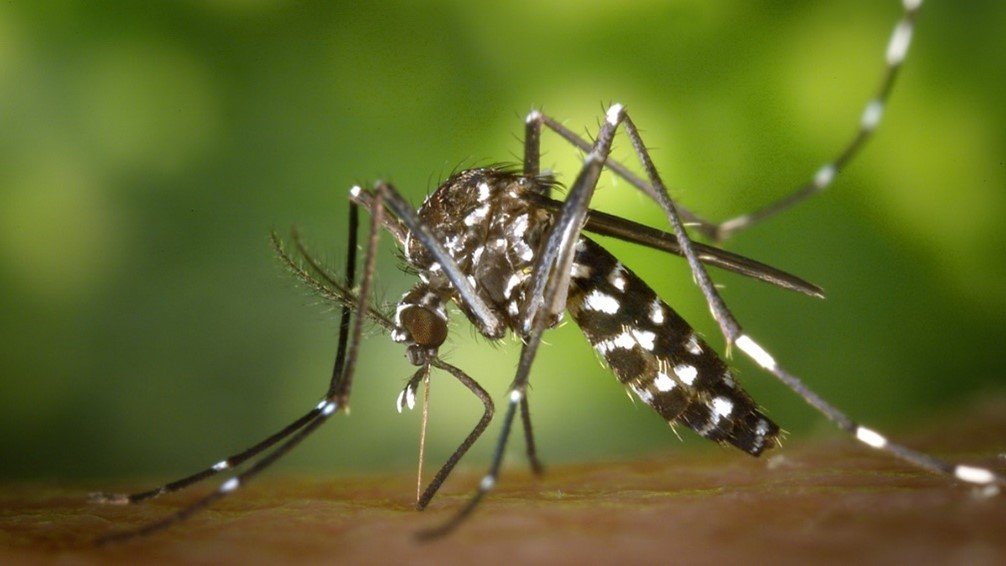
The bite may feel like a tiny prick or may go unnoticed. Itching and localized swelling often become more noticeable later. Some people develop a small papule while others develop a larger wheal.
What does a western honey bee look like?
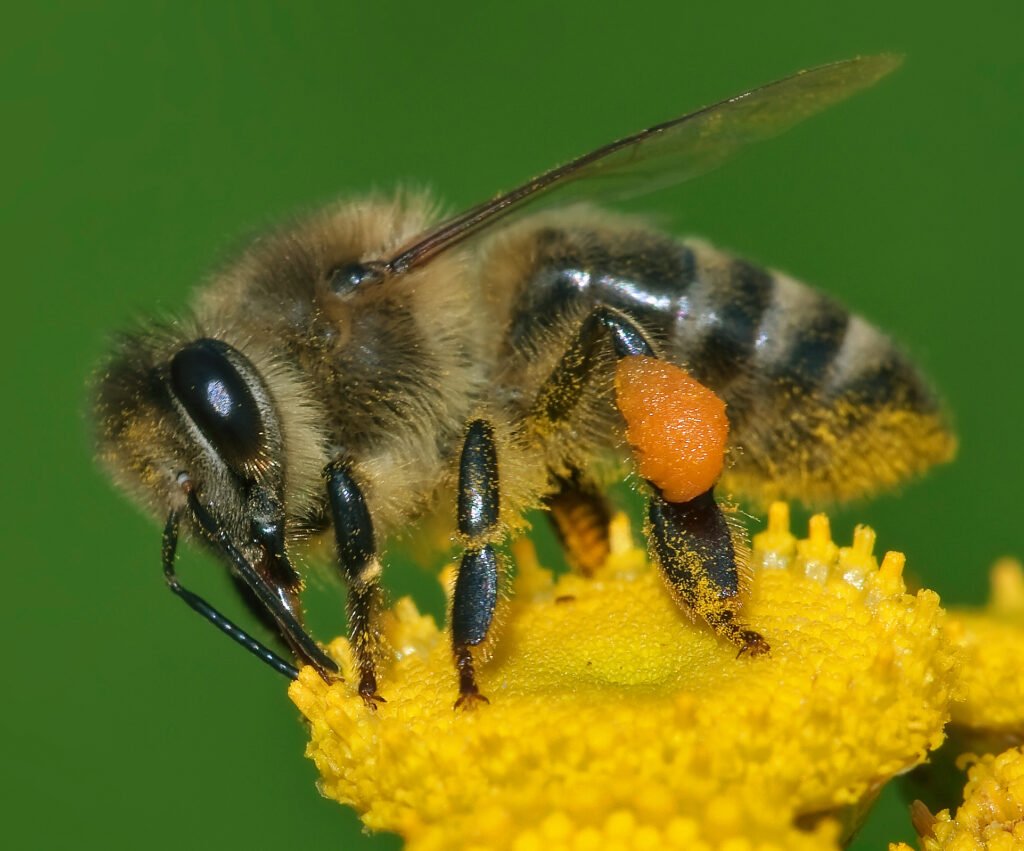
The western honey bee, Apis mellifera, is a robust, hairy bee with brown-to-golden coloration and darker abdominal bands. Worker honey bees collect pollen and nectar and are frequently seen on flowers. Their hairy appearance helps separate them from many smoother-bodied wasps, although close identification is not always possible from a brief encounter.
The honey-bee sting is a venom injection. In many human stings, the barbed stinger can remain embedded in the skin with part of the venom apparatus attached. That is why a visible stinger should be removed promptly.
Why stinger removal matters
Current CDC/NIOSH guidance recommends removing a bee stinger when it remains in the skin, washing the site, and applying ice for swelling. The American Academy of Dermatology also emphasizes getting the stinger out quickly because venom can continue to enter the skin while the stinger remains.
CDC’s worker guidance advises scraping over the area with gauze or a fingernail rather than squeezing the stinger. Whatever method is available, the practical priority is not to leave an obvious stinger in place while trying to find a perfect tool.
Honey-bee sting timeline
Immediately: sharp or burning pain is common; inspect for a visible stinger.
First minutes: remove the stinger promptly, wash the skin, and apply a cool pack.
Hours: localized redness, tenderness, itching, and swelling can increase before settling.
Any time soon after the sting: generalized hives, breathing difficulty, throat/facial swelling, dizziness, fainting, vomiting, or other systemic symptoms can signal a serious allergic reaction.
Asian tiger mosquito bite vs honey bee sting symptoms
Both exposures can cause redness, itching, swelling, and discomfort, but the timing and dominant symptom often differ.
Typical mosquito-bite pattern
- Feeding may be barely noticed.
- Itching commonly becomes the main symptom.
- A small red papule or larger wheal may appear.
- Multiple bites can occur on exposed skin.
Typical honey-bee sting pattern
- Immediate pain or burning is common.
- A stinger may still be visible in the skin.
- Redness and swelling can develop around the sting site.
- Some people develop a large local reaction extending beyond the immediate sting site.
- People with venom allergy may develop a systemic reaction involving areas far from the sting.
Neither the size of the local swelling nor the presence of itching alone determines whether a reaction is dangerous. The most important concern is whether symptoms are generalized or involve breathing, circulation, the face, tongue, or throat.
Pictures: can the skin tell you what caused it?
Usually not with certainty. For asian tiger mosquito bite vs honey bee sting pictures, the insect and exposure history are more informative than the skin. A visible bee stinger is a particularly strong clue. A black-and-white mosquito photographed while feeding is similarly useful.
If neither arthropod was seen, keep other possibilities open. The StingHelp What Bit Me? identification guide can help compare exposure clues without pretending that a photograph can confirm a species.
Asian tiger mosquito bite vs honey bee sting treatment differences
For an uncomplicated mosquito bite, treatment focuses on symptom relief and preventing additional bites. For a honey-bee sting, the first priorities are getting away from the area, checking for a retained stinger, removing it promptly, and watching closely for an allergic reaction.
What to do after a likely honey-bee sting
- Move calmly away from the bee activity to reduce the chance of additional stings.
- Look for a visible stinger and remove it promptly. CDC/NIOSH recommends scraping with gauze or a fingernail rather than squeezing it.
- Wash the sting site with soap and water.
- Apply a cool pack or wrapped ice for swelling and pain.
- Avoid scratching because broken skin can become irritated or infected.
- Use an appropriate over-the-counter pain or itch treatment only if safe for you and according to the label.
- Stay alert for generalized allergy symptoms, especially during the early period after the sting.
What to do after a likely Asian tiger mosquito bite
- Wash the area gently with soap and water.
- Apply a cool compress for itching or swelling.
- Avoid scratching and keep broken skin clean.
- Use an appropriate OTC anti-itch product only if safe for you and according to the label.
- Prevent more bites with EPA-registered repellent, protective clothing, screens, and standing-water control.
- Consider travel and local mosquito-borne disease activity if significant systemic illness develops.
For broader care principles, see the StingHelp bite and sting first-aid guide.
What are the warning signs of anaphylaxis after a bee sting?
Insect-venom allergy can be life-threatening. Seek emergency care for breathing difficulty, wheezing, throat tightness, swelling of the tongue or face, fainting, severe dizziness, rapidly spreading hives, collapse, or other rapidly progressing whole-body symptoms.
Nausea, vomiting, generalized hives, and symptoms away from the sting site can also be part of a systemic reaction. Someone with prescribed epinephrine for a known severe sting allergy should follow their personal emergency plan and use the medication as directed while emergency help is being obtained.
CDC/NIOSH advises workers with a history of severe insect-sting allergy to carry an epinephrine autoinjector and medical identification. Long-term allergy management should be individualized with a qualified clinician or allergist.
Decision guide: what should you do next?
Visible bee stinger + local pain/swelling only: remove the stinger promptly, wash, cool, and monitor.
Itchy bump after obvious mosquito exposure: routine mosquito-bite care and bite prevention are usually appropriate.
Swelling stays local but becomes very large or painful: contact a healthcare professional if you are concerned or symptoms are worsening.
Breathing trouble, throat/tongue/facial swelling, fainting, widespread hives, severe dizziness, or collapse: treat this as an emergency.
What if there were many bee stings?
Multiple honey-bee stings deserve more caution than a single uncomplicated sting because the total venom dose is greater. The American Academy of Dermatology recommends medical attention when someone has been stung multiple times, particularly for children or when symptoms are significant.
If several bees are attacking, move away from the area rather than stopping to remove individual stingers immediately. Once in a safer location, remove retained stingers and seek appropriate medical help based on the number of stings and the person’s symptoms.
Large local reaction vs systemic allergy
A large local reaction can involve substantial swelling around the sting site and may extend beyond the immediate puncture area. That can be uncomfortable and concerning, but it is different from a systemic allergic reaction affecting distant skin, breathing, circulation, or the gastrointestinal system.
The distinction is not always easy for a non-clinician, so rapidly progressing swelling, facial or throat involvement, breathing symptoms, faintness, or widespread hives should not be watched at home while waiting for certainty.
USA: what is most important?
Honey bees are widespread across the United States. The practical medical issue is less about geography than about the individual reaction: a person with a venom allergy can have a serious response wherever the sting occurs.
For Asian tiger mosquitoes, geography matters more for disease risk. Aedes albopictus is established in many U.S. areas, but dengue, chikungunya, or Zika transmission depends on infected mosquitoes, season, travel, and local epidemiology rather than the bite mark itself.
Europe: honey-bee venom allergy is an established concern
Honey bees are also widespread across Europe. The European Academy of Allergy and Clinical Immunology identifies Hymenoptera venom allergy as a major cause of anaphylaxis in Europe and notes that honey bees are an important cause of systemic sting reactions.
European readers with a history of systemic sting reactions may be referred to an allergy specialist for evaluation. EAACI guidance recognizes venom immunotherapy as the preventive treatment for selected people with clinically significant Hymenoptera venom allergy. That is specialist care—not something chosen from the appearance of a single sting.
Honey bee vs wasp: why the retained stinger clue matters
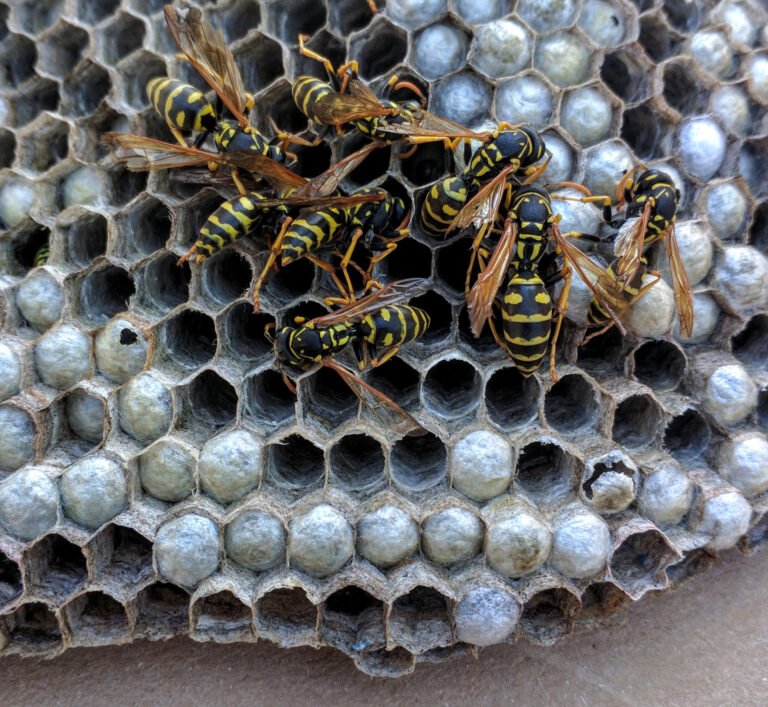
A retained stinger supports honey-bee exposure because worker honey bees commonly leave their barbed stinger in human skin. Wasps and hornets generally retain their stingers and can sting more than once. This is not an absolute rule, but it is a useful identification clue.
If the insect was a wasp, hornet, or yellowjacket rather than a honey bee, the emergency allergy warning signs remain the same. Do not delay emergency care while trying to determine the exact Hymenoptera species.
How to prevent honey-bee stings
Stay calm around individual bees, avoid swatting, wear footwear outdoors, and take care around flowering plants, hives, and areas where bees are actively foraging. People working with bees or known to have venom allergy need a prevention plan appropriate to their exposure and medical history.
If a nest or colony is in a location that creates a safety problem, use a qualified local bee professional, beekeeper, or pest-management service rather than disturbing it without training or protective equipment.
How to prevent Asian tiger mosquito bites
Use EPA-registered insect repellent, wear protective clothing when practical, maintain screens, and remove standing water from small containers around the home. Frequent checks matter because Asian tiger mosquitoes can breed in small water-holding objects.
For other painful stings, compare the fire-ant comparison. If the culprit may have been a fly rather than a bee, see the deer-fly guide. More bee-related information is available in the StingHelp Bee Stings hub.
Frequently asked questions
How can you tell an Asian tiger mosquito bite from a honey bee sting?
A honey-bee sting is usually immediately painful and may leave a visible stinger. An Asian tiger mosquito bite may be barely noticed during feeding and then become itchy later. Seeing the arthropod is more reliable than judging the skin mark alone.
What should you do if a bee stinger is still in the skin?
Remove it promptly. CDC/NIOSH recommends scraping over the stinger with gauze or a fingernail rather than squeezing it, then washing the site and applying ice. Do not spend unnecessary time trying to identify the bee while the stinger remains embedded.
Which symptoms after a bee sting are an emergency?
Breathing difficulty, throat tightness, tongue or facial swelling, fainting, severe dizziness, widespread hives, collapse, or another rapidly worsening generalized reaction requires emergency evaluation. People with prescribed epinephrine should follow their personal emergency plan.
Is a large swollen area always anaphylaxis?
No. A large local reaction can cause substantial swelling near the sting without becoming a systemic allergic reaction. However, swelling involving the face or throat, breathing problems, faintness, or symptoms throughout the body need urgent assessment.
Can an Asian tiger mosquito transmit disease?
Yes. Infected Aedes albopictus mosquitoes can transmit dengue, chikungunya, and Zika. Actual risk depends on local transmission and travel context. The appearance of the bite cannot tell you whether a virus was transmitted.
When should someone seek medical care after a mosquito bite or bee sting?
Seek medical advice for severe or worsening swelling, increasing pain, signs of infection, multiple bee stings, systemic symptoms, or significant illness after mosquito exposure. Emergency allergy symptoms after a sting require immediate emergency care.
Authoritative references
- CDC/NIOSH — Insects and Scorpions at Work, updated March 2026
- American Academy of Dermatology — How to Treat a Bee Sting
- EAACI — Insect sting allergy position paper
- Anaphylaxis UK — Insect Sting Allergy
- CDC — Asian Tiger Mosquito
Bottom line
The key asian tiger mosquito bite vs honey bee sting treatment differences are straightforward: mosquito bites mainly need symptom care and bite prevention, while a honey-bee sting may require prompt stinger removal and close monitoring for venom allergy. A visible stinger, immediate pain, generalized symptoms, and the insect itself are more useful than the skin mark alone.
Educational information for a U.S.- and Europe-focused audience. This article cannot diagnose an insect, allergic reaction, infection, or mosquito-borne disease from a photograph and does not replace professional medical care.