Direct answer: An American dog tick bite and a stable fly bite usually differ most in timing and exposure. A dog tick may stay attached and feed with little initial pain. A stable fly lands, cuts the skin with piercing mouthparts, takes a blood meal, and usually causes an immediate sharp or painful bite before flying away.
People searching for american dog tick bite vs stable fly bite treatment differences often see a red spot and want to know which insect caused it. The skin mark alone is not reliable. The stronger clues are whether a tick was attached, whether a housefly-like insect repeatedly landed and bit, where the exposure happened, how quickly pain started, and whether later systemic symptoms develop.
This guide compares pictures, symptoms, first-aid differences, warning signs, and prevention for U.S. readers. It also explains why stable flies are painful blood-feeding flies but do not create the same routine human tick-borne disease concern as an American dog tick.
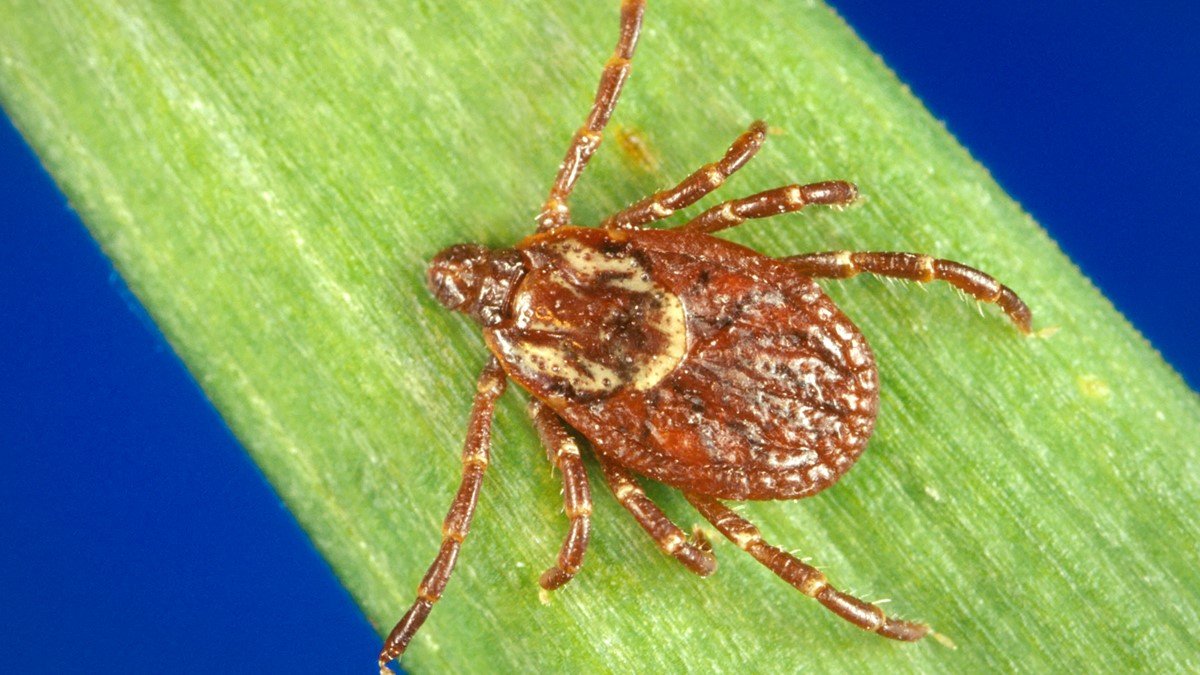
American dog tick bite vs stable fly bite treatment differences: quick comparison
| Clue | American dog tick bite | Stable fly bite |
|---|---|---|
| Scientific name | Dermacentor variabilis | Stomoxys calcitrans |
| Exposure pattern | Tick attaches to the skin and feeds over time. | Fly lands, takes a painful blood meal, then leaves; it may return repeatedly. |
| Pain at first | May be mild or unnoticed. | Usually immediately painful or sharply irritating. |
| Typical location clue | Can attach anywhere, including hidden body areas after outdoor exposure. | Often attacks exposed lower legs and ankles of people and the lower legs of animals. |
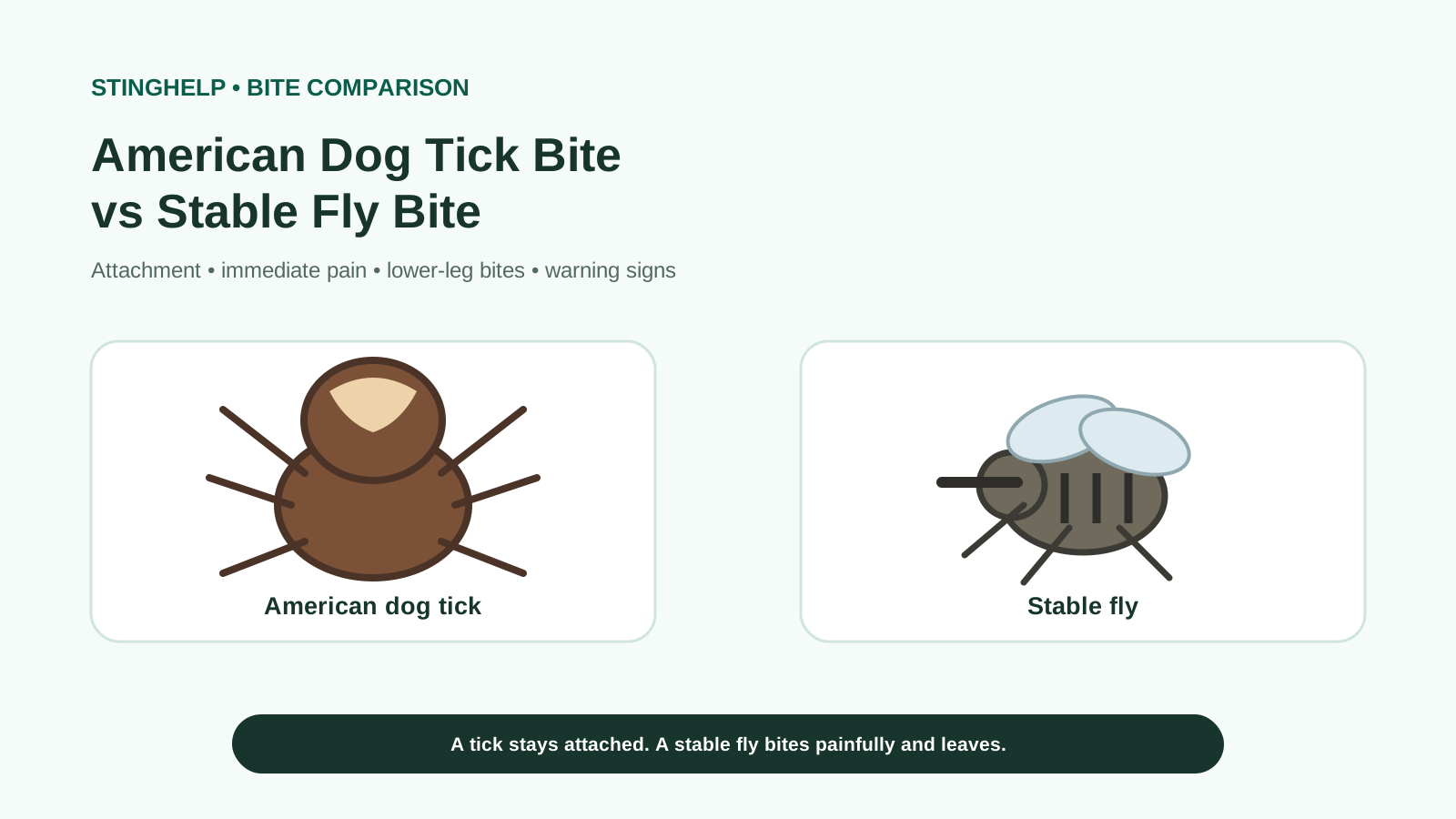
| Appearance of culprit | Eight-legged tick with ornate pale markings in adult stages. | Housefly-like fly with a forward-projecting piercing proboscis and four dark stripes on the thorax. |
| Main medical concern | Possible RMSF or tularemia transmission. | Painful blood-feeding bite and local reaction; stable flies are major veterinary pests but are not a common established human vector like the American dog tick. |
| First priority | Remove the attached tick promptly and correctly. | Move away or prevent repeated fly bites, wash the skin, and treat mild local symptoms. |
What an American dog tick bite usually looks and feels like
An American dog tick can attach without causing much pain. The tick may remain on the skin for hours or longer and enlarge as it feeds. People often discover it by touch during a tick check, shower, clothing change, or pet grooming rather than because they felt the original bite.
After removal, the site may show a small red bump, mild itching, tenderness, or almost no visible reaction. The mark can become more irritated if the area is scratched, squeezed, repeatedly cleaned with harsh products, or manipulated while trying to remove mouthpart fragments.
CDC surveillance updated July 2, 2026 describes the American dog tick as widely distributed east of the Rocky Mountains, with limited established areas west of the Rockies. Adult female ticks are most likely to bite people, and human-biting risk is often highest in spring and summer.
The important risk can appear later
The American dog tick can transmit Rickettsia rickettsii, which causes Rocky Mountain spotted fever (RMSF), and Francisella tularensis, which causes tularemia. A bite does not automatically mean infection occurred, but later symptoms matter.
Seek medical advice if fever, severe or persistent headache, rash, unusual fatigue, muscle aches, neurologic symptoms, significant vomiting, or worsening systemic illness develops after a plausible tick exposure. RMSF can become serious quickly, and a rash may be absent early.
What is a stable fly?
The stable fly (Stomoxys calcitrans) looks similar to a house fly but has very different feeding behavior. Both male and female stable flies feed on blood. USDA research describes the species as a persistent blood feeder that bites livestock, companion animals, wildlife, and people.
One useful identification feature is a rigid, forward-projecting piercing-sucking proboscis. Adults also have four dark stripes on the upper thorax. Stable flies often rest on fences, walls, vegetation, buildings, and other surfaces near animal hosts.
USDA research notes that stable flies commonly feed on the lower legs of hosts. On people, bites are often noticed around the ankles and lower legs, especially in locations where fly populations are high.
Why stable fly bites hurt
A stable fly does not quietly remain attached like a tick. It cuts into the skin to obtain blood, and USDA sources describe the bite as painful. The fly may be persistent and repeatedly attempt to feed if it is disturbed before completing a meal.
UF/IFAS guidance describes stable fly attacks on people, pets, and agricultural animals and notes that the bites are extremely painful. In Florida, large fly populations can even affect beach visitors when winds carry stable flies from breeding areas to recreational sites.
What does a stable fly bite look like?
The bite may leave a small red spot, a pinpoint area of bleeding, tenderness, or mild swelling. Some people have little irritation after the initial painful bite. Others can develop itching or a larger local reaction.
The key clue is often the event itself: a housefly-like insect repeatedly lands on exposed skin, causes a sharp painful bite, and flies away when disturbed. Multiple bites can occur on exposed lower legs when stable flies are abundant.
A stable fly bite usually does not create the classic attached-tick scenario. If an arthropod stayed fixed in place and had to be removed from the skin, a stable fly is not the likely explanation.
Pictures: how the actual insects differ
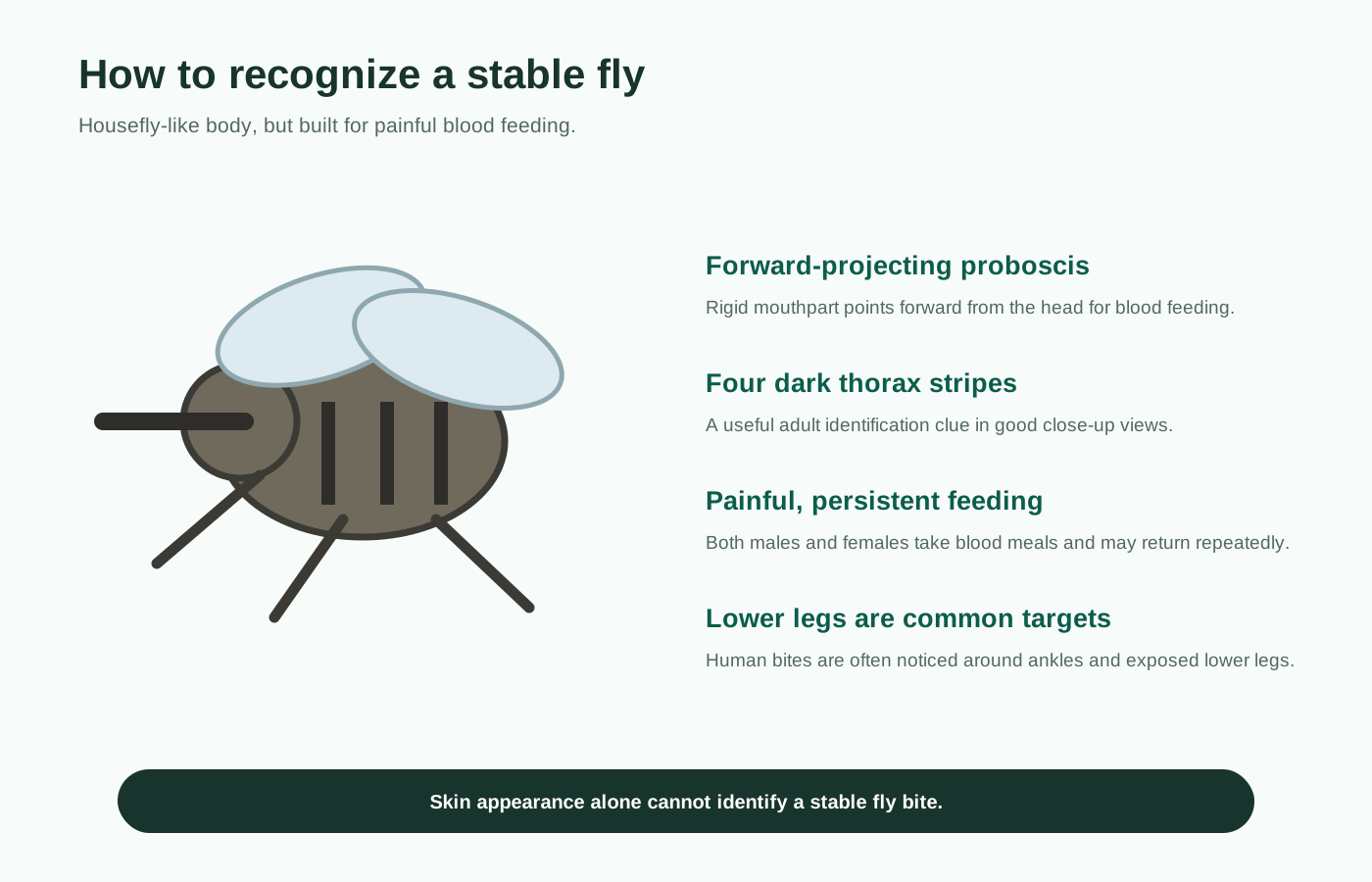
American dog ticks and stable flies look very different. A tick is an arachnid with eight legs as an adult and a compact oval body. An adult American dog tick has pale ornate markings on the upper body.
A stable fly has six legs, wings, large compound eyes, and a fly-like body. It resembles a house fly at a quick glance, but the stable fly’s stiff proboscis projects forward from the head. That mouthpart is designed for blood feeding.
For american dog tick bite vs stable fly bite pictures, an image of the actual culprit is much more useful than the lesion. The skin can show overlapping redness, swelling, tenderness, or a small central mark.
Do not confuse every biting fly with a stable fly
Horse flies, deer flies, black flies, mosquitoes, biting midges, and other flies can also bite people. The combination of a housefly-like body, painful persistent feeding, a forward-projecting proboscis, and the right environment is more useful than pain alone.
If the fly was not seen clearly, describe the exposure as a biting-fly bite rather than claiming a specific species from the skin mark.
The biggest treatment difference: remove the tick vs stop repeated fly bites
The practical american dog tick bite vs stable fly bite treatment differences begin with whether the arthropod is still attached.
American dog tick first aid
- Use clean fine-tipped tweezers.
- Grasp the tick as close to the skin as possible.
- Pull upward with steady, even pressure.
- Avoid twisting, jerking, burning, crushing, or coating the tick with petroleum jelly, nail polish, gasoline, or essential oils.
- Clean the bite site and your hands afterward.
- Record the date and likely exposure location.
- Take a clear photo of the actual tick if identification may be useful.
If a small mouthpart fragment remains and cannot be removed easily, avoid repeatedly digging into the skin. Keep the area clean and monitor it.
Stable fly bite first aid
- Move away from the fly-heavy area or cover exposed skin to prevent additional bites.
- Wash the bite with soap and water.
- Apply a wrapped cold pack or cool compress if pain or swelling continues.
- Avoid repeated scratching, which can damage the skin and increase secondary infection risk.
- Use appropriate over-the-counter symptom relief only when safe for the person and according to label directions.
- Monitor for worsening redness, increasing pain, drainage, fever, or unusual systemic symptoms.
Most uncomplicated biting-fly reactions can be managed with basic local care. The immediate goal is to stop continued exposure, clean the skin, and support pain or itching.
Does a stable fly transmit disease to people?
Stable flies are important veterinary pests and have been studied for their ability to mechanically carry pathogens among animals. However, this should not be presented as equivalent to the established human tick-borne disease risk from an American dog tick.
For an ordinary human stable fly bite in the United States, the practical concern is usually painful feeding, repeated bites, skin irritation, and secondary infection from scratching rather than a predictable human vector-borne illness.
If a person develops significant fever or systemic illness after a fly bite, medical evaluation is appropriate. Do not automatically assume the fly caused the illness, and do not ignore serious symptoms because the original skin mark looked minor.
What symptoms after a dog tick bite should change the plan?
Fever, severe headache, rash, marked fatigue, muscle aches, neurologic symptoms, significant vomiting, or worsening systemic illness after a relevant dog-tick exposure deserves medical attention.
Tell the clinician when and where the tick was found and show a photograph of the actual tick if one is available. A minor local bump does not rule out later tick-borne illness.
Also seek evaluation for increasing warmth, spreading redness, pus, drainage, red streaking, fever, or pain that becomes worse rather than better at the bite site.
What symptoms after a stable fly bite deserve more attention?
A stable fly bite is usually most painful at the moment of feeding. The discomfort may decrease after the fly leaves. Persistent major swelling, severe allergic symptoms, spreading skin inflammation, or systemic illness is less typical and deserves evaluation.
Contact a healthcare professional for worsening redness, increasing warmth, pus, red streaking, fever, or pain that intensifies over time. These findings can indicate secondary infection or another diagnosis rather than a simple fly bite.
Call emergency services for breathing difficulty, tongue or throat swelling, collapse, severe confusion, seizure, or another rapidly progressive life-threatening reaction after any arthropod exposure.
Original decision guide: which clues matter most?
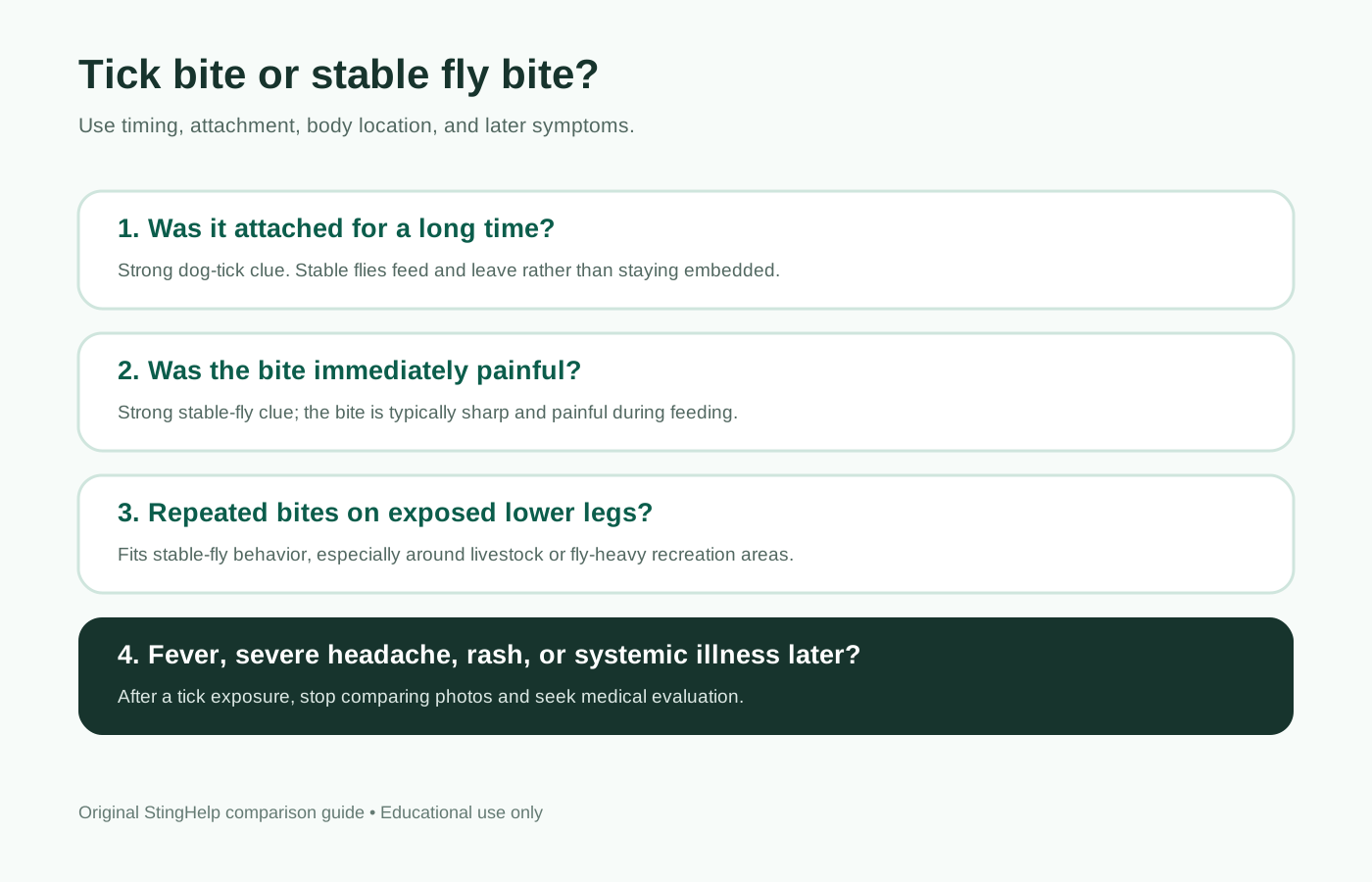
| Question | More consistent with American dog tick | More consistent with stable fly |
|---|---|---|
| Was the arthropod attached for a prolonged period? | Strong tick clue. | No; stable flies feed and leave. |
| Was the bite immediately sharp or painful? | Less typical. | Very typical. |
| Did a housefly-like insect repeatedly land and bite? | No. | Strong stable-fly clue. |
| Were bites concentrated on exposed lower legs? | Possible but not specific. | Common stable-fly pattern. |
| Did fever, headache, or rash develop later? | Raises concern for tick-borne illness after relevant exposure. | Not typical of an uncomplicated stable fly bite and needs evaluation. |
| Is the only evidence a red spot? | Insufficient. | Insufficient. |
Where stable flies are common
Stable flies breed in moist, decaying organic material. They are strongly associated with livestock operations, animal bedding, manure mixed with vegetation, spilled feed, hay, silage, grass clippings, and other decomposing plant material.
They can also become a nuisance away from farms. USDA and UF/IFAS sources describe problems in recreational areas, including Florida beaches, when flies disperse or are carried by wind.
That environmental context can be useful. Repeated painful bites around farms, stables, kennels, livestock facilities, or fly-heavy coastal recreation areas are more consistent with stable flies than with a single attached tick.
How to prevent American dog tick bites
Use EPA-registered repellents according to the product label, wear protective clothing in tick habitat, consider permethrin-treated clothing or gear when appropriate, and avoid brushing against dense vegetation when practical.
After outdoor activity, perform a full-body tick check. Check the scalp, behind the ears, under the arms, around the waist, behind the knees, between the legs, and around the groin. Check pets, clothing, backpacks, and outdoor equipment too.
How to reduce stable fly bites
Wear long pants, socks, and closed shoes when stable flies are active, especially around livestock, farms, or locations with heavy fly pressure. EPA-registered repellents labeled for biting flies can be useful when applied according to directions.
Environmental management is also important around properties. Reduce wet decaying vegetation, spoiled feed, heavily soiled bedding, and other organic breeding material. Keep animal areas as dry and clean as practical.
Because stable flies can be persistent, physical barriers, clothing, screens, air movement, and properly placed traps can complement habitat management.
Frequently asked questions
Do stable flies look like house flies?
Yes. Stable flies resemble house flies, but they have a stiff forward-projecting proboscis and both males and females feed on blood.
Are stable fly bites painful?
Yes. USDA and UF/IFAS sources describe stable fly bites as painful or extremely painful. The pain is often immediate while the fly is feeding.
Do stable flies stay attached like ticks?
No. Stable flies land, feed on blood, and leave. They can repeatedly return if they are interrupted or if many flies are present.
Can stable flies transmit RMSF?
Stable flies are not the established human vector for RMSF. The American dog tick is among the U.S. ticks that can transmit Rickettsia rickettsii, the bacterium that causes RMSF.
Why are stable fly bites often on the lower legs?
Stable flies commonly feed on the lower legs of hosts. People may notice painful bites around ankles and lower legs when flies are abundant.
When should I seek care after a fly bite?
Seek medical advice for worsening pain, spreading redness, drainage, fever, major swelling, systemic symptoms, or any reaction that is severe or not improving as expected.
Related StingHelp guides
- Tick Bites: Removal, Symptoms & Warning Signs
- Tick Bite Warning Signs
- No-See-Um Bites
- What Bit Me? Identification Guide
- First Aid for Bites & Stings
- Bite & Sting Prevention
Authoritative references
- CDC — American Dog Tick Surveillance
- USDA ARS — Blood Feeding Behavior of the Stable Fly
- UF/IFAS — Stable Fly, Stomoxys calcitrans
- MedlinePlus — Insect Bites and Stings
Bottom line
The practical american dog tick bite vs stable fly bite treatment differences begin with exposure. Remove an attached American dog tick promptly and monitor for later tick-borne illness. A stable fly causes a short, painful blood-feeding bite and then leaves; treatment usually focuses on stopping repeated bites, cleaning the skin, and relieving local symptoms.
Educational information for a U.S.-focused audience. This article does not diagnose a bite, infection, tick-borne illness, or other condition from a photograph and does not replace professional medical care.