Direct answer: No-see-ums, also called biting midges, are tiny blood-feeding flies that can cause painful, intensely itchy red welts or small blisters. The best prevention is to reduce moist breeding areas where practical, wear protective clothing, use an appropriate repellent, and use finer screening because some biting midges can pass through standard window screens. Severe or persistent reactions should be evaluated by a healthcare professional.

Biting midges are small enough that people may feel bites without clearly seeing the insect. In the United States they are especially troublesome in some coastal, wet, irrigated, and warm-weather environments. Skin appearance alone is not enough to prove that no-see-ums caused a reaction.
What are no-see-ums?
No-see-ums are tiny biting midges in the family Ceratopogonidae. University of Florida IFAS notes that many biting midges are roughly 1–2 millimeters long, making them much smaller than typical mosquitoes. Female biting midges take blood meals; males do not bite people.
What do no-see-um bites feel and look like?
University of Arizona Cooperative Extension describes bites as painful and irritating and notes that they can appear as small red welts or water-filled blisters that itch intensely. Sensitive people may have longer-lasting itchy or painful lesions.
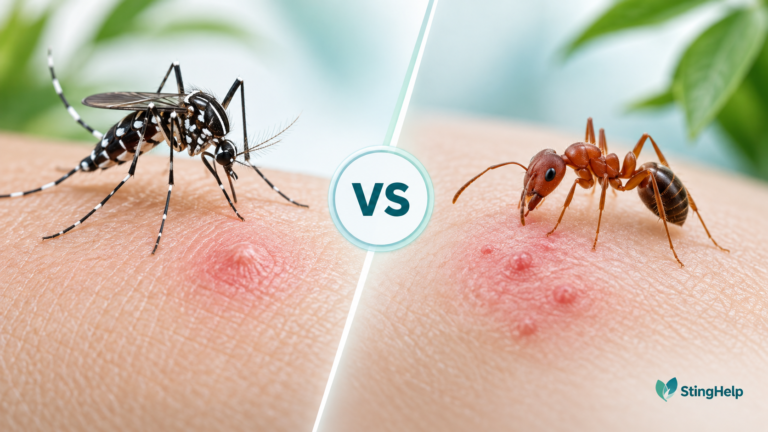
Because mosquitoes, fleas, chiggers, allergic reactions, and other skin conditions can produce overlapping marks, use the environmental clues as well: tiny flies around dawn or dusk, nearby moist soil or organic matter, marshes, beaches, lakes, irrigated landscapes, or poorly drained areas.
Where do biting midges breed?
Different species use different habitats, but moist organic material is a common theme. Arizona Extension lists over-irrigated turf, poorly drained areas, potted plants, tree holes, and other damp locations as possible breeding sites. UF/IFAS describes important habitats that include marshes, swamps, mangroves, tree holes, and other wet environments.
How can you reduce no-see-um bites?
- Wear light-colored long sleeves, long pants, shoes, and socks in areas with heavy biting activity.
- Use an appropriate insect repellent and follow the label. Arizona Extension notes that repellents effective against mosquitoes can also help against biting midges.
- Keep doors and windows screened and closed when biting midges are active.
- Consider finer mesh where no-see-ums are a recurring problem; standard screens may not stop the smallest species.
- Reduce unnecessary over-irrigation and allow persistently moist problem areas to drain and dry where practical.
What can help the itching?
Avoid scratching, which can break the skin. A wrapped cool compress may help local discomfort. University of Arizona Extension notes that over-the-counter topical cortisone products may relieve itching for some people. Follow the label and ask a pharmacist or clinician when age, pregnancy, medical conditions, allergies, or other medicines make self-treatment uncertain.
When should you get medical help?
Seek medical advice for severe or persistent swelling, increasing pain, signs of secondary infection, extensive blistering, or a reaction that is not improving. Seek emergency care for trouble breathing, swelling of the tongue or throat, fainting, collapse, or a rapidly progressing severe allergic reaction.
Can no-see-ums transmit disease?
Many biting midges are primarily nuisance pests to people in the United States. Some Culicoides species can transmit pathogens in other parts of the world, and biting midges are important vectors of animal diseases. Do not assume that every no-see-um bite carries an infection; disease risk depends on species and geography.
Frequently asked questions
Why can I feel bites but not see the insect?
Biting midges can be only a few millimeters or less in size and may be difficult to see while they are feeding.
Can no-see-ums get through window screens?
Yes. Arizona Extension notes that some can pass through common screen mesh, so finer mesh may be needed in locations with recurring problems.
Are no-see-um bites the same as mosquito bites?
No, but the reactions can overlap. Environmental exposure and seeing the insects are more useful than trying to diagnose from one mark.
Does drying wet areas help?
It can help reduce some local breeding habitat when the problem is caused by moisture-dependent species, particularly around over-irrigated or poorly drained areas.
Related StingHelp guides
Authoritative references
- University of Arizona Cooperative Extension — Something’s Biting Me, but I Can’t See It
- University of Florida IFAS — Biting Midges, No-See-Ums
Educational information only. Geographic risk varies by species and location, and a skin mark alone cannot confirm the cause.