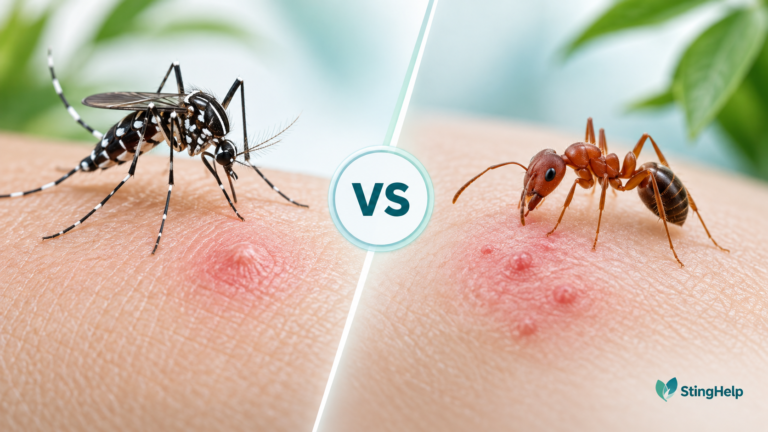

Direct answer: An American dog tick bite and a “red ant bite” usually differ more by exposure than by skin appearance. A dog tick may stay attached and feed, while U.S. “red ant” searches often refer to fire ants, which bite to grip and then sting with venom, causing immediate burning and often a white pustule within 1–2 days.
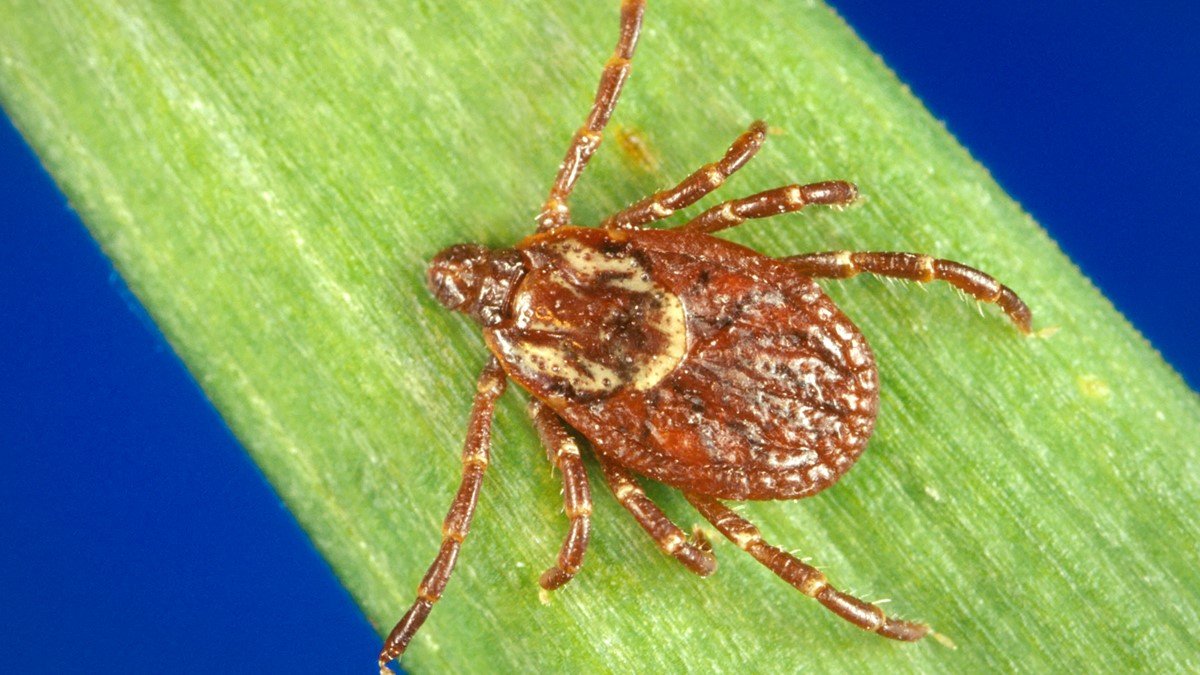
When people search for american dog tick bite vs red ant bite treatment differences, “red ant” needs clarification. Many red-colored ants exist, but in the United States the medically important comparison is often an imported fire ant sting. Fire ants can bite with their jaws and sting repeatedly with venom. That creates a different risk pattern from an American dog tick (Dermacentor variabilis), which attaches to the skin and feeds over time.
This guide compares pictures, symptoms, first-aid differences, warning signs, and prevention. It uses the term red ant bite where people commonly search that phrase, while explaining when the more accurate medical description is a fire ant sting. The skin mark alone cannot prove the cause.
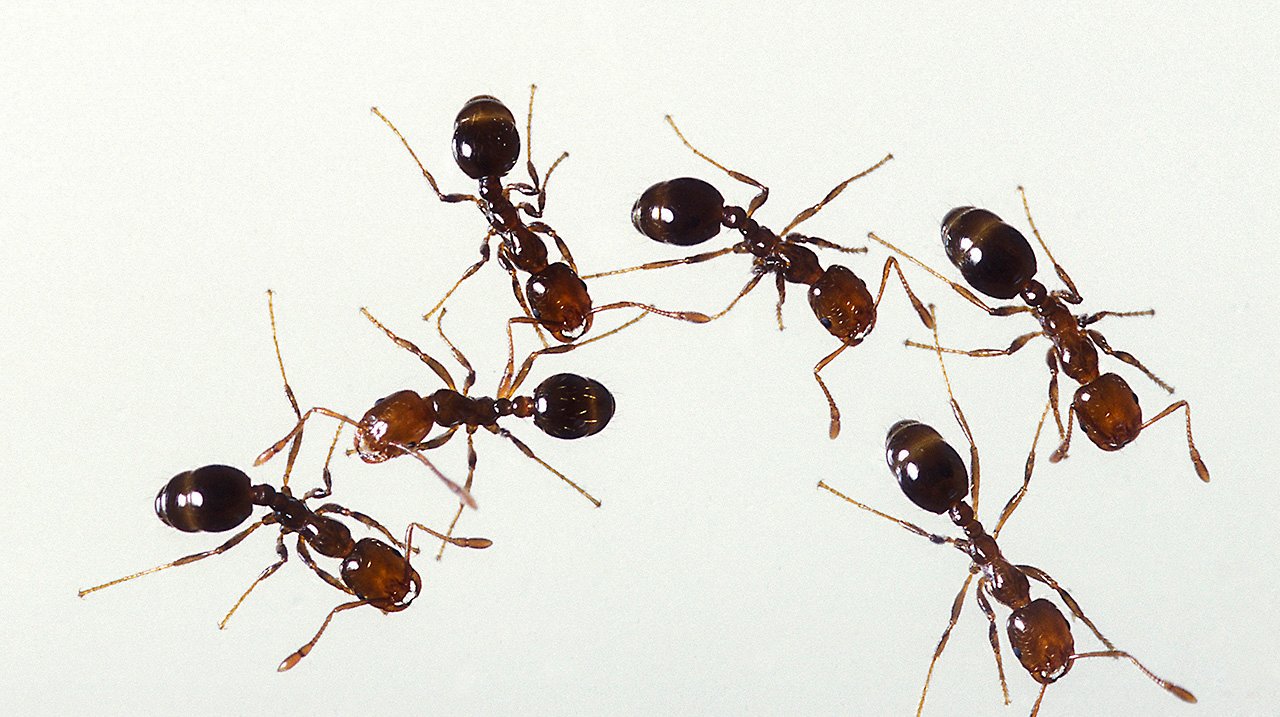
American dog tick bite vs red ant bite treatment differences: quick comparison
| Clue | American dog tick bite | Red/fire ant sting |
|---|---|---|
| Typical exposure | A tick attaches and feeds, often after grass, brush, yard work, hiking, hunting, or animal contact. | Fire ants swarm after a mound or colony is disturbed and can sting repeatedly. |
| Immediate sensation | Often mild or unnoticed. | Usually immediate burning, stinging, or sharp pain. |
| What stays on the skin? | The whole tick may remain attached until removed or detached. | Ants may cling with their jaws while stinging, but they do not remain embedded like ticks. |
| Typical early skin reaction | Small red bump or mild irritation after removal. | Red, painful or itchy bumps; fire ant lesions commonly develop white fluid-filled pustules within 1–2 days. |
| Main medical concern | Possible tick-borne infection such as RMSF or tularemia. | Venom reaction, sterile pustules, multiple-sting toxicity, and possible anaphylaxis. |
| First priority | Remove the attached tick correctly. | Move away from the colony, brush ants off, wash the area, cool the sting, and monitor for allergy symptoms. |
| Emergency warning | Severe systemic illness, neurologic symptoms, collapse, or another life-threatening change. | Breathing difficulty, throat/tongue swelling, fainting, shock, or rapidly progressive anaphylaxis. |
What an American dog tick bite usually looks and feels like
An American dog tick can attach without causing a dramatic sensation. People may discover the tick while showering, changing clothes, checking after outdoor activity, or grooming a pet. The tick may remain attached for hours or longer and become larger as it feeds.
After removal, the site can show a small red bump, mild tenderness, itching, or very little visible reaction. Repeated squeezing, digging for mouthparts, scratching, adhesives, disinfectants, or topical products can make the area appear more inflamed than the original bite.
CDC surveillance updated July 2, 2026 describes the American dog tick as widely distributed east of the Rocky Mountains, with limited established areas west of the Rockies. Adult female ticks are most likely to bite people, and human-biting risk is highest in spring and summer in many regions.
The bigger concern can appear later
The American dog tick can transmit Rickettsia rickettsii, which causes Rocky Mountain spotted fever (RMSF), and Francisella tularensis, which causes tularemia. A bite does not mean infection occurred, but the person should watch for symptoms after a plausible exposure.
Fever, severe or persistent headache, rash, marked fatigue, muscle aches, neurologic symptoms, significant vomiting, or worsening systemic illness deserves medical attention. RMSF can become serious quickly, and a rash may not be present early. Do not use a mild-looking bite site to rule out illness.
What does a red ant or fire ant sting look and feel like?
In U.S. medical guidance, red fire ants are a common cause of painful ant stings. Fire ants are reddish-brown and often live in mounds in open grassy areas, especially in warmer parts of the country. They can become aggressive when their mound or colony is disturbed.
NIOSH notes that fire ants bite and sting. They use their jaws to attach and then inject venom, producing a burning sensation. Red bumps develop at the sting sites and can become white fluid-filled pustules within one or two days.
MedlinePlus describes local symptoms including swelling, redness, itching, and pain. Pus-filled blisters may last several days. The white pustule is often part of the venom reaction and does not automatically mean bacterial infection.
Why multiple stings matter
A person who steps on or disturbs a fire ant mound can receive many stings in a short time. Multiple stings increase the total venom exposure. MedlinePlus notes that severe multi-sting reactions can include vomiting, diarrhea, widespread swelling, shortness of breath, low blood pressure, rapid heartbeat, and shock.
Children, older adults, medically vulnerable people, and anyone with previous serious reactions deserve a lower threshold for urgent medical advice after numerous stings.
Pictures: why the pustule is useful but not perfect
The classic white pustule that forms after a fire ant sting can be a useful clue, especially when several similar lesions appear after an obvious mound exposure. However, a pustule alone is not proof. Folliculitis, infected scratches, other insect bites, and irritated skin can also develop white or yellow centers.
An American dog tick bite usually does not produce the same classic cluster of sterile pustules. More importantly, the tick itself may still be attached or may have been removed. That exposure evidence is stronger than trying to compare two close-up skin photos.
For american dog tick bite vs red ant bite pictures, ask what happened first. Was a tick attached? Did someone disturb an ant mound and feel several immediate burning stings? Did the lesions appear in a cluster on the feet or lower legs? Did white pustules develop a day later? Exposure timing often gives a clearer answer than lesion shape.
The key treatment difference: remove the tick vs stop the ant exposure

The most important american dog tick bite vs red ant bite treatment differences start with whether the exposure is still happening.
American dog tick: prompt mechanical removal
- Use clean fine-tipped tweezers.
- Grasp the tick as close to the skin as possible.
- Pull upward with steady, even pressure.
- Do not twist, jerk, burn, crush, or coat the tick with petroleum jelly, nail polish, gasoline, or essential oils.
- Clean the bite site and your hands afterward.
- Record the date and likely exposure location.
- Take a clear photo of the tick if identification may be useful.
If a small mouthpart fragment remains and cannot be removed easily, avoid repeatedly digging into the skin. Keep the area clean and monitor it.
Fire ant: leave the colony area and remove ants from the skin
- Move away from the mound or swarm to prevent additional stings.
- Brush ants off promptly; they can stay attached with their jaws and sting repeatedly.
- Wash the exposed skin with soap and water.
- Apply a wrapped cold pack or cool compress for local pain and swelling.
- Avoid scratching or deliberately opening pustules.
- Monitor the whole person for allergy symptoms, especially after multiple stings.
MedlinePlus advises gentle washing and wrapped ice for mild fire ant reactions. NIOSH advises immediate medical attention for serious symptoms such as breathing difficulty, major swelling, chest pain, severe sweating, or other systemic changes.
Do not pop fire ant pustules
The small white pustules caused by fire ant venom are commonly sterile at first. Popping, squeezing, or scratching them can damage the skin barrier and increase the chance of secondary bacterial infection.
Keep the area clean and avoid unnecessary manipulation. If a pustule opens on its own, use gentle wound care. Increasing warmth, spreading redness, worsening pain, pus with surrounding inflammation, red streaking, or fever can justify medical evaluation for infection.
This is an important distinction because a pustule can look like “pus” even when the original lesion is a venom reaction rather than bacterial infection.
Allergy and anaphylaxis after fire ant stings
Fire ant venom can trigger serious allergic reactions in sensitized people. AAAAI includes fire ants among stinging insects capable of causing anaphylaxis. Warning symptoms can include widespread hives or itching, swelling of the face, tongue, or throat, difficulty breathing, dizziness, stomach cramps, nausea, diarrhea, low blood pressure, or loss of consciousness.
Anaphylaxis is a medical emergency. If a person has prescribed epinephrine and develops symptoms consistent with anaphylaxis, use it according to the emergency plan and call 911. Emergency medical evaluation is still needed after epinephrine.
Do not wait for the local sting sites to become dramatic. Dangerous allergic reactions can affect breathing and circulation even when the skin lesions themselves look small.
What symptoms after a tick bite should change the plan?
After an American dog tick exposure, seek medical advice if fever, severe headache, new rash, unusual fatigue, muscle aches, neurologic symptoms, significant vomiting, or worsening systemic illness develops.
Tell the clinician when and where the tick exposure occurred. A photograph of the actual tick can be useful. A photograph of the skin mark is much less specific.
Also seek care for local infection warning signs: increasing warmth, progressive pain, pus or drainage, red streaking, spreading redness with fever, or a site that is becoming worse rather than gradually improving.
What symptoms after fire ant stings should change the plan?
For one or a few mild stings, local burning, redness, itching, swelling, and pustules can be expected. Medical advice becomes more important when there are many stings, severe swelling, widespread symptoms, significant vomiting, breathing difficulty, dizziness, fainting, or signs of shock.
A rapidly developing whole-body reaction should be treated as an allergy emergency. A delayed site that becomes increasingly hot, painful, draining, or surrounded by spreading redness can indicate secondary infection rather than the normal venom reaction.
Original decision guide: which clues matter most?
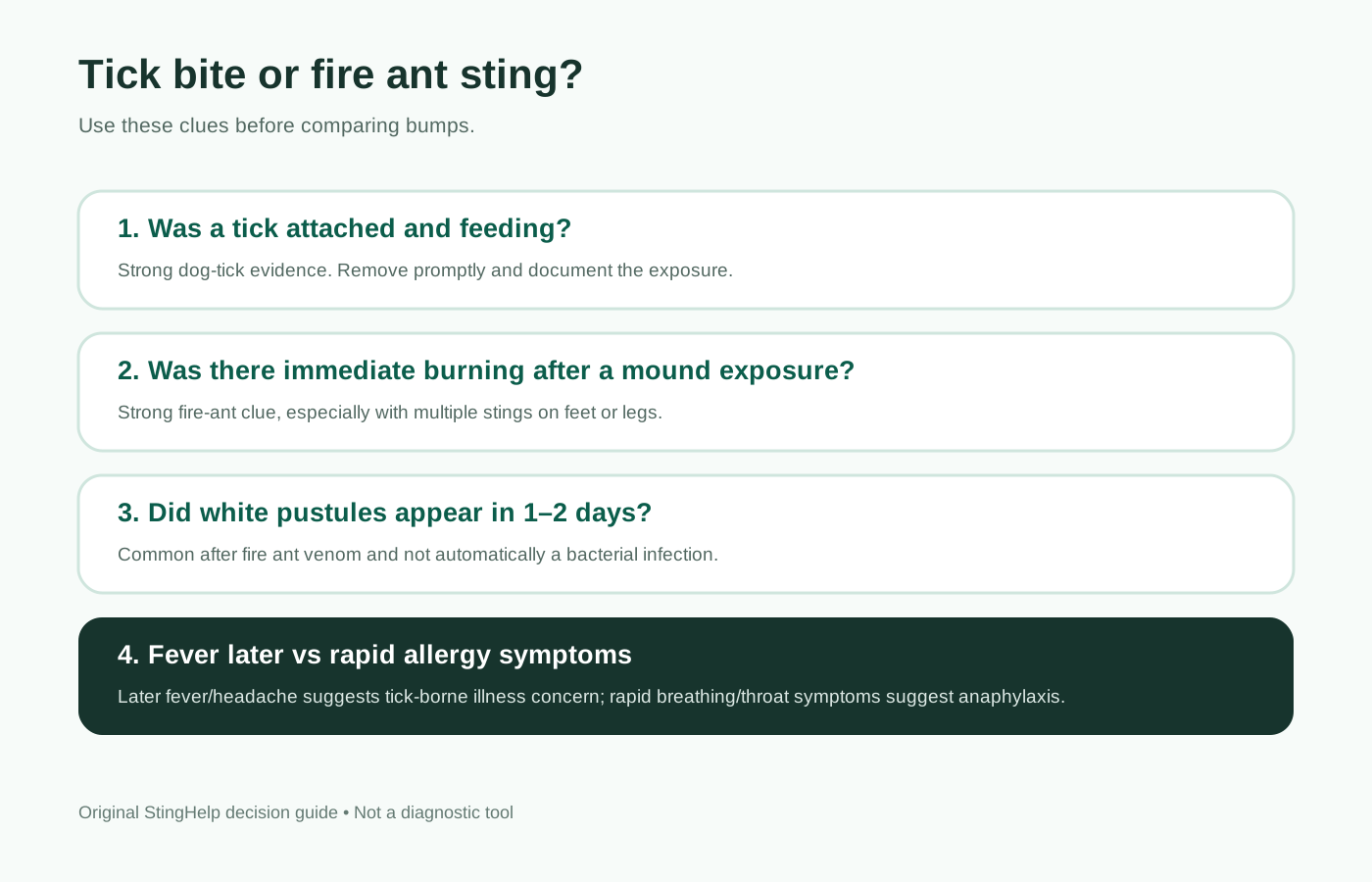
| Question | More consistent with American dog tick | More consistent with fire/red ant sting |
|---|---|---|
| Was an arthropod attached and feeding? | Strong tick evidence. | Not typical after the ant is brushed off. |
| Was there immediate burning pain? | Less typical. | Common with fire ant venom. |
| Were multiple lesions produced at once? | Less typical for one attached tick. | Common after a fire ant swarm or mound disturbance. |
| Did white pustules develop in 1–2 days? | Not a classic dog tick feature. | Strongly supports fire ant stings in the right exposure setting. |
| Did fever/headache/rash develop later? | Can raise concern for tick-borne illness. | Not typical of a mild local fire ant reaction and needs evaluation. |
| Did breathing/throat symptoms start rapidly? | Emergency regardless of cause. | Classic concern for venom anaphylaxis. |
When should someone seek emergency care?
Call emergency services for trouble breathing, swelling of the tongue or throat, collapse, severe confusion, seizure, inability to stay awake, or another rapidly progressive life-threatening reaction.
After fire ant exposure, these symptoms can represent anaphylaxis or a severe toxic reaction after many stings. After a tick exposure, they are not a routine local bite-site reaction and require urgent assessment regardless of the exact cause.
Do not continue comparing online pictures when the person is rapidly becoming ill.
How to prevent American dog tick bites
Use EPA-registered repellents according to the product label, wear protective clothing in tick habitat, consider permethrin-treated clothing or gear when appropriate, and avoid brushing against dense vegetation when practical.
After outdoor activity, perform a full-body tick check. Check the scalp, behind the ears, under the arms, around the waist, behind the knees, between the legs, and around the groin. Check pets, clothing, backpacks, and outdoor equipment too.
How to prevent fire ant stings
Avoid disturbing ant mounds and be cautious when lifting objects from the ground in infested areas. NIOSH advises workers to inspect areas before beginning work and notes that fire ants can be found on vegetation and even in water.
Wear closed shoes outdoors in known fire ant areas. Pants tucked into socks or boots can provide additional protection during yard work, field work, or other higher-exposure activities.
For persistent colonies around homes or workplaces, use appropriate local pest-management guidance rather than repeatedly disturbing active mounds.
Frequently asked questions
Is a “red ant bite” really a bite or a sting?
Fire ants do both. They bite with their jaws to hold onto the skin and then sting, injecting venom. The painful skin reaction is mainly caused by the sting.
Do fire ant pustules mean infection?
Not necessarily. Fire ant venom commonly produces sterile white pustules within one to two days. Infection becomes more concerning when there is worsening warmth, pain, spreading redness, drainage, red streaking, or fever.
Can an American dog tick cause white pustules?
A classic cluster of white sterile pustules is much more characteristic of fire ant stings than an American dog tick bite. However, skin appearance alone is never enough to prove the cause.
Can fire ants cause anaphylaxis?
Yes. Fire ant venom can trigger life-threatening anaphylaxis in allergic people. Breathing difficulty, throat or tongue swelling, fainting, shock, or rapid whole-body symptoms require emergency care.
Can American dog ticks transmit disease?
Yes. American dog ticks can transmit the bacteria that cause RMSF and tularemia. A bite does not automatically mean infection occurred.
Should I pop a fire ant blister?
No. Avoid intentionally opening or squeezing a fire ant pustule. Keep it clean and allow it to heal unless a clinician advises otherwise.
Related StingHelp guides
- Fire Ant Stings: Pustules, First Aid & Allergy Warning Signs
- Tick Bites: Removal, Symptoms & Warning Signs
- Tick Bite Warning Signs
- What Bit Me? Identification Guide
- First Aid for Bites & Stings
- Emergency & Warning Signs
Authoritative references
- CDC — American Dog Tick Surveillance
- CDC/NIOSH — Protecting Yourself from Stinging Insects
- MedlinePlus — Fire Ants
- AAAAI — Stinging Insect Allergy
Bottom line
The practical american dog tick bite vs red ant bite treatment differences are clear once the exposure is known. Remove an attached American dog tick promptly and monitor for later tick-borne illness. For U.S. fire ant exposure, leave the mound area, brush ants off, wash and cool the skin, avoid popping pustules, and watch closely for anaphylaxis or serious multi-sting symptoms.
Educational information for a U.S.-focused audience. “Red ant bite” is a common search phrase; this article uses fire ant guidance when discussing medically important red-ant stings. It does not diagnose a bite, sting, allergy, infection, or tick-borne illness from a photograph and does not replace professional medical care.