Direct answer: Brown recluse bite treatment should begin with gentle washing, a wrapped cold pack, removing tight jewelry or clothing, and getting professional medical advice. A confirmed or strongly suspected brown recluse bite can worsen over hours and may cause significant skin injury or, rarely, systemic illness. Call 911 for collapse, severe confusion, seizures, breathing problems, or other life-threatening symptoms.
The brown recluse, Loxosceles reclusa, is a venomous spider associated mainly with south-central and parts of the southern United States. MedlinePlus notes that a bite may initially feel like a sharp sting or may barely be noticed; pain can increase over the next several hours. Some bites remain limited, while others can develop worsening pain, discoloration, blistering, ulceration, or systemic symptoms.
If you are searching for how to treat brown recluse bite on behind the knee, use the same first-aid approach as for other body sites, but pay close attention to swelling, movement, and friction in the knee crease. Do not diagnose a brown recluse bite from a “bull’s-eye,” two punctures, or a necrotic-looking photo alone. Many infections and skin conditions are mistaken for spider bites.
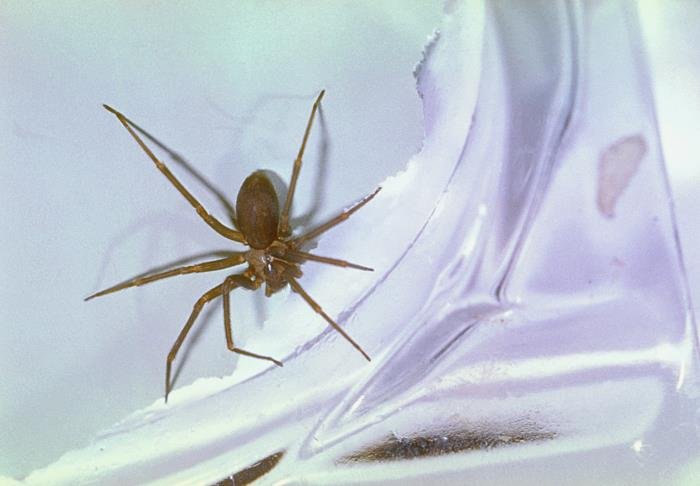
What should you do first after a suspected brown recluse bite?
Move away from the exposure area and avoid handling the spider. If it can be photographed safely from a distance, a clear image may help with identification, but do not risk a second bite. Wash the skin gently with soap and water.
MedlinePlus recommends a cold pack wrapped in cloth, used in intervals rather than directly against the skin. Remove rings, tight clothing, or constricting items before swelling develops. If the bite is on an arm or leg, keep the area comfortably still while arranging medical advice.
For a strongly suspected or confirmed brown recluse bite, contact a healthcare professional or Poison Control. In the United States, Poison Help is available at 1-800-222-1222. The early skin appearance may not predict the final severity, so professional guidance is more useful than repeatedly comparing the lesion with online photographs.
Brown recluse first aid: safe steps and common mistakes
| Safer step | Purpose | Avoid |
|---|---|---|
| Wash gently with soap and water | Basic wound hygiene. | Scrubbing, cutting, or squeezing the site. |
| Use a wrapped cold pack | May reduce pain and local swelling. | Direct ice or prolonged freezing exposure. |
| Remove tight items | Prevents constriction if swelling increases. | Leaving rings or tight braces in place. |
| Record the time and location | Helps clinicians interpret progression and geographic plausibility. | Relying on a skin photo alone. |
| Contact Poison Control or a clinician | Provides individualized triage. | Waiting for tissue damage before seeking advice. |
| Protect the skin | Reduces secondary injury and infection risk. | Popping blisters or applying caustic home remedies. |
What symptoms can occur after a brown recluse bite?
MedlinePlus describes pain that can develop within the first several hours and may become severe. Other possible symptoms include itching, fever, chills, nausea, sweating, a reddish or purplish area around the bite, and a sore or ulcer. Severe systemic complications are uncommon but can include blood-cell destruction, kidney problems, seizures, and other serious illness.
The local lesion can evolve over time. Some cases develop a blister or darkened area and may ulcerate. However, not every brown recluse bite becomes necrotic, and not every necrotic skin lesion is a brown recluse bite. Geographic range, an actual spider encounter, and clinical evaluation matter.
Children can have more serious reactions than adults, according to MedlinePlus. People with significant medical conditions, severe symptoms, rapidly worsening pain, or systemic illness should be assessed promptly.
How to treat a brown recluse bite behind the knee
For how to treat brown recluse bite on behind the knee, wash gently, use a wrapped cold pack in short intervals, remove tight clothing, and limit friction while arranging medical advice. The knee crease can repeatedly rub against clothing and can make a swollen lesion painful during walking or bending.
Do not immobilize the leg so tightly that circulation is affected. A homemade tourniquet is not appropriate. If the leg is swelling, check shoes, socks, knee supports, and clothing for constriction. Comfortable elevation may be used if a clinician or poison specialist recommends it and it does not increase discomfort.
Because the back of the knee is near a major joint, worsening pain that limits movement deserves attention. MedlinePlus notes that clinicians may use a brace or sling for bites near a joint in some cases. That is a clinical decision, not a reason to apply a rigid splint at home without guidance.
When is tissue damage or infection a concern?
Brown recluse venom can damage skin and blood vessels, but it is important to distinguish venom-related injury from bacterial infection. Increasing warmth, pus, red streaking, progressive tenderness, fever, or feeling increasingly unwell can suggest secondary infection or another diagnosis that needs examination.
CDC notes that MRSA and other skin infections are sometimes mistaken for spider bites. If no spider was seen, avoid assuming that a painful red bump is a brown recluse bite. This is especially important when a lesion is filled with pus, rapidly expanding, or accompanied by fever.
Do not squeeze, lance, or attempt to remove “venom” from the wound. Do not use bleach, gasoline, acids, or other caustic products. These can cause burns, increase tissue damage, and make the original condition harder to evaluate.
Which warning signs need urgent medical attention?
Seek prompt care for severe or increasing pain, rapidly expanding swelling, significant blistering, darkening tissue, fever, chills, persistent nausea or vomiting, unusual weakness, or symptoms that are moving beyond the bite area. Medical assessment is especially important for children or people who are medically vulnerable.
Call 911 for collapse, severe confusion, seizure, inability to wake, breathing difficulty, or another life-threatening reaction. Rare systemic brown recluse envenomation can affect the blood and kidneys, so dark urine, jaundice, or marked systemic illness requires urgent evaluation.
Do not delay care while trying to prove the species. A clinician can treat the current symptoms and complications even when the exact spider remains uncertain.
What might happen at urgent care or the emergency department?
The clinical team may check temperature, pulse, blood pressure, breathing, hydration, pain, and the appearance and progression of the wound. Depending on symptoms, they may order blood or urine tests and provide pain treatment, fluids, wound care, or other supportive treatment.
Antibiotics are not automatic treatment for brown recluse venom. MedlinePlus notes that antibiotics may be prescribed when the wound is infected. This distinction matters because local inflammation and tissue injury can look dramatic without being a bacterial infection.
Bring a concise exposure history: when and where the bite occurred, whether the spider was seen, the body site, when pain began, how the lesion changed, recent travel, and any photographs showing progression. Mention pregnancy, allergies, immune suppression, kidney disease, blood disorders, and current medicines.
How long does a brown recluse bite take to heal?
Healing varies widely. Mild cases may improve without major tissue injury. More serious lesions can evolve over days and may take weeks or longer to heal. MedlinePlus notes that a deep ulcer can take many months in severe cases and may leave a scar.
The most useful home observation is the direction of change. A stable or slowly improving lesion is different from one that becomes increasingly painful, larger, hotter, darker, more swollen, or associated with fever or systemic symptoms.
Take dated photographs from the same distance and lighting if a clinician asks you to monitor the lesion. Avoid drawing conclusions from one photo. Skin tone, lighting, topical products, scratching, and time since exposure can all change appearance.
Why are brown recluse bites often misdiagnosed?
Brown recluse spiders have a limited U.S. geographic range, yet “brown recluse bite” is frequently used as a label for unexplained skin wounds. CDC and other medical sources emphasize that infections and other skin disorders can resemble spider bites.
| Evidence | More useful | Less reliable |
|---|---|---|
| Exposure | Spider seen, captured safely, or photographed in a plausible setting. | No spider seen; diagnosis based only on a skin lesion. |
| Geography | Exposure occurred within a known recluse range or documented setting. | Assuming a species is common everywhere in the U.S. |
| Timeline | Pain and lesion progression documented over hours and days. | One isolated photograph without timing. |
| Clinical signs | Exam, systemic symptoms, labs when indicated. | Two punctures or a “bull’s-eye” treated as proof. |
It is possible to make a safe next-step decision without perfect identification. Wash the area, protect the skin, use a wrapped cold pack, document the course, and seek professional evaluation when the reaction is severe or worsening.
How can brown recluse bites be prevented?
Brown recluse spiders prefer dark, sheltered spaces. Use gloves when moving boxes, firewood, stored materials, or items that have been undisturbed for a long time. Shake out shoes, clothing, towels, gloves, and bedding that have been stored in garages, sheds, basements, closets, or other low-traffic areas.
Reduce clutter, seal gaps where practical, and avoid putting bare hands into spaces you cannot see. When working outdoors around logs, rocks, woodpiles, or debris, use protective clothing and footwear.
Most spiders are not aggressive and bites commonly occur when a spider is trapped against the skin. Simple exposure prevention is more useful than trying to eliminate every spider around a property.
Frequently asked questions
What should you do first for brown recluse bite treatment?
Wash the area, use a wrapped cold pack, remove tight clothing or jewelry, document the exposure, and contact Poison Control or a healthcare professional for guidance.
Does every brown recluse bite become necrotic?
No. Severity varies. Some bites remain limited, while others cause significant local injury or systemic illness.
Should I take antibiotics?
Not routinely for venom exposure. Antibiotics are used when a clinician determines that a bacterial infection is present.
Can a brown recluse bite look like MRSA?
Yes. Skin infections can be mistaken for spider bites. A pus-filled, warm, painful, or fever-associated lesion needs clinical evaluation rather than photo diagnosis.
Can I cut open the bite or suction the venom?
No. Cutting, squeezing, suction, and caustic chemicals can cause additional tissue injury and do not safely remove venom.
When is a brown recluse bite an emergency?
Call 911 for collapse, severe confusion, seizures, breathing difficulty, inability to wake, or other life-threatening symptoms. Severe systemic illness, dark urine, jaundice, or rapidly worsening symptoms need urgent medical care.
Related StingHelp guides
- Spider Bites
- First Aid for Bites & Stings
- Emergency & Warning Signs
- Infection, Complications & Healing
- What Bit Me? Identification Guide
Authoritative references
- MedlinePlus — Brown Recluse Spider
- CDC/NIOSH — Venomous Spiders at Work
- MedlinePlus — Spider Bites
- CDC — MRSA Skin Infections
- CDC Yellow Book — Spider Envenomation
Bottom line
For how to treat brown recluse bite on behind the knee, use gentle washing, a wrapped cold pack, removal of constricting clothing, careful monitoring, and professional medical guidance. Do not wait for a classic-looking lesion before seeking help. Increasing pain, tissue damage, fever, systemic illness, dark urine, neurologic symptoms, or life-threatening changes require prompt or emergency care.
Medical review status: Pending. This draft provides educational information for a U.S. audience and must not be published as medically reviewed until a qualified reviewer and review are documented.