
Bite and Sting Infection: Complications and Healing
Understand how bite and sting sites can change while healing, which local changes may deserve closer attention, and when worsening symptoms should be evaluated by a healthcare professional.
Track the direction of change
Improvement over time is reassuring. Increasing pain, spreading redness, drainage, fever, or new whole-body symptoms can change the next step.
Avoid diagnosing from appearance alone
A red or swollen area can have several possible explanations. Timing, exposure, progression, and associated symptoms provide useful context.
Know when home monitoring is no longer enough
Persistent or worsening symptoms, significant pain, fever, drainage, or concern for infection are reasonable reasons to contact a healthcare professional.
Latest infection & healing guides
Articles focused on symptom progression, skin changes, healing, possible complications, and safer follow-up decisions.
Normal healing can include temporary redness, itching, tenderness, or mild swelling that gradually improves. Infection becomes more concerning when pain and warmth increase instead of settle, redness keeps spreading, drainage or pus appears with worsening inflammation, red streaking develops, or fever and systemic illness occur. Not every enlarging red area is an infection—large local allergic reactions and irritation from scratching can also expand—so progression and the person’s overall condition matter.
Documenting changes with dated photos can help show whether a site is improving or worsening. Avoid repeatedly squeezing, cutting, or applying harsh chemicals to a bite or sting. For immediate care steps see First Aid for Bites and Stings, and for severe or rapidly worsening symptoms use the Emergency and Warning Signs guide.
When symptoms are uncertain, a clinician can help distinguish normal inflammation, allergic reactions, secondary infection, and other skin conditions that may look similar.

How Long Does Bee Sting Pain Last? Healing and Warning Signs
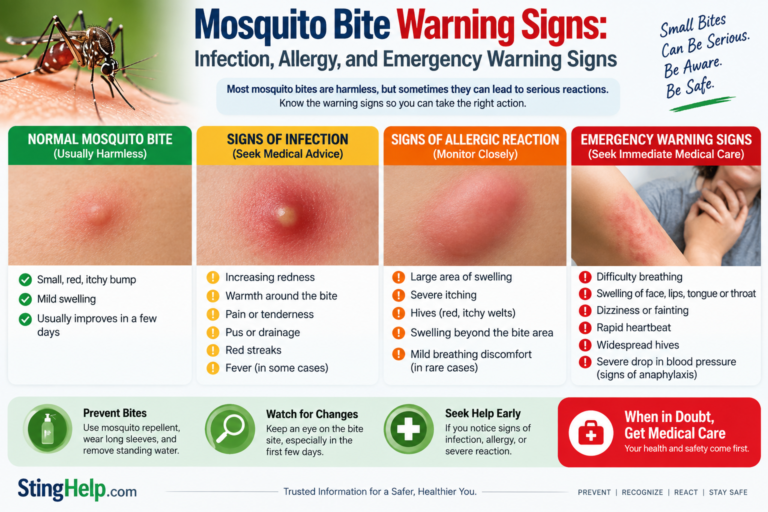
Mosquito Bite Warning Signs: Infection, Allergy, and Emergency Warning Signs
Skeeter Syndrome Warning Signs: Infection, Allergy, and Emergency Warning Signs
Tick Bite Warning Signs: Infection, Allergy, and Emergency Warning Signs
Severe or rapidly worsening symptoms should not wait for online guidance.
Breathing difficulty, throat swelling, fainting, collapse, severe confusion, or another rapidly worsening whole-body reaction may require emergency care.