
Black Fly Bites on Your Dog’s Belly: Red Rings vs Ringworm vs Lyme
# Black Fly Bites on Your Dog's Belly: Red Rings vs Ringworm vs Lyme If you found red rings on your dog's belly this…
# No-See-Ums in the House: How They Get In and How to Get Rid of Them If tiny biting insects seem to appear inside your home out of nowhere, especially…

# No-See-Ums in the House: How They Get In and How to Get Rid of Them
If tiny biting insects seem to appear inside your home out of nowhere, especially on calm, humid evenings, no-see-ums are a likely culprit. The direct answer is this: standard window screens usually cannot keep them out, so indoor control works best as a layered plan. Fit finer mesh where it matters most, use fans and air conditioning to make indoor air less inviting, reduce damp breeding spots near the home, and treat bites with simple care while you fix the entry points. No single product makes a home completely bite free when breeding habitat sits nearby, but a steady combination of screening, airflow, dryness, and light management can cut indoor encounters a great deal.
This article focuses on the indoor problem. It explains what no-see-ums are, how they get inside, and what to do room by room. It does not replace advice about bite treatment, and it does not diagnose any rash or reaction. If you want detail on caring for bites themselves, see the companion guide on no-see-um bite treatment.
No-see-ums are small biting flies often called biting midges. They are a different insect from mosquitoes, although people often confuse the two because both bite and both are most active in warm, humid conditions. The name is honest. These insects are tiny, about 1 to 3 millimeters long, so an individual midge can be easy to miss, especially in dim light or against a busy background. You may notice the itchy spots before you ever notice the insect that caused them.
Their small size explains much of the indoor problem. A screen that stops a mosquito can still let a biting midge pass. Their bites also tend to cluster around exposed skin, and people often notice them after spending time near a door, a window, or a porch in the evening. That pattern is a useful clue, but it is not proof of which insect bit you, because several biting insects can cause similar itchy spots. When in doubt, focus on prevention and simple bite care, and seek care promptly if a reaction looks severe or worsening.
Female biting midges bite to obtain blood, which they need for egg development. Like mosquitoes, they are drawn to cues that signal a warm blooded host. Body heat, exhaled carbon dioxide, and light can all draw them toward a home and toward people inside it. They are weak fliers, so they do best when the air is calm. A breeze, a fan, or an air conditioned room can make it harder for them to fly steadily and land, which is one reason airflow is such a useful indoor tool.
No-see-ums breed in moist places. Common breeding habitat includes moist soil, marsh edges, and standing water near the home. Damp garden beds, soggy mulch, poorly drained low spots, and the edges of ponds or marshy ground can all support them. That matters for indoor control because the insects you see inside often come from habitat just outside. Sealing a single window helps, but if damp breeding ground sits close to the house, new midges can keep arriving. The long term plan therefore has two parts: keep them out, and make the ground near the home less suitable for breeding.
Understanding entry points makes the fix much clearer. No-see-ums do not need an open door to get in, although open doors certainly help them. They can slip through gaps that look far too small to matter, and they follow the same cues that draw them to people outdoors.
Most homes have standard window screens with a mesh size of 16×16 or 18×16. Those screens are designed mainly for larger insects such as houseflies and mosquitoes. A biting midge, at about 1 to 3 millimeters, can pass through openings of that size. That is why people sometimes report bites inside a room even when every window screen looks intact. The screen is not broken. It is simply not fine enough for this particular insect.
Finer mesh changes the picture. Screens described as 20×20 or 30×30 no-see-um mesh have smaller openings and are much more likely to block biting midges. The tradeoff is airflow. Finer mesh can reduce breezes through a window, and it may need cleaning more often because dust and pollen collect on it. For many households, the practical compromise is to fit fine mesh on the windows and porch openings used most in the evening, such as bedrooms and the main living area, while leaving standard mesh elsewhere.
No-see-ums follow light, body heat, and carbon dioxide. In the evening, a lit room with an open window or a door that opens often becomes a beacon. Midges gather near the light, then drift inside when a door opens or through a screen that cannot stop them. People sitting near a lit window are also easier targets, because heat and exhaled breath add to the attraction.
This is why timing and lighting matter as much as screening. On calm, humid evenings at dawn and dusk, when biting midges are most active, keeping doors closed, limiting how long exterior doors stand open, and being careful about bright lights near open windows can reduce how many insects gather at entry points in the first place.
Because no-see-ums are weak fliers, they struggle in moving air. Calm evenings are worst for indoor encounters, because still air lets them fly, hover, and land with little effort. A porch fan, a ceiling fan, or a steady breeze through a screened opening can disrupt them. The same logic applies indoors. A room with a fan running is a harder place for a weak flier to feed than a still, warm room with the windows open.
Seasonality shapes the risk as well. Nationally, no-see-ums are most active in June and July, when warm and humid conditions are common. On the Gulf Coast, where warm and humid weather lasts much longer, they can be active year round. That regional difference matters for planning. In northern areas, a short summer push on screening and yard drainage may be enough. On the Gulf Coast, the same measures need to become year round habits rather than a one season project.
Beyond screens, midges can enter through small gaps around doors, worn weather stripping, gaps around window frames, and vents or openings that are not screened. They can also ride in when pets come inside, or drift in during the few seconds a door stands open while someone carries groceries or lets a pet out. No home is perfectly sealed, and chasing perfect sealing is not realistic. The goal is to close the biggest, most consistent gaps first, starting with bedrooms and rooms where people sit still in the evening.
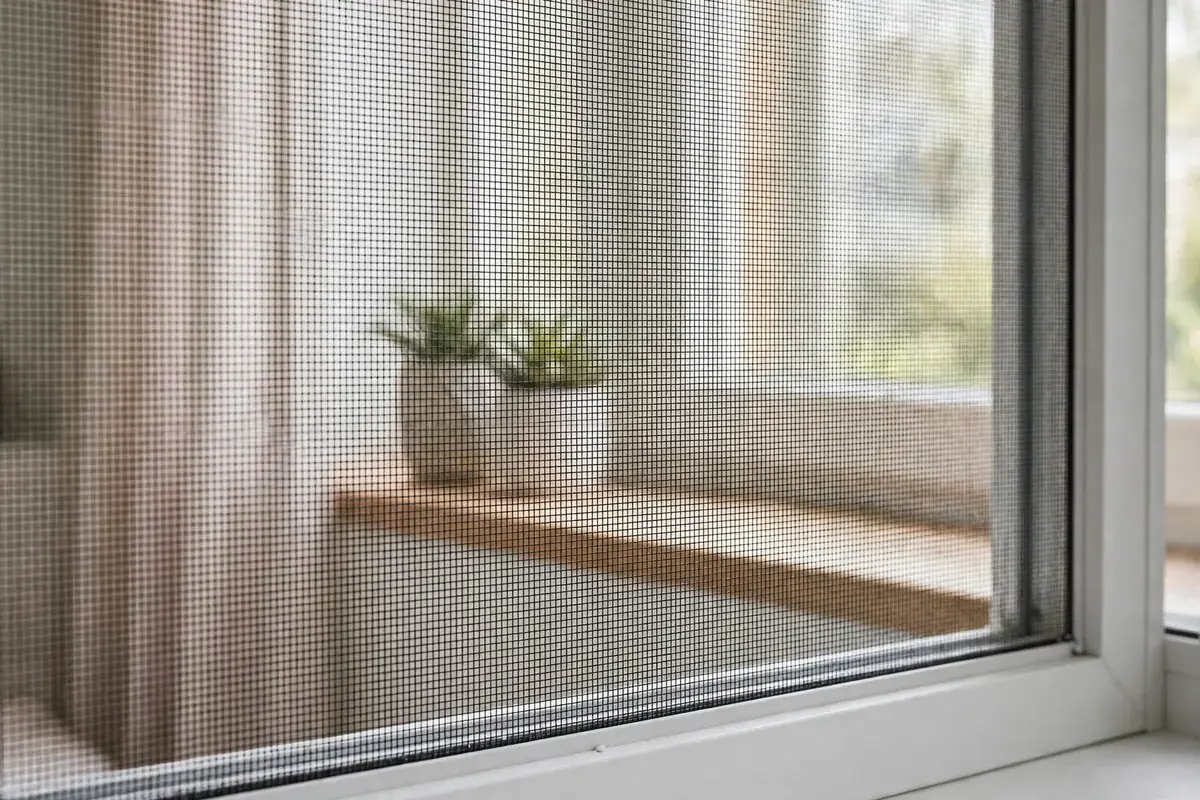
Indoor control works best as a layered plan rather than a single purchase. The steps below are ordered from the most reliable to the most situational, so you can start with the measures that give the most protection for the effort involved.
Fitting fine mesh is the single most reliable indoor step. Choose 20×20 or 30×30 no-see-um mesh for bedroom windows, the main living area, and any porch or sunroom where people spend evening time. Check that frames fit snugly, that there are no torn corners, and that sliding windows close fully against their frames. A fine screen with a gap at the edge still lets midges in.
If replacing every screen at once is too much, start with bedrooms. People spend hours still and asleep in bedrooms, which makes them easy targets, and better sleep is often the first benefit people notice. Porch screening comes next for households that spend evenings outside, because a screened porch with fine mesh can turn an unusable evening space into a comfortable one.
Fans are a simple, low cost defense because no-see-ums are weak fliers. A ceiling fan in the living room or bedroom, a portable fan aimed across a seating area, or a porch fan can all make landing harder. The goal is steady airflow across the places where people sit, not a blast of wind in one corner. Outdoors, a fan on a porch can help even when fine screening is not in place.
Air conditioning helps in two ways. It keeps indoor air moving and cooler, which is less inviting, and it lets you keep windows closed on the worst evenings without giving up comfort. On calm, humid evenings at dawn and dusk, closing windows and running the air conditioner is often the most practical choice, especially in bedrooms.
No-see-ums need moisture to breed, so drying out damp spots near the home reduces the local population over time. Fix drainage so water does not pool near foundations, clean gutters so they drain freely, and avoid over-watering garden beds close to the house. Let potted plant soil dry between waterings rather than keeping it constantly soggy, and empty saucers under pots so they do not hold standing water. Indoors, dehumidifying damp rooms, fixing leaks promptly, and ventilating bathrooms and laundry areas help keep the home less hospitable to moisture loving insects in general.
This step takes longer to show results than screening, because it works on breeding habitat rather than on the insects already flying. It is still worth doing, because screening alone cannot stop a steady stream of new midges from a soggy yard. Think of drainage and watering habits as the long term part of the plan, and screening and fans as the immediate part.
Because no-see-ums follow light, evening lighting choices can shift where they gather. Keep bright white lights away from doors and windows that open in the evening where possible. Outdoors, yellow bug-light bulbs attract fewer biting insects than standard white bulbs, and they can be a useful swap for porch and patio fixtures. Indoors, closing curtains or blinds in lit rooms can reduce the glow that draws midges toward windows, especially in bedrooms.
Light management does not replace screening, and it will not keep every midge away. It is a supporting measure that reduces the number of insects gathering at entry points, which gives screening and fans less work to do.
Carbon-dioxide-baited traps are marketed as a way to lure biting insects away from people, because carbon dioxide mimics human breath. Some households find them useful as a supplement, particularly outdoors and away from seating areas, where they may draw some insects away from people. They are not a standalone solution indoors, and they do not eliminate a local midge population. Traps also need ongoing upkeep, and their value depends heavily on placement, local habitat, and how many midges are breeding nearby.
If you try a trap, place it according to the product instructions, away from where people sit, and judge it by whether indoor bites fall over time rather than by how many insects it catches. A trap full of insects does not by itself mean fewer bites, because it may simply be drawing in insects from a wide area. For most households, screening, fans, dryness, and light management should come first, with traps as an optional extra.
The table below compares the main indoor options by what each one does, how much cost or effort it typically involves in plain words, and where it falls short. Costs vary by home size, local prices, and whether you do the work yourself or hire help, so the table uses broad levels rather than exact figures.
| Method | What it does | Cost and effort level | Limits |
|---|---|---|---|
| Fine no-see-um mesh (20×20 or 30×30) on windows and porches | Blocks tiny midges that pass through standard screens | Moderate cost, one time effort to fit, occasional cleaning | Reduces airflow, needs snug frames, does not fix breeding habitat outside |
| Fans and air conditioning | Makes flying and landing hard for weak fliers, lets you keep windows closed | Low to moderate running cost, easy to use daily | Helps only while running, does not stop midges already indoors |
| Dehumidifying and fixing leaks | Dries damp indoor areas and reduces moisture loving insect habitat | Low to moderate cost, ongoing habit | Slow to show results, does not block entry on its own |
| Fixing drainage and watering habits | Reduces moist soil and standing water where midges breed near the home | Low to moderate effort, seasonal upkeep | Takes time, cannot fix marsh or wetland habitat beyond the property |
| Yellow bug-light bulbs outdoors | Draws fewer biting insects to porches and doors than white bulbs | Low cost, simple swap | Supporting measure only, does not block or remove midges |
| Carbon-dioxide-baited traps | Lures some biting insects toward the trap instead of people | Moderate cost plus ongoing upkeep | Optional supplement, does not eliminate local populations, placement matters |
A second comparison helps clarify the screening choice, because it is the decision most households face first.
| Feature | Standard screen (16×16 or 18×16) | Fine no-see-um mesh (20×20 or 30×30) |
|---|---|---|
| Blocks mosquitoes and larger flies | Yes, generally | Yes, generally |
| Blocks biting midges about 1 to 3 millimeters long | Often no, midges can pass through | Much more likely to block them when frames fit snugly |
| Airflow through the window | Better | Reduced, especially with the finest mesh |
| Cleaning needs | Standard | More frequent, because dust collects on finer openings |
| Best use | Rooms where midges are not a problem | Bedrooms, living areas, and porches used on summer evenings |

Bite care basics are simple, and they matter because scratching can make skin problems worse. Wash the area gently with soap and water, apply a cool compress for comfort, and try to avoid scratching. Keep nails short and skin moisturized if dryness makes itching worse, and watch the area over the next day or two. For a fuller guide to bite care and how healing usually looks, see how to tell if a bug bite is healing.
Simple comfort measures are usually enough for mild itching, but they are not a diagnosis and they do not replace medical care when a reaction looks serious. If you are unsure whether a bite is healing normally or becoming infected, it is reasonable to seek advice from a clinician rather than waiting it out. The detailed treatment guide at no-see-um bites treatment covers bite care in more depth for readers who want it.
Most no-see-um bites cause itching and small spots that settle with simple care. Seek medical advice promptly if you notice signs that could suggest infection or a stronger reaction. Those signs include redness that keeps spreading, increasing warmth around the area, swelling that gets worse rather than better, pus or discharge, red streaks moving away from the bite, fever, or pain that increases instead of easing. Facial swelling, swelling of the lips or tongue, trouble breathing, wheezing, dizziness, fainting, or a widespread rash are emergency signs.
Call 911 or go to emergency care right away if you have trouble breathing, throat or facial swelling, fainting, or any sign of a severe allergic reaction. Do not wait to see whether it settles on its own. If a child, an older adult, or someone with a weakened immune system has a worsening bite, seek care sooner rather than later, because infections and reactions can progress faster in those groups. Bring a note of when the bites appeared and what care you have already tried, since that helps the clinician assess the situation.
It is important to be honest about what indoor control can and cannot do. No method guarantees a bite free home when breeding habitat sits nearby. Fine mesh, fans, and dryness can greatly reduce indoor bites, but a home next to marsh edges, damp low ground, or standing water will keep receiving new midges from outside. Doors open, pets come and go, and small gaps remain, so occasional indoor encounters can still happen even in a well screened home.
Insecticide fogging deserves special caution. Fogging can knock down insects present at the time, but it gives only brief relief for no-see-ums because midges fly in from wide areas and repopulate quickly. It does not fix breeding habitat, it does not block entry, and repeated fogging is not a substitute for screening and drainage. Households that rely on fogging alone often find bites return within a short time, which is frustrating and wasteful. Fogging may have a place in a broader pest plan advised by a professional, but on its own it is not a lasting indoor solution.
A realistic goal is therefore reduction, not elimination. Measure success by fewer bites, better sleep, and evenings you can enjoy, rather than by zero insects ever. If indoor bites stay heavy despite fine mesh, fans, and drainage work, consider asking a local pest professional to inspect for hidden entry points or nearby breeding sources you may have missed, especially damp areas under decks, in crawl spaces, or around drainage features.

A short checklist makes the plan easier to carry out without feeling overwhelmed.
Fit fine mesh on bedroom windows, check frames and weather stripping, run a fan or air conditioner on calm humid evenings, and keep bedroom doors closed while windows are open elsewhere in the house. Close curtains in lit bedrooms at dusk to reduce glow at the window.
Use fans across seating areas, keep exterior doors closed as much as practical on peak evenings, and fix any gaps around door frames. Avoid leaving doors standing open while cooking or carrying items in and out during dawn and dusk hours.
Fit fine mesh on screened porches where possible, use porch fans, swap porch bulbs for yellow bug-light bulbs, and keep the area near the door free of standing water and soggy pots. Store firewood, plant pots, and garden items so they do not trap moisture against the house.
Grade soil away from foundations where feasible, clean gutters, avoid over-watering beds near the house, and let potted plant soil dry between waterings. Remove or refresh standing water in saucers, buckets, and other containers after rain. These steps take time, but they lower the local midge pressure that screening must hold back.
Yes, often they can. Standard screens at 16×16 or 18×16 are made for larger insects, and a biting midge at about 1 to 3 millimeters can pass through openings of that size. That is why intact screens do not always prevent indoor bites, and why fine 20×20 or 30×30 mesh is the usual upgrade for midge problems.
No-see-ums are most active in calm, humid conditions at dawn and dusk, and they are weak fliers, so still evening air suits them well. Lit rooms, body heat, and exhaled carbon dioxide also draw them toward homes in the evening, which increases the chance they gather at windows and doors.
Yes, as a supporting measure. Because no-see-ums are weak fliers, steady airflow makes it harder for them to fly and land. A fan does not block entry or remove breeding habitat, but across a seating area or bedroom it can noticeably reduce bites while it runs, especially combined with fine mesh and closed windows.
No, not on its own. Traps may draw some biting insects away from people, but they do not eliminate local populations and they do not block entry. Treat them as an optional supplement after screening, fans, dryness, and light management are in place, and judge them by whether bites fall over time.
Nationally, no-see-ums are most active in June and July. On the Gulf Coast, warm and humid conditions last much longer, so they can be active year round. In cooler regions, the worst period is usually the warm summer months, while Gulf Coast households should plan for year round habits.
Fogging gives only brief relief for no-see-ums, because new midges fly in from wide areas after treatment. It does not fix breeding habitat or block entry. Screening, airflow, drainage, and watering habits are more lasting steps, and a pest professional can advise whether any targeted treatment fits your property.
Start with bedrooms. Fit fine mesh on bedroom windows if you can, run a fan or air conditioner on calm humid evenings, and keep bedroom doors closed while other windows are open. Better sleep is often the fastest benefit, and bedrooms are where still, sleeping people are easiest targets.
No-see-ums get inside because they are tiny, because standard screens cannot stop them, and because light, heat, and carbon dioxide draw them toward homes on calm humid evenings. The indoor answer is layered: fine mesh on the windows that matter most, fans and air conditioning to defeat weak fliers, drier soil and better drainage near the home, smarter evening lighting, and traps only as an optional extra. Fogging alone will not hold, and no method promises a bite free home while breeding habitat sits nearby. With steady habits, though, most households can turn a summer of indoor bites into a much calmer season, with bedrooms protected, evenings more comfortable, and bites far less frequent.
This content is medically reviewed by Dr. Sarah Jones, MD.
Medical disclaimer: This article is for general information only and is not medical advice. It does not diagnose or treat any condition. If you have a severe reaction, signs of infection, or a worsening bite, seek medical care promptly, and call 911 for trouble breathing, facial or throat swelling, fainting, or any sign of a severe allergic reaction.
Dr. Jones oversees StingHelp’s clinical verification process. Every guide is systematically evaluated against active Centers for Disease Control and Prevention (CDC), Environmental Protection Agency (EPA), and American Academy of Allergy, Asthma & Immunology (AAAAI) medical consensus standards to ensure symptom distinctions and care recommendations are clinically sound.
Explore physician-reviewed first-aid procedures, identification clues, and symptom comparisons for other common outdoor bites and stings.

# Black Fly Bites on Your Dog's Belly: Red Rings vs Ringworm vs Lyme If you found red rings on your dog's belly this…

Red Rings on Your Dog's Belly? It's Probably Black Fly Bites — Not Ringworm, Not Lyme The fast answer: Every spring and early summer,…

Greenhead Fly Season at the Jersey Shore: When They're Worst, and How to Plan Around Them The fast answer: Greenhead flies — the big,…