Halloween night is full of things that go bump in the dark — ghosts, goblins, and inflatable lawn monsters. But one of the least expected hazards doesn’t wear a costume at all. While kids dart across lawns, cut through brush, and dive into leaf piles between houses, ticks can hitch a ride on clothing and skin. The result? A tick bites trick-or-treating scenario most parents never see coming, because ticks are supposed to be a summer problem.
Except they aren’t. Adult blacklegged ticks stay active on mild fall days and can still be active ahead of any major frost — Halloween-night exposure is very real. The classic trick-or-treat route invites tick encounters: kids cut across yards, play in leaf piles, and brush against hedges and tall grass. Leaf piles and brush are prime questing habitat — and a costume doesn’t stop ticks.
This article covers how to keep ticks out of your Halloween night: why they’re still active in late October, where kids pick them up on the route, costume-friendly prevention, a step-by-step tick check for when costumes come off, what to do if you find a tick, and which signs to watch for afterward.
Why Ticks Are Still a Threat on Halloween Night
Most people pack away their tick worries with the swimsuits. But adult blacklegged ticks — the ticks associated with Lyme disease across much of the United States — have a fall activity peak. They stay active on mild fall days and can still be questing ahead of any major frost. Late October, trick-or-treat night, falls squarely inside their active season.
Questing is how ticks find you: a tick climbs a grass blade or twig, extends its front legs, and waits for a host to brush past. The classic Halloween route is a parade through questing habitat — cutting across lawns, wading through curbside leaf piles, squeezing past hedges. Each is a brush-past opportunity for a waiting tick.
Nuvance Health’s Halloween safety guidance explicitly recommends a tick check following trick-or-treating, especially if the child walked through leaves, brush, or tall grass. That’s a hospital system treating the tick check as standard Halloween-evening safety. The perception gap is the real hazard: on a chilly evening, ticks don’t cross anyone’s mind, so the habits that work — light layers, tucked pants, repellent, a check afterward — never happen.
Where Trick-or-Treaters Pick Up Ticks
Ticks concentrate in transition zones: where lawn meets woods, brush piled along a fence, tall ornamental grass, and leaf litter under trees. They need humidity, so they cluster in leaf piles, damp brush, and shady vegetation rather than on open lawns or pavement.
The classic Halloween route runs straight through these zones. Kids cut across lawns diagonally, chase friends through unmowed side yards, and play in leaf piles before and after the candy run — and a child jumping into a leaf pile is jumping into concentrated questing habitat.
Door-to-door details matter too. Hay bales, cornstalks, and brush bundles lining walkways make fine tick perches, and the bushes flanking a front door sit exactly at kid height.
Pets deserve a mention: a dog trotting along can pick up ticks and carry them indoors. New York State’s fall guidance specifically calls for checking pets as part of the end-of-day routine.
Route with intention: stick to driveways and sidewalks where you can, steer kids around leaf piles and brush rather than through them, and save leaf-pile jumping for a day when everyone can shower right after.
Costume-Aware Prevention Before You Leave

The best tick bite is the one that never happens, and most prevention happens before you leave the porch. Costumes fight standard tick-prevention habits — capes cover light clothing, masks hide the scalp — so adapt the standard guidance to work with the costume.
Start with what’s underneath. Put light-colored layers under the costume where possible — light leggings, a light long-sleeve shirt, light socks. Ticks show up far more easily on light fabric. Then tuck pant legs into socks: the costume usually covers it, and it closes the easiest entry point — ticks crawling up from shoes and ankles. New York State’s fall guidance lists light-colored clothing and tucked pant legs as core prevention.
Use repellent per the label. Apply an EPA-registered repellent per label directions on exposed skin, including wrists, neck, and ankles under the costume. Check the label for age guidance before using any repellent on children, and apply it yourself.
Contain the hair, and pack a zip-top bag. A braid, bun, or ponytail makes the after-Halloween check far more effective — ticks on a child’s head are the hardest to find. Tuck a zip-top bag in your pocket: it’s your tick-saving kit if you spot one during the evening. Before you leave, set expectations: “we’re doing a tick check when we get home, just like we sort candy.” Kids who expect the check cooperate with it.
The After-Halloween Tick Check: A Step-by-Step Routine
This is the single most important tick-safety step of the night, and it takes about five minutes. Tick experts at Tufts University advise a tick check every time you return indoors — Halloween night is no exception. The goal: find any tick before it attaches, or catch an attached tick within 24 hours — Lyme disease transmission generally requires 36 to 72 hours of attachment.
Costumes off, then shower. Check when costumes come off, before kids scatter — ticks can wander off clothing, so costume pieces go straight to the laundry. Run the dryer on high heat for clothes you can’t wash right away. Then have kids shower: it washes off unattached ticks, and on soapy skin you can feel for new bumps.
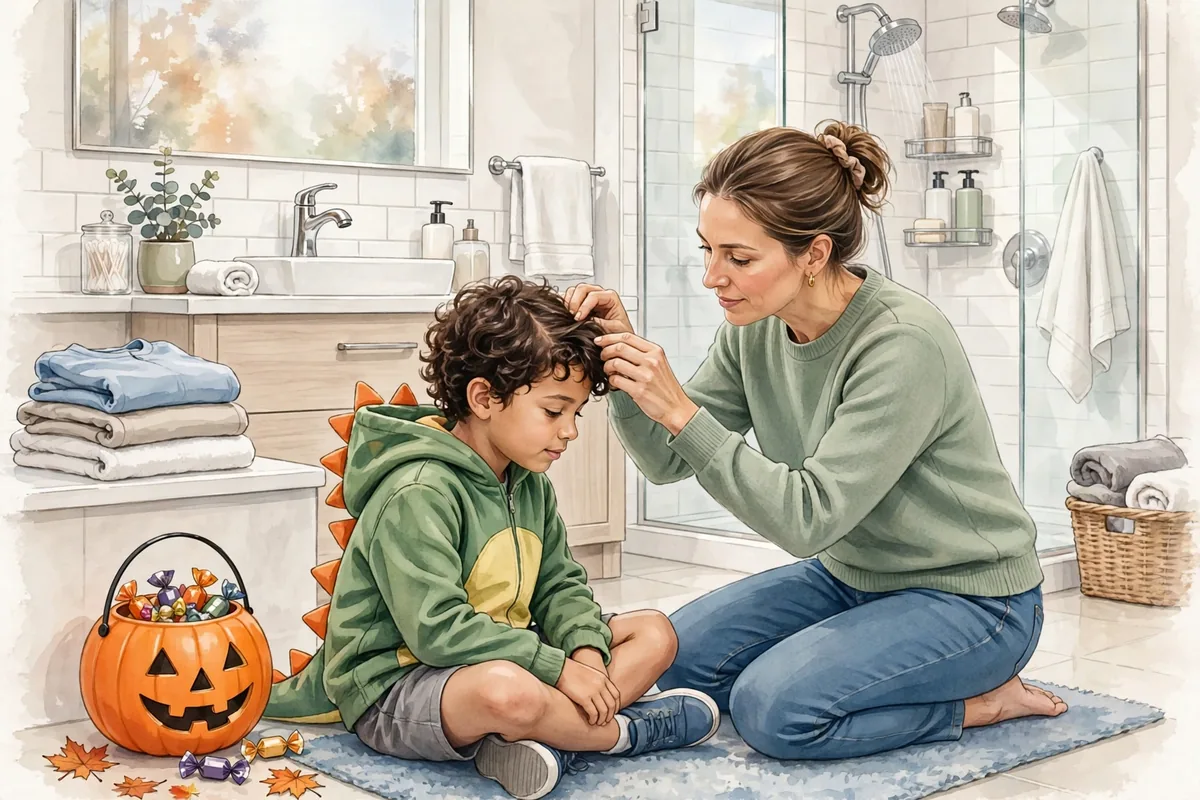
The full-body check: under the arms, in and around the ears, inside the belly button, behind the knees, between the toes, under the hair, the groin, and the waistband line. Check the neck and hairline on kids who wore masks or wigs.
Pair it with candy sorting. Check first, then sort the haul — kids cooperate when candy is the reward. Check the dog too if it joined the walk: ears, between toes, around the collar.
What to Do If You Find a Tick That Night
Finding a tick during the check isn’t a reason to panic — it’s the system working. Remove it correctly, save it, and call your pediatrician. Stay calm in front of the kids; a matter-of-fact tone keeps a small scare small.
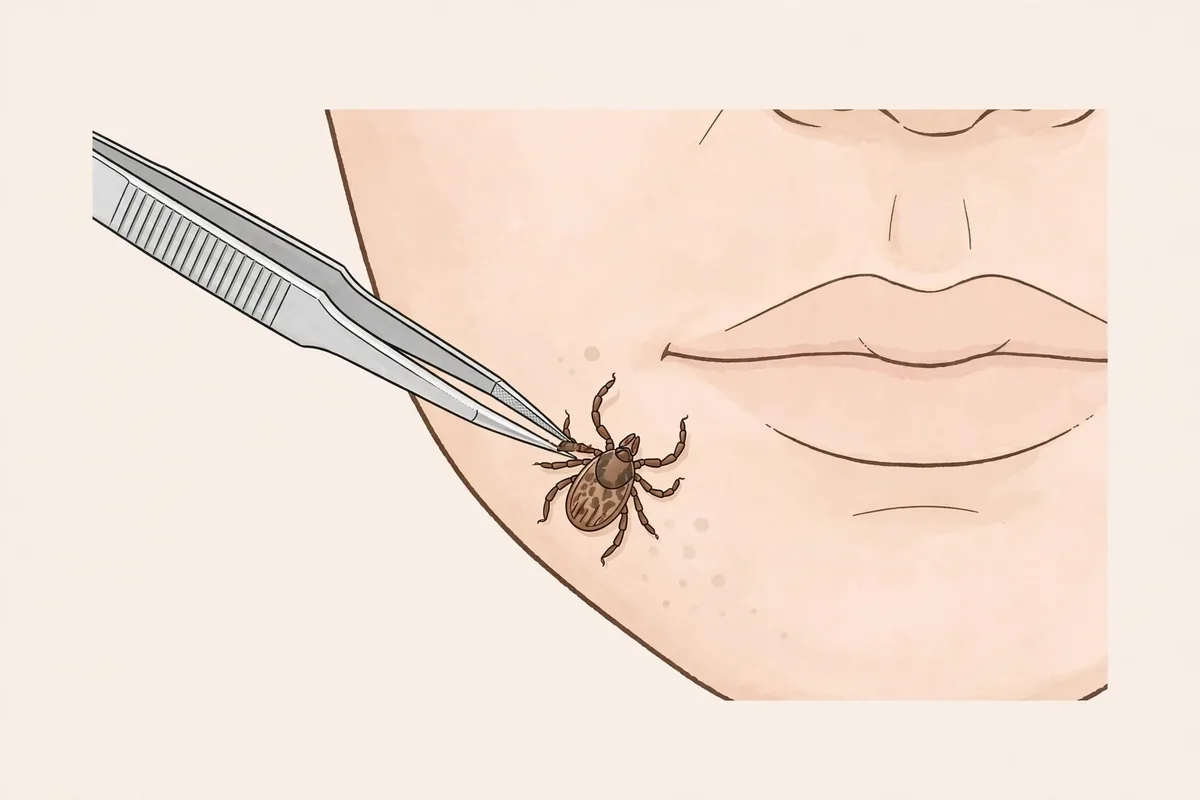
Remove it safely. Use fine-tipped tweezers — not fingernails, matches, or petroleum jelly. Grasp the tick as close to the skin as possible, right at the mouth where it is attached, and pull back slowly, steadily, and firmly like a splinter. Don’t jerk or twist, then clean the area with soap and water. For a detailed walkthrough, see our guide on how to remove an attached tick safely.
Save the tick and note the details. Place it in a sealed bag with the date — if symptoms develop later, the actual tick can help a healthcare professional. Jot down where it was attached and whether it looked flat or engorged — an engorged tick, or unknown attachment time, is worth mentioning to your pediatrician.
Call the pediatrician. Any tick bite on a child warrants a call — not a midnight ER dash, but a prompt call, ideally the next day. Describe what you found and that you’ve saved the tick. The pediatrician decides whether a visit is needed. Leave species identification to the professionals; your job was the check, the removal, and the save.
Signs to Watch in the Coming Weeks
Removing the tick ends Halloween night’s work, but a short watch period follows. Most tick bites never lead to illness — knowing what to look for means you’ll act quickly if something does develop. Watch through the days to weeks after the bite.
The rash. The best-known sign associated with Lyme disease is an expanding rash — sometimes a bull’s-eye, though not always. Any expanding redness around the bite site deserves a prompt call to your pediatrician. It can also be simple local irritation, which is why you should never diagnose it yourself — our guide on tick bite rash vs. local irritation explains the general differences, with the same bottom line: let a doctor decide.
Flu-like symptoms. Watch for fever, headache, unusual fatigue, or joint aches. These have many possible causes in cold-and-flu season, but if they follow a known tick bite, that context matters — tell the pediatrician about the bite when you call.
What not to do. Don’t start any medication on your own — that decision belongs to your child’s doctor. Check the bite site once a day and keep the saved tick until your pediatrician says you no longer need it. Our tick bite aftercare guide covers the next few weeks in more detail.
When to See a Doctor for a Bug Bite
- Any tick bite on a child warrants a call to the pediatrician. Save the tick in a sealed bag with the date, note where it was attached and for roughly how long, and call — ideally the next day.
- An expanding rash around the bite site in the days after — whether or not it looks like a bull’s-eye — deserves prompt medical attention.
- Fever, headache, fatigue, or joint aches in the days to weeks after a known tick bite. Mention the bite when you call; the context matters.
- The tick was attached and engorged, or the attachment time is unknown. Tell the doctor what you observed.
- Signs of skin infection at the bite site — increasing redness, warmth, swelling, or pain spreading outward days after the bite — should be evaluated promptly.
- You couldn’t remove the whole tick, or the bite area looks unusual afterward.
Medically reviewed by Dr. Sarah Jones, MD.
Frequently Asked Questions
Are ticks really still active on Halloween?
Yes. Adult blacklegged ticks stay active on mild fall days and can still be active ahead of any major frost. Nuvance Health’s Halloween safety guidance explicitly recommends a tick check after trick-or-treating, especially if a child walked through leaves, brush, or tall grass. Don’t let the chilly air fool you.
Where on the trick-or-treat route are ticks most likely?
Leaf piles, brush along fences and sidewalks, tall grass in side yards, hedges flanking front doors, and edges where lawns meet woods — damp, shady spots where ticks wait for a host to brush past. Sticking to driveways and sidewalks where possible reduces contact.
How do I do a tick check on a kid in a full costume?
Do the check when the costume comes off, before kids scatter. Shower first — it washes off unattached ticks — then check soapy skin head to toe, feeling for new bumps: under arms, in and around ears, inside the belly button, behind knees, between toes, under hair, groin, and the waistline. Pair it with candy sorting so kids cooperate, and put worn clothes in the dryer on high heat.
What is the right way to remove a tick I find on Halloween night?
Use fine-tipped tweezers: grasp the tick at the mouth where it attaches to the skin, pull back slowly, steadily, and firmly like a splinter, then clean the area with soap and water. Save the tick in a sealed bag with the date and call your pediatrician.
How long after a tick bite should I watch my child for symptoms?
Watch through the days to weeks after the bite for an expanding rash, fever, headache, unusual fatigue, or joint aches. Most tick bites never lead to illness, but if any of these appear after a known bite, call your pediatrician and mention the bite.
This article is for informational purposes only and isn’t medical advice. If you’re worried about a bite or sting, talk to a healthcare professional.