
No — flea bites on babies are usually not dangerous, but they can be miserable. Babies cannot tell you what is wrong, cannot stop themselves from scratching, and their skin reacts more strongly than adult skin. The good news: with gentle care at home and a plan to remove the fleas, most cases clear up without any lasting problem.
What Flea Bites Look Like on a Baby #
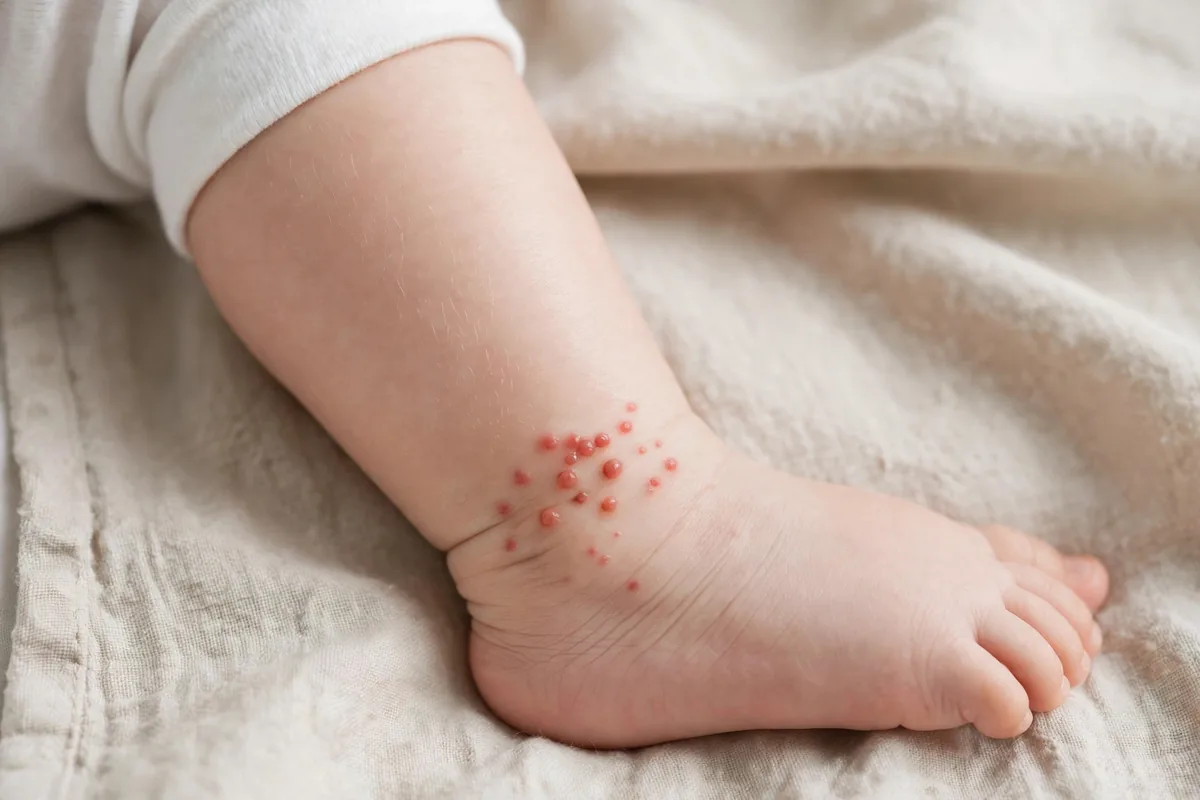
Small red bumps in clusters. Flea bites usually appear as tiny raised red spots, often with a darker red center. They tend to show up in groups of two or three, or in a short line where the flea moved along the skin feeding.
Common locations. Fleas bite where they can reach skin easily. On babies, look around the ankles and lower legs, the waistline and diaper edges, the folds of the elbows and knees, and the armpits. Bites around sock lines and waistbands are a classic clue.
Bigger reactions than adults. Baby skin is thin and sensitive, so the same bite that gives an adult a small dot can raise a large, swollen bump on an infant — sometimes with a pale halo around it. Dramatic-looking swelling alone does not mean infection; it is often just the baby’s immune system overreacting.
Very itchy, often at night. Flea saliva triggers intense itching, and babies may seem fussier than usual, especially in the evening. If your baby is scratching at the same spots repeatedly, look closely for the clustered pattern.
Flea bites versus mosquito bites. Mosquito bites usually appear as scattered single bumps wherever skin was exposed. Flea bites cluster in lines or groups around clothing edges. If you are unsure, comparing notes with guidance on mosquito bite swelling in children can help you tell the patterns apart — and either way, the scratch-control steps below apply to both.
Safe Treatment Steps at Home #
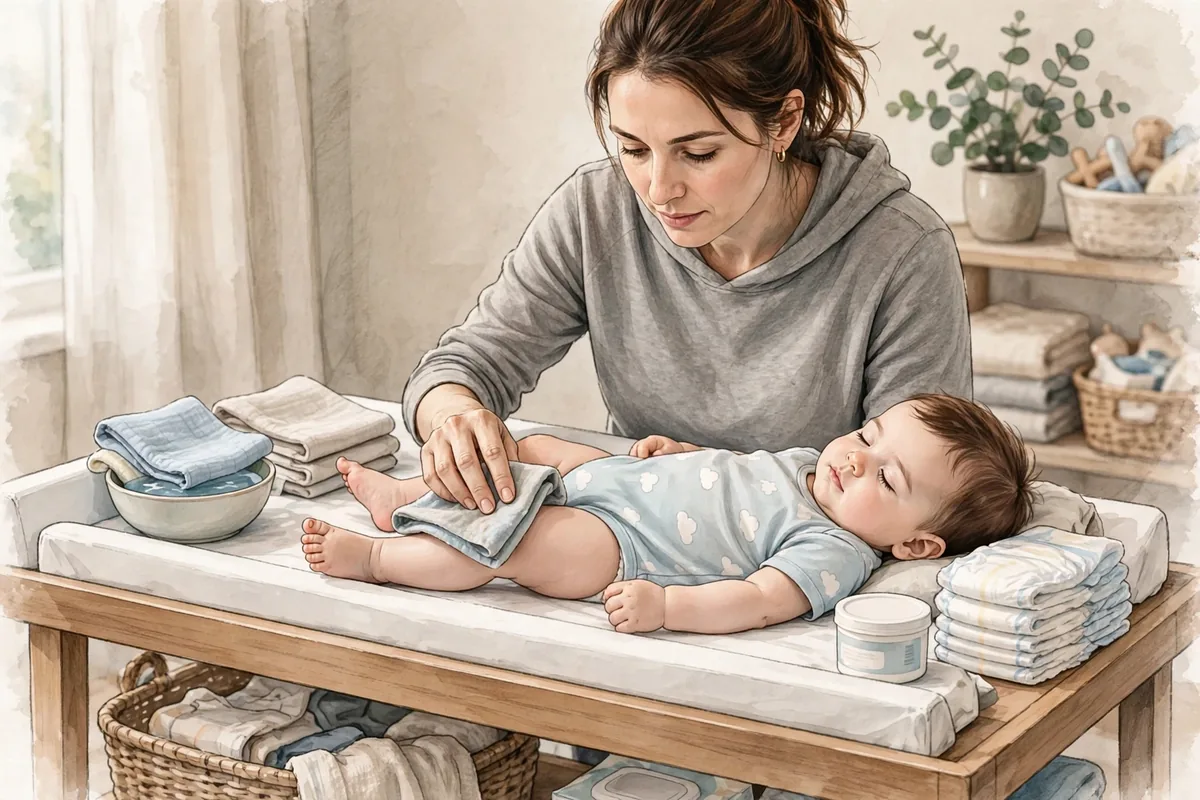
Clean the bites gently. Wash the affected areas with lukewarm water and mild soap, then pat dry. Keeping the skin clean lowers the chance that scratching will lead to a skin infection.
Use a cool compress. A clean, damp washcloth — cool, not ice-cold — held on the itchy spots for a few minutes can calm the itch. Repeat as needed through the day. This is the single safest itch reliever for infants.
Keep nails short. Trim your baby’s nails and consider soft mittens at night. Most of the damage from flea bites comes not from the bite itself but from scratching that breaks the skin.
Dress in loose, soft clothing. Tight elastic bands over bitten skin increase irritation. Choose breathable cotton and keep the nursery cool, since heat makes itching worse.
Do not reach for adult products. Never use adult-strength creams, essential oils, or home remedies on baby skin without asking first. Do not give a baby any oral medicine — including antihistamines — unless your pediatrician specifically says so. For babies, the rule is simple: cool compresses and clean skin at home, and your pediatrician’s advice for anything stronger.
Soothe with an oatmeal bath. A lukewarm bath with colloidal oatmeal (made for sensitive skin) can ease widespread itching. Keep it short, skip the soap on irritated areas, and moisturize afterward with a plain, fragrance-free baby lotion.
Clearing Fleas From Your Home #
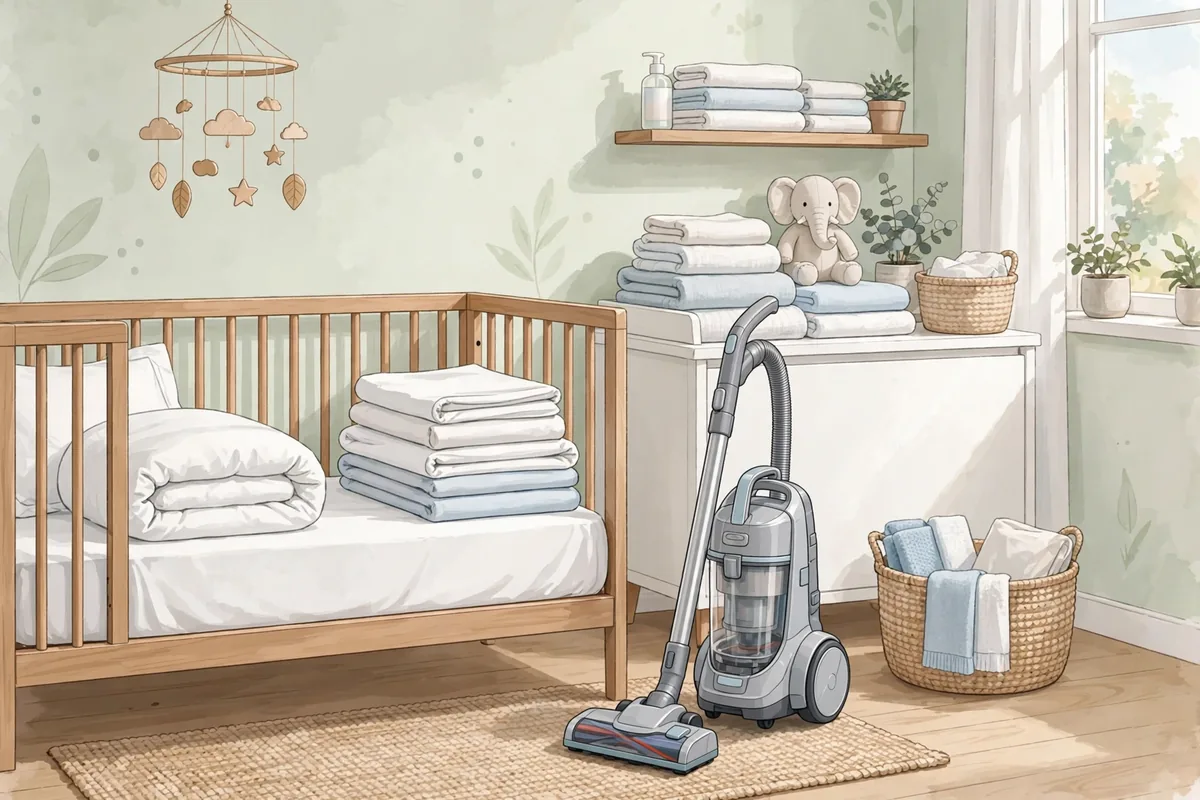
Start with the bedding. Wash all crib sheets, blankets, and your own bedding in hot water and dry on the highest heat the fabric allows. Heat kills fleas at every life stage.
Vacuum thoroughly and often. Vacuum carpets, rugs, floor cracks, baseboards, and upholstered furniture daily during an infestation. The vibration also encourages pupae to hatch so they can be picked up. Empty the vacuum canister or seal the bag and take it outside immediately.
Treat the pets — through your vet. Pets are the usual flea source. Ask your veterinarian for a flea treatment that is safe for your specific animal, and follow the schedule exactly. Never use dog flea products on cats, and never apply pet products to a baby’s skin.
Be cautious with home insecticides. Foggers and sprays leave residue on floors and surfaces where babies crawl and put hands in mouths. If the infestation is heavy, consider a licensed pest professional and keep the baby out of treated rooms for the full time they recommend.
Watch the yard. If pets go outside, fleas may be living in shady, damp spots in the yard. Keep grass short and ask your vet about safe outdoor treatment options.
Repeat for several weeks. Flea eggs keep hatching in waves, so one round of cleaning is rarely enough. Keep up the washing and vacuuming for at least three to four weeks to break the life cycle.
Keeping Bites From Getting Worse #
Discourage scratching. Scratching feels good for a second but makes inflammation worse and can open the skin to bacteria. Distraction, cool compresses, and trimmed nails are your main tools — practical steps for reducing bite itching without medication.
Watch for infection signs. Normal flea bites improve within a few days. Call your pediatrician if you see increasing redness or warmth, swelling that keeps growing, yellow crusts or pus, red streaks spreading from a bite, or a fever.
Keep the diaper area dry. Bites near diaper edges can get irritated by moisture. Change diapers promptly and use a barrier cream your pediatrician approves to protect healing skin.
Track new bites. If fresh bites keep appearing after two weeks of cleaning, the flea source is still active — revisit the pet treatment and vacuuming routine rather than just treating the skin.
Warning signs: when to seek care #
Call 911 immediately if your baby has trouble breathing or swallowing, swelling of the face, lips, or tongue, widespread hives, or becomes limp, unresponsive, or unusually hard to wake. These are signs of a severe allergic reaction. If an epinephrine auto-injector has been prescribed for your child, use it first, then call 911 — do not wait to see if symptoms pass.
Call your pediatrician promptly — or go to urgent care — if bites show spreading redness, warmth, pus, or red streaks; if your baby develops a fever (any fever in a baby under 3 months needs same-day evaluation); if swelling keeps growing after several days; or if your baby stops feeding normally, seems inconsolable, or the bites are not improving after a week of home care. Bites on the face near the eyes also deserve a clinician’s look.
Frequently asked questions #
Are flea bites dangerous for babies? #
Usually not. Flea bites are an itchy nuisance, and serious illness from flea bites is uncommon in the US. The main risks are skin infection from scratching and, rarely, an allergic reaction. Treat the itch gently, prevent scratching, and clear the fleas from the home.
Can I use anti-itch cream on my baby? #
Ask your pediatrician first. Many over-the-counter creams are not tested for infants, and babies absorb more through their skin than adults do. Cool compresses and oatmeal baths are the safest first steps; your pediatrician can recommend a specific product if one is needed.
How do I know the bites are from fleas and not mosquitoes? #
Flea bites cluster in lines or tight groups, often around sock lines, waistbands, and diaper edges — places where clothing is snug. Mosquito bites are usually scattered single bumps on exposed skin. If you have a pet that goes outdoors, or you find bites mainly on lower legs, fleas are the likelier culprit.
Do I need to treat my pet even if only the baby has bites? #
Yes. Pets are the most common flea source in a home, even if you never see a flea on them — cats in particular groom fleas away before you notice. Have your veterinarian recommend a safe flea treatment for each pet and treat all animals in the household on the same schedule.
Medical and editorial note #
This guide is general information about flea bites on babies and is not medical advice. Babies are more vulnerable than older children, so when in doubt, contact your pediatrician promptly rather than trying new products on your own. For flea treatment of pets, always follow your veterinarian’s guidance.


