
Ask anyone who summers on the Jersey Shore about greenhead flies and watch them wince. A greenhead fly bite first aid routine matters because these bites are not like mosquito bites — they are small slash wounds that bleed, throb, and swell, and they arrive in the middle of your beach day. This guide gives you the exact steps to stop the pain fast, clean the bite properly, keep it from getting infected, and avoid the next attack.
First aid for a greenhead bite: step by step #
Do these in order. The whole routine takes about ten minutes, and the earlier you start, the less the bite swells.
Step 1 — Get out of range. Greenheads attack in daylight, love hot sunny weather, and are drawn to wet skin and sweat. Walk away from the marsh edge, the wet sand, or wherever you were standing. Do not stand still swatting — they are fast, they dodge, and more are coming. If you just smacked one and it dropped, stomp it; greenheads famously “play dead” and fly off again if you turn away.
Step 2 — Stop the bleeding. Press a clean cloth, tissue, or bandage firmly on the bite for a few minutes. Greenhead bites often ooze because the fly’s mouthparts cut the skin and its saliva contains anticoagulant compounds. Light pressure is enough; the oozing usually stops within minutes.
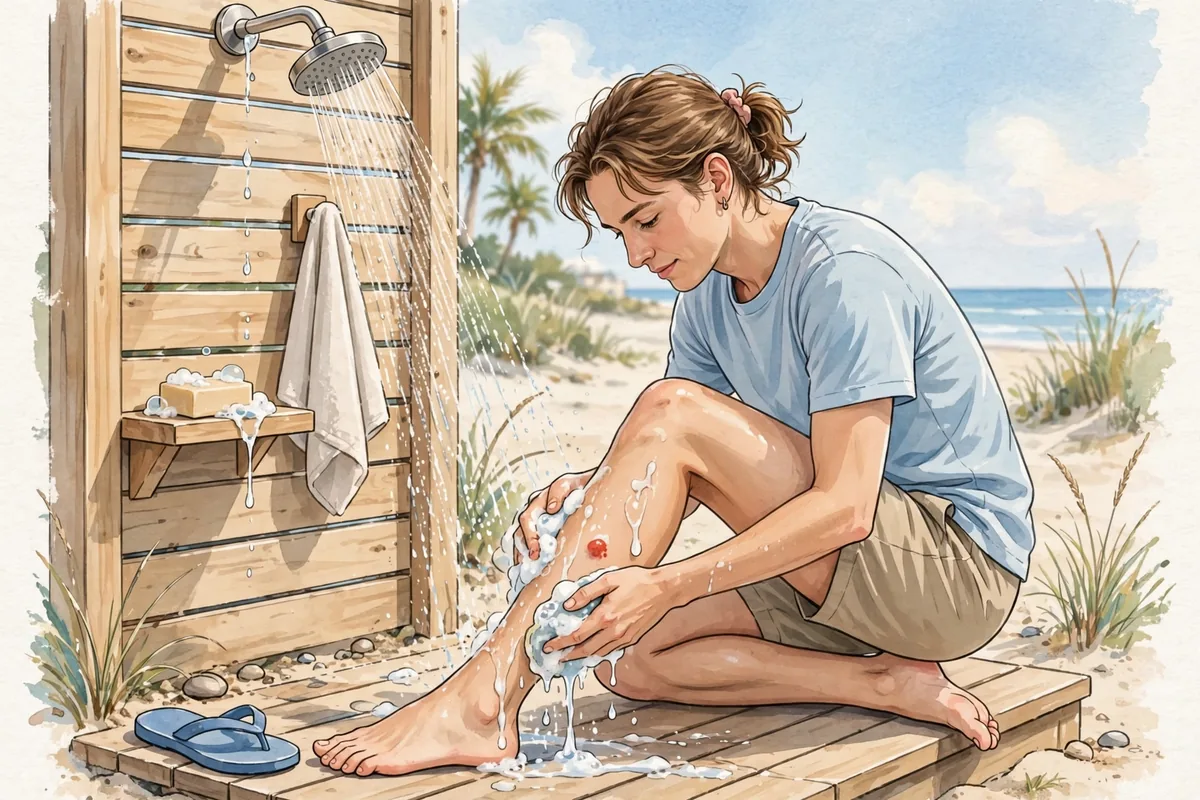
Step 3 — Wash it well. Clean the bite with soap and water as soon as you can — a beach shower, a sink, even a water bottle and a dab of soap from your bag. Because the skin is broken, cleaning is the most important infection-prevention step you will take all day. Pat dry; do not scrub the raw center.
Step 4 — Ice it. Apply a cold compress — ice wrapped in a cloth, a cold water bottle, a bag of frozen anything — for 10-15 minutes. Cold narrows blood vessels, which calms the throbbing pain and limits swelling. Repeat every hour or two through the afternoon if the bite keeps aching.
Step 5 — Calm the inflammation. Once the skin is clean and the bleeding has stopped, a thin layer of hydrocortisone cream on the intact skin around the bite can reduce redness and itching. For the deep ache and swelling, an oral anti-inflammatory or antihistamine per label directions may help — choose based on your symptoms and any other medications you take, and ask your pharmacist if you are unsure. Do not apply creams to a bite that is still actively oozing.
Step 6 — Leave it alone. Cover with a clean adhesive bandage if the bite is somewhere clothing will rub, otherwise leave it open to the air. Do not scratch, squeeze, or pick at it. Mark the edges of the redness with a pen if the swelling looks large — if redness expands past your marks over the next day, that is useful information for a clinician.
For a printable version of this sequence you can keep in your beach bag, our bite and sting first aid checklist covers the same steps in pocket format.
Why greenhead bites hurt so much #
The greenhead fly (Tabanus nigrovittatus, also called the salt marsh greenhead) is a horse fly species, and it inherits the family business: cutting skin to drink blood. But a few details explain why beachgoers rate this bite among the worst in North America.
Scissor-like mouthparts #
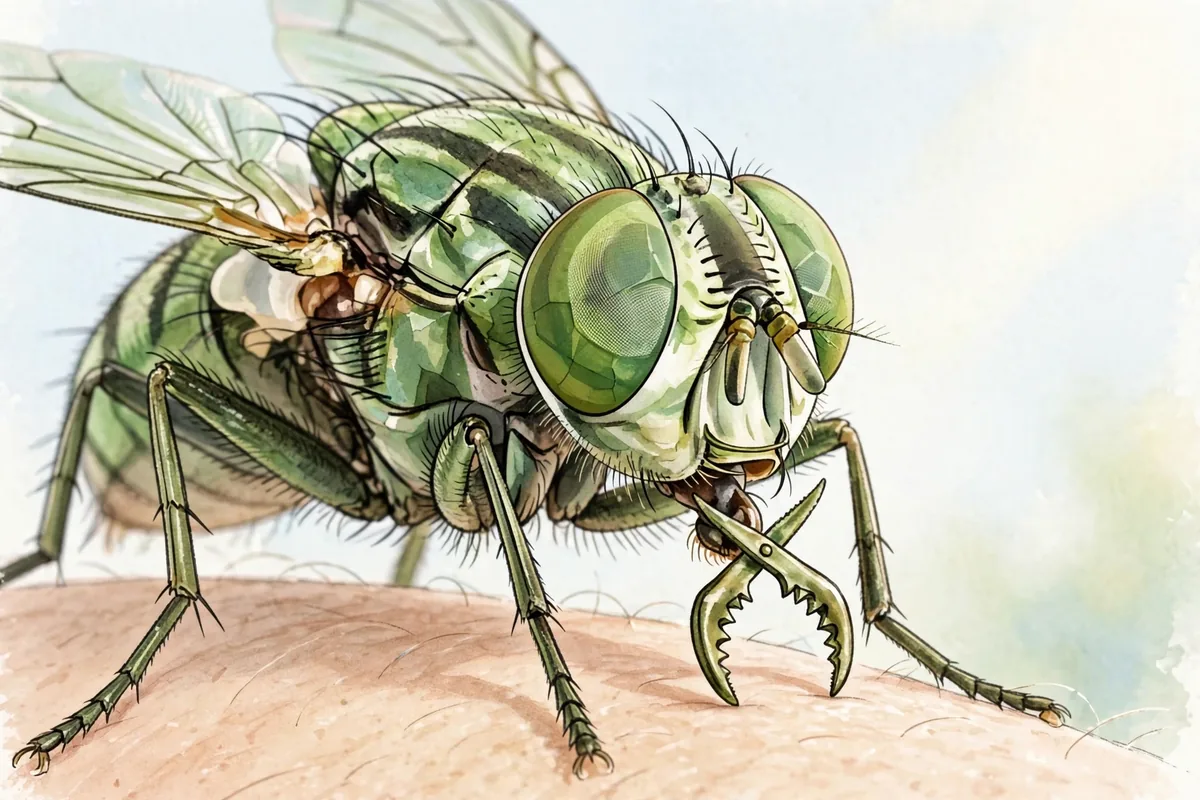
Most biting insects pierce. Greenheads slash. Their mouthparts work like tiny scissors or knives, cutting a wound in the skin so blood pools and the fly can lap it up. Victims describe the sensation as a sudden sharp cut or stab — there is no mistaking it, and no “did something bite me?” ambiguity afterward.
Anticoagulant saliva #
Like other horse flies, greenheads inject saliva containing compounds that keep blood flowing freely while they feed. Those same compounds irritate the skin and trigger a strong inflammatory response — which is why the pain is followed by intense itching and a swollen, red welt that can look dramatic in beach photos.
Aggressive daytime hunting #
Greenheads are visual hunters that key in on movement, dark colors, carbon dioxide, and heat. They are most active on hot, sunny, windless days — exactly when the beach is full. They circle, land, and bite fast, and a single outing can produce multiple bites. They are also persistent enough that locals joke about them holding grudges.
How greenhead bites compare #
| Feature | Greenhead fly bite | Mosquito bite | Deer fly bite | |—|—|—|—| | Pain at the bite | Sharp, immediate, severe | None or minimal | Sharp, immediate, moderate-severe | | Bleeding | Common — cut wound oozes | Rare | Common but smaller wound | | Size of the fly | Housefly-sized, green eyes | Tiny (3-6 mm) | Small (6-10 mm), banded wings | | Swelling | Large, hot welt | Small bump | Large welt | | Itch duration | Days | Days | Days | | Where it happens | Coastal marshes, bays, beaches (Eastern US) | Anywhere with standing water | Woods, trails, wetlands | | Peak season | Late June through August | Summer, varies by region | Summer |
Greenheads are essentially horse flies optimized for the shoreline: smaller than the big inland horse flies but just as committed to the bite.
Where and when greenheads attack #
Knowing the enemy’s schedule is half the defense.
Range. The salt marsh greenhead lives in the coastal marshes and wetlands of the Eastern United States, with the New Jersey coast as its most notorious stronghold. Larvae develop in the intertidal mud of salt marshes for one to two years before pupating in early spring, and adults emerge in late spring.
Season. Adults are most common from late June through August. Locals treat greenhead season as a defined annual event — intense for several weeks, then fading. A wet spring that expands marsh habitat can make a given summer worse.
Time of day. Greenheads are daytime feeders, worst in the heat of the day on sunny, calm days. Wind is your friend: even a moderate breeze disrupts their flight and makes biting much harder for them.
What draws them. Wet skin (coming out of the water is peak danger time), sweat, dark clothing, movement, and carbon dioxide. They love legs — bare legs on the beach are the classic target — and they will also go for arms, neck, and scalp. A hat is not just sun protection during greenhead season.
Why they cannot simply be sprayed away. Greenhead larvae live in ecologically sensitive salt marsh mud, so broad insecticide treatment is not practical or environmentally acceptable. Coastal communities instead deploy specialized black box traps in marsh areas to reduce adult populations. Yard sprays and foggers will not dent a greenhead population — the flies migrate in from the marsh continuously.
Pain relief options compared #
Once the bite is clean and iced, you have choices for the lingering ache and itch. No dosing advice here — these are the categories, described generally, so you can pick what fits your situation and read the label.
| Option | What it does | Best for | Notes | |—|—|—|—| | Cold compress (repeat) | Numbs pain, limits swelling | The first hours; throbbing pain | The single most effective measure; keep repeating | | Oral antihistamine | Reduces itch and histamine-driven swelling | Intense itching, large welts | Use per label directions; some cause drowsiness | | Oral anti-inflammatory (NSAID class) | Reduces pain and inflammation | Deep ache, significant swelling | Use per label directions; not for everyone — check with your doctor or pharmacist | | Hydrocortisone cream | Calms local redness and itch | Itchy welt on intact skin | Thin layer only; not for open or oozing bites | | Calamine lotion | Soothes itch, dries weeping skin | Itchy, mildly oozing bites | Gentle; safe for most people | | Baking soda paste or diluted vinegar | Mild soothing for some people | Minor itch | Home remedy with limited evidence; harmless in small amounts | | Scratching | Feels good for one second | Nothing | Breaks skin, invites infection, prolongs healing |
If pain is severe, if swelling keeps growing after the first day, or if you are unsure which product is safe with your other medications, a pharmacist can advise in minutes — that is what they are there for.
Cleaning the bite: infection prevention #
A greenhead bite is a small open wound, and open wounds on beach days meet sand, sweat, and seawater. Infection is the most common real complication, and it is almost entirely preventable.
- Wash promptly and wash again. Clean the bite when it happens, and rinse it again that evening. Soap and clean water are enough; you do not need hydrogen peroxide or alcohol, which can irritate healing tissue.
- Keep it clean through the day. If you are staying at the beach, rinse the bite if it gets sandy. A light bandage keeps sand and sunscreen out of the wound.
- Watch the 48-hour rule. Normal inflammation peaks within 24-48 hours and then improves. Redness, pain, or swelling that keeps increasing after 48 hours — or new pus, red streaks, or fever — means the wound may be infected. See the warning signs section.
- Do not share the wound with the ocean. Swimming with a fresh, open bite in seawater is asking for bacterial trouble. Wait until the skin has closed.
Our guide to cleaning bites and stings safely covers technique details, including what to use when you have no clean water nearby.
Greenhead bite mistakes to avoid #
Beach folklore produces a lot of bad advice. Skip these:
- Ignoring the bite because “it is just a fly bite.” The wound is open. Clean it like any cut.
- Scratching it open again. The itch peaks on day one and two. Every scratch resets the healing clock and invites bacteria.
- Applying sunscreen directly into the wound. Sunscreen chemicals sting broken skin and irritate the wound. Cover the bite with a bandage before reapplying sunscreen around it.
- Squeezing it “to get the poison out.” There is no venom sac to drain — it is a cut with saliva in it. Squeezing deepens tissue damage.
- Using the same towel on the bite and your face. Cross-contamination is a minor but real way to spread skin bacteria.
- Waiting out spreading redness. A welt that keeps expanding past day two, or red streaks heading away from the bite, is not “just swelling” — get it checked.
Avoiding greenheads at the shore #
You cannot eliminate greenheads from the coastline, but you can make yourself a much less appealing target.
- Cover your legs. Lightweight long pants or a long cover-up on the walk to and from the water makes a bigger difference than any spray. Greenheads love bare legs.
- Wear light colors. Dark clothing attracts visual hunters like greenheads. White, khaki, and pastels are measurably less attractive to them.
- Dry off and cover up after swimming. Wet skin is a magnet. Towel off and throw on a cover-up rather than air-drying on the sand.
- Choose breezy spots. Wind disrupts greenhead flight. A breezy stretch of beach or a spot near the water’s edge with airflow will have fewer successful bites than a still hollow in the dunes.
- Use repellent as a backup layer. A DEET- or picaridin-based repellent on exposed skin helps, but expect modest results against greenheads — treat it as a supplement to clothing, not a replacement.
- Consider a head net for marsh walks. If you walk trails through or beside salt marsh, a fine-mesh head net over a hat prevents the circling-and-diving attacks on your head and neck that make greenheads so maddening.
- Support local trap programs. Many coastal communities maintain black box traps in marsh areas. They work at the population level — one backyard trap will not protect your blanket, but community-wide trapping reduces the overall pressure.
Warning signs: when to seek care #

Call 911 immediately if you develop trouble breathing or swallowing, swelling of the face, lips, tongue, or throat, widespread hives, dizziness or fainting, or a racing heartbeat after any bite. If you carry an epinephrine auto-injector, use it and call 911 — do not wait to see if symptoms improve.
Beyond emergencies, seek care promptly if: redness or swelling keeps spreading after 48 hours; red streaks extend from the bite; pus, cloudy drainage, or increasing pain develops; you develop fever or chills; the bite is on or near the eye and swelling is severe; or an ulcer forms that does not begin healing within two weeks. Greenhead bites are dirty wounds by nature — when in doubt about infection, get a professional look sooner rather than later.
Frequently asked questions #
How long does a greenhead fly bite hurt? #
The sharp pain of the bite itself fades within minutes to an hour, especially with ice. A deep ache and tenderness can linger for a day or two, and itching often persists for several days. Most bites are substantially better by day 3-4 and fully healed within one to two weeks. Pain that intensifies after day two is not normal healing — have it checked.
Why do greenhead bites swell so much? #
Two reasons: the wound is a cut, not a puncture, so there is real tissue damage; and the fly’s saliva contains anticoagulant and inflammatory compounds that provoke a strong immune response. Together they produce a hot, swollen welt that can look dramatic. Large swelling alone, without spreading redness or fever, is usually a normal large local reaction.
Do greenhead flies bite through clothing? #
They can bite through thin, tight fabrics — swimwear and thin t-shirts are not reliable barriers. Loose, thicker, or layered clothing is much more effective because the fly’s short mouthparts cannot easily reach skin through fabric that stands away from the body. This is one reason a loose cover-up beats a tight rash guard for greenhead protection.
Are greenhead fly bites dangerous? #
For most people, no — the outcome is pain, swelling, and itching that resolve on their own. The realistic risks are secondary bacterial infection (from the open wound plus scratching) and, rarely, severe allergic reactions. Greenheads are not considered significant disease vectors for people. Keep the bite clean, do not scratch, and watch the 48-hour rule.
When is greenhead season over? #
On the New Jersey coast, greenhead activity typically peaks from late June through August and tapers off as summer ends. The exact window shifts with weather — a cool, wet summer can compress the season, while a hot one extends it. Once nighttime temperatures drop consistently and marsh activity quiets, the pressure drops fast.
Medical and editorial note #
This guide is general information for quick reference and is not medical advice. Greenhead bites vary with the individual, the number of bites, and how the wound is cared for. If a bite is worsening after 48 hours, shows signs of infection, or you have any concern about an allergic reaction, see a healthcare professional promptly. In an emergency, call 911.


