
Bed bug bites on the back are often found in lines or clusters across the shoulder blades, the middle back, and the lower back, in the exact places where skin presses against a mattress, a sheet, or a headboard during sleep. If you wake with new itchy marks on your back, check the bed first, treat the skin gently, and launder bedding promptly, because the back is both the contact zone and the hardest area to inspect alone.
Why Back Bites Happen in Bed #
The back spends more uninterrupted time in contact with bedding than almost any other part of the body. When you lie on your back, your shoulder blades, your spine, and your lower back press into the mattress for hours. When you lie on your side, one shoulder blade and one hip take the pressure, but the upper back still rests against the sheet and the pillow edge. When you lie on your stomach, the chest takes the main contact, yet the lower back can still touch a folded blanket or a bunched sheet. In every common sleep position, some part of the back is in close, still contact with the bed. That stillness matters. A feeding insect needs time and a stable surface, and a sleeping person offers both.
How the back becomes the contact zone #
Think of the bed as a map of pressure points. The mattress supports weight, the fitted sheet covers the mattress, and the top sheet, blanket, or comforter lies over the sleeper. The back touches the fitted sheet directly when no sleep shirt is worn, or it touches a sleep shirt that itself rests on the sheet. Either way, the back is close to the seams, folds, and edges where bed bugs hide during the day. The insects tend to stay near the sleeping person, in mattress seams, in the tufts and buttons of a mattress, behind a headboard, in bed frame joints, and in the folds of nearby bedding. At night they move a short distance to feed, then return to a nearby hiding place. The back is therefore not a random target. It is the nearest large, warm, still surface.
Why bites cluster on the shoulder blades and lower back #
The shoulder blades create two broad, slightly raised areas that press firmly into the mattress. The lower back, especially the area just above the waistband, often presses into the mattress when the mattress sags slightly or when a pillow under the knees changes the curve of the spine. The waistband itself can create a second line of interest, because elastic edges, shirt hems, and pajama waistbands trap warmth and create small folds where an insect can pause. Bites in this region often appear in a rough line that follows the edge of a shirt, the top of a waistband, or the curve of a shoulder blade. A cluster can also form where a blanket fold crosses the back, or where the back rested against a headboard seam while the sleeper sat up in bed reading or watching a screen before sleep.
The role of the sleep shirt #
A sleep shirt changes the pattern, but it does not remove the back from the picture. A loose shirt can ride up during the night and expose the lower back. A tight shirt can press a seam, a tag, or a printed area against the skin for hours. A shirt worn for several nights in a row can carry insects or their signs from one night to the next if the shirt is left on the bed or on the floor beside the bed. The back of the shirt deserves the same attention as the sheet. When you check for a cause, look at the shirt you slept in, the side that touched the mattress, the inside of the collar, and any fold near the hem. Wash the sleep shirt with the bedding, not separately days later, so a possible source is not left sitting in a hamper.
Sleeping position and bite pattern #
Sleep position does not prove a cause on its own, but it helps you read the pattern. Back sleepers often notice marks across both shoulder blades and the center of the back. Side sleepers often notice marks on the upper shoulder blade on the side they slept on, plus marks along the side of the torso. Stomach sleepers often notice marks lower down, where the back was exposed by a shirt that rode up, or where a blanket edge crossed the lower back. People who change position often during the night may notice a wider scatter, because different parts of the back touched the bed at different times. People who sleep very still may notice a tighter line or cluster. Neither pattern is a diagnosis by itself. The pattern is a clue that points you toward the bed inspection described later in this guide.
What Bed Bug Bites on the Back Look Like #
Bed bug bites on the back do not have one single look that fits every person. Skin tone, skin sensitivity, scratching, and time since the bite all change the appearance. The most useful approach is to describe what you see, note where it sits, and compare it with other common causes, rather than trying to force a single label onto every mark.
Lines, clusters, and single marks #
Three patterns come up again and again on the back. The first is a line of three or more small raised marks, sometimes called a breakfast, lunch, and dinner pattern in everyday talk, running across a shoulder blade or along the lower back. The second is a tight cluster, where several marks sit close together in one patch, often where the back pressed into a mattress seam or a fold. The third is a scattered set of single marks, spread across the upper and lower back, which can happen when the sleeper moved during the night or when bites came from more than one night. A single mark on the back proves very little on its own. A line or cluster in the mattress contact zone, plus new marks on more than one morning, is a stronger reason to inspect the bed.
Color, size, and itch #
On lighter skin, fresh bites often look pink or red and slightly raised, sometimes with a darker center. On darker skin, bites may look purple, brown, or darker than the surrounding skin, and the raised area may be easier to feel than to see. The itch is often the most noticeable symptom, and it can be intense on the back because clothing, a bra strap, a backpack strap, or a chair back can rub the area during the day. Some people feel almost no itch. Others feel a strong urge to scratch, especially at night when the skin is warm and attention is not distracted by daytime activity. Scratching can make the area redder, break the skin, and create a cycle where the itch feels worse after scratching. Keeping nails short, wearing a clean, soft shirt, and using gentle care steps can reduce that cycle.
What bed bug bites are often mistaken for #
Back marks are easy to misread, because the back is also a common site for acne, heat rash, contact irritation from a new detergent, and bites from other insects. Acne on the back, often called back acne, tends to sit where oil and sweat collect, and it often includes pimples with white or dark centers that develop over days. Heat rash tends to appear after sweating, in areas where clothing traps heat, and it often feels prickly rather than like distinct bites. A reaction to a new laundry product tends to match where fabric touched the skin most closely, and it may improve when the product changes. Mosquito bites on the back tend to be fewer, more scattered, and linked to time spent outdoors or near an open window. Flea bites tend to concentrate around the ankles and waist, and they are more likely when pets sleep on the bed. None of these comparisons can confirm or rule out bed bugs by themselves. They help you decide what to check next.
A comparison table for back marks #
| Possible cause | Typical back pattern | Clues that point this way | What to check next |
|---|---|---|---|
| Bed bugs | Lines or clusters across shoulder blades and lower back | New marks after sleeping in the same bed, marks in mattress contact zone | Mattress seams, headboard, bed frame joints |
| Mosquitoes | A few scattered marks, often on exposed skin | Time outdoors, open window, one night of bites | Window screens, standing water nearby, outdoor exposure |
| Fleas | Many small marks, often near waist and ankles as well | Pets on the bed, marks on lower legs too | Pet bedding, carpet edges, pet resting areas |
| Back acne | Pimples and bumps where oil collects | Slow buildup over days, oily or sweaty skin | Skin care routine, tight clothing, heat and sweat |
| Heat rash or fabric irritation | Widespread redness or small bumps under clothing | Hot weather, new detergent, tight synthetic fabric | Laundry products, fabric type, ventilation |
For a broader explanation of how different bites and stings compare, see this guide to bite and sting differences.
How to Check Your Back When You Cannot See It #
The back is the hardest body part to inspect alone. The middle back and lower back sit outside direct view, and twisting to see them in a mirror can strain the neck and shoulders. A careful, unhurried check is still possible, and it is worth doing, because a clear picture of the marks helps you decide on skin care, laundry, and bed inspection steps.
The two mirror method #
Stand with your back to a large bathroom or bedroom mirror, and hold a smaller hand mirror in front of you, angled so you can see the reflection of your back in the large mirror. Move slowly. Start at the upper back, then tilt the hand mirror to cover the middle back, then the lower back. Good lighting matters more than speed. Stand near a bright overhead light or a lamp placed to the side, so shadows do not hide raised marks. If the image is blurry, step closer to the large mirror and adjust the hand mirror angle in small moves. Take a photo of the mirror reflection with your phone if you want a record, and keep the phone steady so the image stays sharp. A photo taken this way is useful for tracking change, but it does not need to be perfect.
Asking a partner or trusted person for help #
A second pair of eyes is often the simplest solution. Ask a partner, a family member, or a trusted friend to look at your back in good light and describe what they see in plain terms. Ask them to note the location, the number of marks in each zone, whether marks form a line or a cluster, and whether any area looks broken, swollen, or warm. If you want a record, ask them to take a photo from directly behind you, plus one photo angled from each side. Keep the request simple and specific, so the helper does not have to guess what matters. If you live alone, a mirror check plus a careful touch check can still give you a useful picture, and a clinician can complete the inspection if you seek care.
The touch check #
When sight is limited, touch adds information. After washing your hands, run your fingertips lightly over the upper back, the shoulder blades, the spine area, and the lower back. Note raised bumps, rough patches, and areas that feel warmer than the skin around them. Note where a shirt seam, a bra strap, or a waistband crosses the area, because pressure and rubbing can change how a mark looks and feels. Do not press hard, and do not scratch during the check. The goal is a map, not a test of endurance. Write the map down right away, while the details are fresh. A simple sketch of a back outline, with dots for marks and lines for clusters, is often clearer than a paragraph of description.
Reaching the middle and lower back for care #
Treating the back alone raises the same reach problem as inspecting it. A clean, soft washcloth on a long handle, a lotion applicator with a long handle, or a clean towel draped over the shoulder can help you reach the middle back without twisting sharply. Apply gentle products with light strokes, not vigorous rubbing. If a product is meant for the back and you cannot reach the area safely, ask for help rather than straining. A helper can apply a thin, even layer while you sit or stand comfortably. If you use a tool to reach the back, wash it after use and let it dry fully, so it does not become another item that carries skin irritation or laundry residue from one day to the next.
First Steps in the First Day After You Notice Back Bites #

The first day sets the tone for skin recovery and for finding the source. The steps below are designed to be calm, practical, and easy to complete in order, without panic and without harsh treatment of the skin.
Step by step checklist for the first day #
- Wash your hands, then wash the back gently with lukewarm water and a mild, fragrance free cleanser. Pat dry with a clean towel.
- Inspect the back with a mirror or with help, and note the zones, pattern, and itch level.
- Change into a clean, soft, loose sleep shirt, and put the shirt you slept in into the laundry pile with the bedding.
- Strip the bed, including the fitted sheet, top sheet, pillowcases, and any blanket that touched the back. Place bedding in a sealed bag for transport to the washer if you must carry it through other rooms.
- Inspect the mattress seams, headboard, and bed frame using the steps in the inspection section, in good light.
- Launder bedding on a hot wash and dry cycle where fabric labels allow, and fold clean bedding away from the floor.
- Vacuum the mattress edges, bed frame, and floor around the bed, then empty the vacuum promptly and dispose of the contents outside the living space.
- Keep nails short, avoid scratching, and use gentle itch relief steps rather than harsh scrubbing or strong home remedies.
- Watch for warning signs described later in this guide, and seek prompt care if any of them appear.
- Repeat the bed check the next morning, and note whether new marks appeared, so you can tell if the problem is ongoing.
What not to do on the first day #
Do not move bedding, pillows, or infested items to another room, a sofa, or a guest bed before laundering, because that can spread a possible insect problem to a new sleeping area. Do not spray the mattress or the skin with a strong household insecticide, and do not apply bleach, alcohol, or harsh cleaning products to the skin. Do not scratch the back with a hard object, a brush, or long nails, because broken skin is more likely to become irritated or infected. Do not throw the mattress away as a first step, because disposal without a plan can spread insects through hallways and other rooms, and a replacement mattress in the same room can become affected again if the room source is not addressed. A calm, ordered approach protects the skin and keeps the room problem contained.
Itch Relief for the Back, Step by Step #
Itch relief for the back needs a plan that works with limited reach, with clothing rubbing the area all day, and with sleep as the main goal. The steps below start with the gentlest options and move to general product categories, always with the reminder to follow product labels and to ask a pharmacist or clinician when you are unsure.
Start with gentle washing and cooling #
Wash the back gently once or twice a day with lukewarm water and a mild cleanser, then pat dry. A cool, damp cloth placed lightly on the itchy area can calm the urge to scratch, especially before bed. Use a clean cloth each time, and keep the cloth in place only for a short, comfortable period, with breaks in between, so the skin does not stay damp for a long time. A cool shower can help after a hot day, but avoid very hot water, because heat can increase itch and dry the skin. After washing, apply a plain, fragrance free moisturizer to the back if the skin feels dry, using light strokes and help if you cannot reach the middle back. Moist skin is less likely to crack, and intact skin is easier to protect from further irritation.
Protect the back from rubbing and scratching #
Clothing is a daily source of rubbing on the back. Choose a soft, breathable, loose shirt for the day, and avoid rough seams, heavy backpack straps, or tight bra straps pressing directly on the itchiest areas when you can. If a strap must cross the area, place a soft layer underneath it, and adjust the strap so it does not dig in. At night, wear a clean, loose sleep shirt that does not ride up easily, and keep the bedroom cool enough that you do not sweat heavily under blankets. Trim nails short and keep hands clean, so an absent minded scratch does less damage. If you wake scratching, a cool cloth and a change to a clean shirt can break the cycle better than continued rubbing.
General product categories to discuss with a pharmacist #
Over the counter products for itch come in several general categories, including soothing lotions, creams intended to calm itch, and oral products intended to reduce itch and allergic type reactions. This guide does not name specific products, strengths, or use schedules, because the right choice depends on your health, other medicines, skin condition, and product label. Read the label fully, follow it exactly, and ask a pharmacist or clinician before starting a new product, especially if you are pregnant, breastfeeding, caring for a child, managing a chronic condition, or taking other medicines. Tell the pharmacist that the affected area is the back, that reach is limited, and that you may need help applying a product evenly. If a product causes burning, increased redness, swelling, or a rash beyond the original marks, stop using it and seek advice.
A comparison table for relief approaches #
| Relief approach | How it helps the back | Watch out for | Best use case |
|---|---|---|---|
| Gentle washing and patting dry | Removes sweat and residue without harsh rubbing | Very hot water, harsh soaps, vigorous scrubbing | Daily care, morning and before bed |
| Cool damp cloth | Calms itch for a short period, helps before sleep | Leaving skin damp too long, using a dirty cloth | Strong itch at night, after a hot day |
| Plain fragrance free moisturizer | Supports the skin barrier, reduces dryness related itch | Fragranced products, heavy oils on broken skin | Dry skin, after washing |
| Soothing lotion or itch cream, label guided | Targets itch directly on the affected area | Use on broken skin unless the label allows it, mixing many products | Localized itch, when gentle care alone is not enough |
| Oral itch relief product, pharmacist guided | May help widespread itch and sleep disruption | Drowsiness, interactions with other medicines, use in children | Widespread itch, pharmacist or clinician advice needed |
How to Inspect the Mattress, Bed Frame, and Headboard #

The bed inspection is the step that turns a skin problem into a room problem with a clear target. Take your time, use good light, and work in a planned order, so you do not miss the seams and joints where insects hide.
Mattress seams, tufts, and tags #
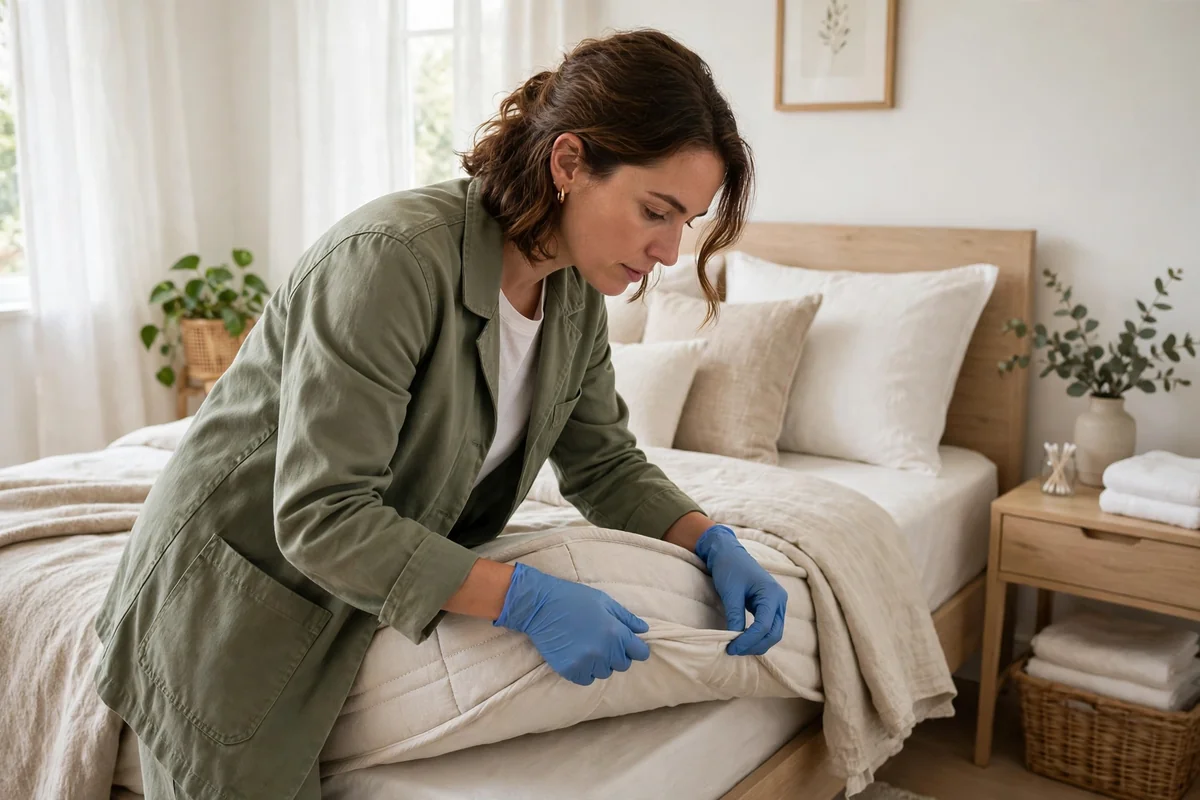
Start with the mattress, because the back rests on it all night. Lift the fitted sheet and inspect the top surface, then the sides, then the seams that run around the edge. Look closely at piping, folds, tufts, buttons, and the area around the manufacturer tag. Use the thin card to lift seam edges gently, and shine the flashlight into folds. Look for tiny rust colored insects, small pale eggs, shed skins, and dark spots that look like ink marks on fabric. The dark spots may be small and clustered along a seam. If you find signs, take a photo for reference, note the location, and do not disturb the area more than needed until you have a plan for laundry and room treatment. Check both sides of the mattress if you can lift or tilt it safely, and ask for help if the mattress is heavy.
Bed frame joints and slats #
Bed bugs hide in joints, cracks, and screw holes as readily as in mattress seams. Inspect the bed frame where rails meet the headboard and footboard, where slats rest on supports, and where any wooden joints show gaps. Shine the flashlight into screw holes, along the inside of rails, and under slats. Look for the same signs as on the mattress, including insects, shed skins, and dark spots. Wooden frames with many joints need more time than simple metal frames, because each joint is a potential hiding place. Note any cracked wood, loose joints, or damaged areas, because those areas may need repair or closer attention during professional treatment.
Headboard, wall, and nearby furniture #
The headboard is a major hiding area for back related bites, because the upper back and shoulders rest near it when a person sits up in bed. Remove pillows and bedding from the headboard area, then inspect the front, back, and edges of the headboard, including any upholstery, buttons, seams, and wall mounts. Check the wall behind the headboard, including picture frames, electrical outlets, and any cracks near the bed. Check the nightstand, especially drawers, joints, and the back panel, because it sits within easy travel distance of the bed. Do not move infested items to other rooms. Keep inspected items in place or in sealed bags until laundry or treatment steps are ready.
A checklist for the bed inspection #
- Top mattress surface, including tufts, buttons, and tag area
- Mattress side seams and piping, all the way around
- Underside edges of the mattress, if you can tilt it safely
- Fitted sheet, top sheet, pillowcases, and blanket folds
- Sleep shirt back, collar, hem, and inside seams
- Headboard front, back, seams, and wall mounts
- Bed frame rails, joints, screw holes, and slats
- Wall behind the bed, picture frames, and nearby outlets
- Nightstand drawers, joints, and back panel
- Floor along the bed legs, baseboards, and nearby clutter
Laundering Bedding and Clothing the Right Way #
Laundering is one of the most effective home steps for back bites, because it addresses the exact fabrics that touch the back all night. Done carefully, it removes insects and signs from bedding and clothing, and it prevents a clean bed from being remade with affected fabrics.
Sorting bedding and sleep clothes #
Gather everything that touched the back during sleep, including the fitted sheet, top sheet, pillowcases, duvet cover, blankets that touched the back, and sleep shirts. Add pillow protectors and mattress protector covers if they are removable and washable. Place items in a sealed bag if you must carry them through hallways or to a shared laundry room, and open the bag only at the washer, so insects are not scattered along the way. Sort by fabric label, not by color alone, because heat tolerance matters more than color for this task. Keep delicate items separate, and check labels for any item that cannot tolerate heat, so you can choose a safe alternative for that item.
Heat, washing, and drying steps #
Wash bedding and sleep clothes using the hottest wash setting that the fabric label allows, with a regular detergent. Dry items fully on a hot dryer setting where the label allows, until items are completely dry, because damp bedding left in a pile can develop odor and can be unpleasant to sleep on. If a fabric cannot tolerate high heat, follow the label and consider a longer drying time on a safe setting, or seek advice from a laundry professional about that item. Fold clean bedding immediately, and store it away from the floor and away from the bed until you remake the bed, so clean items do not pick up dust or insects from the floor. Remake the bed with clean sheets, a clean sleep shirt, and a clean pillowcase, and keep the laundry bag for affected items separate from clean laundry.
A laundry table for back contact items #
| Item that touches the back | Why it matters | Laundering approach |
|---|---|---|
| Fitted sheet | Direct back contact all night | Hot wash and full dry where label allows, with bedding batch |
| Top sheet and duvet cover | Covers the back, folds can harbor signs | Same bedding batch, unfold and shake out before washing |
| Pillowcases | Touch the upper back and shoulders near the pillow edge | Same bedding batch, change often while marks are active |
| Sleep shirt | Back of shirt presses against sheet and skin | Wash with bedding, check back, collar, and hem before washing |
| Blankets and throws | Cross the back, especially the lower back | Wash where label allows, seal and store if washing must wait |
| Mattress protector cover | Sits between mattress and sheet | Wash if removable, replace if damaged or unwashable |
Warning Signs: When to Get Urgent Care #
Most bed bug bites on the back are uncomfortable but not dangerous. Some signs, however, need urgent attention, and back bites deserve special caution, because you cannot easily see spreading redness, swelling, or broken skin on your own back. Ask for help with checks when you are unsure, and do not wait to seek care if a warning sign appears.
Signs that need prompt attention #
Seek prompt care if the back area becomes increasingly painful, if swelling grows, if redness spreads outward from the marks, if the skin feels hot to the touch, if you see pus, yellow crusting, or a bad smell from broken skin, or if you develop a fever, chills, or a general feeling of illness. Seek prompt care if the itch is severe enough to prevent sleep for several nights, if marks blister widely, if you notice a large number of new marks in a short period, or if you have a condition that affects healing or immunity. Children, older adults, and people with chronic skin conditions also deserve a lower threshold for seeking advice, because skin changes can progress faster and are harder to monitor on the back.
Signs that need emergency care #
Some reactions need emergency care without delay. These include trouble breathing, swelling of the lips, tongue, or face, a feeling of throat tightness, widespread hives, dizziness, fainting, or a rapid heartbeat after bites. These signs are uncommon after bed bug bites, but they can occur with any bite or sting reaction, and the back location does not make them less serious. If you notice these signs in yourself or in another person, act immediately and do not try to treat the reaction at home while waiting to see if it improves.
Call 911 or seek urgent care right away if you have trouble breathing, swelling of the lips, tongue, or face, throat tightness, widespread hives, dizziness, fainting, or a rapid heartbeat after bites. Do not wait, do not drive yourself if you feel faint or short of breath, and tell emergency responders that the symptoms followed insect bites on the back.
For a fuller list of urgent symptoms after any bite or sting, see this guide to bite and sting warning signs.
Treating the Room, Not Just the Skin #
Skin care alone will not solve back bites if the bedroom source remains. Room treatment needs a plan that matches the size of the problem, the type of home, and the limits of home products. A calm, staged approach is safer than a rushed, chemical heavy attempt.
When home steps are enough, and when they are not #
Home steps such as laundering, vacuuming, decluttering near the bed, and sealing bedding in bags can reduce a small problem and help you judge whether the problem is growing. They are often not enough on their own for an established infestation, because insects hide in joints, walls, and furniture that home cleaning cannot fully reach. If signs persist after careful laundry and inspection, if new marks keep appearing for more than a week or two, if you find insects or many dark spots, or if the problem spreads to another bed or room, seek professional help. A pest professional can inspect hidden areas, identify the insect, and recommend a treatment plan that fits the home.
Working with a pest professional #
Prepare for a professional visit by keeping your log, your inspection notes, and photos ready. Note the zones on the back where marks appear, the dates of new marks, and the places where you found signs in the room. Clear clutter from around the bed, but do not move bedding or furniture to other rooms before the visit unless the professional asks you to, because moving items can spread the problem and can hide the original pattern. Ask the professional what preparation is needed, what treatment steps will be used, how many visits may be needed, and what you should do between visits. Follow those instructions carefully, and keep sleeping in the same bed unless the professional advises otherwise, because moving to another room can make treatment harder to target.
Room habits that reduce future back bites #
After treatment, room habits protect the back during sleep. Keep the bed away from the wall when space allows, keep bedding from touching the floor, and avoid storing bags, laundry, or clutter under the bed or against the bed legs. Use a well fitting mattress protector designed to encase the mattress, if a professional or product guide recommends one, and check it for tears during laundry changes. Vacuum the bed frame edges, baseboards, and floor around the bed regularly, and empty the vacuum promptly. Inspect secondhand furniture carefully before bringing it into the bedroom, especially bed frames, headboards, and nightstands, because these items can carry a hidden problem into a clean room.
Travel and Hotel Beds: Back Protection Away From Home #
Travel changes the back bite picture, because the sleeper meets an unfamiliar bed, unfamiliar bedding, and a room that may have had many previous guests. A short, consistent travel routine protects the back and prevents a hotel problem from traveling home in luggage.
Checking a hotel bed before you sleep #
When you arrive, place luggage in the bathtub or on a luggage rack away from the bed, not on the bed or on the floor beside the bed, while you check the room. Pull back the sheets and inspect the mattress seams, the headboard, and the bed frame with a flashlight, using the same zones as the home inspection. Look for insects, shed skins, and dark spots along seams. Check pillow seams and the folds of the top sheet. If you find signs, ask for another room, preferably a room that is not next to, above, or below the affected room, and do not move your luggage onto the bed while you wait. If the room looks clear, you can still keep luggage off the bed for the first night as a simple precaution.
Sleeping habits that protect the back on the road #
On the road, keep the same back focused habits as at home, with a few travel additions. Wear a clean sleep shirt, and keep a separate bag for sleep clothes so they do not mix with day clothes in the suitcase. Avoid placing clothes on the bed, and hang clothes or keep them in closed luggage rather than in open piles on the floor. If you sleep in a bed that feels unfamiliar, note the hotel name, room number, and dates in your log, so you can connect new back marks to a specific stay if they appear later. If you wake with new back marks in a hotel, inspect the bed again in daylight, take a photo of any signs you find, and tell the hotel promptly, so the room can be checked and you can request a change if needed.
Unpacking after travel without bringing a problem home #
Unpacking is the moment when a travel problem can become a home problem. Unpack directly into a washer where possible, and launder travel sleep clothes and any clothing worn in bed on a hot wash and full dry where labels allow. Inspect the suitcase, especially seams, pockets, and wheels, and vacuum the suitcase before storing it. Store the suitcase away from the bed, not under the bed or in a pile of bedding. If you suspect the suitcase carried insects, keep it sealed in a large bag until it can be cleaned, and do not place it on the bed or on bedroom furniture. A careful unpacking routine takes a little extra time, but it protects the home bed that your back will rest on for many nights after the trip.
Frequently Asked Questions #
How can I tell if marks on my back are bed bug bites? #
You cannot confirm bed bug bites from appearance alone, because many skin conditions look similar. Look for a pattern of lines or clusters in the places where your back touched the mattress, sheets, or headboard, note whether new marks appear after nights in the same bed, and inspect the mattress seams, headboard, and bed frame for insects, shed skins, or dark spots. A pattern plus bed signs is stronger evidence than appearance alone, and a clinician or pest professional can help confirm the cause.
Why are bed bug bites on the back so itchy at night? #
Nighttime itch often feels stronger because the skin is warm under blankets, the room is quiet, and there are fewer distractions. Clothing and bedding can also rub the back during sleep, and a shirt that rides up can expose itchy skin to direct contact with sheets. A cool cloth, a clean loose sleep shirt, a cool room, and gentle skin care before bed can reduce nighttime itch, and persistent sleep disruption deserves advice from a clinician.
Can bed bugs bite through a shirt or sheet? #
Bed bugs usually feed on exposed skin, but a thin or loose shirt does not always prevent contact, because fabric can shift, ride up, or press against the skin in a way that leaves gaps. A sheet alone does not form a reliable barrier, because insects can move under bedding and reach skin at edges, folds, and gaps. The most reliable protection is a clean bed, inspected seams, laundered bedding, and room treatment when needed, rather than relying on a single layer of fabric.
How long do bed bug bites on the back last? #
The duration varies by person, by scratching, and by whether new bites keep occurring. Many marks fade over days, while itch may ease sooner or last longer. Marks that are scratched heavily, or that become irritated by tight clothing and straps, may take longer to settle and may leave darker spots that fade slowly. If marks keep appearing, the duration question is less about one batch of marks and more about whether the bedroom source has been addressed, because new bites can restart the cycle each night.
Should I sleep in another room to avoid back bites? #
Sleeping in another room is usually not a good first step, because it can spread the problem to the new room and can make professional treatment harder to target. It is better to clean the bedding, inspect the bed, use gentle skin care, and seek professional advice if signs persist. A professional can advise on whether a temporary change is needed in a specific case, and can plan treatment around the rooms that are actually affected.
Do I need to throw away my mattress if I have back bites? #
No, a mattress should not be thrown away as a first step. Start with inspection, laundry, vacuuming, and professional advice. Disposal without a plan can spread insects through the home, and a new mattress in the same untreated room can become affected again. If disposal is recommended, follow professional and local guidance for sealing, labeling, and removal, so the problem does not move with the item.
Can I treat bed bug bites on my back by myself? #
Gentle self care, including washing, cooling, moisturizing, protecting the skin from scratching, and following product labels, is suitable for many mild reactions. Self care has limits, especially on the back, where you cannot easily see or reach the area. Seek advice if the skin worsens, if warning signs appear, if sleep is badly affected, or if you are unsure about the cause. A clinician can examine the back directly and advise on skin care and further steps.
How do I prevent bed bug bites on my back when traveling? #
Use a short travel routine on every trip. Keep luggage off the bed, inspect mattress seams and the headboard with a flashlight before sleeping, wear a clean sleep shirt, keep clothes out of open piles on the floor, and launder travel sleep clothes promptly after returning home. Inspect and vacuum the suitcase before storing it away from the bed. If you find signs in a hotel room, tell the hotel promptly and request a different room.
First Aid: Safe Steps for Suspected Bed Bug Bites #
Gently wash the affected skin with soap and water, then pat it dry. A cool cloth or wrapped cold pack can help with itching and swelling; do not put ice directly on the skin. Avoid scratching or breaking blisters, and keep fingernails clean. Do not apply bleach, household disinfectants, pesticides, or harsh home remedies to the skin. If the area becomes increasingly painful, warm, swollen, starts draining pus, or is accompanied by fever, seek medical advice. Get emergency help for breathing difficulty, throat or tongue swelling, faintness, or widespread hives.
Skin marks alone cannot confirm a bed bug infestation. Look for physical evidence around sleeping areas, such as live insects, shed skins, eggs, or dark spotting, and seek help from a qualified pest professional if signs are found.
Authoritative Sources and Further Reading #
- CDC: About Bed Bugs — symptoms, bite variability, and infestation signs.
- U.S. EPA: How to Find Bed Bugs — explains why skin bites are a poor indicator of infestation and lists physical evidence.
- American Academy of Dermatology: Bed Bug Treatment — skin care and when to seek dermatology care.
- Mayo Clinic: Insect Bites and Stings First Aid — general skin care and emergency warning signs.
Medical Disclaimer #
This article is for general information only, and it is not medical advice. It does not diagnose, treat, cure, or prevent any condition, and it does not replace advice from a qualified clinician who can examine your skin and review your health history. If you are concerned about bites on your back, if symptoms worsen, if warning signs appear, or if you have a condition that affects healing or immunity, seek care promptly from a clinician, pharmacist, or urgent care service, and call emergency services when emergency signs are present. Always read product labels fully and follow them exactly, and ask a pharmacist or clinician before starting a new skin or itch product, especially when other medicines, pregnancy, breastfeeding, childhood, or chronic conditions are involved. If this guide conflicts with advice from your clinician, follow your clinician.


