
Deer Flies in the Boundary Waters: Paddler Guide
There's a moment on every summer Boundary Waters trip when the wilderness stops feeling serene. You're mid-portage, canoe on your shoulders, and a cloud…
You're kneeling beside a harvested deer when you notice small dark insects racing across the hide. They look like ticks — flat, fast, and everywhere — and a few are…
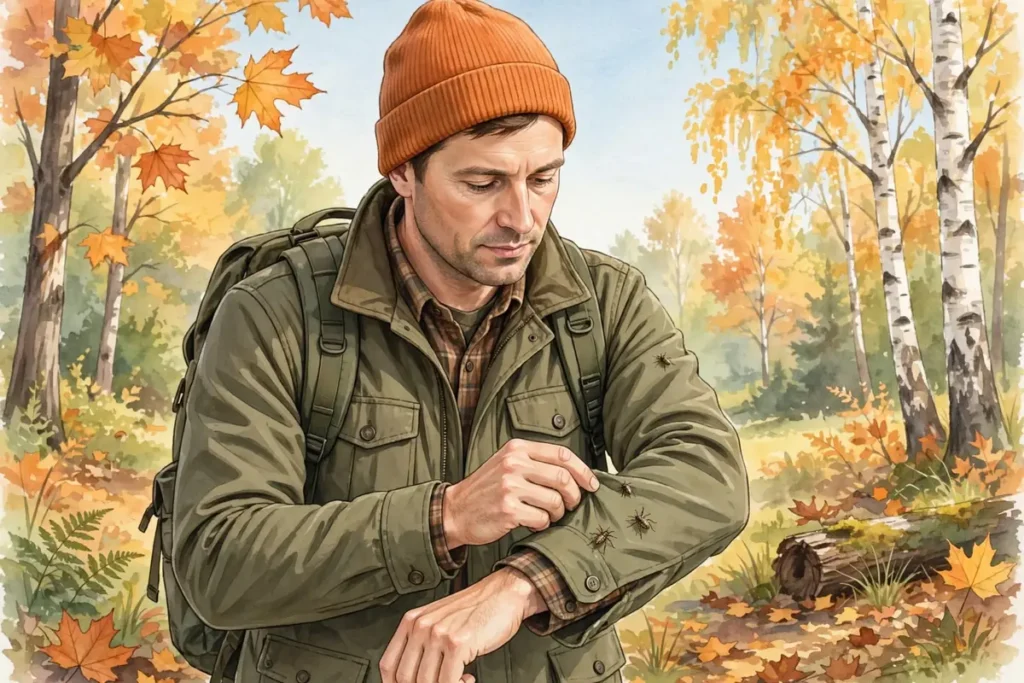
You’re kneeling beside a harvested deer when you notice small dark insects racing across the hide. They look like ticks — flat, fast, and everywhere — and a few are already on your sleeves. Most hunters’ first instinct is alarm: did these things just bite me, and do I have ticks all over me?
The direct answer is that deer keds biting hunters is a common fall-season encounter, and most of the time those “ticks” aren’t ticks at all. Deer keds are biting flies that shed their wings once they land on a deer, and they do bite people too — especially hunters handling deer during the season. They look enough like ticks to fool almost anyone, but telling them apart changes what you should do next. Researchers are honest about the limits: keds may carry some of the same bacteria ticks do, but evidence they transmit disease to people in the US is still limited.
This guide explains what deer keds are, how to tell them from ticks, what to do about bites, and what science actually says about the health risk.
Deer keds (Lipoptena cervi, the European deer ked) are blood-feeding flies in the louse-fly family. They arrive as winged flies, but the moment one lands on a host — deer, elk, or an unlucky hunter — it burrows through the fur and snaps its wings off at the base. From then on it lives as a flattened, wingless parasite, moving quickly across the body taking blood meals. Females eventually birth a single mature larva at a time, which drops to the ground and pupates.
Introduced to North America in the late 1800s, the species is now widespread across the Northeast, densest in the northern states. Keds are most noticeable to hunters in the fall — exactly when deer season opens — because that’s when winged adults are actively seeking hosts.
Why hunters? Field dressing puts you in prolonged, close contact with the exact animal keds live on. When a deer cools after harvest, the keds abandon ship — and the nearest warm body is yours. Penn State entomologist Michael Skvarla recruited Pennsylvania’s deer hunters as citizen scientists precisely because hunters encounter keds constantly and almost always mistake them for ticks.
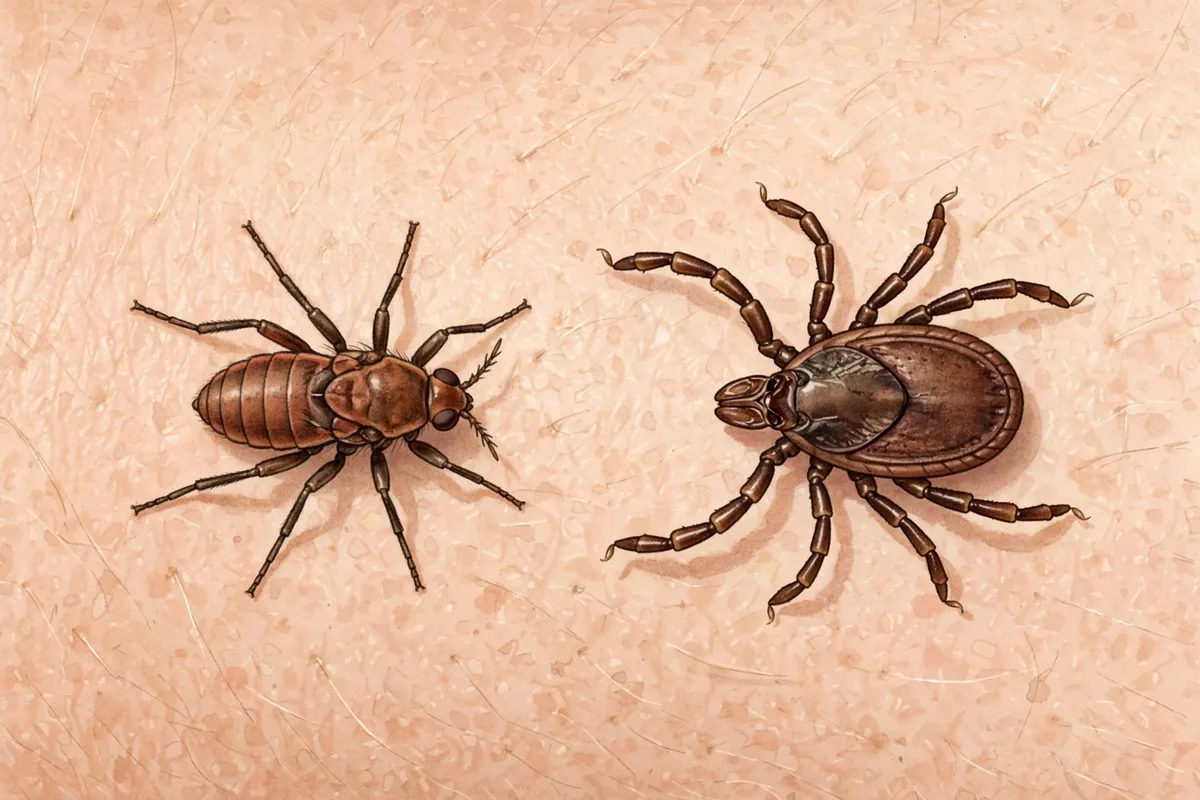
This is the section to memorize, because correct identification changes your response. A ked is not a tick, and the surest difference is the leg count: keds have six legs, ticks have eight. Count the legs and the question is settled instantly — six means a fly, eight means a tick.
Behavior is the second giveaway, often easier to observe than leg count. Keds are fast and restless — they sprint across skin, clothing, and hides without attaching. Ticks, once feeding, are firmly attached to the skin and barely move. Mississippi State Extension puts it plainly: if the critters are moving quickly and not attached to the skin, they’re deer keds; if they’re firmly attached, they’re ticks. One caution: when a harvested deer cools, its ticks disengage and start crawling — but they move noticeably more slowly than keds.
Size and shape help too. Deer keds run about 1/8 to 3/16 of an inch — typically larger than an unfed tick — with a flattened, leathery body, and they tend to concentrate on the deer’s belly and underside, while ticks cluster more around the head and neck. If you find one of these insects on yourself, work through this bite-and-sting clue checklist to sort out what bit you — correct ID is the foundation of correct aftercare.
Yes — deer keds absolutely bite humans. In nature they’re parasites of deer, elk, cattle, horses, and people; in labs they’ve fed on dogs, mice, and even birds. Hunters get bitten most often during field dressing, when keds abandoning a cooling deer land on the nearest warm alternative. Hikers, forestry workers, and anyone moving through ked-heavy woods in the fall can be bitten too.
The bite itself is usually noticed as a sharp prick, though some people don’t feel it until the reaction develops. European research comparing ked and tick bites found a useful contrast: tick bites typically produce a reddish, poorly defined lesion that fades within a few days, while deer ked bites tend to leave scattered, irregular red bumps that can itch intensely and persist for weeks or even months. That lingering, itchy aftermath — sometimes called deer ked dermatitis — is the most common complaint. Itchy bites that flare up at night are common with many biting insects; our guide on why bug bites itch at night explains the mechanisms and what eases them.
Here’s where honesty matters more than reassurance. Skvarla’s research indicates that deer keds may harbor anaplasma (the bacteria behind anaplasmosis) and bartonella (associated with bartonellosis) — the same families of pathogens normally associated with ticks. That finding is real, and it’s why researchers are studying keds in the first place.
But “may harbor” is not the same as “transmits to people.” As Skvarla himself has said, the research goal is to determine whether keds pose risks to human health — the answer isn’t established, and no confirmed pattern of ked-to-human disease transmission has been documented in the United States. So the accurate summary is: keds bite people, keds can carry bacteria of interest, and the evidence that they make people sick remains limited.
What does that mean for you in the deer woods? Don’t panic about keds, but don’t ignore bites either. The framing that fits the evidence is the same one that applies to ticks: save the insect when you can, watch the bite, and see a doctor if symptoms develop — without diagnosing yourself from a bump. If you develop a fever, an unusual rash, or persistent symptoms after any insect bite in the fall, tell your doctor about the exposure and let them evaluate it.
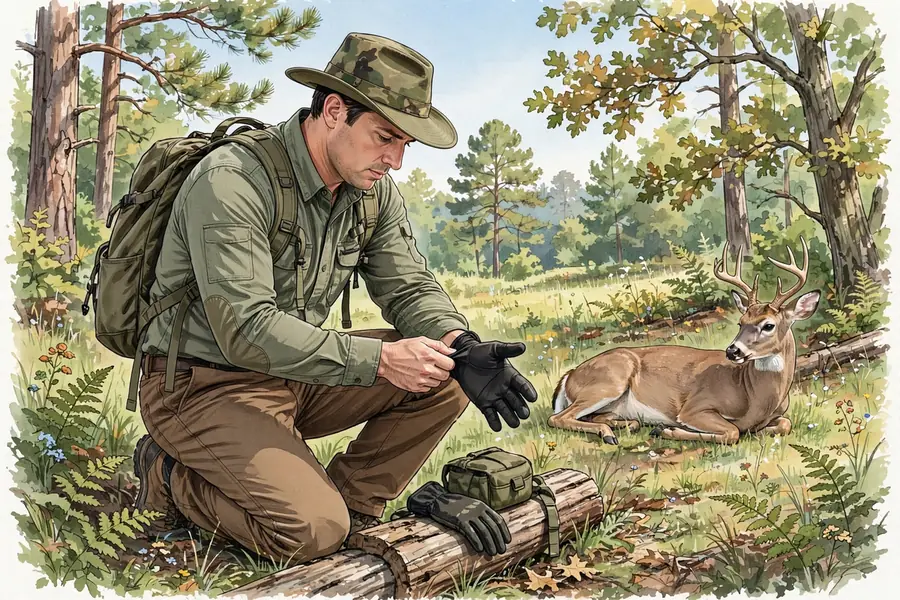
You can’t avoid keds entirely during deer season — they live on the animal you’re hunting — but you can cut how many reach your skin. Start with clothing: long sleeves, gloves, and a hat or head covering during field dressing. Keds land on exposed skin and crawl upward, so closing off the wrists, neck, and scalp removes their easiest routes. Tuck your shirt in and your pants into your boots before you start the messy work.
Permethrin-treated clothing is the strongest tool here. Treat your hunting outerwear, gloves, and gaiters with 0.5% permethrin (clothing only — never on skin), applied outdoors and allowed to dry completely before you wear it. The treatment kills and repels keds, ticks, and other biting insects on contact and stays effective through roughly six washings. Since field dressing is sustained outdoor work where biting insects strike, the outdoor worker bite prevention guide has routines that translate well to a long day in the deer woods.
Repellents on exposed skin help too, though keds are persistent — use an EPA-registered product labeled for biting flies or ticks, applied per the label. During field dressing, work efficiently: get the deer hung and cooling, change out of your outer layer promptly, and check clothing and skin before getting in the truck — keds that ride home on your jacket will keep hunting in the cab.
When a ked bites you, treat the bite like any other insect bite: clean it with soap and water, and avoid scratching. Scratching feels satisfying for three seconds, then makes everything worse — breaking skin, inviting secondary infection, and prolonging the itch. A cool compress can calm the immediate reaction, and keeping the area clean is the main job.
For the itching that follows ked bites, most people use cool compresses and standard over-the-counter approaches for insect bites. We’re not prescribing anything here; if the itching is severe or the bumps keep spreading, that’s a conversation for your doctor or pharmacist, not a decision to make from an internet article.
Watch the bite site over the following days and weeks. Some redness and itching that gradually improves is typical of a ked bite. What should prompt a call to your doctor: an expanding rash, increasing pain or warmth, pus, red streaks spreading from the bite, fever, or any flu-like symptoms in the weeks after the exposure. Take a photo of anything unusual — a dated picture helps a clinician evaluate a lesion far better than a description. And if you managed to save the insect, keep it: knowing whether it was a ked or a tick (and which tick species) genuinely helps medical decision-making.

Deer ked bites are usually a nuisance rather than an emergency, but get medical advice promptly for any of these:
For severe reactions to any sting, review the anaphylaxis warning signs so you can act fast.
Are deer keds the same as ticks?
No. Deer keds are wingless biting flies (six legs) that shed their wings on a host; ticks are arachnids (eight legs) that attach and feed for days. Leg count and behavior — fast and crawling versus attached and still — tell them apart.
Can deer keds give you Lyme disease?
There is no established evidence that deer keds transmit Lyme disease to people. Research has found that keds may harbor bacteria like anaplasma and bartonella, but whether they can pass those to humans remains unproven in the US — the disease-vector evidence is limited, which is exactly why researchers are still studying them.
How do I get deer keds off my clothes and skin?
Brush or pick them off promptly — they’re fast but they don’t cling the way attached ticks do. Shake out clothing before getting in the vehicle, change out of field-dressing layers, and run them through the dryer on high heat. Check your hair, neck, and waistband, where wandering keds tend to end up.
Why do deer ked bites itch for so long?
European dermatology research found that ked bites can leave itchy red bumps persisting for weeks or months, unlike typical tick bites that fade in days. The prolonged reaction appears tied to the ked’s saliva proteins, and some people are simply more reactive than others. Persistent or worsening bumps deserve a doctor’s look, not a guess.
Should I save a deer ked that bit me?
If you can, yes. Drop it in a sealed container or bag with rubbing alcohol and note the date and location. A ked is less medically informative than an attached tick, but having the actual insect eliminates guesswork if a clinician later needs to know what bit you.
Medically reviewed by Dr. Sarah Jones, MD.
This article is for informational purposes only and isn’t medical advice. If you’re worried about a bite or sting, talk to a healthcare professional.
Dr. Jones oversees StingHelp’s clinical verification process. Every guide is systematically evaluated against active Centers for Disease Control and Prevention (CDC), Environmental Protection Agency (EPA), and American Academy of Allergy, Asthma & Immunology (AAAAI) medical consensus standards to ensure symptom distinctions and care recommendations are clinically sound.
Explore physician-reviewed first-aid procedures, identification clues, and symptom comparisons for other common outdoor bites and stings.

There's a moment on every summer Boundary Waters trip when the wilderness stops feeling serene. You're mid-portage, canoe on your shoulders, and a cloud…

# No-See-Ums in the House: How They Get In and How to Get Rid of Them If tiny biting insects seem to appear inside…
# Black Fly Bites on Your Dog's Belly: Red Rings vs Ringworm vs Lyme If you found red rings on your dog's belly this…