Direct answer: A brown dog tick bite usually causes a small local skin reaction, but a red streak, rapidly expanding redness, pus, worsening pain, fever, severe headache, rash, or systemic illness should not be dismissed as a routine tick bite. Brown dog ticks can transmit Rocky Mountain spotted fever (RMSF) in some regions, including parts of the southwestern United States and northern Mexico, so fever or serious illness after a plausible tick exposure needs prompt medical evaluation.
The bite mark itself cannot show whether infection occurred. Many people with tick-borne illness never remember seeing a tick. Exposure history, geography, symptoms, and clinical evaluation matter more than the size of the bump.
Urgent warning
RMSF can become severe quickly. CDC guidance emphasizes prompt treatment when RMSF is clinically suspected rather than waiting for laboratory confirmation. Seek medical care urgently for fever, severe headache, rash, marked weakness, confusion, or rapidly worsening illness after tick exposure.
Brown dog tick bite warning signs at a glance
| Finding | What it may mean | What to do |
|---|---|---|
| Small red bump only | Common local irritation | Clean, observe, avoid scratching |
| Red streak, increasing warmth, pus, worsening tenderness | Possible skin infection or inflammation | Seek medical evaluation |
| Fever, severe headache, muscle aches, rash | Possible tick-borne illness depending on region/exposure | Prompt medical care |
| Facial/throat swelling, breathing trouble, fainting | Severe allergic reaction or other emergency | Call emergency services |
| Confusion, profound weakness, severe illness | Serious systemic disease | Emergency evaluation |
What a brown dog tick looks like
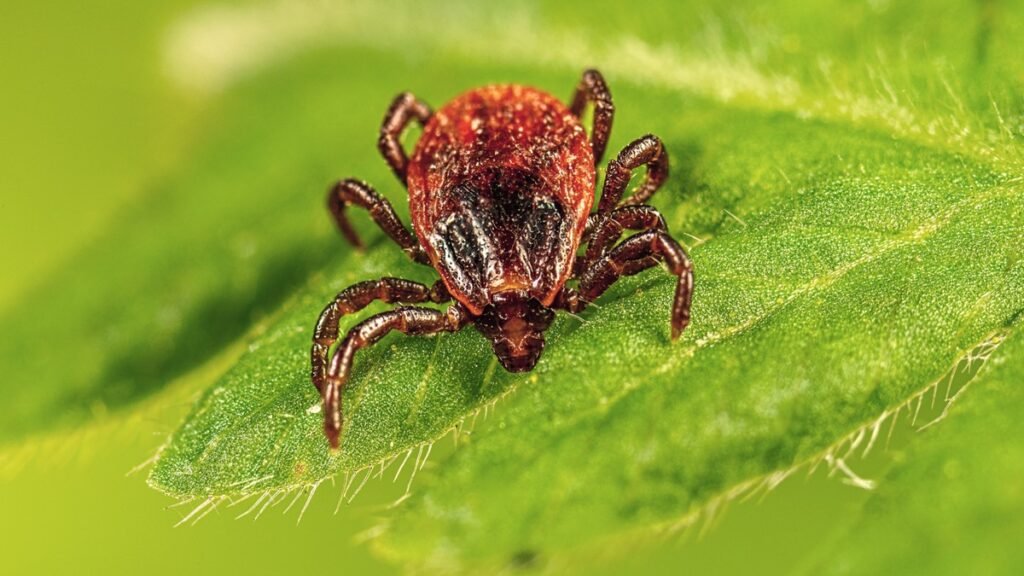
The brown dog tick, Rhipicephalus sanguineus sensu lato, is strongly associated with dogs. Unlike many ticks that are mainly encountered outdoors, brown dog ticks can infest kennels, yards, homes, and buildings where dogs live. They occur worldwide and can bite people.
What a typical bite reaction looks like
A routine tick attachment site may be a small red spot or papule with mild itching or tenderness. The tick may still be attached when discovered. After removal, mild local redness can persist for a short time.
The bite mark alone does not identify the species and does not tell you whether a pathogen was transmitted. Save a clear photo of the tick if possible and note the location and date of exposure.
What does a red streak from a tick bite mean?
A red streak extending away from a bite can have several causes, including local inflammation, irritation from scratching, or infection involving lymphatic vessels. It deserves medical attention when it is spreading, warm, painful, associated with pus or fever, or accompanied by worsening illness.
Do not assume that every red streak is a tick-borne disease rash. Conversely, do not ignore a progressive streak simply because the original bite looks small.
Brown dog ticks and Rocky Mountain spotted fever
CDC identifies brown dog ticks as important RMSF vectors in parts of the southwestern United States and Mexico. Brown dog tick transmission is particularly relevant in some communities where dogs and ticks live in close proximity around homes and yards.
RMSF can cause fever, severe headache, muscle pain, gastrointestinal symptoms, and rash, though rash may not be present early. Because delay in treatment increases risk, suspected RMSF is a clinical urgency.
Remove an attached tick promptly
- Use clean fine-tipped tweezers.
- Grasp the tick as close to the skin surface as possible.
- Pull upward with steady, even pressure.
- Do not twist, crush, burn, or coat the tick with petroleum jelly or nail polish.
- Clean the bite site and your hands after removal.
- Check the rest of the body and inspect pets and the home environment if brown dog ticks are suspected.
When to call a doctor after a brown dog tick bite
Call a healthcare professional for fever, severe headache, spreading rash, marked fatigue, muscle aches, vomiting, worsening bite-site infection, significant swelling, or neurologic symptoms. Mention the tick exposure, where it happened, and the date.
When it is an emergency
Call emergency services for trouble breathing, swelling of the face or throat, fainting, severe confusion, collapse, seizures, or rapidly worsening serious illness.
Should you test the tick?
Commercial tick testing is generally not used by CDC to make individual treatment decisions. A positive tick test does not prove that transmission occurred, and a negative result can be falsely reassuring if another tick bite was missed. Clinical symptoms and exposure history are more important.
Preventing brown dog tick exposure
Because brown dog ticks are closely associated with dogs and can live around homes, prevention may require both personal protection and veterinary/environmental control. Check pets regularly, follow veterinarian-recommended tick prevention, wash pet bedding, inspect cracks and resting areas, and consider professional pest management for established indoor infestations.
Why brown dog tick exposure can happen indoors
Brown dog ticks are unusually well adapted to living around dogs and human structures. Infestations can develop in kennels, dog sleeping areas, cracks, baseboards, wall voids, patios, and yards. People may therefore encounter these ticks without hiking in the woods.
If one brown dog tick is found indoors, inspect pets and common resting areas carefully. A veterinarian can advise on pet tick prevention, while a licensed pest-management professional may be needed for an established household infestation. Treating only the person while ignoring the environment can allow exposure to continue.
Brown dog tick bite vs ordinary skin irritation
A small red bump after removal can be normal. More concerning changes include increasing pain, warmth, swelling, drainage, rapidly expanding redness, red streaking, or fever. Scratching can worsen inflammation and create openings for bacteria.
Take a baseline photo after removal and another later if symptoms change. The goal is to document progression, not to diagnose disease by color or shape.
RMSF symptoms can start before a classic rash
Rocky Mountain spotted fever may begin with fever, severe headache, muscle pain, nausea, vomiting, abdominal symptoms, or general illness. A rash can appear later and is not always present early. Waiting for a “textbook” rash before seeking care can delay treatment.
Tell the clinician that a tick exposure is possible even if the tick was never seen. CDC notes that many patients do not recall a tick bite. The region, dog exposure, housing environment, season, and recent travel can all help the clinical assessment.
Why early treatment matters when RMSF is suspected
RMSF can progress rapidly and can be life-threatening. CDC recommends doxycycline as the treatment of choice for suspected RMSF in adults and children, and clinical treatment should not be delayed while waiting for laboratory confirmation. This is a decision for a healthcare professional, not a reason to self-medicate with leftover antibiotics.
Brown dog ticks, pets, and household control
Dogs can carry brown dog ticks into homes and kennels. Check around ears, neck, toes, and other areas where ticks may attach, but follow veterinary guidance rather than using human insecticides on pets. Wash pet bedding, vacuum cracks and edges, and dispose of vacuum contents securely.
Because ticks may hide away from the host between blood meals, severe infestations often require environmental treatment. Follow product labels exactly and keep children and animals away from treated areas as directed.
What to document after a bite
- Date and approximate time the tick was found.
- Location where exposure likely occurred.
- Whether the tick was attached and, if known, for approximately how long.
- A clear photo of the tick before disposal, if safe.
- Any fever, headache, rash, muscle pain, nausea, or other systemic symptoms that develop.
- Changes in the bite site such as spreading redness, drainage, or red streaking.
Allergic reaction vs infection vs tick-borne illness
An allergic reaction can cause rapid itching, hives, swelling, or—in severe cases—breathing difficulty and fainting. A bacterial skin infection more often causes progressively increasing warmth, pain, redness, pus, or fever. A tick-borne illness can cause fever, headache, muscle pain, rash, or other systemic symptoms even when the bite site itself looks mild.
These categories can overlap. Do not use the appearance of the bite alone to decide which one is present.
What not to do after a tick bite
- Do not burn an attached tick with a match or lighter.
- Do not smother it in petroleum jelly, nail polish, essential oils, or harsh chemicals to force detachment.
- Do not twist aggressively during removal.
- Do not wait for a rash before seeking care when significant fever or illness develops.
- Do not take veterinary tick products or leftover antibiotics yourself.
Prevention for homes with dogs
Use veterinarian-recommended tick prevention consistently, especially in regions where brown dog ticks are common. Check dogs after boarding, travel, kennel stays, or time in infested yards. Keep sleeping areas clean, repair cracks where practical, and address infestations early.
For people, avoid direct contact with infested bedding or kennel surfaces until treated, wear gloves when cleaning heavily infested areas, and shower and change clothes after significant tick exposure.
Brown dog tick life cycle and why infestations persist
Brown dog ticks have egg, larval, nymphal, and adult stages. Between blood meals they can hide in protected areas rather than remaining on the dog. This makes household control different from simply removing the visible adult tick. Eggs and immature ticks may be in cracks, bedding, kennels, wall edges, or outdoor resting areas.
A coordinated plan may include veterinary prevention for pets, laundering or replacing heavily infested bedding, vacuuming, environmental treatment when appropriate, and follow-up inspection. Always follow pesticide labels and veterinary instructions.
How long should you watch for symptoms?
Monitor for illness during the days and weeks after a tick exposure. The exact incubation period varies by disease, so there is no single cutoff that makes every later symptom irrelevant. Record the date of exposure and bring that timeline to a clinician if fever, headache, rash, muscle pain, or other systemic symptoms develop.
What does an infected bite site look like?
Secondary bacterial infection can cause increasing redness, warmth, tenderness, swelling, pus, crusting, or red streaking. Fever can occur as infection worsens. These findings deserve clinical evaluation, especially in people with diabetes, immune suppression, poor circulation, or a history of serious skin infections.
Do not repeatedly squeeze the site or use caustic chemicals. Gentle cleaning and protection from scratching are safer while arranging care.
Brown dog tick exposure in children
Children may be exposed through family dogs, yards, or kennels. Check the scalp, behind the ears, neck, armpits, waistline, groin, behind knees, and other areas after significant exposure. If a child develops fever, severe headache, unusual sleepiness, rash, repeated vomiting, or marked weakness after tick exposure, seek medical care promptly.
Brown dog tick exposure during pregnancy
Pregnant people with fever or systemic illness after a tick bite should contact their obstetric or medical clinician rather than self-treating. The risks and medication choices need individualized assessment. Prompt evaluation is more important than trying to identify the species from the bite mark.
Should the home be treated if one tick is found?
One tick does not always mean there is an indoor infestation. Look for repeated ticks on the dog, ticks crawling on walls or floors, or multiple life stages around pet resting areas. Repeated findings justify veterinary and pest-control advice. Avoid indiscriminate pesticide use in living spaces.
What if the tick mouthparts seem to remain in the skin?
After removal, small mouthpart fragments can occasionally remain. Do not dig deeply into the skin with a needle or blade. If a fragment is easily removed with clean tweezers it may be lifted out, but otherwise the skin can often heal while the fragment works out naturally. Seek medical advice if the area becomes increasingly painful, swollen, infected, or difficult to manage.
Can a brown dog tick bite cause a bull’s-eye rash?
A classic expanding erythema migrans rash is most strongly associated with Lyme disease and blacklegged ticks, not brown dog ticks. However, many rashes are not textbook circles, and other tick-borne illnesses can cause different rashes. Any expanding rash with fever or systemic symptoms after tick exposure deserves evaluation rather than diagnosis by shape alone.
Why dog health matters to human risk
Heavy tick burdens on dogs can signal substantial environmental exposure. Keeping dogs on effective veterinarian-recommended tick prevention can reduce the number of ticks feeding and reproducing around the household. Check pets after travel, boarding, hunting, hiking, or visits to tick-prone properties.
When to contact public health or pest professionals
Repeated brown dog tick findings in a home, kennel, apartment building, or community setting may require coordinated control. Local public-health agencies, veterinarians, or licensed pest professionals can provide region-specific guidance. This is especially important in areas where brown dog ticks are known to transmit RMSF.
Follow-up after a medically evaluated tick bite
If a clinician evaluates the bite, follow the monitoring plan they provide and return if symptoms worsen. A single reassuring visit does not mean new fever, rash, severe headache, confusion, or other systemic symptoms should be ignored later.
Keep the exposure date and any tick photograph available in your medical record or phone. If a new clinician sees you days later, that information can help connect the symptoms to the original exposure.
Why prevention needs to include the whole household
When brown dog ticks are established indoors, treating only one pet or one room may not be enough. All pets may need veterinary guidance, and sleeping areas, kennels, cracks, and outdoor resting spots may need coordinated management. Follow-up inspections are important because immature ticks can be difficult to see.
For apartment or multi-pet settings, coordinate tick control rather than treating one animal in isolation. Repeated sightings after treatment can indicate surviving life stages in protected areas and may justify professional reassessment.
Early attention to repeated tick activity can reduce ongoing exposure for both people and pets.
Frequently asked questions
Can brown dog ticks bite people?
Yes. Dogs are the primary host, but brown dog ticks can bite humans.
Can a brown dog tick live inside a house?
Yes. Brown dog ticks are unusual among ticks because they can complete much of their life cycle in buildings and kennels where dogs are present.
Does a red streak always mean RMSF?
No. A red streak can reflect skin inflammation or infection and is not specific for RMSF. Progressive streaking with warmth, pain, fever, or illness should be evaluated.
Can RMSF happen without a rash?
Yes. A rash may be absent early or sometimes not develop, so clinicians consider the full symptom pattern and exposure history.
Should I wait for a blood test before treatment if RMSF is suspected?
CDC guidance emphasizes that treatment should not be delayed for laboratory confirmation when RMSF is clinically suspected.
What should I do after removing a tick?
Clean the area, record the date and location, monitor for symptoms in the following days and weeks, and seek medical care if fever, rash, severe headache, or other concerning illness develops.
Related StingHelp guides
- What Bit Me? Identification Guide
- Bite & Sting First Aid
- Mosquito Bite Warning Signs
- Tick Bite Warning Signs
Authoritative references
- CDC — Rocky Mountain Spotted Fever
- CDC — Clinical Overview of RMSF
- CDC — Where Ticks Live
- CDC — What to Do After a Tick Bite
- CDC — RMSF Diagnosis and Testing
Bottom line
Most brown dog tick bites cause only local irritation, but progressive skin infection signs or systemic illness deserve medical attention. In regions where brown dog ticks transmit RMSF, fever, severe headache, rash, or rapid deterioration after tick exposure should be treated as clinically important.
Educational information only and not a substitute for professional diagnosis or treatment.