
Chickenpox vs Bug Bites: A Parent’s ID Guide
Your child wakes up covered in itchy red spots and the questions start immediately: is this chickenpox vs bug bites, an allergic reaction, or…
Compare a blacklegged tick bite with a paper wasp sting using timing, attachment, nest exposure, symptoms, first aid, and emergency warning signs.
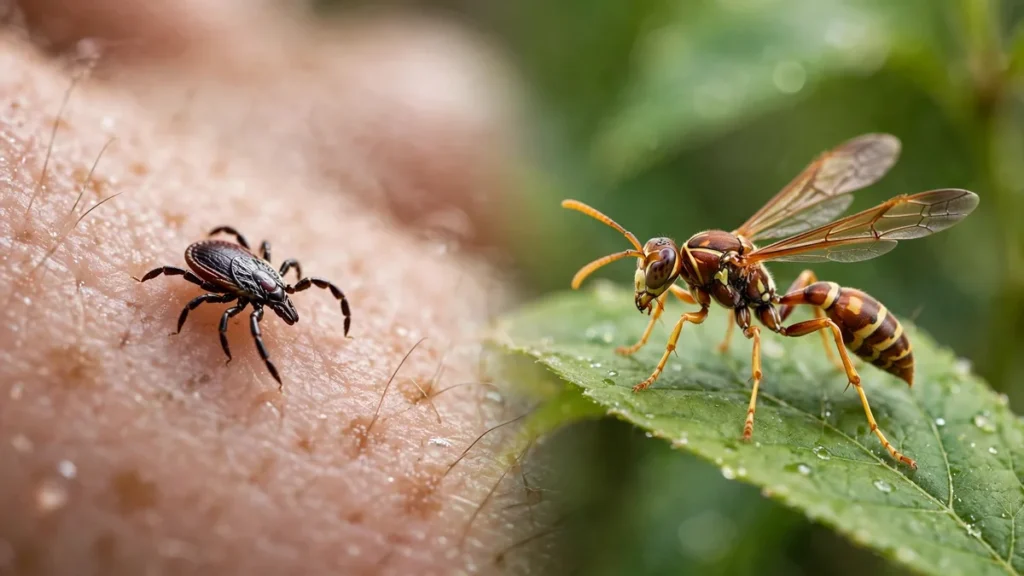
Direct answer: A blacklegged tick bite and a paper wasp sting usually feel very different at the moment of exposure. A blacklegged tick can stay attached for hours or longer and the bite may be painless enough to go unnoticed. A paper wasp sting is typically sudden and painful because venom is injected immediately. The safest way to tell them apart is to focus on what happened, whether an arthropod was attached, where the exposure occurred, and how symptoms developed—not on the shape of one red spot.
Fastest clue: An attached tick strongly supports a tick bite. A sharp, immediate sting while working near an open paper nest under an eave, railing, shrub, shutter, or woodpile strongly supports a paper wasp sting.
| Clue | Blacklegged tick bite | Paper wasp sting |
|---|---|---|
| What usually happens first | The tick attaches and feeds; many people do not feel the bite | Immediate sharp or burning pain is common |
| Does the arthropod stay attached? | Often yes, until removed or detached | No; the wasp stings and moves away |
| Typical exposure | Wooded, brushy, grassy, leaf-litter, yard, trail, or pet-associated exposure | Near an exposed paper nest, often around eaves, shutters, shrubs, railings, or woodpiles |
| Early skin reaction | May be a small red bump or mild local irritation | Pain, redness, warmth, and swelling can begin quickly |
| Main health concern | Tick-borne infection risk after an infected tick bite | Venom reaction, including anaphylaxis in a susceptible person |
| Most urgent red flag | Later fever, expanding rash, or other illness after relevant tick exposure | Breathing trouble, throat/tongue swelling, fainting, widespread hives, or systemic symptoms |
Skin reactions overlap. Both a tick bite and a wasp sting can leave redness, swelling, tenderness, itching, or a visible punctum. Those findings alone are not specific. A much better question is: What was happening immediately before the mark appeared?
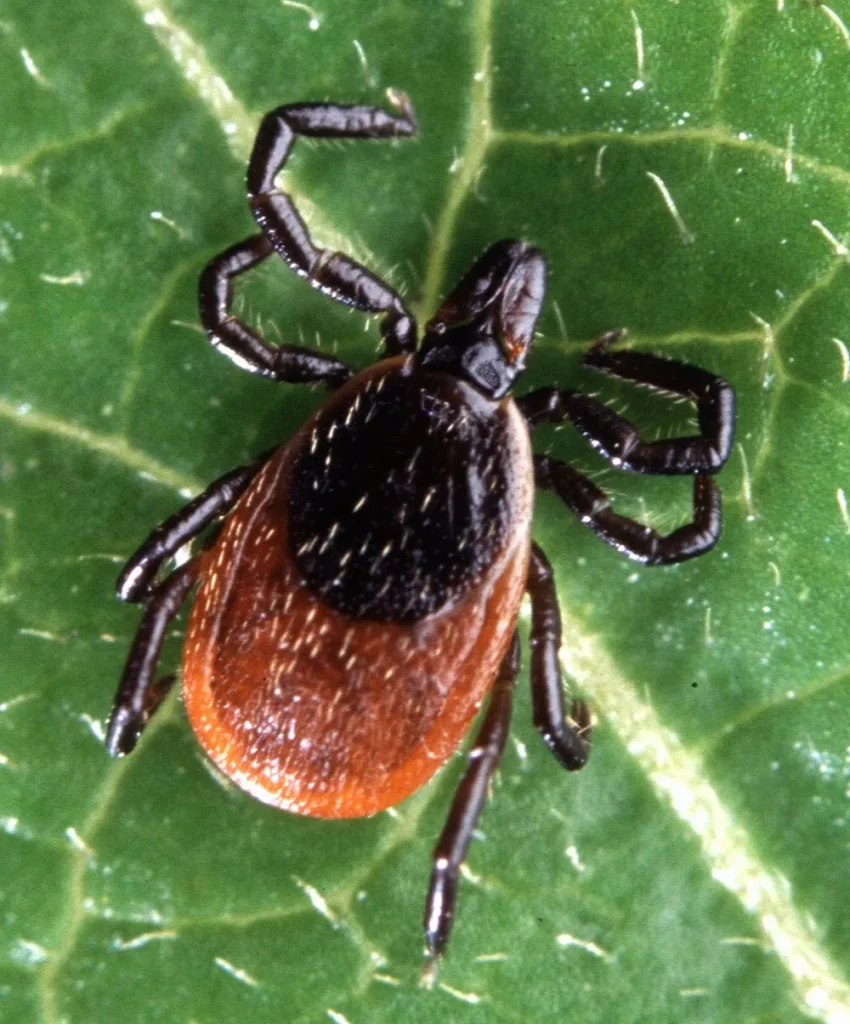
Blacklegged ticks are associated with outdoor exposure in places where ticks can contact clothing or skin. They climb onto a host, attach with their mouthparts, and feed. Paper wasps are flying stinging insects. The American Academy of Allergy, Asthma & Immunology notes that paper wasps commonly build exposed comb-like nests under eaves, behind shutters, or in shrubs and woodpiles. A sting often follows close contact with a wasp or disturbance near the nest.
A small area of redness immediately after removing a tick can be a local reaction and does not automatically mean Lyme disease. CDC guidance notes that a small bump or redness at the bite site can occur and may fade within a day or two. The more important issue is what happens over the following days to weeks.
Blacklegged ticks can transmit the bacteria that cause Lyme disease in parts of the United States. An erythema migrans rash, when it occurs, typically expands gradually rather than appearing as a painful swollen welt within minutes. It may feel warm but is often not very itchy or painful. Not every Lyme rash looks like a classic bull’s-eye, so relying on that single image pattern is unsafe.
Other symptoms that deserve medical attention after a relevant tick bite can include fever, chills, headache, fatigue, muscle or joint aches, swollen lymph nodes, or a new expanding rash. Tell a clinician when and where the tick exposure occurred and whether the tick was saved or photographed.
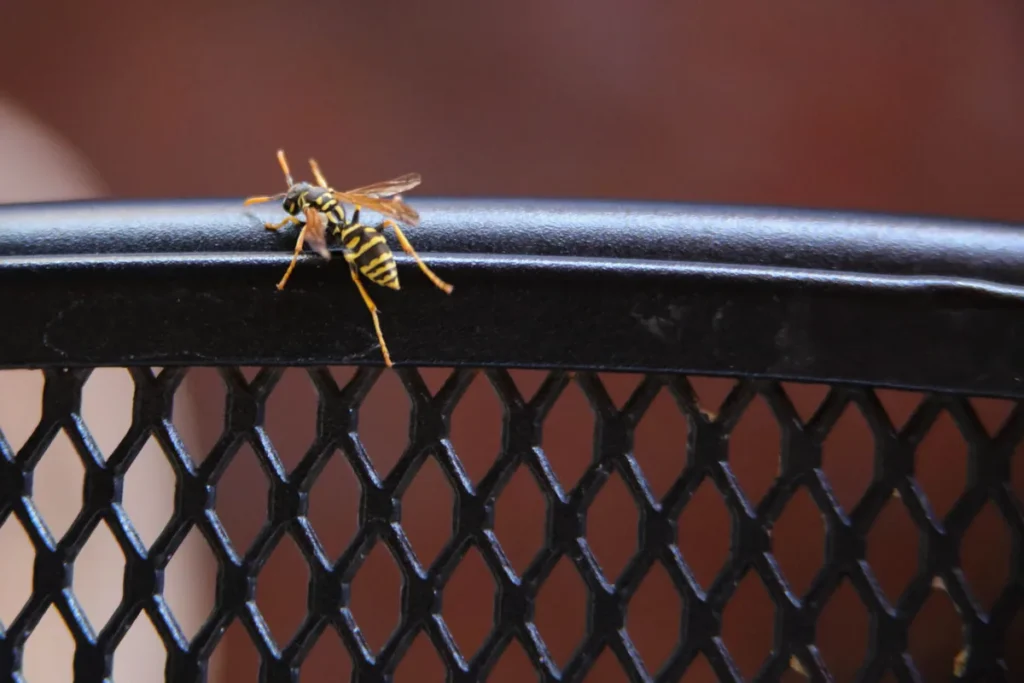
Paper wasp venom causes an immediate tissue and immune response. Many people notice pain first, followed by localized redness and swelling. A normal local reaction can look dramatic without being dangerous. The key distinction is whether symptoms remain local or begin affecting other parts of the body.
Large local swelling can extend beyond the immediate sting site and may peak later. That does not automatically mean bacterial infection or anaphylaxis. In contrast, widespread hives, facial or throat swelling, breathing difficulty, dizziness, vomiting, diarrhea, or fainting after a sting can indicate a systemic allergic reaction and require urgent evaluation.

Paper wasps build recognizable open-comb nests rather than enclosed football-shaped nests. They may be attached under porch roofs, deck rails, window ledges, outdoor furniture, sheds, or shrubs. A person trimming vegetation, reaching behind a shutter, moving stored material, or working near an eave may be stung before noticing the nest.
If several wasps are repeatedly entering and leaving one small area, avoid approaching or disturbing it. Nest removal can trigger defensive stinging and is safer when handled appropriately, especially if anyone nearby has a known venom allergy.
CDC recommends removing an attached tick as soon as possible. Use clean fine-tipped tweezers when available. Grasp the tick close to the skin’s surface and pull upward with steady, even pressure. Avoid crushing the tick’s body. After removal, clean the bite area and your hands.
Do not wait for a clinic visit simply to remove an attached tick. Delaying removal can increase exposure time. Also avoid folk techniques designed to make the tick detach slowly, such as covering it with petroleum jelly, nail polish, heat, or irritating chemicals.
Record the date of the bite. A clear photo of the tick can help with later identification. If fever, rash, or other illness develops within the following days or weeks, contact a healthcare professional and mention the tick exposure.
Move away from the area first so you are not stung again. Wash the site gently with soap and water. A cool compress can reduce pain and swelling. If the sting is on an arm or leg, elevation may also help. Avoid aggressive squeezing, cutting, suction devices, bleach, gasoline, essential oils, or other caustic home remedies.
Medication choices depend on age, pregnancy, allergies, other medicines, and medical history. Follow product labels and ask a pharmacist or clinician if you are unsure what is safe for you or a child.
A venom allergy can cause anaphylaxis soon after a sting. Symptoms may involve more than the skin. Trouble breathing, throat or tongue swelling, fainting, rapidly spreading hives, severe dizziness, vomiting, diarrhea, or signs of shock after a sting are reasons to call emergency services.
If a person has been prescribed an epinephrine auto-injector for a known venom allergy, they should follow their emergency plan. Emergency care is still needed after epinephrine because symptoms can recur or remain severe.
This comparison matters because the follow-up is different. A paper wasp sting is primarily a venom exposure. A blacklegged tick bite is primarily an attachment and potential vector exposure. The danger after a wasp sting is usually immediate allergy or, after many stings, systemic venom effects. The danger after a tick bite may appear later if a tick-borne infection develops.
That means a person can feel fine after removing a tick and still need to watch for later symptoms. The opposite can happen after a wasp sting: the first few minutes may tell you much more about allergy risk than the appearance several days later.

Unlike honey bees, wasps generally do not leave a barbed stinger embedded in the skin after a routine sting. A visible object in the skin should not automatically be assumed to be a wasp stinger. Look carefully and avoid digging into the skin unnecessarily. If you actually see a tick attached, treat it as a tick exposure and remove it promptly.
Redness soon after a sting is usually inflammatory. Redness around a recent tick bite can also be local irritation. Infection becomes more concerning when pain is worsening instead of improving, the area becomes increasingly hot and tender, pus or drainage develops, fever appears, or redness continues spreading with systemic illness.
An expanding Lyme rash is not the same thing as ordinary cellulitis or an immediate venom reaction. If the pattern is enlarging over days after a tick exposure, especially with fever or flu-like symptoms, seek medical evaluation rather than relying on home treatment.
If no tick or wasp was seen, avoid overconfidence. Many unrelated skin conditions are labeled “bites” based only on appearance. Ask yourself whether there was a sudden painful event, whether you were near a visible paper nest, whether you had recent wooded or brush exposure, whether a tick was later found on clothing or a pet, and whether symptoms began immediately or were noticed much later.
A clinician may be able to narrow the possibilities from the history even when the original arthropod is unavailable. A photo of the actual insect is more useful than a close-up of a nonspecific red bump.
Blacklegged tick exposure is especially relevant in regions where these ticks and Lyme disease are established, including much of the Northeast, mid-Atlantic, and upper Midwest, with related western blacklegged ticks on the Pacific Coast. Paper wasps are widespread in the United States and are frequently encountered around homes, yards, porches, gardens, and outbuildings.
Geography changes probability, not certainty. A person can travel, insects can be transported, and multiple arthropods may share the same outdoor environment. Use location as one clue rather than a diagnosis.
Seek earlier medical advice when symptoms are difficult to assess, when the person has a history of severe venom allergy, or when there are multiple stings. Children may not describe dizziness, throat tightness, or breathing changes clearly. Watch for behavior changes, facial swelling, vomiting, wheezing, faintness, or rapidly worsening symptoms.
For tick exposure in a child, remove the tick promptly and document the date. Ask a pediatric healthcare professional about concerning later symptoms rather than using adult medication or antibiotic advice from the internet.

Call emergency services now for trouble breathing, throat or tongue swelling, fainting, severe dizziness, rapidly spreading hives with other systemic symptoms, or other signs of anaphylaxis after a sting.
Contact a healthcare professional if you develop fever, an expanding rash, facial weakness, severe headache, new joint swelling, or other illness after a blacklegged tick exposure; if a sting reaction keeps worsening; if there are signs of infection; or if you are unsure how to manage a high-risk exposure.
No. Lyme disease is associated with infected blacklegged ticks, not paper wasps.
It can cause local irritation, but many tick bites are not noticed when they occur. Sudden sharp pain is more characteristic of a sting or cutting bite than a feeding tick.
No. Not every blacklegged tick is infected, and transmission risk depends on multiple factors. Remove an attached tick promptly and monitor for symptoms.
No. A large local reaction can stay limited to the area around the sting. Anaphylaxis involves systemic symptoms such as breathing difficulty, throat swelling, fainting, or widespread hives with other symptoms.
No. The exposure history and actual arthropod are usually more informative than the skin appearance alone.
Educational information only. StingHelp does not diagnose insect exposures or replace care from a qualified healthcare professional. Seek urgent care for severe, rapidly worsening, or systemic symptoms.
Dr. Jones oversees StingHelp’s clinical verification process. Every guide is systematically evaluated against active Centers for Disease Control and Prevention (CDC), Environmental Protection Agency (EPA), and American Academy of Allergy, Asthma & Immunology (AAAAI) medical consensus standards to ensure symptom distinctions and care recommendations are clinically sound.
Explore physician-reviewed first-aid procedures, identification clues, and symptom comparisons for other common outdoor bites and stings.

Your child wakes up covered in itchy red spots and the questions start immediately: is this chickenpox vs bug bites, an allergic reaction, or…

Your child comes in from the yard clutching a caterpillar they thought looked cool, and now their hand is burning. Or you brush a…

For weeks, you have woken up with fresh, fiercely itchy bumps — around your waistband, across your abdomen, along your shoulders. You stripped the…