Direct answer: Most uncomplicated biting midge bites can be managed with gentle skin care, cooling, and monitoring, but treatment depends on the exposure and the person’s symptoms. tiny biting midges take short blood meals and can bite repeatedly during one outdoor exposure. The skin reaction alone cannot confirm the exact insect, and severe symptoms should be triaged before identification.
What a biting midge bite usually looks and feels like
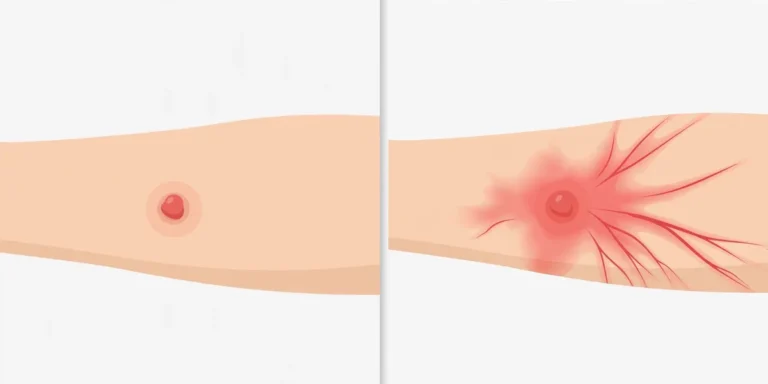
itching, burning, or small red papules may appear soon after exposure or become more noticeable later. Individual reactions vary widely. Skin sensitivity, body location, scratching, age, and previous exposure can all change how dramatic the area looks.
Where this exposure is most plausible
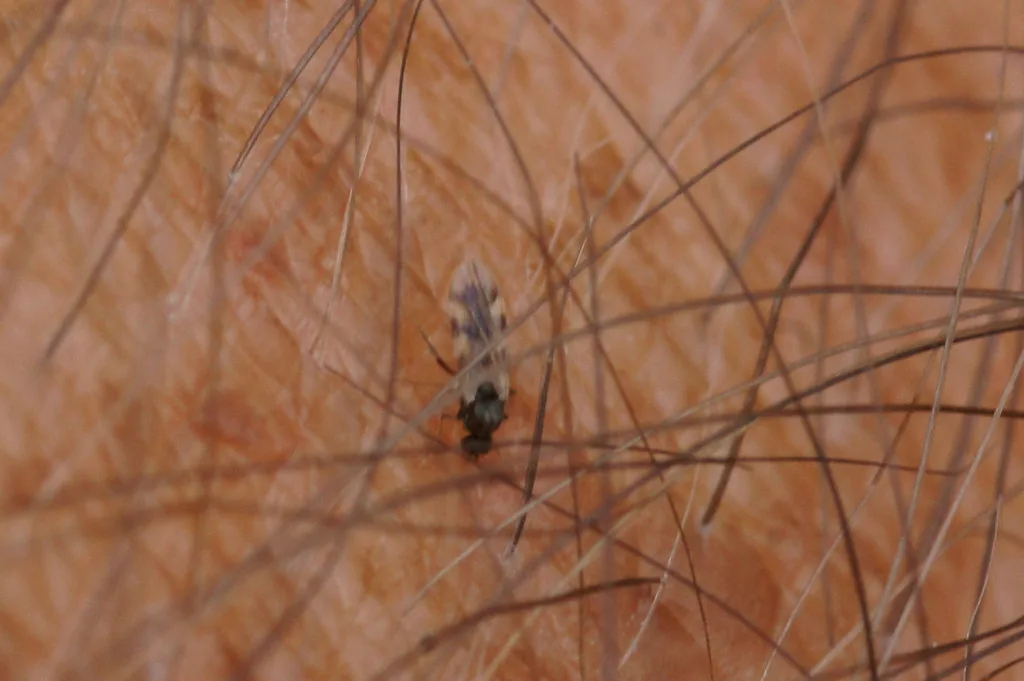
marshes, shorelines, damp habitats, gardens, wooded edges, and areas with heavy midge activity. tiny biting flies seen during compatible outdoor exposure are stronger evidence than the pattern of bumps. If the setting does not fit, keep other causes open instead of forcing the diagnosis from a photograph.
Immediate first aid
leave the biting area, wash the skin gently, use a wrapped cool compress, and avoid scratching. Simple measures are usually safer than cutting, squeezing, suction, repeated peroxide, bleach, essential oils, or other irritating home remedies.
Step-by-step home care for a mild local reaction
- Move away from the source so additional bites or stings do not occur.
- Wash the area gently with soap and water.
- Use a wrapped cool compress for short intervals if it is comfortable.
- Avoid scratching, picking, or opening blisters or pustules.
- Remove rings, tight footwear, or other constricting items early if swelling is developing nearby.
- Track whether pain, itch, redness, and swelling are improving or worsening.
Relief for itching and pain
Over-the-counter medicines can help some people, but they are not appropriate for everyone. Age, pregnancy, kidney or liver disease, glaucoma, prostate problems, sedation risk, allergies, and medication interactions can change what is safe. Follow the product label and ask a pharmacist or clinician if you are unsure.
What not to do
- Do not cut or suction the skin.
- Do not apply pesticides or veterinary products to human skin.
- Do not use bleach, strong acids, or caustic chemicals.
- Do not repeatedly scrub the area with harsh antiseptics.
- Do not start leftover antibiotics “just in case.”
- Do not delay emergency care while trying to identify the exact insect.
When to call 911
Call emergency services for difficulty breathing, wheezing, throat tightness, fainting, severe weakness, confusion, rapidly developing swelling of the tongue or face, or widespread hives accompanied by vomiting, dizziness, or breathing symptoms. If the person has a prescribed epinephrine plan, follow it and still seek emergency care.
When to seek prompt medical care
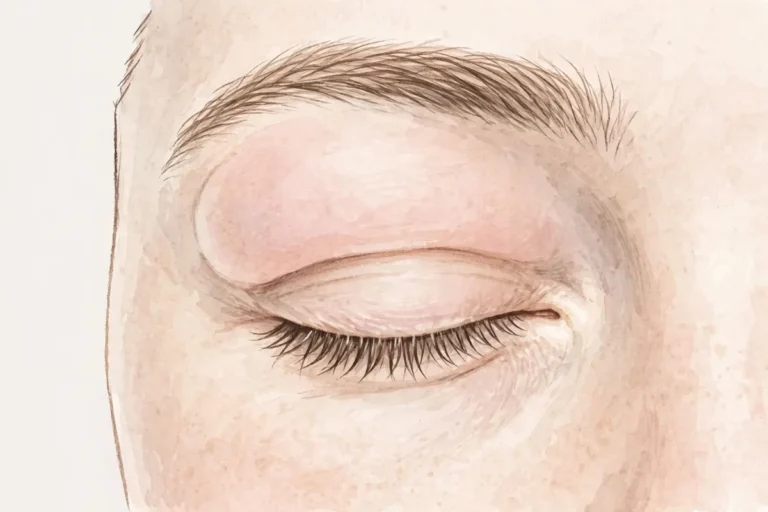
Seek medical assessment for severe or progressively increasing pain, high fever, repeated vomiting, neurologic symptoms, significant eye or mouth involvement, rapidly expanding swelling that affects function, pus, red streaking, or redness that keeps spreading while the person feels increasingly unwell.
Allergy versus a large local reaction
A large local reaction can become impressive over many hours without being the same as anaphylaxis. Emergency allergy symptoms involve breathing, circulation, consciousness, or multiple body systems. A person with a history of severe reactions should follow their clinician’s emergency plan.
Inflammation versus infection
Redness, warmth, and swelling can be ordinary inflammation after a bite or sting. Infection becomes more concerning when pain progressively worsens, drainage or pus appears, fever develops, red streaking occurs, or the person becomes increasingly ill. Scratching can damage the skin barrier and create secondary infection.
How long symptoms can last
Many uncomplicated local reactions improve over several days, although itching or swelling can persist longer in sensitive people. The direction of change matters more than the exact size of the mark. A reaction that steadily improves is more reassuring than one that becomes increasingly painful or systemic.
What to monitor for the next 48 hours
Record pain, itching, swelling, fever, headache, drainage, dizziness, weakness, and any new rash away from the original site. Take a clear photo in similar lighting if the reaction changes. Note whether the person can sleep, eat, drink, walk, and breathe normally.
Exposure-specific risk context
most reactions are local. Disease significance varies by species and geography, so ordinary itchy bumps do not prove infection. This is why a correctly identified arthropod still does not automatically tell you whether a complication is present.
What if you are not sure what caused it?
Review the previous day or two for marshes, shorelines, damp habitats, gardens, wooded edges, and areas with heavy midge activity. tiny biting flies seen during compatible outdoor exposure are stronger evidence than the pattern of bumps. If neither clue fits, consider another arthropod, dermatitis, folliculitis, or infection rather than repeatedly treating the skin for the wrong cause.
Children
Children may scratch intensely and can need age- and weight-appropriate medication advice. Seek care sooner for extensive swelling, dehydration, breathing symptoms, repeated vomiting, fever with worsening illness, or a lesion near the eye or mouth.
Pregnancy and breastfeeding
Pregnancy can change which medicines are appropriate. Simple measures such as gentle washing and a cool compress are generally preferred first steps, but medication questions should be discussed with a clinician or pharmacist who knows the person’s history.
Older adults and people with chronic conditions
Older adults, people with diabetes, poor circulation, immune compromise, chronic edema, or multiple medications may need a lower threshold for assessment when redness, pain, drainage, or systemic symptoms are worsening.
Preventing another biting midge bite
use fine-mesh screens, clothing barriers, EPA-registered repellents as labeled, and avoid peak local activity when practical. Prevention is especially important when repeated new lesions suggest the exposure source is still present.
Environmental source control
If new bites or stings continue, treating the skin alone is not enough. Revisit the environment, identify the source when possible, and use evidence-based pest or habitat control rather than spraying the body or indoor surfaces indiscriminately.
Frequently asked questions
Should I pop a blister or pustule?
No. Intentionally opening it can damage the skin barrier and increase infection risk. Protect the area and seek care if it becomes increasingly painful, drains pus, or is accompanied by fever.
Does a large swollen area mean infection?
No. Large local inflammation can occur without bacterial infection. Progressive pain, pus, fever, red streaking, or worsening illness are more concerning.
Can I identify the insect from the bite mark?
Usually not reliably. tiny biting flies seen during compatible outdoor exposure are stronger evidence than the pattern of bumps.
How do I know whether symptoms are getting better?
Look for a downward trend in pain, swelling, itch, and redness, and stable overall health. New systemic symptoms or a clearly worsening trend deserve reassessment.
When should I contact a pharmacist?
A pharmacist can help with age-appropriate itch or pain relief and check interactions for stable local symptoms. Emergency or severe systemic symptoms need medical care rather than pharmacy-only advice.
Related StingHelp guides
Authoritative references
- American Academy of Dermatology: bug bites and stings
- NHS: insect bites and stings
- US EPA: insect repellents
- CDC
Bottom line
For a likely biting midge bite, start with simple first aid, monitor the direction of change, and focus on red flags rather than the exact appearance. Severe allergy, systemic illness, or progressive infection signs need prompt medical attention.
Educational information only; not a diagnosis or substitute for individualized medical care.
Additional safety checkpoint
tiny biting flies seen during compatible outdoor exposure are stronger evidence than the pattern of bumps. If the exposure is uncertain and symptoms are worsening, professional reassessment is safer than continued image matching or repeated home remedies.
Additional safety checkpoint
tiny biting flies seen during compatible outdoor exposure are stronger evidence than the pattern of bumps. If the exposure is uncertain and symptoms are worsening, professional reassessment is safer than continued image matching or repeated home remedies.
Additional safety checkpoint
tiny biting flies seen during compatible outdoor exposure are stronger evidence than the pattern of bumps. If the exposure is uncertain and symptoms are worsening, professional reassessment is safer than continued image matching or repeated home remedies.
Additional safety checkpoint
tiny biting flies seen during compatible outdoor exposure are stronger evidence than the pattern of bumps. If the exposure is uncertain and symptoms are worsening, professional reassessment is safer than continued image matching or repeated home remedies.
Additional safety checkpoint
tiny biting flies seen during compatible outdoor exposure are stronger evidence than the pattern of bumps. If the exposure is uncertain and symptoms are worsening, professional reassessment is safer than continued image matching or repeated home remedies.
Additional safety checkpoint
tiny biting flies seen during compatible outdoor exposure are stronger evidence than the pattern of bumps. If the exposure is uncertain and symptoms are worsening, professional reassessment is safer than continued image matching or repeated home remedies.
Additional safety checkpoint
tiny biting flies seen during compatible outdoor exposure are stronger evidence than the pattern of bumps. If the exposure is uncertain and symptoms are worsening, professional reassessment is safer than continued image matching or repeated home remedies.
Additional safety checkpoint
tiny biting flies seen during compatible outdoor exposure are stronger evidence than the pattern of bumps. If the exposure is uncertain and symptoms are worsening, professional reassessment is safer than continued image matching or repeated home remedies.
Additional safety checkpoint
tiny biting flies seen during compatible outdoor exposure are stronger evidence than the pattern of bumps. If the exposure is uncertain and symptoms are worsening, professional reassessment is safer than continued image matching or repeated home remedies.
Additional safety checkpoint
tiny biting flies seen during compatible outdoor exposure are stronger evidence than the pattern of bumps. If the exposure is uncertain and symptoms are worsening, professional reassessment is safer than continued image matching or repeated home remedies.
Additional safety checkpoint
tiny biting flies seen during compatible outdoor exposure are stronger evidence than the pattern of bumps. If the exposure is uncertain and symptoms are worsening, professional reassessment is safer than continued image matching or repeated home remedies.
Additional safety checkpoint
tiny biting flies seen during compatible outdoor exposure are stronger evidence than the pattern of bumps. If the exposure is uncertain and symptoms are worsening, professional reassessment is safer than continued image matching or repeated home remedies.
Additional safety checkpoint
tiny biting flies seen during compatible outdoor exposure are stronger evidence than the pattern of bumps. If the exposure is uncertain and symptoms are worsening, professional reassessment is safer than continued image matching or repeated home remedies.
Additional safety checkpoint
tiny biting flies seen during compatible outdoor exposure are stronger evidence than the pattern of bumps. If the exposure is uncertain and symptoms are worsening, professional reassessment is safer than continued image matching or repeated home remedies.
Additional safety checkpoint
tiny biting flies seen during compatible outdoor exposure are stronger evidence than the pattern of bumps. If the exposure is uncertain and symptoms are worsening, professional reassessment is safer than continued image matching or repeated home remedies.
Additional safety checkpoint
tiny biting flies seen during compatible outdoor exposure are stronger evidence than the pattern of bumps. If the exposure is uncertain and symptoms are worsening, professional reassessment is safer than continued image matching or repeated home remedies.
Additional safety checkpoint
tiny biting flies seen during compatible outdoor exposure are stronger evidence than the pattern of bumps. If the exposure is uncertain and symptoms are worsening, professional reassessment is safer than continued image matching or repeated home remedies.
Additional safety checkpoint
tiny biting flies seen during compatible outdoor exposure are stronger evidence than the pattern of bumps. If the exposure is uncertain and symptoms are worsening, professional reassessment is safer than continued image matching or repeated home remedies.
Additional safety checkpoint
tiny biting flies seen during compatible outdoor exposure are stronger evidence than the pattern of bumps. If the exposure is uncertain and symptoms are worsening, professional reassessment is safer than continued image matching or repeated home remedies.
Additional safety checkpoint
tiny biting flies seen during compatible outdoor exposure are stronger evidence than the pattern of bumps. If the exposure is uncertain and symptoms are worsening, professional reassessment is safer than continued image matching or repeated home remedies.
Additional safety checkpoint
tiny biting flies seen during compatible outdoor exposure are stronger evidence than the pattern of bumps. If the exposure is uncertain and symptoms are worsening, professional reassessment is safer than continued image matching or repeated home remedies.
Additional safety checkpoint
tiny biting flies seen during compatible outdoor exposure are stronger evidence than the pattern of bumps. If the exposure is uncertain and symptoms are worsening, professional reassessment is safer than continued image matching or repeated home remedies.
Additional safety checkpoint
tiny biting flies seen during compatible outdoor exposure are stronger evidence than the pattern of bumps. If the exposure is uncertain and symptoms are worsening, professional reassessment is safer than continued image matching or repeated home remedies.
Additional safety checkpoint
tiny biting flies seen during compatible outdoor exposure are stronger evidence than the pattern of bumps. If the exposure is uncertain and symptoms are worsening, professional reassessment is safer than continued image matching or repeated home remedies.