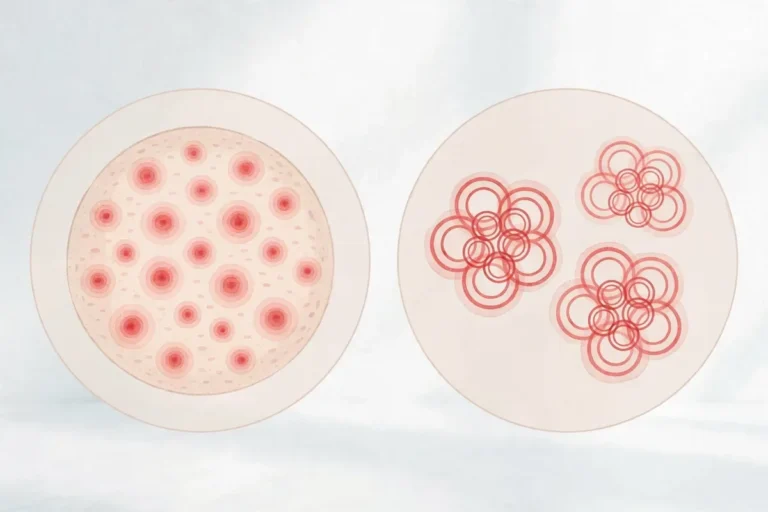
Ask any trail rider about the worst part of a summer ride, and the answer is rarely the horse. It is the flies. Deer fly and horse fly bites on horseback riders are a special kind of misery: these are not the delicate sips of a mosquito but slashing, painful bites that draw blood, swell impressively, and send both horse and rider into a frenzy. Equestrian forums are full of riders describing deer flies that chase them down the trail, circling the head and landing on the neck for bite after bite.
The good news is that riders are not helpless. Because biting flies hunt by sight and movement, rider-specific strategies — color choices, head protection, timing, and the right repellents — work better than generic bug advice. This guide covers why flies target riders, a practical protection playbook for the saddle, how to treat bites on the trail, and when a bite needs medical attention.
Why Biting Flies Love Horseback Riders
Deer flies (Chrysops species) and horse flies (Tabanus species) are among the largest biting flies in North America, and their feeding method explains why their bites hurt so much. Unlike mosquitoes, which pierce skin with a fine needle-like proboscis, these flies use scissor-like mouthparts to slash the skin and then lap up the pooling blood. The result is a painful bite that often bleeds, swells, and itches for days.
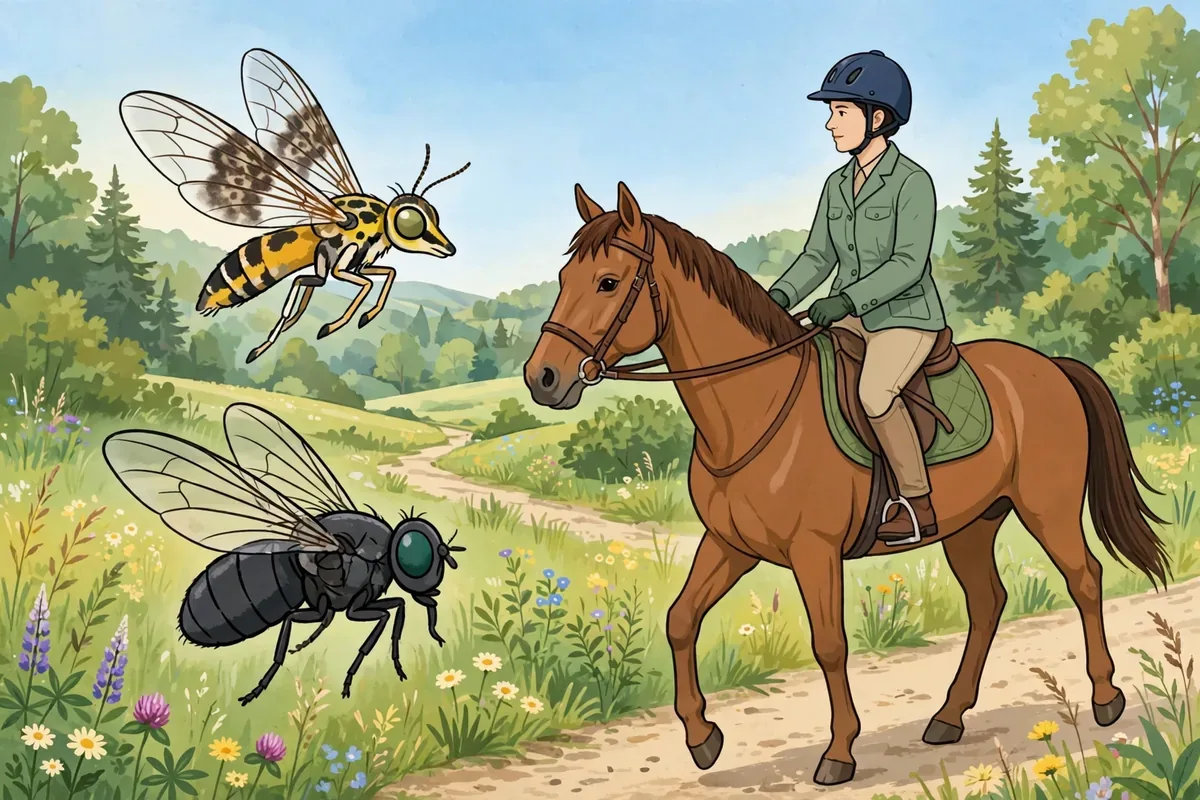
Riders are premium targets for several reasons. First, these flies are visual hunters attracted to large, dark, moving objects — a horse and rider on a trail is essentially a billboard. University extension factsheets note that deer flies are persistent pursuers that will follow a moving target for long distances. Second, both horse and rider exhale carbon dioxide and give off heat and sweat odors, the chemical cues that close the final distance. Third, riders move slowly through fly habitat — woodland edges, wetlands, and pastures — at exactly the warm, calm times of day when these flies are most active.
Deer flies have a particular fondness for the head and neck, circling relentlessly and landing on the ears, neck, and scalp — which is why riders describe them as the most maddening of the two. Horse flies are larger, their bites more painful, and they tend to target the legs and torso. There is one real disease concern to know about: deer flies (Chrysops species) can transmit Francisella tularensis — the bacterium that causes tularemia, sometimes called “deer fly fever.” The CDC lists deer-fly bites as a recognized source of tularemia in the western United States. Human cases are uncommon (a few hundred nationally per year), but the disease can be serious, so watch for fever or swollen lymph nodes in the days after bites. Horse flies are not considered significant disease vectors for humans in the US. Beyond that, both species’ bites can trigger significant local allergic reactions in sensitive people, and secondary infection from scratching is a real risk.
The Rider’s Protection Playbook
Generic insect advice only goes so far in the saddle. Here is what actually works for riders, drawn from extension guidance and experienced equestrian practice:
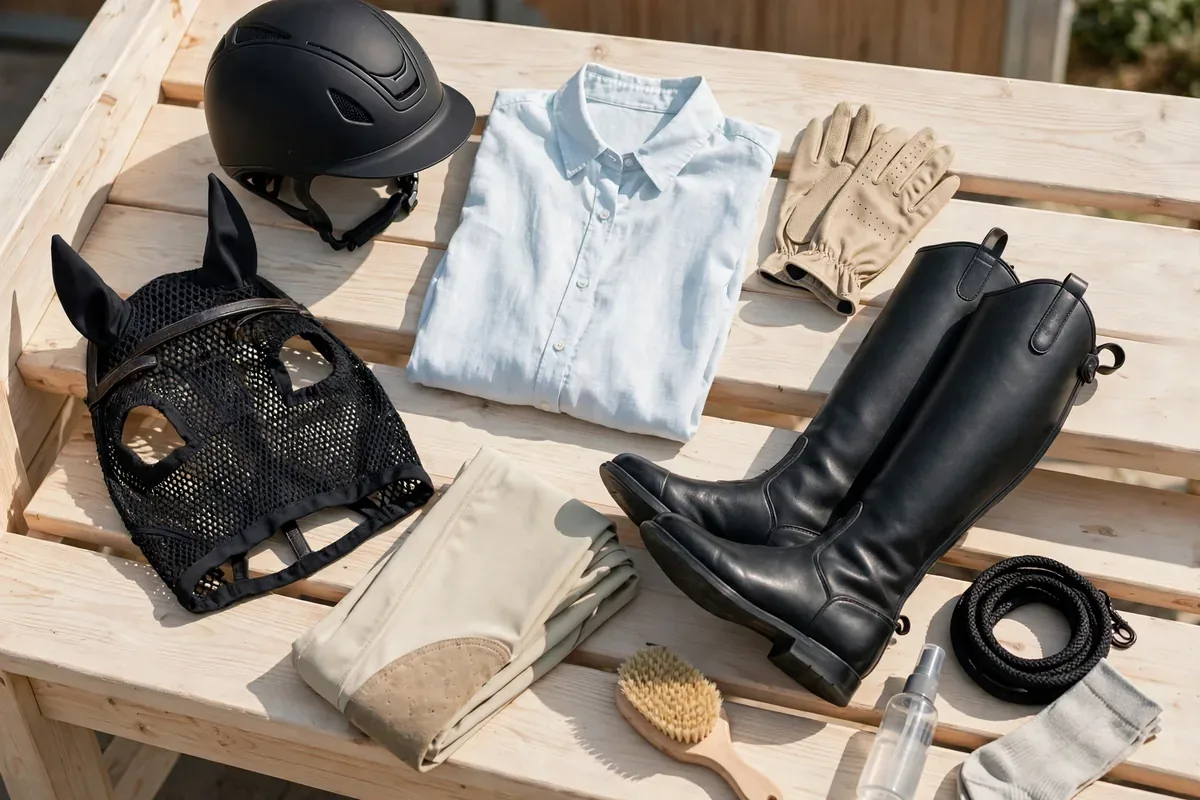
Dress to disappear. Biting flies are drawn to dark colors and contrasting patterns. Light-colored, solid clothing — white, tan, light gray — makes you a less attractive target and makes landed flies easier to spot and swat. Long sleeves and long pants in lightweight, breathable fabric protect more skin without overheating you. Tuck pant legs into socks or boots on the worst trails.
Protect your head and neck. A head net or a riding helmet with an attached face veil is the single highest-value piece of gear against deer flies, which obsess over the head. Riders who have tried everything else consistently call the head net the game-ending move. A bandana or neck gaiter pulled up over the ears and neck covers the other favorite landing zone.
Use repellents correctly. Apply an EPA-registered repellent (DEET, picaridin, or IR3535) to exposed skin before the ride, following the label. Picaridin is popular with riders because it is odorless and will not damage synthetic tack or helmet materials the way DEET can. Note the honest limitation: repellents are less effective against biting flies than against mosquitoes — they help, but they do not create a force field. Reapply on long rides, especially if you are sweating.
Treat your clothing, not just your skin. Permethrin applied to clothing (never to skin) is one of the most effective tools against biting flies. Treat riding shirts, pants, and socks in advance and let them dry fully; consumer sprays last through about six washes (factory-treated garments last much longer). This is the layer that keeps working when sweat washes repellent off.
Time your rides. Biting flies are daytime feeders, most aggressive during warm, calm, humid daylight hours — roughly late morning through late afternoon in summer. Early-morning and evening rides dodge the worst of it. Windy days are your friend; dead-calm humid days are theirs. Check conditions the way you would check a weather forecast — see our outdoor bite prevention checklist for more timing strategies that transfer to the trail.
Protect the horse too. A miserable, head-tossing horse is dangerous. Fly sheets, fly masks with ear covers, and equine-safe fly sprays keep your mount calmer, which keeps you safer. A fly bonnet (ear net) under the bridle is standard summer tack for good reason.
Keep moving. Biting flies have a harder time landing on a moving target. When you stop for a break, expect the swarm to catch up — plan breaks in open, breezy spots rather than still, shaded fly habitat.
Treating Fly Bites on the Trail
Even with good protection, bites happen. Deer fly and horse fly bites hurt immediately, often bleed a little, and typically develop into red, swollen, intensely itchy welts within hours. Here is the field treatment sequence:
- Clean it. Wash the bite with clean water — from your bottle if necessary — and mild soap if you have it. Fly mouthparts are not sterile, and these bites are more prone to secondary infection than mosquito bites because the wound is larger.
- Cold first. Apply a cold pack or a cold wet cloth for 10–15 minutes to reduce pain and swelling. Our cold compress guide covers the technique. On the trail, a wet bandana works in a pinch.
- Do not scratch. The number-one rule. Scratching a fly bite converts a 3-day welt into a 2-week infected sore. Keep nails short; cover the bite with a bandage if you cannot leave it alone.
- Raise the bitten limb. Bites on the lower leg that swell significantly benefit from elevation during rest breaks.
- Watch the trajectory. Normal fly bites are worst in the first 24 hours, then steadily improve over 2–5 days. Improvement that reverses — growing pain, spreading redness, increasing warmth — is the signal to seek care (see below).
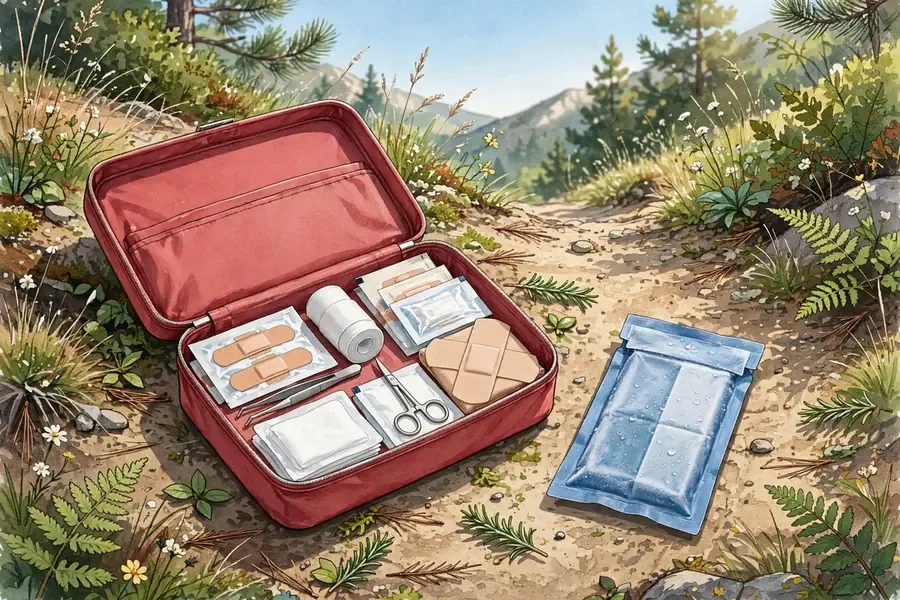
Pack a small bite kit in your saddlebag: antiseptic wipes, adhesive bandages, a reusable cold pack, and whatever anti-itch product you prefer. Our bite-sting first-aid checklist covers the same bases and is worth assembling once.
When to See a Doctor for a Bug Bite
Most fly bites resolve with basic care, but riders should know the red flags — partly because “tough it out” culture runs deep in equestrian sports:
- Signs of infection (cellulitis): expanding redness, increasing warmth, red streaks spreading from the bite, swelling that worsens after 48 hours, pus, or fever. Fly bites get infected more often than mosquito bites because of the larger wound and the scratching they provoke.
- Large local allergic reactions: some people develop dramatic swelling — a whole forearm from one bite, for example. If swelling is severe, involves a joint, or limits function, get evaluated.
- Systemic allergy signs: trouble breathing, swelling of the lips or tongue, dizziness, or hives spreading beyond the bite area. Call 911. Our anaphylaxis warning signs page lists the full picture.
- Bites near the eye that cause significant swelling — vision-adjacent swelling deserves prompt evaluation.
- Fever, headache, swollen lymph nodes, or feeling systemically ill in the days after bites — these can signal tularemia (“deer fly fever”) or a tick-borne illness, especially in endemic areas. Deer flies share habitat with ticks, and it is easy to miss a tick while focused on flies — do a full tick check after every ride.
One caution: do not lance, squeeze, or “drain” a swollen bite yourself. If an abscess is forming, that is a clinician’s job.
Frequently Asked Questions
Why do deer flies keep circling my head when I ride?
Deer flies are visual hunters that target the head and neck, and they are persistent pursuers of moving targets. A rider on a horse is large, dark, warm, and exhaling carbon dioxide — an ideal target. A head net or helmet veil is the most effective countermeasure.
What is the best repellent for horseback riding?
Picaridin is a strong choice for riders: effective, odorless, and safe on synthetic tack and helmet materials that DEET can damage. Permethrin-treated clothing (never applied to skin) adds the most durable layer of protection. No repellent fully stops determined biting flies, so layer repellents with clothing and timing strategies.
Do horse fly bites carry diseases?
Deer flies can transmit tularemia — sometimes called “deer fly fever” — a recognized, though uncommon, risk in the United States, especially in the western states. Horse flies are not considered significant disease vectors for humans here. For both species, the main medical risks are large local allergic reactions and secondary bacterial infection from scratching.
How long do horse fly bites last?
Typically 2–5 days: painful and swollen in the first 24 hours, then steadily improving. Bites that worsen after 48 hours — more pain, spreading redness, streaking, or fever — may be infected and should be evaluated.
Should I cancel a ride because of flies?
Not necessarily — just adapt. Ride early morning or evening, choose breezy days and open trails, wear light colors and a head net, treat clothing with permethrin, and protect your horse with a fly mask and sheet. The worst fly days (hot, calm, humid afternoons near wetlands) are the ones to skip or shorten.
Sources
- CDC — Tularemia (how it spreads, including deer-fly transmission): https://www.cdc.gov/tularemia/
Medically reviewed by Dr. Sarah Jones, MD.
This article is for informational purposes only and isn’t medical advice. If you’re worried about a bite or sting, talk to a healthcare professional.