Alpha-Gal Symptoms Hours After Eating Red Meat: Night Hives and Hidden Sources
# Alpha-Gal Symptoms Hours After Eating Red Meat: Night Hives and Hidden Sources If you eat beef, pork, or lamb at dinner and then wake up in the middle of…
# Alpha-Gal Symptoms Hours After Eating Red Meat: Night Hives and Hidden Sources
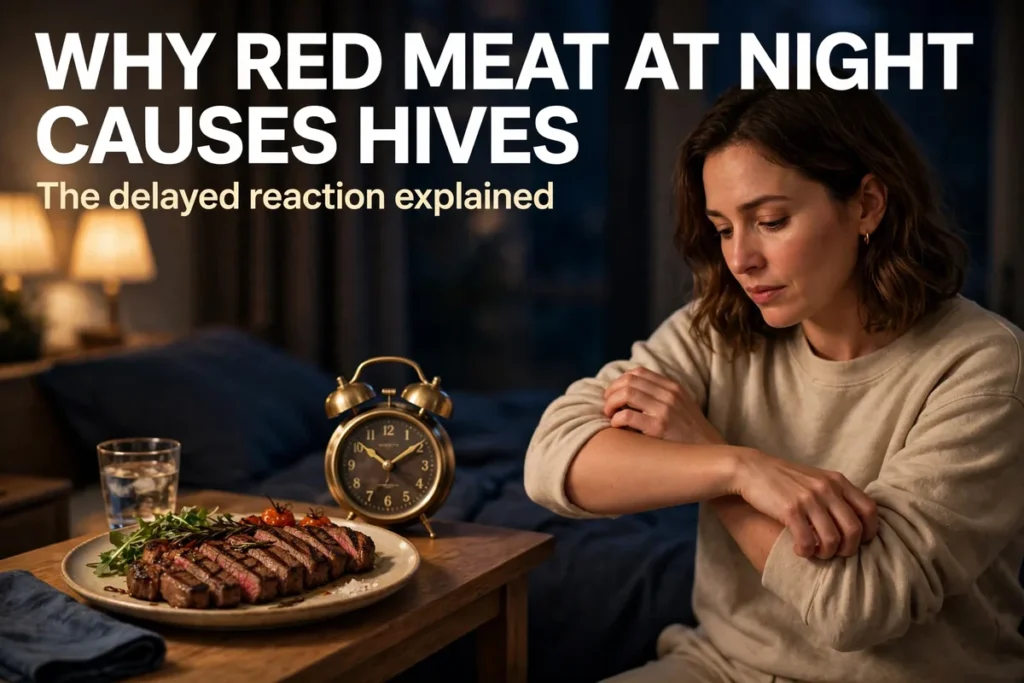
If you eat beef, pork, or lamb at dinner and then wake up in the middle of the night covered in hives, alpha-gal syndrome belongs on the list of possible explanations to discuss with an allergist. The direct answer is this: alpha-gal syndrome is an allergy to a sugar molecule called galactose-alpha-1,3-galactose, often shortened to alpha-gal, which is found in most mammals but not in people. After a tick bite sensitizes a person to alpha-gal, eating red meat can trigger a reaction that is delayed by hours rather than minutes. Most sources put the reaction window at roughly 2 to 8 hours after eating, most often 3 to 6 hours. That delay is why the pattern is so confusing. A meal that felt fine at the table can lead to itching, hives, swelling, stomach pain, or breathing trouble long after dinner is over, often in the middle of the night.
This article focuses on that delayed reaction pattern. It is not a basic definition page, and it does not replace the broader overview of the condition. For background on the syndrome itself, see the related guide on alpha-gal syndrome. If you have recently had a tick bite and are wondering what to watch for in the days and weeks that follow, the guides on seed tick cluster bite treatment and tick bite aftercare for the next few weeks explain general aftercare steps to discuss with a clinician.
This article is general information only. It cannot diagnose you, and it cannot tell you whether a specific food is safe for you. If you have symptoms after eating red meat, especially symptoms that affect breathing, talk with an allergist and seek emergency care right away for severe signs.
The Signature Story: A Tick Bite, Then Night Hives
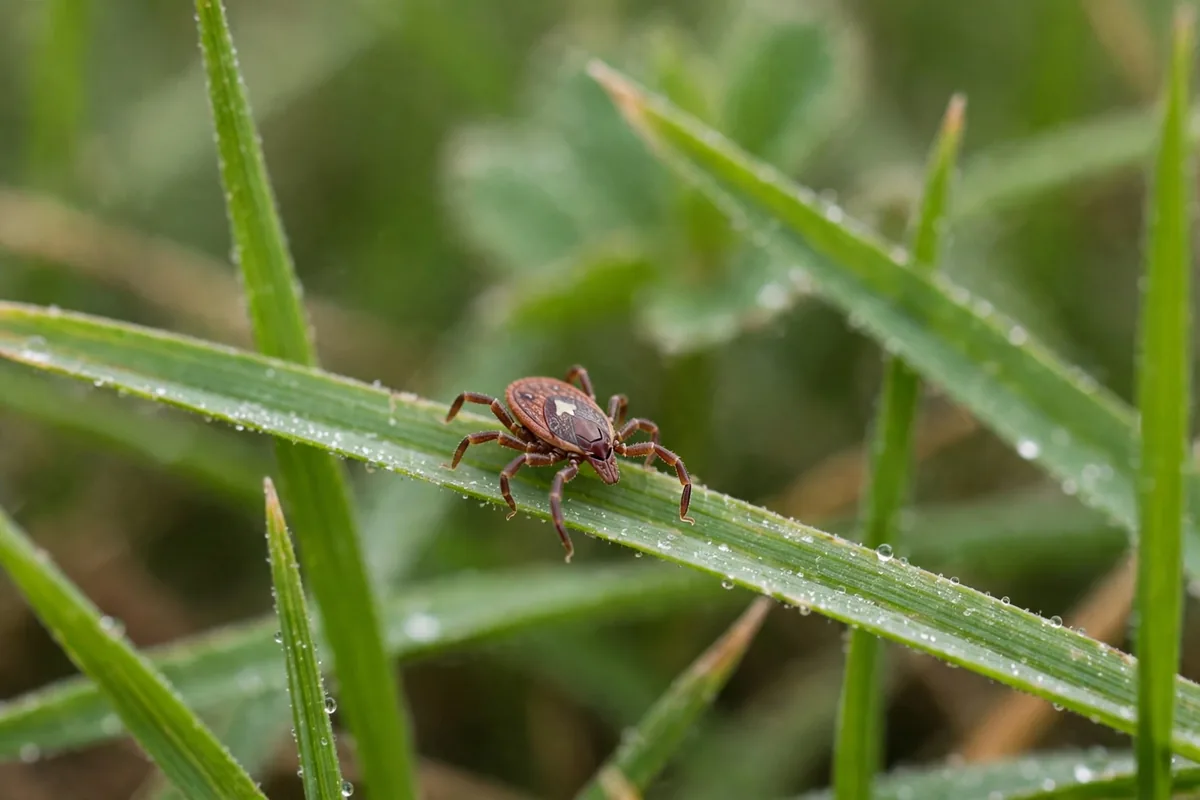
Many people who later learn they have alpha-gal syndrome tell a version of the same story. They remember a tick bite weeks or months earlier. Sometimes the bite was itchy for a long time. Sometimes there were many tiny ticks at once. Sometimes the bite itself seemed minor and was soon forgotten. Then, weeks or months later, a familiar dinner leads to an unfamiliar night.
A Dinner That Seemed Fine
The meal is often ordinary: a steak, a burger, pork chops, lamb, or a stew made with beef. At the table, nothing feels wrong. There is no immediate tingling, no sudden swelling, and no obvious warning sign. The person goes to bed feeling normal. Hours later, itching starts. Hives appear. The stomach may cramp. In some cases, the lips, face, or tongue swell, or breathing becomes harder. Because the reaction arrives so late, the connection to dinner is easy to miss. People often blame bedding, laundry detergent, a new soap, stress, or something they ate much later in the evening. Some people have several confusing episodes before anyone connects the pattern to red meat eaten hours earlier.
Why the Night Pattern Matters
The night pattern is not a coincidence. It follows from the timing of the meal and the timing of the reaction. Dinner is commonly the largest red meat meal of the day, and a delay of roughly 2 to 8 hours, most often 3 to 6 hours, pushes the reaction into the late evening or the middle of the night. A lunch reaction may appear in the afternoon or early evening instead. The key clue is not the clock alone. It is the repeated link between red meat and symptoms hours later, especially when the same foods eaten earlier in life never caused trouble. If you notice that pattern, write down what you ate, when you ate it, when symptoms started, and what the symptoms were. That simple record can be very helpful for an allergist, because the history often matters as much as any test.
Why Some People React and Others Do Not
Not everyone who is bitten by a tick develops alpha-gal syndrome. Sensitivity varies a great deal from person to person. Some people react to a small amount of red meat. Others tolerate small amounts but react to larger portions or to fattier cuts. Some people react mainly to certain hidden sources, which are discussed below, while others react mainly to a full serving of meat. Sensitivity can also change over time, which is why ongoing follow up with an allergist matters. Never test your own limits by deliberately eating a food you suspect causes a reaction. A reaction that was mild once can be more severe the next time, and there is no safe home test for severity.
Why the Reaction Is Delayed: A Sugar, Not a Protein
Most well known food allergies involve proteins. When a person with a peanut allergy eats peanut, the immune system recognizes peanut protein quickly, and symptoms often begin within minutes. Alpha-gal syndrome works differently, and that difference explains the delay.
Alpha-Gal Is a Carbohydrate
Alpha-gal is a carbohydrate, a type of sugar molecule, rather than a protein. It is present in the tissues of most mammals, including cows, pigs, sheep, deer, and rabbits. People do not naturally make alpha-gal, so the human immune system can learn to treat it as foreign after a tick bite. The lone star tick is the tick most often linked to this sensitization in the United States, although research on other tick species continues and readers should not assume that only one tick species can matter. What is clear is that the sensitization step usually starts with a tick bite, not with eating meat for the first time.
Digestion Takes Time
Because alpha-gal is carried in meat along with fats and other components, it takes longer to be digested, absorbed, and carried into the bloodstream in a form that triggers symptoms. That slower path is the most useful explanation for the delay. The reaction does not wait because the immune system is slow to notice. It waits because the trigger itself arrives later. Fat content may also play a role in how quickly or strongly a person reacts, which is one reason fattier meats and rich broths are sometimes reported as more troublesome, although individual experience varies and no single food rule applies to everyone.
The Window: Roughly 2 to 8 Hours, Most Often 3 to 6 Hours
For planning and for keeping a symptom diary, the practical window is roughly 2 to 8 hours after eating, most often 3 to 6 hours. That window is a guide, not a guarantee. Some reactions may fall outside it. A reaction that starts minutes after eating does not automatically rule alpha-gal syndrome out, and a reaction that starts much later does not automatically prove it. Other conditions can cause delayed hives or stomach symptoms, and only a clinician who reviews your history can sort through the possibilities. Still, when hives repeatedly wake you several hours after red meat, the timing itself is an important clue to bring to an allergist.
Alpha-Gal Versus Typical Food Allergy: A Comparison
The table below summarizes the contrast that confuses so many people. It is a general comparison, not a diagnostic tool.
Feature
Alpha-Gal Syndrome
Typical Protein Food Allergy
Trigger type
A carbohydrate sugar molecule called alpha-gal
Usually a food protein, such as peanut or egg protein
How sensitization often starts
After a tick bite
Usually through eating or other early exposure, not a tick bite
Typical onset after eating
Roughly 2 to 8 hours, most often 3 to 6 hours
Often within minutes, commonly under 2 hours
Common trigger foods
Beef, pork, lamb, and other mammalian meats, plus some hidden mammalian sources
The specific food protein, such as peanut, tree nut, milk, egg, wheat, soy, fish, or shellfish
Night waking pattern
Common after a dinner containing red meat
Less tied to a dinner-to-night delay
Safe protein groups often discussed
Poultry, fish, and shellfish do not contain alpha-gal
Depends on the specific allergy, and cross contact still matters
This comparison helps explain why standard food allergy advice can feel unhelpful here. Advice that says to watch for symptoms within minutes of eating will miss the alpha-gal pattern entirely. Advice that assumes the most recent food is the culprit will point to a bedtime snack instead of dinner. Once the delayed pattern is recognized, the history becomes much clearer, and testing and management can be planned properly.
The Full Symptom List: From Itching to Anaphylaxis
Alpha-gal reactions can range from mild to severe, and the same person can have different symptoms on different occasions. Do not assume that a mild reaction means future reactions will also be mild. The list below covers the symptoms most often discussed for this condition. Having one or more of these symptoms after eating red meat does not prove alpha-gal syndrome, because many conditions cause hives, stomach pain, or swelling. The list is meant to help you describe what happened clearly to a clinician.
Skin Symptoms
Hives are the most recognizable sign. They are raised, itchy welts that can appear anywhere on the body and may come and go. Itching without visible hives can also occur. Some people notice flushing, a warm redness of the face or chest. Swelling, called angioedema, can affect the lips, face, tongue, or eyelids. Swelling of the tongue or throat is a warning sign that needs emergency care, even if breathing still feels manageable at first.
Stomach and Digestive Symptoms
Digestive symptoms are common and are sometimes the main feature, especially when skin symptoms are mild or absent. They can include stomach pain or cramping, nausea, vomiting, and diarrhea. Some people notice heartburn-like discomfort or a feeling of fullness. Because stomach symptoms have many causes, they are easy to attribute to a stomach bug, stress, or a rich meal. When stomach pain repeatedly follows red meat by several hours, especially alongside hives or itching, that pattern deserves attention from a clinician.
Breathing and Whole Body Symptoms
Respiratory symptoms can include wheezing, coughing, a tight feeling in the chest, or shortness of breath. Nasal congestion or sneezing can also occur, although those symptoms alone are less specific. At the severe end is anaphylaxis, a whole body allergic reaction that can affect breathing, blood pressure, and consciousness. Signs can include trouble breathing, throat tightness, dizziness, fainting, a weak pulse, and widespread flushing or hives. Anaphylaxis is a medical emergency. If you have signs of anaphylaxis, call 911 or your local emergency number right away and use prescribed emergency medication if you have it, as directed by your clinician. Do not wait to see whether symptoms improve on their own.
What a Reaction Can Feel Like Over Time
Some people describe a reaction that builds gradually: mild itching first, then more hives, then stomach cramping, then a sense of unease or dizziness. Others describe a sudden waking with intense itching and swelling. Still others have mainly stomach symptoms with little skin involvement. This variation is one reason a written record matters. Note the food, the portion, the cooking method, the time eaten, the time symptoms started, every symptom in order, and anything that helped or did not help. Bring that record to your appointment. It often reveals a pattern that memory alone misses.
Hidden Sources: Where Alpha-Gal Can Hide
Avoiding an obvious steak is only part of living with alpha-gal syndrome for many people. Alpha-gal can also be present in foods and products made from mammalian tissues, even when the word beef, pork, or lamb does not appear on the front of the package. Sensitivity to hidden sources varies widely. Some people tolerate gelatin or dairy without trouble. Others, especially highly sensitive people, react to small amounts. Never assume that a hidden source is safe for you because another person tolerates it. Discuss your personal limits with an allergist, and read labels carefully every time, because recipes and suppliers change.
The Hidden Source Table
Hidden Source
Where It May Appear
Why It Can Matter
Gelatin
Gummy candies, marshmallows, jelly desserts, some yogurts, capsules for medicines and supplements
Gelatin is usually made from mammalian skin or bones and can contain alpha-gal
Broths and stocks
Soups, gravies, sauces, rice cooked in broth, restaurant dishes
Broths and stocks made from mammalian bones or meat can carry alpha-gal even when no meat pieces are visible
Lard and tallow
Pastries, pie crusts, fried foods, refried beans, some restaurant cooking fats
Lard comes from pigs and tallow comes from cattle or sheep, so both are mammalian fats
Some dairy products
Milk, cheese, butter, cream, and foods made with them, especially in highly sensitive people
Dairy comes from mammals, so some highly sensitive people react, while many others tolerate dairy
Collagen supplements and powders
Protein powders, skin and joint supplements, some snack bars
Collagen is often sourced from mammalian skin, bones, or connective tissue
Some vaccines and IV products
Certain vaccines, gelatin based plasma expanders, some intravenous medicines, and some surgical products
Some medical products contain gelatin or other mammalian components, so disclosure to clinicians matters
Meat flavorings and meat based sauces
Gravy mixes, bouillon, meat flavored seasonings, some processed foods
Flavorings and bases may be made from mammalian meat or fat even when the dish looks meat free
This table is not complete, and it is not a list of foods you must avoid. It is a starting point for label reading and for questions to ask an allergist or dietitian. If a product label is unclear, contact the manufacturer or choose a clearly safe alternative. When eating out, tell staff that you have an allergy related to mammalian meat and ask about broths, cooking fats, and sauces, not only about visible meat.
Gelatin in Gummies and Capsules
Gelatin deserves special attention because it appears in places people do not expect. Gummy candies, marshmallows, and many jelly desserts use gelatin as a gelling agent. Many medicine and supplement capsules are also made from gelatin. For some people with alpha-gal syndrome, gelatin causes no problem. For others, it triggers hives or stomach symptoms. If you take regular medicines, do not stop them on your own because the capsule may contain gelatin. Talk with your prescribing clinician and pharmacist about alternatives. They can often find a tablet form, a liquid form, or a capsule made from a non mammalian material. The same approach applies to supplements: check the source of collagen or gelatin before starting a new product, and ask your clinician whether it fits your situation.
Broths, Stocks, Lard, and Tallow
Broths and stocks are a common source of surprise reactions. A vegetable soup cooked in beef stock, rice cooked in beef broth, or gravy made from meat drippings can all contain alpha-gal even though no meat is served on the plate. Lard and tallow work the same way. A pastry made with lard, beans refried in lard, or food fried in tallow can trigger symptoms in a sensitive person. Restaurant cooking is especially tricky because the same grill, fryer, or pan may be used for mammalian meat and for poultry or fish. Cross contact does not affect everyone in the same way, but it is worth asking about when reactions keep happening despite careful home cooking.
Dairy and Highly Sensitive People
Dairy is one of the most variable areas in alpha-gal syndrome. Milk, cheese, butter, and cream come from mammals, so they can contain small amounts of alpha-gal. Many people with the condition tolerate dairy without symptoms. A smaller group, often described as highly sensitive, reacts to dairy or to other low level sources. There is no simple rule that tells you which group you fall into. If dairy seems linked to your symptoms, discuss it with an allergist rather than cutting out a whole food group without guidance. A dietitian can help you keep your diet balanced if dairy or other foods need to be limited.
Vaccines, IV Products, and Medical Disclosure
Some vaccines and intravenous products contain gelatin or other mammalian components. This does not mean you should avoid needed medical care. It means disclosure matters. Tell every clinician, dentist, pharmacist, and surgeon that you have suspected or confirmed alpha-gal syndrome, and ask them to check product ingredients when a gelatin containing product is planned. In many cases, an alternative product exists or the benefit of the product outweighs the risk, with monitoring in place. Decisions about vaccines and hospital products should always be made with the clinician who knows your history, not from a general article. Keep a short written note about your condition in your phone or wallet so it is easy to share in urgent situations.
How Diagnosis Works: History Plus Testing
There is no single home test for alpha-gal syndrome, and no article can diagnose it. Diagnosis usually starts with a careful history and is supported by allergist testing when appropriate. Understanding the process can help you prepare for the appointment and ask better questions.
The History Comes First
An allergist will usually ask about tick bites, including when they happened and whether the bites were unusually itchy or long lasting. They will ask about foods eaten before reactions, the timing of symptoms, and whether reactions happen repeatedly after red meat but not after poultry or fish. They will also ask about hidden sources, medicines, and any severe reactions. Bring your symptom diary if you have one, along with a list of medicines and supplements. The more specific your timeline is, the easier it is for the clinician to see whether the delayed pattern fits.
Alpha-Gal Specific IgE Blood Testing
One test often discussed is alpha-gal specific IgE blood testing. This test looks for IgE antibodies to alpha-gal in the blood. A positive result can support the diagnosis when it fits the history, but it does not by itself prove that a specific food caused a specific reaction, and a result must be interpreted alongside your symptoms. Some people have detectable antibodies without clear symptoms, and test levels do not reliably predict how severe a reaction will be. Do not promise yourself or others a particular test result, and do not order or interpret testing without a clinician. Skin testing and supervised food challenges are sometimes used for other allergies, but their role in alpha-gal syndrome is more limited and must be decided by an allergist who can manage risk safely.
What a Diagnosis Does Not Do
A diagnosis does not give you a fixed list of foods that will always be safe or always be unsafe. Sensitivity can change, hidden sources can vary by product, and restaurant preparation can introduce cross contact. A diagnosis also does not replace emergency planning. If you have had a severe reaction, your allergist may discuss an emergency action plan and whether to carry emergency medication. Follow that plan exactly, and make sure family members or housemates know where the medication is and how to use it.
Living With Alpha-Gal Syndrome: Practical Daily Choices
Living with alpha-gal syndrome is manageable for many people once the pattern is clear, but it takes planning. The goal is not perfection. The goal is a routine that lowers risk without making every meal stressful.
Proteins That Do Not Contain Alpha-Gal
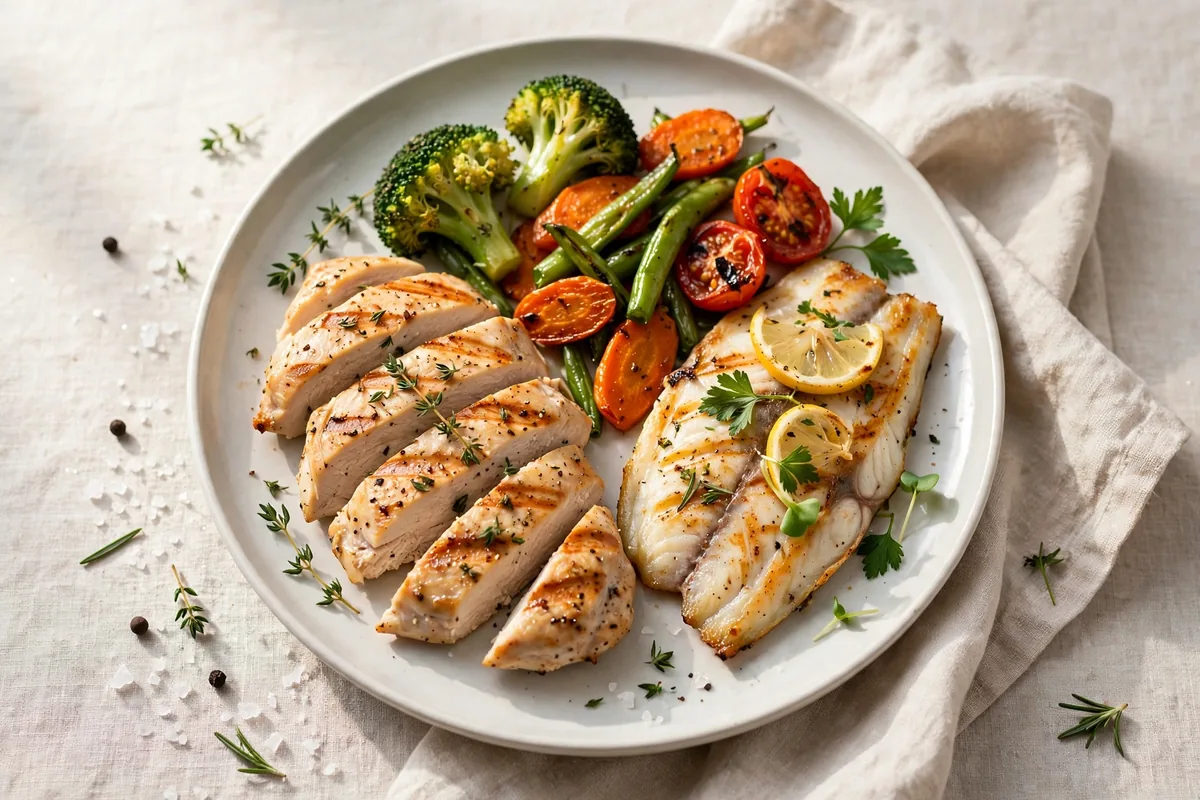
Poultry, fish, and shellfish do not contain alpha-gal. Chicken, turkey, duck, fish, and shrimp are therefore commonly discussed as protein alternatives, although individual allergies to poultry, fish, or shellfish can still exist and must be respected. Plant proteins such as beans, lentils, tofu, and chickpeas are also free of mammalian meat, but check how they are cooked. Beans refried in lard or cooked in beef broth are no longer a safe workaround. At home, using separate cooking fats and clean pans for mammalian meat and for other foods can reduce cross contact for the household.
Label Reading Without Exhaustion
Label reading becomes easier with a short personal checklist. Look for beef, pork, lamb, veal, gelatin, collagen, lard, tallow, meat broth, meat stock, and bouillon. Watch for vague terms such as natural flavors or meat flavoring, and check with the manufacturer when the source is unclear. Keep a list of products you tolerate well and products that caused trouble. Over time, shopping becomes faster because you return to familiar safe choices. When trying a new product, introduce one change at a time so that any reaction is easier to trace.
Eating Out and Traveling
Eating out requires a clear, calm explanation. A useful script is: I have an allergy to mammalian meat, including beef, pork, and lamb, and also to broths, gravies, and cooking fats made from those meats. Can you tell me whether this dish uses beef broth, lard, tallow, or a shared grill? Staff may not know every ingredient, so choose simpler dishes when answers are uncertain. When traveling, pack safe snacks, research restaurants in advance, and carry your emergency medication and a written allergy note. If you stay with friends or family, explain the hidden source issue in advance, because a well meaning cook may use beef broth in an otherwise safe dish.
Symptoms May Lessen Over Time for Some People
For some people, symptoms lessen over time if they avoid further tick bites. This is not guaranteed, and it should never be treated as a promise that the allergy will go away. Avoiding new tick bites is still important, because additional bites can maintain or increase sensitivity. Follow up with your allergist over time rather than assuming the condition has resolved. If your allergist advises a careful re-evaluation, that evaluation should happen under medical guidance, not by trying red meat at home to see what happens.
Tick Bite Prevention: Avoiding the Next Sensitizing Bite
Because alpha-gal syndrome usually begins with a tick bite, prevention is part of long term management, not only a seasonal tip. Tick prevention also lowers the risk of other tick related illnesses, so the same habits protect you in several ways.
Everyday Prevention Habits
When you spend time in grass, brush, or wooded areas, wear long sleeves and long pants when practical, tuck pants into socks in high risk areas, and choose light colored clothing so ticks are easier to spot. Use an EPA registered insect repellent as directed on the label, and consider treating clothing and gear with permethrin according to product instructions, keeping treated items away from cats and following safety warnings. After outdoor activity, check yourself, children, and pets for ticks, shower when you get home, and put outdoor clothing in a hot dryer for a short cycle when possible to kill unattached ticks. Keep lawns mowed, clear leaf litter, and create a buffer between wooded edges and play areas when you can.
After a Tick Bite
If you find an attached tick, remove it promptly with fine tipped tweezers, grasping close to the skin and pulling steadily upward without twisting or crushing the body. Clean the bite area and your hands with soap and water or rubbing alcohol. Do not burn the tick or apply oils or other home remedies to force it off. Write down the date of the bite and watch the area and your general health in the following days and weeks. Seek care if you develop a spreading rash, fever, severe headache, joint pain, or other concerning symptoms, or if the bite area becomes very painful, swollen, or infected. Even when a bite seems minor, keeping a record helps if delayed symptoms appear later.
When to See a Doctor
See a clinician promptly if you have repeated hives, swelling, or stomach symptoms hours after eating red meat, even if each episode seems mild. Bring your food and symptom diary, your medicine list, and any notes about tick bites. An allergist is the right specialist to discuss testing and long term management. A primary care clinician can also be a good first step and can refer you onward.
Get Emergency Care Right Away for Anaphylaxis Signs
Call 911 or your local emergency number right away if you notice any of these signs, especially after eating red meat or a hidden mammalian source: trouble breathing, wheezing that is getting worse, tightness or swelling of the throat, swelling of the lips or tongue that affects breathing or swallowing, dizziness, fainting, a weak pulse, widespread, full-body flushing with hives, or a feeling that something is seriously wrong. Do not drive yourself. If you have prescribed emergency medication, use it as directed by your clinician and still seek emergency care, because symptoms can return. If you are with someone who shows these signs, call for help, help them use their emergency medication if they have it, keep them lying on their side if they are vomiting or faint, and stay with them until help arrives.
When Symptoms Are Mild but Keep Returning
Mild does not mean unimportant when it keeps happening. Repeated hives, itching, or stomach pain after red meat deserve evaluation, because the pattern may point to alpha-gal syndrome or to another condition that needs care. Repeated stomach symptoms can also lead to poor sleep, missed work, anxiety about food, and nutritional gaps if whole food groups are cut without guidance. A clinician can help you sort out the cause, plan testing, and build a diet that is both safe and balanced. If symptoms worsen, become more frequent, or start to include breathing trouble or swelling, treat that change as urgent and seek care sooner rather than later.
Frequently Asked Questions
Why do my hives show up at night instead of right after dinner?
The most likely explanation, when alpha-gal syndrome is involved, is the delay itself. Because alpha-gal is a carbohydrate that takes time to be digested and reach the bloodstream, reactions commonly appear roughly 2 to 8 hours after eating, most often 3 to 6 hours. A dinner eaten in the evening therefore leads to symptoms late at night. Keeping a diary of meal times and symptom times can make this pattern visible, and an allergist can help confirm whether it fits your history.
Can I eat red meat sometimes if I only get mild hives?
Do not decide this on your own. A mild reaction once does not guarantee a mild reaction next time, and portion size, fat content, hidden sources, alcohol, exercise, illness, and other factors can change how a reaction unfolds. Talk with an allergist about your history, testing, and a safe eating plan. Never use a home challenge, such as eating a small piece of meat to test yourself, as a way to decide. Severe reactions can develop quickly, and a safe setting with medical support is needed for any formal evaluation.
Is chicken, turkey, or fish safe if I have alpha-gal syndrome?
Poultry, fish, and shellfish do not contain alpha-gal, so they are commonly discussed as alternatives to mammalian meat. That does not mean every chicken or fish dish is automatically safe for you. Check for beef broth, lard, tallow, gravy, and shared cooking surfaces, and respect any separate allergy you have to poultry, fish, or shellfish. If a dish is cooked with mammalian ingredients, it can still cause symptoms even when the main protein is chicken or fish.
Does gelatin in candy or medicine really matter?
It can matter, but it does not matter equally for everyone. Some people with alpha-gal syndrome tolerate gelatin without symptoms. Others, especially highly sensitive people, react to gelatin in gummies, marshmallows, desserts, or capsules. Do not stop prescribed medicines because of a gelatin capsule. Talk with your prescribing clinician and pharmacist about a tablet, liquid, or non gelatin alternative. For foods and supplements, check labels and ask your allergist whether gelatin is a concern for your level of sensitivity.
Will alpha-gal syndrome go away if I avoid tick bites?
For some people, symptoms lessen over time if they avoid further tick bites, but this is not guaranteed and should not be assumed. Additional tick bites can maintain or increase sensitivity, so prevention remains important even if you feel better. Any decision about reintroducing red meat should be made with an allergist, based on your history and follow up, not by trying meat at home. Keep up with tick prevention and routine follow up even during periods without symptoms.
What should I tell a restaurant or a host about my allergy?
Keep it short and specific. Say that you have an allergy to mammalian meat, including beef, pork, and lamb, and that broths, stocks, gravies, lard, and tallow made from those meats can also cause a reaction. Ask whether the dish uses any of those ingredients or a shared grill or fryer. Simpler dishes with clear ingredients are often easier to verify. Thank staff for checking, and have a backup plan, such as a safe snack, when the answer is uncertain.
How is alpha-gal syndrome different from a regular meat intolerance?
A food intolerance usually causes digestive discomfort without involving the immune system in the same way as an allergy, and it does not typically cause hives, swelling, or anaphylaxis. Alpha-gal syndrome is an allergy, so it can involve skin, digestive, respiratory, and whole body symptoms, including severe reactions. The delayed timing also sets it apart from most typical food allergies, which often begin within minutes. Because the symptoms overlap with many other conditions, a clinician review is needed to sort out the cause.
A Calmer Way to Think About the Delayed Pattern
The delayed reaction in alpha-gal syndrome is frightening mainly because it breaks the usual rule that a problem food causes trouble right away. Once you understand the rule that applies here, the pattern becomes easier to track. Eat red meat, wait roughly 2 to 8 hours, most often 3 to 6 hours, and watch for hives, itching, swelling, stomach symptoms, or breathing trouble. Notice hidden sources when reactions happen without obvious meat. Bring a clear diary to an allergist. Prevent further tick bites. Those steps do not replace medical care, but they give you and your clinician a much clearer picture than guessing from memory after a sleepless night.
If night hives keep waking you after red meat dinners, do not dismiss the pattern and do not try to manage it alone. Talk with an allergist, share your timeline honestly, and build an emergency plan that fits your history. Early attention can prevent a frightening severe reaction, and a clear plan can make meals feel safer again.
This content is medically reviewed by Dr. Sarah Jones, MD.
Medical disclaimer: This article is for general information only and is not medical advice for any specific person. It does not diagnose, treat, or replace professional care. If you have symptoms after eating red meat, especially trouble breathing, throat tightness, swelling, dizziness, or fainting, call 911 or your local emergency number right away. Talk with an allergist or another qualified clinician about testing, diet choices, medicines, vaccines, and emergency planning for your own situation. Never stop a prescribed medicine or try a food challenge at home without medical guidance.
SJ
Dr. Sarah Jones, MD
MD — Medical Reviewer · Board-Certified Emergency Medicine Physician
Dr. Jones oversees StingHelp’s clinical verification process. Every guide is systematically evaluated against active Centers for Disease Control and Prevention (CDC), Environmental Protection Agency (EPA), and American Academy of Allergy, Asthma & Immunology (AAAAI) medical consensus standards to ensure symptom distinctions and care recommendations are clinically sound.
How this guide was prepared: Researched and structured by the StingHelp Editorial Team; verified against peer-reviewed dermatology literature; clinically reviewed November 2026.
RELATED CLINICAL GUIDES
More StingHelp guides
Explore physician-reviewed first-aid procedures, identification clues, and symptom comparisons for other common outdoor bites and stings.
Allergy, Anaphylaxis & Severe Reactions34 min read
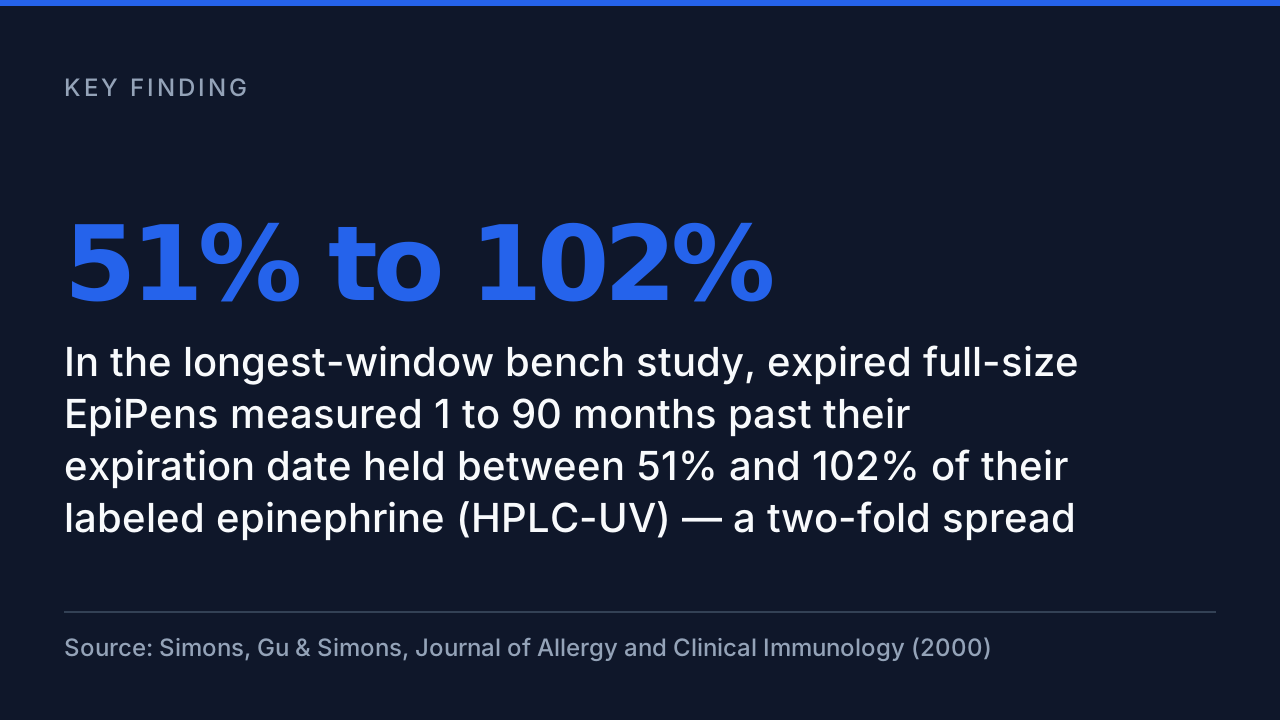
What laboratories actually measured inside expired EpiPens and other auto-injectors: epinephrine content by months past expiry, study by study, with storage conditions, the one delivery study, the firing tests — and why no individual pen's strength can be assumed.
Allergy, Anaphylaxis & Severe Reactions27 min read
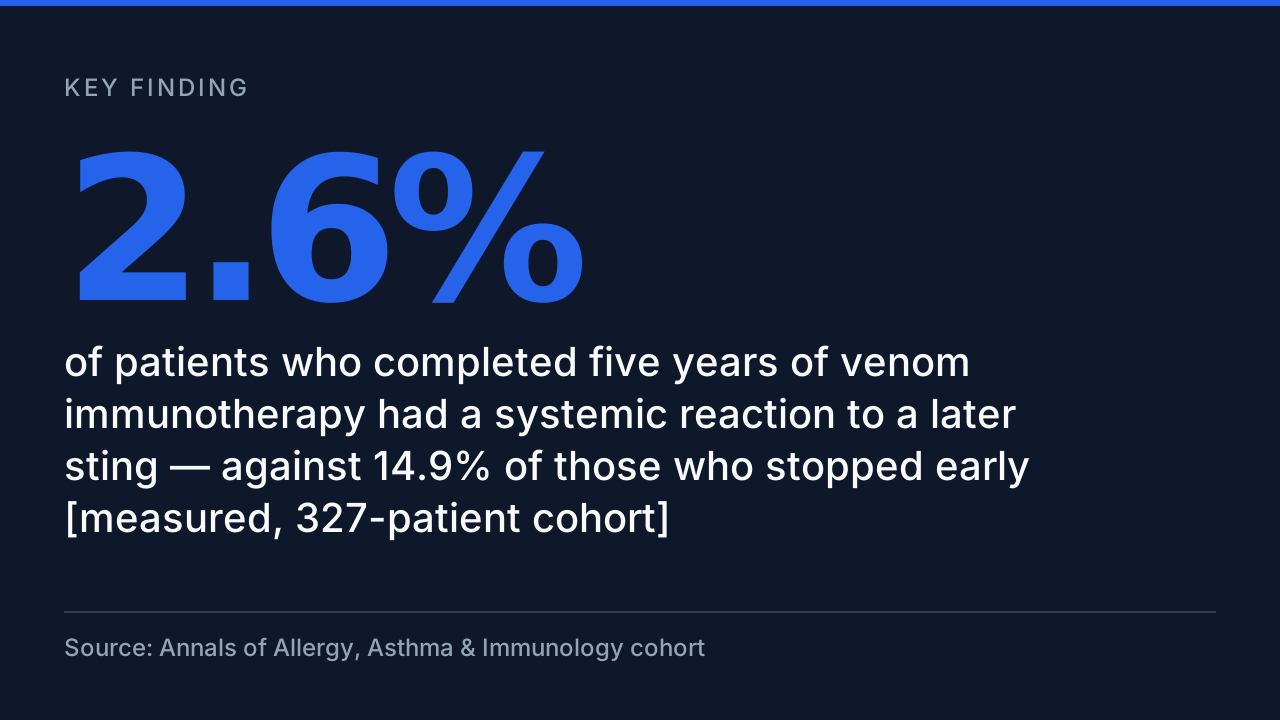
Venom immunotherapy protects 91%-96% of wasp-venom patients but 77%-84% for bee venom — and only a fifth to two-thirds of patients finish the course. Protection, completion, relapse and cost data, split by venom, by years completed and by country.
Allergy, Anaphylaxis & Severe Reactions27 min read
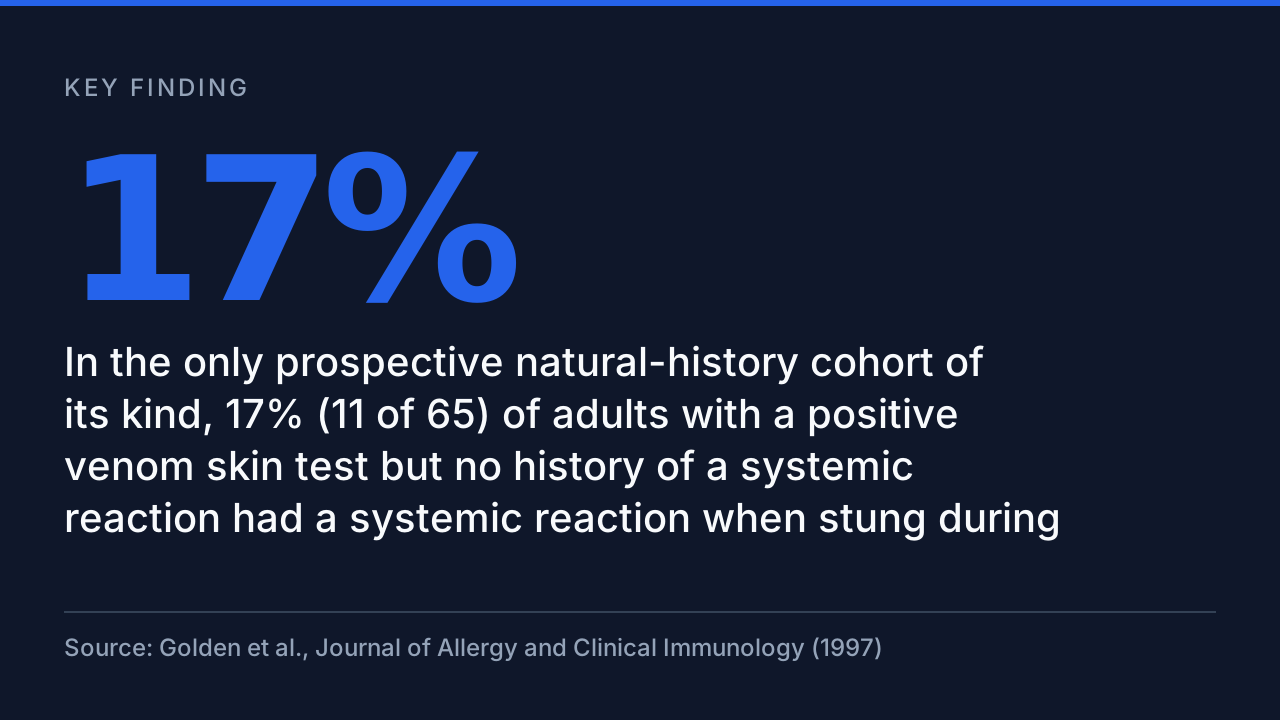
A positive venom allergy test in someone who has never reacted is common, usually temporary, and a weaker prediction than it sounds: the measured prevalence, sting-outcome and fading data, with every population and year attached.
STAY INFORMED
Keep practical guidance close.
Seasonal bite forecasts, updated first-aid protocols, and evidence-based outdoor prevention tips delivered to your inbox.
Your information is handled under our Privacy Policy. For urgent symptoms, seek medical help rather than waiting for an email response.