Aedes Mosquito Bite vs Culex Mosquito Bite: Pictures, Key Differences, and What to Do
Direct answer: You usually cannot identify an Aedes mosquito bite versus a Culex mosquito bite from the skin mark alone. Both can cause itchy red bumps because the reaction is to mosquito saliva. Better clues are the mosquito itself, biting time, local species, travel or exposure setting, and any later illness—not the shape of the bite.
When people search for aedes mosquito bite vs culex mosquito bite pictures, they often expect the bite marks to look distinctly different. In practice, that is unreliable. The Centers for Disease Control and Prevention (CDC) describes mosquito bites generally as puffy reddish bumps that may appear within minutes, or hard itchy reddish-brown bumps that appear later. Those findings do not identify the mosquito genus.
The more useful comparison is ecological and medical: Aedes and Culex mosquitoes differ in activity patterns, breeding behavior, geographic distribution, and the pathogens some species can transmit. This guide explains those differences without diagnosing a mosquito species from a photograph.
[stinghelp_image filename=”aedes-mosquito-bite-vs-culex-mosquito-bite-01.webp” alt=”Side-by-side medical illustration of Aedes and Culex mosquitoes with nonspecific itchy mosquito bite reactions” caption=”Aedes and Culex bites can look similar on skin; mosquito identification and exposure context are more informative than the bump itself.”]
Aedes Mosquito Bite vs Culex Mosquito Bite: Quick Comparison
| Feature | Aedes mosquitoes | Culex mosquitoes |
|---|---|---|
| Can the bite mark identify the genus? | No. Aedes bites can cause typical itchy mosquito bumps. | No. Culex bites can cause the same nonspecific skin reaction. |
| Typical biting activity | Important Aedes vectors such as Aedes aegypti and Aedes albopictus commonly bite during daylight, with CDC travel guidance listing dawn and dusk as important peak periods. | Many Culex mosquitoes are most active from dusk to dawn; CDC lists late evening as an important peak period for Culex quinquefasciatus. |
| Common breeding context | Aedes aegypti and Aedes albopictus often use water-holding containers around homes and human environments. | Culex species can use standing water including ponds, drains, neglected pools, wastewater-associated sites, and containers, depending on species. |
| Important disease associations | Some Aedes species can transmit dengue, Zika, chikungunya, and yellow fever in places where those pathogens circulate. | Some Culex species can transmit West Nile, St. Louis encephalitis, Japanese encephalitis, and other pathogens depending on region and species. |
| Immediate bite care | Wash the area, use a cold pack for swelling/itch, avoid scratching, and use appropriate over-the-counter itch relief as directed. | |
Why Aedes and Culex Bites Can Look the Same
Female mosquitoes bite people or animals to obtain a blood meal. During feeding, the mosquito injects saliva into the skin. The immune system reacts to components in that saliva, producing itching, redness, and swelling. CDC notes that reactions vary substantially from person to person: one person may develop a tiny bump while another develops a larger area of swelling after a mosquito bite.
That variation is one reason a photograph is a poor mosquito-identification tool. Skin tone, scratching, previous exposure, immune response, bite location, number of bites, and time since exposure can all change appearance. Small blisters or darker bruise-like spots can also occur after mosquito bites, according to CDC.
Therefore, an image showing a red papule cannot reliably answer whether the mosquito was Aedes or Culex. If species identification matters for public-health reasons, the mosquito itself, surveillance data, geography, and expert entomologic identification are far more useful.
What Do Aedes Mosquitoes Look Like?
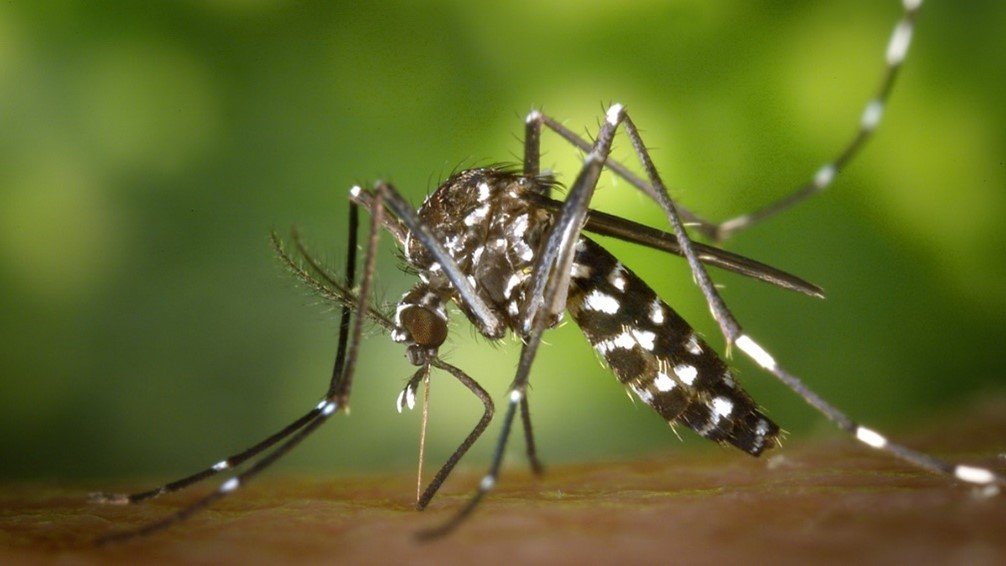
Aedes is a large mosquito genus. Two species of particular public-health importance are Aedes aegypti and Aedes albopictus. Aedes albopictus is commonly called the Asian tiger mosquito and is recognized by contrasting black-and-white markings, including a pale stripe on the thorax. Aedes aegypti also has conspicuous pale markings, but accurate identification should use the whole mosquito rather than a single visual feature.
CDC states that Aedes aegypti and Aedes albopictus occur in many areas of the United States. Their distributions are not identical, and local abundance changes with climate, habitat, season, and control efforts. Do not assume every striped mosquito is a disease-carrying Aedes mosquito or that every Aedes mosquito is infected.
[stinghelp_image filename=”aedes-mosquito-bite-vs-culex-mosquito-bite-02.webp” alt=”Entomology comparison showing characteristic body and leg markings of Aedes and Culex mosquitoes” caption=”Mosquito body markings can help trained identification; the skin reaction cannot reliably distinguish Aedes from Culex.”]
What Do Culex Mosquitoes Look Like?
Culex is another large mosquito genus containing multiple species. Adults are generally less boldly patterned than familiar black-and-white Aedes mosquitoes, but visual identification can still be difficult without magnification and taxonomic expertise. Culex species differ by region, so a photograph should be interpreted alongside location.
CDC describes adult Culex mosquitoes as most active from dusk to dawn. Some species feed heavily on birds and can bite people when other hosts are not nearby. That bird-mosquito cycle is epidemiologically important for viruses such as West Nile virus, which can spill over to humans through infected mosquitoes.
Does Biting Time Tell You Which Mosquito Bit You?
Biting time is a useful clue, not proof. CDC Yellow Book guidance lists Aedes aegypti and Aedes albopictus as having important peak biting periods around dawn and dusk, while Culex quinquefasciatus has a late-evening peak. CDC also emphasizes that regional variation and overlap occur and that mosquitoes can bite across broader periods.
So a bite at noon may make some Aedes species more plausible than a typical nocturnal Culex exposure, but it does not identify the culprit. Likewise, an evening bite is not automatically Culex. The safest prevention strategy is protection from mosquito bites throughout the day and night when mosquitoes are active.
Where Do Aedes and Culex Mosquitoes Breed?
Aedes aegypti and Aedes albopictus are strongly associated with water-holding containers around homes and populated areas. Female Aedes mosquitoes lay eggs on the inner walls of containers near the water line. Buckets, tires, planters, toys, and other small containers can become breeding sites when they hold water.
Culex mosquitoes also need water for immature stages, but many species commonly use more persistent standing-water habitats. CDC describes examples including ponds, lake edges, marshes, neglected swimming pools, storm drains, ditches, and wastewater-related environments; some also use household containers.
This distinction helps with prevention: removing or regularly emptying standing water around a home can reduce breeding opportunities for multiple mosquito groups, not just one genus.
Aedes vs Culex: Disease Risks Are Different
The bite mark does not tell you whether a mosquito carried a pathogen. Most mosquito bites do not lead to a mosquito-borne illness. Disease risk depends on whether a competent mosquito species was infected, whether the pathogen is circulating locally, geography, season, travel, and individual factors.
Important Aedes-associated diseases
CDC identifies Aedes aegypti and Aedes albopictus as important vectors for dengue, chikungunya, Zika, and related viruses in appropriate regions. Dengue transmission occurs primarily through infected Aedes mosquitoes. Chikungunya can cause fever and prominent joint pain; dengue can range from mild illness to severe disease. These diagnoses cannot be made from the bite itself.
Important Culex-associated diseases
Culex mosquitoes are important vectors for West Nile virus in the United States and can transmit St. Louis encephalitis virus. Depending on geography and species, Culex mosquitoes are also involved in transmission of Japanese encephalitis and other pathogens. CDC reported in updated November 2025 guidance that most people infected with West Nile virus do not develop symptoms, while a minority develop febrile illness and a much smaller proportion develop serious neurologic disease.
A person who develops fever, severe headache, confusion, weakness, neck stiffness, seizures, or other significant illness after mosquito exposure should seek medical evaluation based on symptoms and exposure history rather than trying to identify the mosquito from the skin mark.
[stinghelp_image filename=”aedes-mosquito-bite-vs-culex-mosquito-bite-03.webp” alt=”Educational vector diagram comparing Aedes-associated and Culex-associated mosquito-borne diseases without implying every mosquito is infected” caption=”Disease associations differ by mosquito species and region; an ordinary bite bump does not show whether a pathogen was transmitted.”]
What Should You Do for an Ordinary Mosquito Bite?
CDC recommends simple supportive care for uncomplicated mosquito bites. Wash the bite and surrounding skin with soap and water. Apply an ice or cold pack for about 10 minutes to reduce swelling and itching, repeating as needed. An over-the-counter antihistamine or anti-itch cream may help when used according to the product label.
Avoid scratching. Scratching can break the skin and increase the risk of secondary bacterial infection. Keep fingernails short, especially for children who scratch while asleep.
When Does a Mosquito Bite Need Medical Attention?
| Finding | What to do |
|---|---|
| Small itchy bump that is stable or improving | Use routine bite care and monitor. |
| Large local swelling or hives without breathing symptoms | Consider medical advice, especially if severe, painful, or worsening. |
| Increasing warmth, tenderness, pus, or a red streak spreading from the bite | Seek healthcare evaluation because secondary infection may be developing. |
| Fever or systemic illness after mosquito exposure | Contact a healthcare professional and mention location, travel, and mosquito exposure. |
| Confusion, severe weakness, seizure, neck stiffness, or serious neurologic symptoms | Seek urgent/emergency medical care. |
| Trouble breathing, throat/tongue swelling, fainting, or signs of anaphylaxis | Seek emergency care immediately. |
How Can You Tell Aedes Mosquito Bite vs Culex Mosquito Bite Apart?
The most reliable answer is that the aedes mosquito bite vs culex mosquito bite distinction usually cannot be made from the lesion. Use a hierarchy of evidence instead:
- The mosquito itself: a clear specimen or photograph may allow expert identification.
- Location: compare with known local species distributions and public-health surveillance.
- Time of exposure: daylight versus dusk/night activity can shift probability but is not definitive.
- Habitat: container-breeding environments may support Aedes; persistent standing water can support many Culex species.
- Illness pattern: later symptoms guide medical evaluation, but symptoms still do not identify the mosquito without clinical and epidemiologic context.
What Should You Do If You Are Unsure What Caused the Bite?
If the reaction is mild, treat the symptoms and monitor rather than trying to name the insect from a photo. Take a dated picture if the lesion is changing. Note where and when the exposure happened, recent travel, whether mosquitoes were visible, and whether anyone else was bitten.
If the skin becomes increasingly warm, painful, swollen, or begins draining, seek medical advice. CDC notes that an infected mosquito bite may be red and warm and can develop a red streak extending from the bite. If systemic illness develops, tell the clinician about recent travel because mosquito-borne disease risks differ substantially by region.
How to Prevent Both Aedes and Culex Mosquito Bites
CDC recommends EPA-registered insect repellents with active ingredients such as DEET, picaridin, IR3535, oil of lemon eucalyptus/PMD, or 2-undecanone when used according to the label. CDC states that EPA-registered repellents are considered safe and effective when used as directed, including during pregnancy and breastfeeding.
Wear loose-fitting long sleeves and long pants where practical. Permethrin-treated clothing and gear can add protection; permethrin should be used according to product instructions and is intended for clothing/gear rather than direct skin application unless a specific product label says otherwise.
At home, repair window and door screens and reduce standing water. Empty, scrub, turn over, cover, or throw out water-holding items on a regular basis. These measures reduce opportunities for mosquitoes to reproduce around living spaces.
[stinghelp_image filename=”aedes-mosquito-bite-vs-culex-mosquito-bite-04.webp” alt=”Mosquito prevention checklist showing EPA-registered repellent, long sleeves, window screens, and removal of standing water” caption=”Protection throughout the day and night is more reliable than trying to avoid only one mosquito genus.”]
Information-Gain Checklist: What Actually Helps Identification?
- High-value clue: a safely obtained mosquito specimen or clear macro photograph.
- High-value clue: verified local mosquito surveillance or public-health data.
- Moderate clue: time of day and environmental setting.
- Moderate clue: container-heavy urban exposure versus persistent standing-water habitat.
- Low-value clue: whether the bump is round, red, itchy, or slightly swollen.
- Very low-value clue: online image matching without an observed mosquito.
This hierarchy prevents a common mistake: treating a nonspecific skin reaction as if it were a taxonomic feature. For medical decisions, symptoms and epidemiology matter more than guessing the genus.
Related StingHelp Guides
If the mosquito species is uncertain, start with the What Bit Me? Identification & Comparisons hub and focus on exposure clues rather than the skin mark. For broader mosquito guidance, use the Mosquito Bites hub. If the reaction is painful, swollen, or difficult to manage at home, review the First Aid & Treatment section. For fever, neurologic symptoms, breathing problems, spreading infection signs, or other concerning changes, use the Safety / Red Flags section and seek appropriate medical care.
Frequently Asked Questions
Do Aedes mosquito bites look different from Culex mosquito bites?
Not reliably. Both can cause typical itchy red mosquito bumps because the skin reaction is primarily a response to mosquito saliva. Appearance alone cannot identify the genus.
Do Aedes mosquitoes bite during the day?
Many important Aedes vectors are active during daylight, with dawn and dusk important peak periods. Activity can overlap other times, so daytime exposure is a clue rather than proof.
Do Culex mosquitoes bite at night?
Many Culex mosquitoes are most active from dusk to dawn. CDC describes adult Culex mosquitoes as generally most active during this period, but local species and conditions can change activity.
Which is more dangerous, Aedes or Culex?
Neither genus is universally “more dangerous.” Risk depends on the specific mosquito species, pathogen circulation, geography, season, and exposure. Aedes and Culex mosquitoes transmit different important diseases in different settings.
Can an Aedes bite cause dengue?
Only if a competent Aedes mosquito is infected with dengue virus and transmits it during feeding. A normal-looking bite does not show whether dengue virus was transmitted.
Can a Culex bite cause West Nile virus?
Some Culex species are important West Nile virus vectors. Most mosquito bites do not result in West Nile disease, and the bite mark cannot reveal whether the mosquito was infected.
When should I see a doctor after a mosquito bite?
Seek medical advice for worsening redness, warmth, pain, drainage, a spreading red streak, significant fever or systemic illness. Severe neurologic symptoms, breathing difficulty, fainting, or throat/tongue swelling require urgent or emergency care.
What is the best way to prevent Aedes and Culex bites?
Use EPA-registered repellent as directed, wear protective clothing, use screens, reduce standing water, and maintain bite precautions across day and night rather than relying only on typical peak activity times.
Bottom Line
The aedes mosquito bite vs culex mosquito bite question cannot usually be answered from pictures of the skin. Both genera can cause the same itchy inflammatory bump. Use mosquito identification, geography, biting time, habitat, and public-health context instead. Treat uncomplicated bites with basic care, prevent scratching, and seek medical help for infection signs, significant systemic illness, neurologic symptoms, or a severe allergic reaction.
Authoritative References
- CDC — About Mosquito Bites
- CDC — About Culex Mosquitoes
- CDC Yellow Book — Mosquitoes, Ticks, and Other Arthropods
- CDC — Preventing Mosquito Bites
- U.S. EPA — Using Insect Repellents Safely and Effectively
Editorial review recommended before publication. This article provides general educational information and does not replace individualized medical diagnosis or treatment.