Newsletter Subscribe
Enter your email address below and subscribe to our newsletter

 ByQamar
Direct answer: For a mild tick bite, gently wash the skin, use a wrapped cool compress, avoid scratching and harsh home remedies, and monitor the direction symptoms are moving. Seek medical advice for fever, red streaking, pus, rapidly worsening pain or swelling, or systemic illness. Use emergency services for breathing difficulty, throat swelling, collapse, seizure, or severe deterioration.
This guide addresses when to see a doctor for tick bite in teenagers for a USA + Europe audience. The safest approach is to separate a routine local reaction from infection, significant allergy, or vector-borne illness. The size or color of one mark cannot make that distinction by itself, so use the exposure history, progression, and red flags below.
[stinghelp_image filename=”tick-bite-warning-signs-01.webp” alt=”Safe first aid and monitoring for tick bite” caption=”Evidence-based first-aid and monitoring steps after a tick bite.”]
Simple measures are usually the best starting point for a mild local reaction: a cool compress, rest, reducing friction, and keeping the area clean. Elevation may help swelling on an arm or leg when comfortable. Over-the-counter pain relievers or antihistamines may be appropriate for some people, but follow the label and consider age, pregnancy, allergies, kidney or liver disease, blood thinners, and medicine interactions.
Do not keep adding home remedies when symptoms are severe or unusual. A pharmacist or clinician can help determine whether symptom-directed medication is appropriate. If the main problem is fever, systemic illness, or a rapidly worsening wound, the priority is medical assessment rather than stronger itch relief.
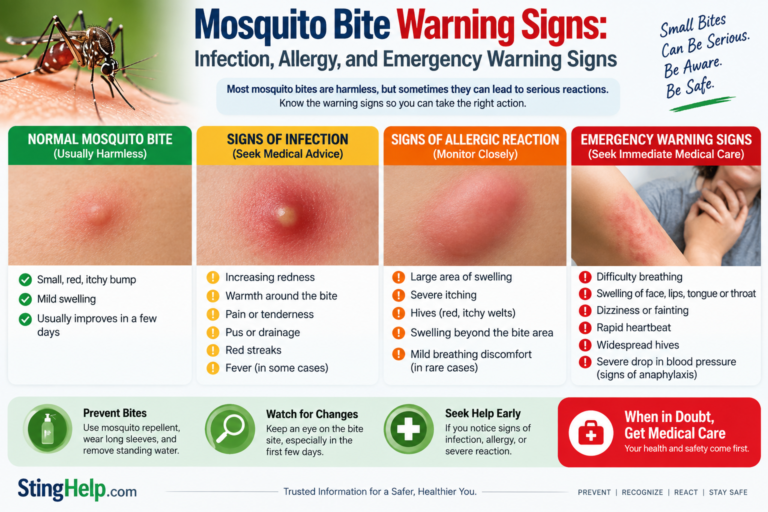
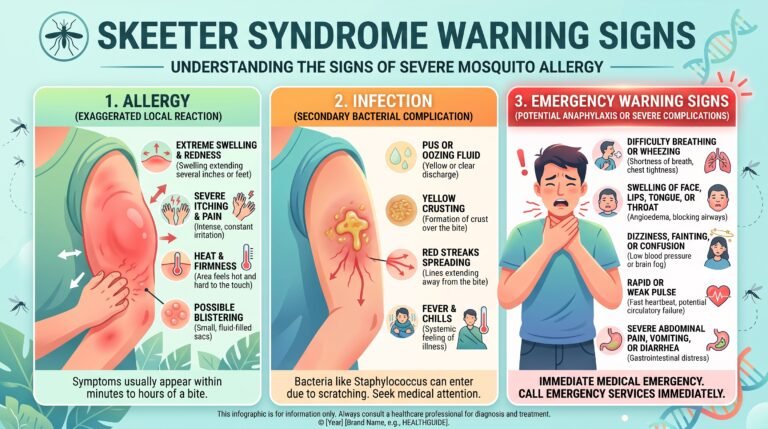
Increasing warmth, tenderness, swelling, pus, red streaking, fever, or a wound that is worsening rather than healing can suggest secondary infection or another complication. Scratching can damage the skin barrier and increase infection risk. Do not squeeze or drain a lesion yourself and do not use leftover antibiotics.
Widespread hives, swelling of the lips, tongue, face, or throat, trouble breathing, wheezing, faintness, collapse, or rapidly progressing symptoms can indicate anaphylaxis. This is an emergency. A large local reaction can be uncomfortable without being anaphylaxis, but airway symptoms or symptoms involving multiple body systems require urgent action.
[stinghelp_image filename=”tick-bite-warning-signs-02.webp” alt=”Warning signs after tick bite” caption=”Decision guide for urgent and emergency symptoms after a tick bite.”]
Redness, itching, swelling, tenderness, papules, blisters, and discoloration are shared responses to many bites, stings, allergic reactions, irritants, and skin infections. Lighting, skin tone, scratching, time since exposure, and secondary infection can all change the way a lesion looks. A photograph is useful for documenting change, but it rarely proves which arthropod caused a mark.
Exposure history usually adds more information than a single image. Record where the event happened, whether an arthropod was seen, whether a tick was attached, whether the reaction followed sleep, yard work, hiking, pet contact, travel, or a nest disturbance, and how quickly symptoms appeared. These details help separate plausible causes without creating false certainty.
Take a dated photograph in similar lighting if the skin is changing, and note whether pain, itching, redness, or swelling is improving, stable, or worsening. Also record fever, headache, nausea, vomiting, dizziness, unusual fatigue, muscle aches, swollen lymph nodes, breathing symptoms, or a rash elsewhere on the body.
The trend matters more than a rigid timeline. A mild local reaction that gradually becomes less uncomfortable is different from a lesion that becomes hotter, more painful, rapidly larger, drains pus, develops red streaking, or occurs with fever. If systemic symptoms develop after a plausible vector exposure, tell the clinician the date and geographic location of the exposure.
| Mistake | Why it can cause problems | Safer approach |
|---|---|---|
| Scratching, squeezing, or cutting the site | Can damage the skin barrier and introduce bacteria. | Keep the area clean and reduce friction. |
| Using bleach, acids, gasoline, or caustic remedies | Can cause chemical burns and obscure the original reaction. | Use gentle washing and evidence-based first aid. |
| Applying ice directly to skin | Can cause cold injury. | Wrap a cold pack in cloth and use short intervals. |
| Taking leftover antibiotics | May not treat the cause and can cause adverse effects. | Use antibiotics only when prescribed for a clinical indication. |
| Diagnosing from social-media pictures | Many unrelated conditions look similar. | Combine exposure, symptoms, progression, and professional assessment. |
Seek prompt medical advice for fever, severe or worsening pain, rapidly spreading swelling, pus, red streaking, a new or expanding rash, significant swollen lymph nodes with illness, persistent vomiting, severe headache, unusual weakness, or neurologic symptoms. Eye involvement, major facial swelling, and reactions close to the mouth or airway also deserve a lower threshold for assessment.
Call emergency services for trouble breathing, swelling of the tongue or throat, collapse, seizure, severe confusion, inability to wake, or a rapidly progressing severe allergic reaction. If a person has a prescribed epinephrine autoinjector and has been instructed to use it for anaphylaxis, use it promptly and still seek emergency care.
Bring a concise timeline: exposure date and location, recent travel, outdoor activity, body site, when symptoms began, and how they changed. Mention medicines, allergies, pregnancy, immune suppression, and major medical conditions. A clear photograph of the arthropod may help when it can be obtained safely, but do not handle a live animal or delay urgent care to capture it.
Separate local findings from whole-body symptoms. “An itchy two-inch patch” and “fever with dizziness” provide different clinical information. This distinction can help a clinician decide whether the main concern is local inflammation, allergy, secondary infection, venom effects, or vector-borne disease.
Use an EPA-registered repellent or the locally approved equivalent according to the label, wear protective clothing when practical, and inspect skin after outdoor activity. CDC advises EPA-registered repellents and loose-fitting long clothing for mosquito and tick prevention. For ticks, check clothing, gear, pets, and hidden skin areas after potential exposure.
Regional risk changes with season and surveillance. Use current public-health guidance for the place where exposure occurred rather than assuming that the same species and disease risks apply everywhere.
Online guidance is most useful for understanding low-risk first aid, documenting an exposure, and recognizing escalation triggers. It is less reliable when it promises to identify a species from one skin photograph or gives a rigid diagnosis based on the number, color, or shape of bumps. Prefer current public-health agencies, national health services, poison centers, and clinician-reviewed specialty organizations.
If the situation is becoming more severe, do not wait for perfect identification. Treat the symptom pattern as the decision point: airway symptoms require emergency action; fever or systemic illness after a vector exposure deserves medical assessment; and worsening warmth, pus, red streaking, or pain can indicate secondary infection or another condition that needs examination.
The same degree of swelling can have different practical consequences depending on where it occurs. Swelling around the eye can interfere with vision, swelling of the lips or tongue can threaten the airway, and swelling of a hand or foot can become uncomfortable under rings, shoes, or tight clothing. Remove constricting jewelry early if swelling is increasing, and seek prompt assessment when function is affected.
Reactions behind a knee, at the waistline, or under a strap may look worse because friction and pressure repeatedly irritate the skin. Reducing friction and keeping the area clean can help, but location does not override red flags: fever, rapidly increasing pain, pus, red streaking, breathing symptoms, or systemic illness still need appropriate medical attention.
A local reaction stays mainly at or near the exposure site and may include redness, swelling, itching, tenderness, or a small blister. A systemic reaction affects other parts of the body or general wellbeing. Examples include widespread hives, breathing difficulty, dizziness, vomiting, fever, severe headache, unusual weakness, or neurologic symptoms.
This distinction is useful because systemic symptoms can change urgency even when the skin mark is small. Conversely, a large local reaction can look dramatic without proving a dangerous infection or a specific species. When in doubt, describe both the skin findings and whole-body symptoms separately when contacting a healthcare professional.
For when to see a doctor for tick bite in teenagers, start with gentle first aid and monitor the direction symptoms are moving. Avoid scratching, harsh chemicals, and unprescribed antibiotics. Get prompt medical advice for fever, red streaking, pus, worsening pain, significant swelling, or systemic illness, and emergency help for breathing difficulty, throat swelling, collapse, seizure, or severe deterioration.