
Are Ticks Active in Winter?
# Are Ticks Active in Winter? Most people pack away their tick precautions along with the camping gear. Once the first hard frost arrives,…
You come in from a hike, a camping trip, or an afternoon of yard work, and your first instinct is to hop in the shower. It feels like the right…

You come in from a hike, a camping trip, or an afternoon of yard work, and your first instinct is to hop in the shower. It feels like the right move: wash off the sweat, the dirt, and hopefully any ticks you picked up along the way. So does showering remove ticks? The short answer is partly. A shower can rinse off ticks that are still crawling on your skin and have not yet attached, but it will not dislodge a tick that has already bitten you. The real power of the shower, according to public health guidance, is the opportunity it creates: a few minutes of wet skin, a mirror, and your full attention make it the best time to do a thorough tick check.
The CDC recommends showering within two hours of coming indoors, stating that it has been shown to reduce the risk of getting Lyme disease and may reduce the risk of other tick-borne diseases. That guidance is the backbone of this article. Below, we break down exactly what showering does for you, where its limits are, and how it fits into a complete post-outing routine so you never rely on the shower alone.
The CDC’s tick-bite prevention guidance includes a short list of steps to take “after you come indoors.” Among them is a direct recommendation: shower soon after being outdoors, specifically within two hours of coming indoors. The agency states that this has been shown to reduce the risk of getting Lyme disease and may be effective in reducing the risk of other tick-borne diseases. Two mechanisms are named: showering may help wash off unattached ticks, and shower time is a good opportunity to do a tick check.
It is worth noticing what the CDC does not claim. It does not say that showering removes attached ticks, kills ticks, or replaces a tick check. The wording is careful, and the caution is deliberate. Ticks are remarkably hardy animals, and the shower is a rinse, not a disinfection. Understanding that distinction keeps you from walking out of the bathroom with a false sense of security while a tick is still feeding somewhere behind your knee.
The two-hour window matters because of how ticks behave once they reach your body. Ticks do not usually bite immediately. They tend to crawl around for a while, looking for a spot with thin, warm skin where they can feed undisturbed. Showering within that window catches many ticks while they are still in the wandering phase. Later in this article, we will cover why the clock keeps ticking even after you are clean, because some disease transmission does not wait.
When a tick first gets onto you, it is usually not attached. It got brushed off a blade of grass, a shrub, or leaf litter onto your pant leg or sleeve, and now it is climbing. Ticks move upward and toward warmth and carbon dioxide, which is why they often end up at waistbands, armpits, and hairlines. During this crawling phase, the tick is held to your skin only by its legs and claws. Running water, soap, and the friction of washing can dislodge it.
This is the part of the answer where the shower genuinely earns its reputation. A crawling tick has no mouthparts embedded in your skin and no cement-like saliva holding it in place (a substance ticks use once they start feeding). It is just a small passenger, and a warm, soapy wash with some scrubbing can carry it down the drain. People who shower promptly after outdoor activity routinely find that they feel cleaner and that the itchy, crawling sensation that makes them check their skin turns out to have been nothing. That sensation is useful: it is your cue to look.
Nymphs deserve special mention here. The immature stage of the black-legged tick, the stage most responsible for Lyme disease transmission, is roughly the size of a poppy seed. Nymphs are tiny, nearly painless when they bite, and notoriously hard to spot. The CDC notes that most people are infected through nymph bites, precisely because these ticks are so easy to miss. A shower will not guarantee every wandering nymph goes down the drain, but it is far better than doing nothing, and the scrubbing gives you a tactile chance to notice something small moving on your skin.
There is an important nuance, though: washing off is not the same as killing. Ticks are astonishingly resistant to water. Research on tick species has shown they can survive submersion for hours or even days, with some species surviving underwater for weeks in laboratory studies, by closing the small breathing openings on their bodies called spiracles. Soap shortens their survival time but does not kill them instantly. So the tick that goes down your drain is almost certainly alive. That is fine, because it is no longer on you, and the drain leads away from your skin. Just do not expect the shower to act as an execution device.
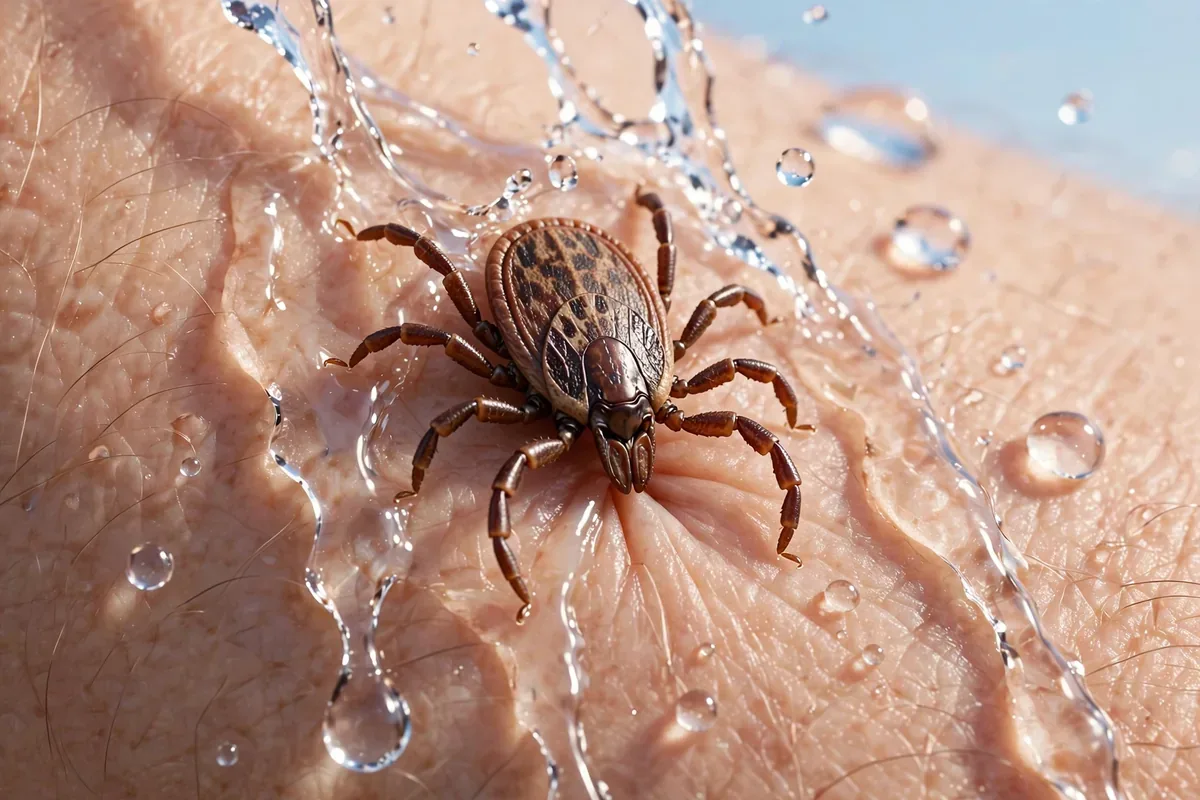
Here is the limit that matters most. Once a tick has bitten you and begun feeding, showering will not remove it. An attached tick has its mouthparts embedded in your skin and is held firmly in place. Water pressure from a household shower, soap, and scrubbing are not enough to dislodge it. Ticks can survive a shower, a bath, or a swim perfectly well, and they will happily stay attached through all of them.
This is why health authorities draw a sharp line between unattached ticks, which a shower can wash off, and attached ticks, which require proper removal. If you step out of the shower and find a tick embedded in your skin, the shower did not fail. It was never going to handle that job. The correct next step is mechanical removal with fine-tipped tweezers: grasp the tick as close to the skin’s surface as possible and pull upward with steady, even pressure, without twisting or jerking. For a step-by-step walkthrough, see our guide on how to remove an attached tick safely.
A few folk remedies circulate for attached ticks, and they are worth avoiding. Do not try to burn the tick off, smother it with petroleum jelly or nail polish, or twist it out with your fingers. These methods can irritate the tick, prolong the time it spends attached, and potentially increase the chance of disease transmission. After removal, clean the bite area with soap and water or an antiseptic, and note the date so you can watch for symptoms in the days and weeks ahead.
One more practical point: if you find an attached tick during your post-shower check, pay attention to how it looks. A tick that appears flat has likely been attached only a short time, while one that looks swollen or engorged has been feeding longer. That observation is useful information to share with a clinician if symptoms develop, since longer attachment generally means higher transmission risk for diseases like Lyme.
If the shower’s ability to wash off crawling ticks is its first benefit, its second benefit is arguably bigger: it is the ideal setting for a full-body tick check. Your skin is wet and bare, you are standing in good light, and a mirror is usually a few steps away. The CDC pairs its shower recommendation with a full-body check for exactly this reason, listing the areas ticks favor: under the arms, in and around the ears, inside the belly button, behind the knees, in and around the hair, between the legs, and around the waist.
Make the check systematic rather than casual. Start at the top and work down, or work from one side of the body to the other, so you do not skip zones. Use a hand-held or full-length mirror for your back, scalp, and other hard-to-see areas.
Starting at the head and moving downward (or across one side of the body) keeps the check from becoming random. Check waistbands and sock lines by looking at the skin underneath them, since ticks often stop at the first barrier of tight clothing. Parents and caregivers should give children the same treatment, especially after they have played in wooded areas, tall grass, or leaf litter.
The shower check also catches something people forget: ticks you carried in on your hair. Ticks can drop from vegetation onto your head or shoulders and wander into the scalp. Shampooing and working your fingers across the scalp is one of the most productive parts of the post-outing routine. If you have long or thick hair, take extra time here. A tick in the scalp is one of the hardest to find later, and one of the easiest to miss during a quick visual scan.
You are not performing a medical exam; you are looking for small dark specks that were not there before. If something looks suspicious, dry the area and take a closer look with good light. Many “ticks” turn out to be freckles, scabs, or bits of dirt, and that is fine. The habit is what protects you, and the shower is the natural anchor for it.
The shower is one step in a sequence, and it works best when the steps around it are also handled. The CDC’s after-indoors routine starts before the bathroom door: check your clothing for ticks, because ticks can ride into the house on fabric and attach to you later. Tumble dry clothes in a dryer on high heat for ten minutes to kill ticks on dry clothing. If the clothes need washing first, use hot water, since cold and medium-temperature water will not kill ticks. This step matters because a tick that survives on your discarded hiking pants can simply find you again in the laundry room.
Pets and gear come next. Ticks can ride into the home on dogs and cats and then move to people, so check pets carefully after outdoor time, and talk to your veterinarian about appropriate tick prevention products for your animals. Examine coats, daypacks, and other gear the same way you would check clothing. These are the routes by which ticks bypass the shower entirely: they never get wet because they were on your backpack, not on you.
Before the outing, prevention reduces everything the shower has to handle. The CDC recommends EPA-registered insect repellents on exposed skin and treating clothing and gear with permethrin, which remains protective through several washings. Tucking pants into socks in heavy tick habitat and staying toward the center of trails also cut down the number of ticks that ever reach your skin. None of these steps is complicated on its own; together, they form the layered defense that makes a single shower far more effective. For a broader overview of tick basics, our tick bites hub covers identification, species, and general prevention.
Think of the order of operations as a funnel. Prevention keeps most ticks off you. The clothing dryer and gear check catch the stowaways. The shower washes off the crawlers and sets up the tick check. And the tweezers handle anything that made it through all of that and attached. No single step carries the whole load, and that is exactly how the CDC designed the guidance.

There is one more reason the shower cannot stand alone, and it is about timing rather than plumbing.
For Lyme disease, the CDC notes that in most cases a tick must be attached for 36 to 48 hours or more before the bacterium can be transmitted, and removing a tick within 24 hours greatly reduces the chances of getting Lyme disease. That long window is good news: it means a prompt shower, a good check, and quick removal usually happen well before transmission risk climbs.
But Lyme disease is not the only tick-borne illness, and not all of them wait politely. Powassan virus, a rare but serious tick-borne disease spread by some of the same black-legged ticks, can be transmitted in as little as 15 minutes after an infected tick attaches, according to CDC-reviewed research. There is no vaccine and no specific treatment for Powassan virus disease, and severe cases can cause lasting neurological problems. This does not mean you should panic after every tick bite. Powassan remains rare. It does mean that “I showered, so I am fine” is the wrong conclusion. A tick that attached an hour before your shower could still transmit a fast-moving pathogen.
Other tick-borne diseases fall somewhere along this spectrum, and the exact timing varies by pathogen, tick species, and how long the tick fed. The honest bottom line: the shower reduces your risk, it does not eliminate it. What eliminates the most risk is the combination of prompt showering, a careful check, correct removal of anything attached, and watching for symptoms like rash or fever in the days and weeks afterward. If symptoms appear, see a clinician promptly and mention the tick bite, including when and where it happened.
| Step | What it handles | What it cannot do |
|---|---|---|
| Shower within 2 hours | Washes off crawling, unattached ticks; creates the ideal setting for a full-body tick check | Does not remove attached ticks; does not kill ticks; does not replace the check itself |
| Full-body tick check | Finds attached ticks early, when removal is most effective | Easy to rush or skip hard-to-see areas; nymphs are the size of a poppy seed and easy to miss |
| Dryer on high heat (10 min) | Kills ticks riding on dry clothing before they reach you again | Does nothing for ticks already on your skin; damp clothes need extra time |
| Checking pets and gear | Catches ticks that hitchhiked indoors on animals, packs, or coats | Only works if done consistently after every outing |
| Fine-tipped tweezers removal | The only reliable way to remove an attached tick | Must be done correctly; folk remedies like burning or smothering make things worse |
No row in that table is optional if you spend time in tick habitat. Each one covers a gap the others leave.

A shower and a tick check are prevention steps, not treatment. See a clinician promptly if any of the following occur after a tick bite or suspected tick exposure:
For a fuller list of warning signs, see tick bite warning signs: infection, allergy, and emergency signals. Never try to interpret tick-test results on your own, and do not assume that a shower after the bite means you are in the clear.
Does showering remove ticks that are already attached?
No. An attached tick has its mouthparts embedded in your skin and will not wash off in the shower. Ticks can survive submersion in water for hours or even days, so water alone does not dislodge or kill them. Attached ticks need to be removed with fine-tipped tweezers, grasped close to the skin and pulled straight out with steady pressure.
How soon after being outdoors should I shower?
The CDC recommends showering within two hours of coming indoors. This timing catches many ticks while they are still crawling and looking for a place to bite, before they attach. It also gives you a natural window to do a full-body tick check while your skin is bare and you are near a mirror.
Can I just shower instead of doing a tick check?
No, and this is one of the most common misunderstandings about the guidance. The CDC recommends showering partly because it is a good opportunity to check your body for ticks, not as a replacement for the check. A quick rinse without looking leaves attached ticks, especially tiny nymphs, exactly where they are.
Does soap or hot water kill ticks in the shower?
Not reliably. Ticks can close their breathing openings and survive submersion for a long time, and soapy or chlorinated water only shortens their survival rather than killing them quickly. The shower’s job is to wash crawling ticks off your skin and down the drain, not to kill them. For clothes, a dryer on high heat for ten minutes is the step that actually kills ticks.
I found a tick on me after showering. What should I do?
Remove it as soon as possible with fine-tipped tweezers, pulling straight out without twisting. Clean the area with soap and water or an antiseptic, and note the date of the bite. Watch for rash, fever, or flu-like symptoms over the next few weeks. If any symptoms develop, or if you could not remove the whole tick, contact a healthcare professional and mention the bite.
Medically reviewed by Dr. Sarah Jones, MD.
This article is for informational purposes only and isn’t medical advice. If you’re worried about a bite or sting, talk to a healthcare professional.
Dr. Jones oversees StingHelp’s clinical verification process. Every guide is systematically evaluated against active Centers for Disease Control and Prevention (CDC), Environmental Protection Agency (EPA), and American Academy of Allergy, Asthma & Immunology (AAAAI) medical consensus standards to ensure symptom distinctions and care recommendations are clinically sound.
Explore physician-reviewed first-aid procedures, identification clues, and symptom comparisons for other common outdoor bites and stings.
# Are Ticks Active in Winter? Most people pack away their tick precautions along with the camping gear. Once the first hard frost arrives,…

One tick, six different clocks. Powassan virus can pass within 15 minutes while Lyme disease usually needs 36 to 48 hours — and official sources disagree on the hours in between. Every figure sourced, every conflict named.
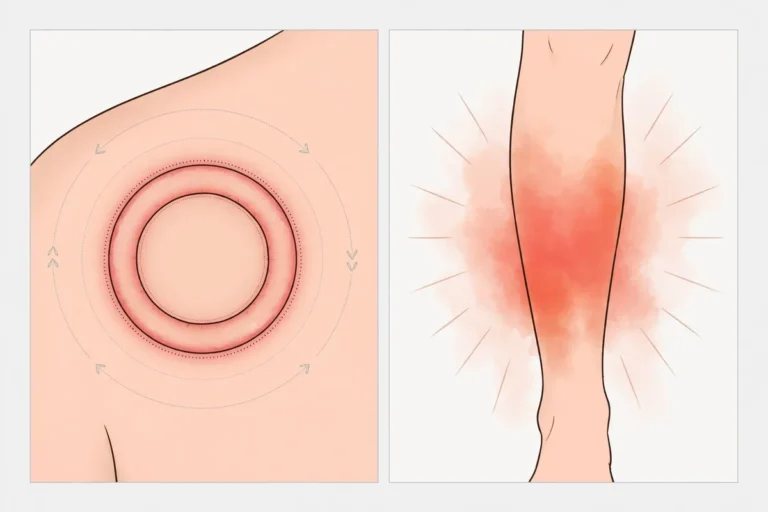
A red area on your skin is getting bigger, and you are trying to decide what it might be. The question lyme disease rash…