Rub a dab of Vicks VapoRub on your wrists and ankles before heading outside, and mosquitoes will leave you alone. The advice appears on garden blogs, parenting forums, and even major home-improvement sites. But does Vicks VapoRub repel mosquitoes, or is a century-old chest rub being drafted into a job it was never designed for?
It does not work as a mosquito repellent. No controlled study has demonstrated repellent efficacy, none of its ingredients is registered as a mosquito repellent at the concentrations present, and the product’s own label makes no such claim. Worse, the myth carries real safety baggage: Vicks contains camphor, which is toxic to young children and pets, and using it as an all-over skin treatment exposes people to risks the product was never meant to pose. This article audits the jar ingredient by ingredient, examines the high-profile source promoting the myth, explains why strong smell is not repellency, and covers the safety warnings that matter most.
The Claim, Amplified by a Household Name
Most mosquito myths spread through anonymous forum posts. This one got a major boost from an unlikely source: Bob Vila’s home-improvement site, which published an article recommending Vicks VapoRub as a garden mosquito deterrent. The piece advises readers that mosquitoes dislike the scent of camphor and menthol, and suggests smearing a small amount on wrists or ankles before heading outside.
This matters because of how trust works online. Bob Vila is a recognized home-improvement authority, and readers reasonably extend that credibility to adjacent topics. A recommendation from a trusted brand reads very differently from the same words in a comment thread. When a high-visibility publisher promotes an untested health-adjacent claim, it acquires a veneer of vetting it never received. Search engines then surface the article prominently, and the myth gains institutional momentum.
But authority in one domain does not transfer to another. Home-improvement expertise is not entomology, and the article offers no testing, no citation, and no acknowledgment that the product’s own manufacturer has never made this claim. The recommendation rests entirely on the folk logic this article will dismantle: it smells strong, therefore mosquitoes must hate it. That logic is worth examining ingredient by ingredient, because the jar’s actual contents tell a precise story.
What’s Actually in the Jar: An Ingredient Audit
Vicks VapoRub’s active ingredients are listed on every jar, and they are worth reading with a repellent-seeker’s eye. The formula centers on three actives in a petrolatum base: camphor at 4.8 percent, eucalyptus oil at 1.2 percent, and menthol at 2.6 percent. The product is regulated as an over-the-counter cough suppressant and topical analgesic, not as a pesticide of any kind.
Camphor (4.8%)
Camphor is the ingredient doing most of the aromatic heavy lifting, and it is the one most often credited in the myth. In industrial and agricultural contexts, camphor and camphor oil do show some insecticidal and repellent properties in laboratory studies. Here is the catch: those studies test camphor at concentrations and in formulations designed for the purpose, not the 4.8 percent in a chest rub designed to produce soothing vapors. There is a vast distance between “this compound shows activity in a lab assay” and “this consumer product repels mosquitoes in a backyard,” and no published study bridges it for Vicks.
Camphor also carries the product’s most serious safety warnings, covered in detail below. An ingredient can be simultaneously interesting to researchers and inappropriate for improvised skin use. Both things are true here.
Menthol (2.6%)
Menthol provides the familiar cooling sensation and much of the recognizable Vicks smell. The myth’s logic treats this strong odor as self-evidently repellent. But menthol’s odor is calibrated for human noses at close range; it is the sensation of the vapors, not a mosquito-receptor effect. No controlled testing supports menthol at this concentration as a mosquito repellent, and “it smells strong to me” is not a mechanism.
Eucalyptus Oil (1.2%)
This is the ingredient that causes the most confusion, because it sounds like it should work. Eucalyptus oil is a real plant essential oil with a sharp scent, and the myth’s defenders often cite it as the secret weapon. The problem is a case of mistaken identity that deserves its own section.
None of the three actives is registered with the EPA as a mosquito repellent. None appears at a calibrated repellent concentration. The jar’s label, which is a regulated document, claims cough suppression and minor muscle ache relief. It claims nothing about insects, because the manufacturer has no data to support such a claim and has never sought it.
Eucalyptus Oil Is Not Oil of Lemon Eucalyptus
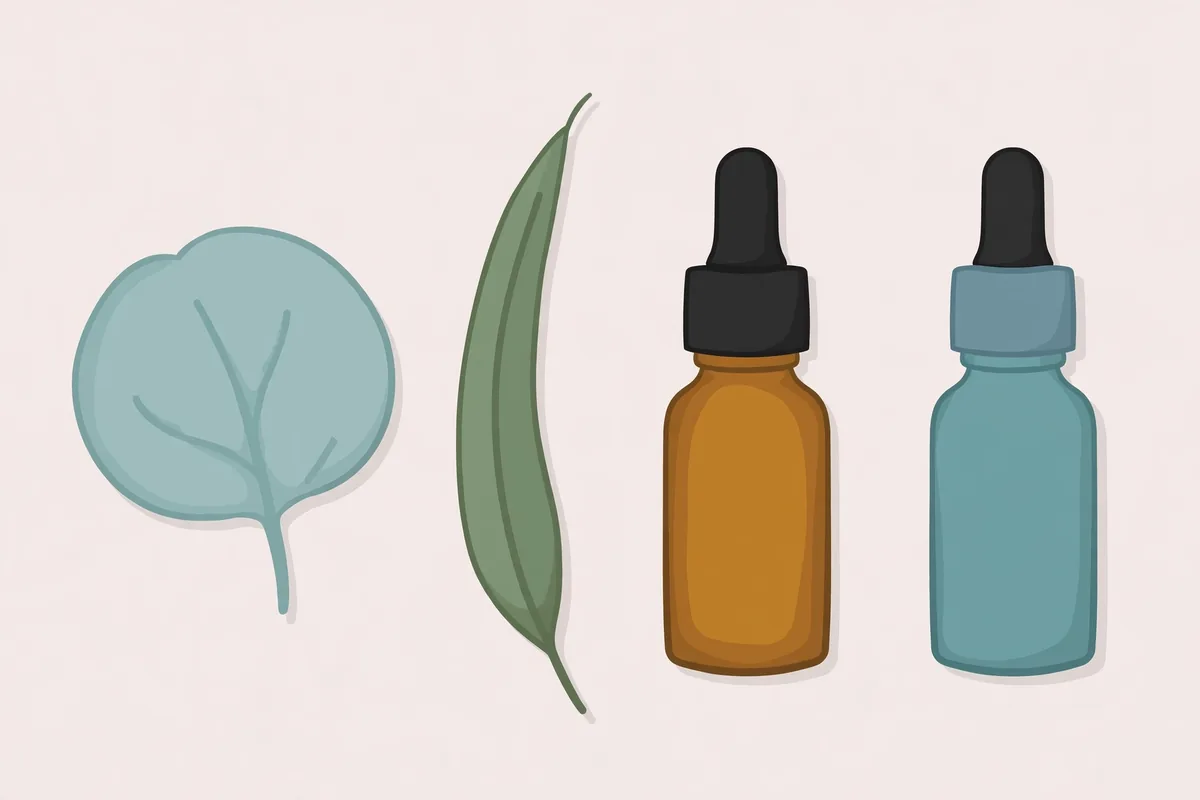
This distinction is the single most useful fact in the entire debate, and the myth depends on readers not knowing it.
Oil of lemon eucalyptus, abbreviated OLE, is an EPA-registered mosquito repellent recommended by the Centers for Disease Control and Prevention. Its repellent activity comes from a compound called PMD (para-menthane-3,8-diol), which occurs naturally in the lemon eucalyptus plant and is also synthesized for repellent products. OLE-based repellents provide up to about six hours of protection in standardized testing. It is a legitimate, tested, regulated option.
The eucalyptus oil in Vicks VapoRub is not oil of lemon eucalyptus. It is conventional eucalyptus oil, a different plant extract with a different chemical profile, present at 1.2 percent in a product formulated for chest congestion. Conventional eucalyptus oil is not EPA-registered as a mosquito repellent, is not recommended by the CDC for that purpose, and has no standardized protection time. The shared word “eucalyptus” is doing all the persuasive work in the myth, and it is a botanical bait-and-switch.
This is a pattern worth learning to spot. Folk remedies constantly borrow credibility from similarly named legitimate products: “eucalyptus” for OLE, “citronella plant” for citronella oil, “vitamin B” for tested repellents. The names sound interchangeable to non-specialists, but the chemistry and the testing are entirely different. When someone cites an ingredient as evidence, always ask which exact substance, at what concentration, tested how. The Vicks claim fails all three questions.
Why Strong Smell Does Not Equal Repellency
The folk theory behind the myth is simple: Vicks smells powerfully medicinal, mosquitoes must find it as unpleasant as some humans do, therefore they stay away. Every step of that reasoning misunderstands mosquito biology.
Female mosquitoes do not evaluate the world by whether scents are pleasant. They follow a host-seeking sequence tuned over millions of years: carbon dioxide plumes from breath guide them from a distance, body heat and moisture narrow the search, and skin chemistry including lactic acid triggers the final landing. A repellent works only if it disrupts one of these steps at the concentrations mosquitoes encounter. EPA-registered repellents like DEET, picaridin, and OLE do this by scrambling the mosquito’s odor receptors at close range, preventing the landing sequence from completing.
Vicks was formulated to produce vapors that feel soothing to human airways, not to jam insect olfaction. Its scent is strong to us because our noses are sensitive to camphor and menthol at low concentrations. Mosquitoes are not navigating by our aesthetic preferences; they are tracking CO2 and heat, which the ointment does not diminish. You can smell intensely of menthol while still exhaling a perfectly trackable carbon dioxide plume from warm, lactic-acid-coated skin. The mosquito follows the plume, not your opinion of the smell.
This is the same error behind most scent-based folk repellents, from scented candles to dryer sheets to strongly perfumed soaps. They target the human nose instead of the mosquito’s guidance system. Real repellency is receptor chemistry at close range, measured in controlled trials, not ambient fragrance judged by people.
Has Anyone Actually Tested It?

The honest answer is no, not in any controlled, published way I could find. There are no peer-reviewed studies testing Vicks VapoRub as a mosquito repellent. There are no EPA registration trials, because the product is not registered as a repellent. There are no manufacturer efficacy claims, because the manufacturer has never made them.
What exists instead is the standard folklore evidence: personal testimonials, blog posts citing other blog posts, and videos of people applying it before going outside. These cannot distinguish the product’s effect from the enormous natural variation in mosquito pressure across evenings, locations, clothing choices, and individual attractiveness to mosquitoes. Some people are bitten far less than others for reasons of skin chemistry and CO2 output alone. Without controls, every bite-free evening feels like proof and every bitten evening gets explained away.
The absence of evidence here is informative rather than neutral. Vicks has been on the market for over a century. If it functioned as a meaningful mosquito repellent, the manufacturer would have enormous commercial incentive to prove it and label it, and researchers studying low-cost repellents would have tested it. The fact that neither has happened, across decades of opportunity, is itself a finding. For a related scent-based myth with the same evidence gap, see our article on whether mosquito repellent stickers work for kids.
The Safety Section You Cannot Skip
This is the part of the article that matters most, because the myth does not just waste money and leave people unprotected. Used as the myth directs, as an all-over skin application before going outside, Vicks exposes people to risks its label never contemplated.
Camphor and Young Children
Camphor is toxic, and young children are the most vulnerable. The product label states that Vicks VapoRub should not be used on children under two years of age, and pediatric guidance urges caution beyond that. Camphor can be absorbed through the skin and mucous membranes, and ingestion of even small amounts has caused poisoning in toddlers, with symptoms including nausea, confusion, and seizures. There are documented cases of camphor poisoning in children with severe outcomes.
The myth’s application method makes this worse. The label directs a thin application to the chest and throat for colds. The myth directs smearing it on wrists, ankles, and other exposed skin, exactly the large-surface-area use that maximizes absorption, on exactly the population, children playing outside, least able to tolerate it. Applying a camphor product to a toddler’s skin to repel mosquitoes is trading an unproven benefit for a documented risk.
Pets
Camphor is toxic to pets as well. Dogs and cats that lick Vicks from skin or surfaces can be poisoned, and cats are particularly sensitive to many essential-oil compounds. Households that follow the myth and then handle pets, or let pets lick treated skin, create an exposure pathway the product was never designed for.
What Safe Repellent Use Looks Like Instead
For children, use products formulated and labeled for their age: EPA-registered repellents with clear pediatric directions, protective clothing, and mosquito netting for infants. Our guide to insect repellent safety for children and pregnancy walks through age-appropriate choices. Never improvise with a medicated chest rub as a substitute for a tested repellent, and keep Vicks stored where young children cannot reach it.
What Actually Works Against Mosquitoes

Protection that works is layered, tested, and honest about its limits.
On skin, use an EPA-registered repellent: DEET, picaridin, or oil of lemon eucalyptus, at the concentration and reapplication interval the label states. These have measured protection times from standardized testing, not testimonials. Treat clothing and gear with permethrin for hiking, camping, and yard work in heavy mosquito areas; it survives multiple washes and kills mosquitoes on contact with fabric.
Around the home, eliminate breeding sites by dumping standing water at least weekly, keep screens intact, and use fans on patios, since mosquitoes are weak fliers whose host-seeking is disrupted by moving air. Wear long sleeves and pants at dawn and dusk when mosquitoes are most active.
| Product or ingredient | Claimed effect | Tested as a repellent? | Demonstrated protection | Safety notes |
|---|---|---|---|---|
| Vicks VapoRub (camphor 4.8%, menthol 2.6%, eucalyptus oil 1.2%) | Strong scent drives mosquitoes away | No published testing | None demonstrated | Camphor toxic to young children and pets |
| DEET (20-30%) | Disrupts mosquito odor receptors | Yes, EPA-registered | Up to 6 hours | Safe when used as labeled |
| Picaridin (20%) | Disrupts mosquito odor receptors | Yes, EPA-registered | 8-12 hours | Low odor, safe when used as labeled |
| Oil of lemon eucalyptus (OLE) | Plant-derived receptor effect | Yes, EPA-registered, CDC-recommended | Up to 6 hours | Not for children under 3 |
Do not substitute any scented household product for these measures in areas with real mosquito pressure. Mosquitoes in the United States transmit West Nile virus and, in some regions, dengue, Zika, and chikungunya. The cost of ineffective protection is measured not only in itchy bites but in disease risk. Use defenses with proven protection times, and leave the chest rub in the medicine cabinet.
When to See a Doctor for a Mosquito Bite
Most mosquito bites need nothing more than time, but certain signs warrant medical care.
Call 911 or seek emergency care for severe allergic reaction: difficulty breathing, swelling of the face, lips, or throat, dizziness, or fainting. Seek emergency care for possible mosquito-borne illness signs: high fever with severe headache, neck stiffness, confusion, or muscle weakness.
See a doctor promptly for infection: bites growing redder, warmer, more swollen, or more painful after the first couple of days, red streaks, pus, or fever. Large local reactions with swelling spanning inches, sometimes called skeeter syndrome, deserve evaluation, especially in children.
See a doctor for fever, rash, joint pain, or headache developing within weeks of mosquito bites, particularly after travel to areas with dengue, Zika, or chikungunya. Our mosquito bite warning signs guide details every red flag.
Frequently Asked Questions
Does Vicks VapoRub repel mosquitoes?
No credible evidence shows that it does. No published study has tested it as a repellent, none of its ingredients is registered as a mosquito repellent, and the manufacturer has never claimed repellent efficacy. Strong smell is not the same as repellency, which requires disrupting the mosquito’s host-seeking at close range.
But Bob Vila’s site recommends it. Doesn’t that mean it works?
A home-improvement publisher’s recommendation is not entomology. The article offers no testing or citations, and expertise in home repair does not transfer to insect science. Treat it as what it is: an untested folk tip amplified by a trusted brand name, not a vetted finding.
Isn’t the eucalyptus oil in Vicks the same as the repellent ingredient?
No. Vicks contains conventional eucalyptus oil at 1.2 percent. The tested, CDC-recommended repellent is oil of lemon eucalyptus (OLE), a different extract whose activity comes from the compound PMD. The shared word “eucalyptus” is a naming coincidence, not a chemical equivalence.
Can I at least put Vicks on my child’s ankles for the playground?
Do not. Vicks is not labeled for children under two, camphor can cause seizures and poisoning in young children through skin absorption or ingestion, and the product was never tested as a repellent. Use age-appropriate EPA-registered repellents, protective clothing, or netting instead.
What is the closest legitimate alternative with a plant-derived ingredient?
Oil of lemon eucalyptus (OLE) repellents, which are EPA-registered and CDC-recommended with up to about six hours of protection. Note the label carefully: the product must say oil of lemon eucalyptus, not merely eucalyptus oil, and OLE products are not recommended for children under three.
Medically reviewed by Dr. Sarah Jones, MD.
This article is for informational purposes only and isn’t medical advice. If you’re worried about a bite or sting, talk to a healthcare professional.