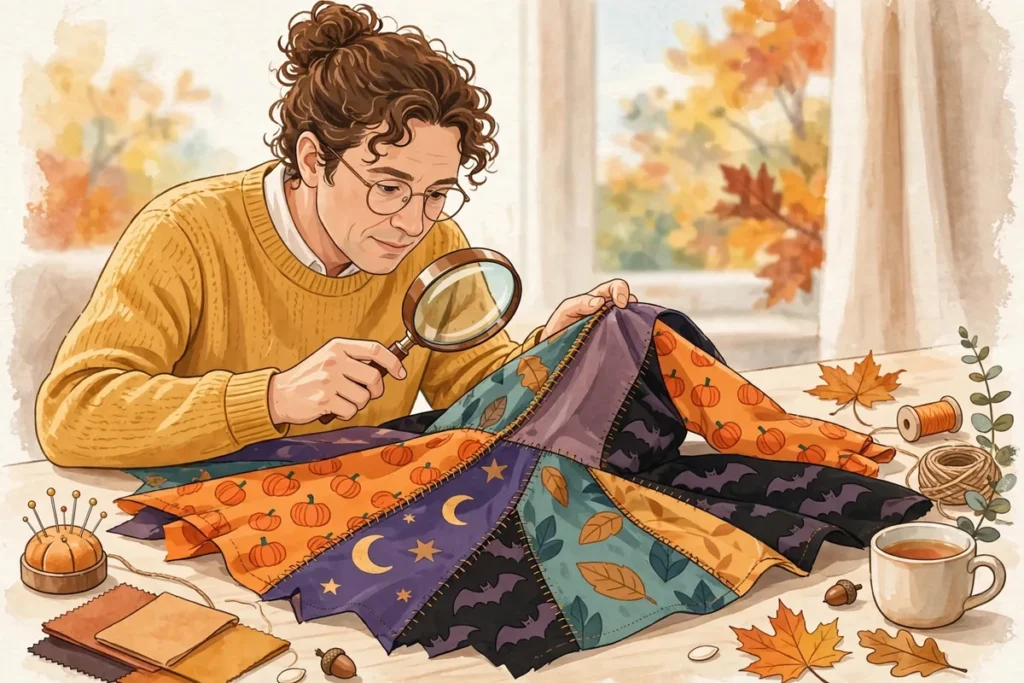
October is thrift-store season, and families hunting for a bargain costume rarely consider what rode home with the last owner. Searching bed bugs thrift store halloween costumes? The honest answer: yes, they can hide in used costumes. These small, flat, reddish-brown insects feed on blood and tuck into seams, folds, and linings — all of which a pre-owned costume has in abundance.
A short inspection at the store plus a heat treatment at home removes the risk in nearly every case. This guide covers where bed bugs hide on costumes, the seam-inspection routine for secondhand clothing, costume-safe heat treatment, and what to do if you suspect hitchhikers came home with you.
Can Bed Bugs Hide in a Used Halloween Costume?
Yes, and the reason is structural. A Halloween costume is a bed bug’s idea of a hiding place: multiple fabric layers, stitched seams, elastic waistbands, hook-and-eye closures, faux-fur trim, and linings that rarely see a wash. Bed bugs do not live on people, but they wedge into fabric crevices close to where a future host will sit or sleep. A costume that was worn for one October night, tossed in a closet or donation bag, and then handled by a store volunteer is a plausible vehicle.
An adult bed bug is about the size of an apple seed — flat and adept at slipping into stitching and folded hems. Eggs are far tinier: pale specks glued into seam channels. A costume’s riskiest zones are the places fingers rarely reach: inner waistband seams, skirt-to-bodice junctions, shoulder padding, Velcro patches, and elastic cuffs.
That said, a costume is not a mattress. Bed bugs prefer a stable sleeping host they can feed on night after night, and a costume in a busy store is more of a transit lounge than a home base. The realistic risk is a small number of bugs or eggs riding along, which is precisely why the inspection and treatment steps below matter. A single pregnant female brought home can start a household infestation, so the goal is simple: never give one a chance. Costumes deserve extra care for one reason: unlike a thrifted jacket worn over a sweater, a costume presses directly against bare skin for hours, and its ruffles, pleats, and layered skirts multiply the hiding places.
The 5-Minute Seam-Inspection Routine Before You Buy
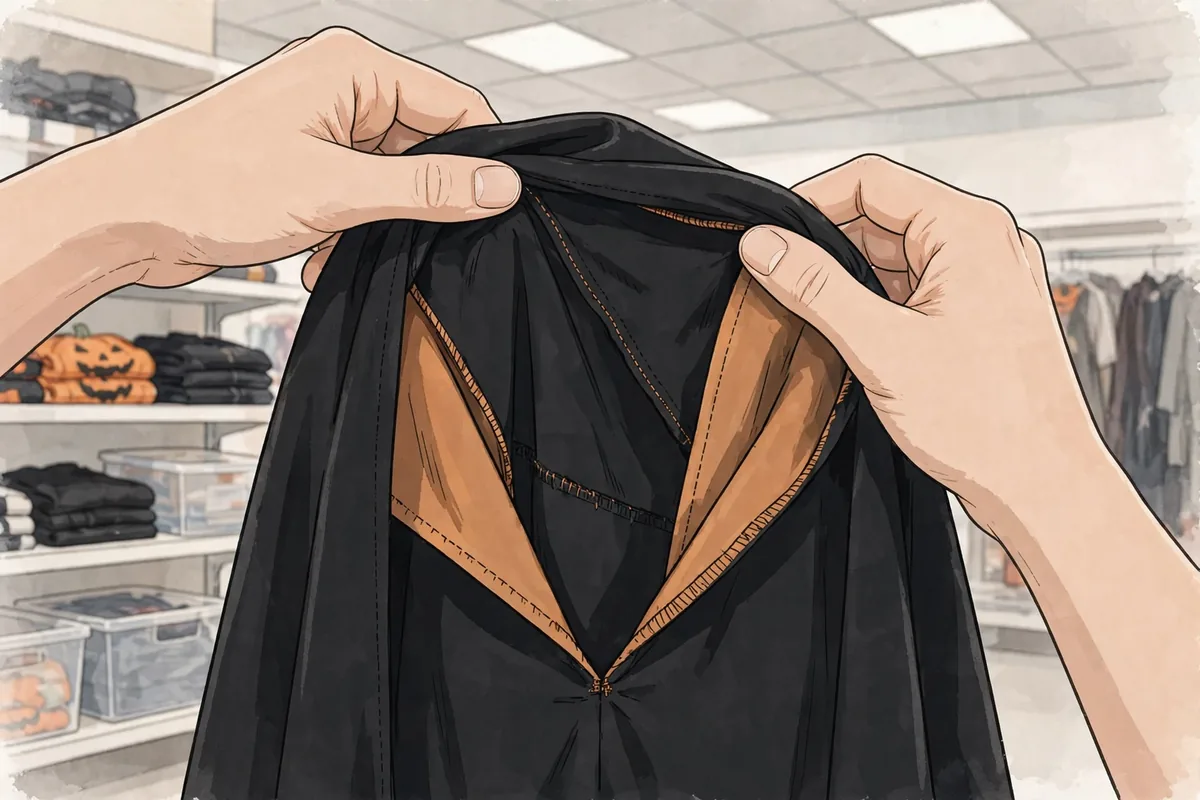
You do not need special equipment at the store — your eyes, your fingers, and decent light are enough. Inspect before the costume goes in your cart. Many thrift stores are well lit, but if you can, hold the garment near a window or under the brightest overhead fixture.
Step 1: Turn it inside out. Seams are the story. Run your eyes slowly along every stitched channel — waistbands, hems, shoulder seams, zipper tracks, and the junctions where lining meets outer fabric. Look for live bugs, shed skins (translucent amber shells), dark rust-colored spots, or pale glued-on eggs.
Step 2: Check the extras. Wigs, masks, hats, gloves, capes, and boot covers often travel with the costume. Bed bugs hide in wig caps, foam mask interiors, and the elastic of gloves. If the set includes plush accessories, squeeze the stuffing gently and check its seams too.
Step 3: Smell and look for staining. A heavy musty-sweet odor is worth noting, and rusty smears along seams (from crushed bugs) are a harder warning sign. Either one means: put the costume back.
Step 4: Bag it before it touches your car. Bring a large sealable bag or a clean trash bag to the store. If the costume passes inspection, seal it before it rides next to your car’s upholstery or your other shopping. If the costume fails inspection, leave it. There are plenty more racks.
This routine also works for costume swaps between neighbors and hand-me-downs from friends. A garment’s history matters more than its price tag, and inspection costs nothing. For a closer look at how inspectors think about checking for bed bugs in other secondhand contexts, the habits are similar to those used when examining hotel rooms in this hotel inspection guide — light, patience, and seams first.
How to Heat-Treat a Costume Without Ruining It
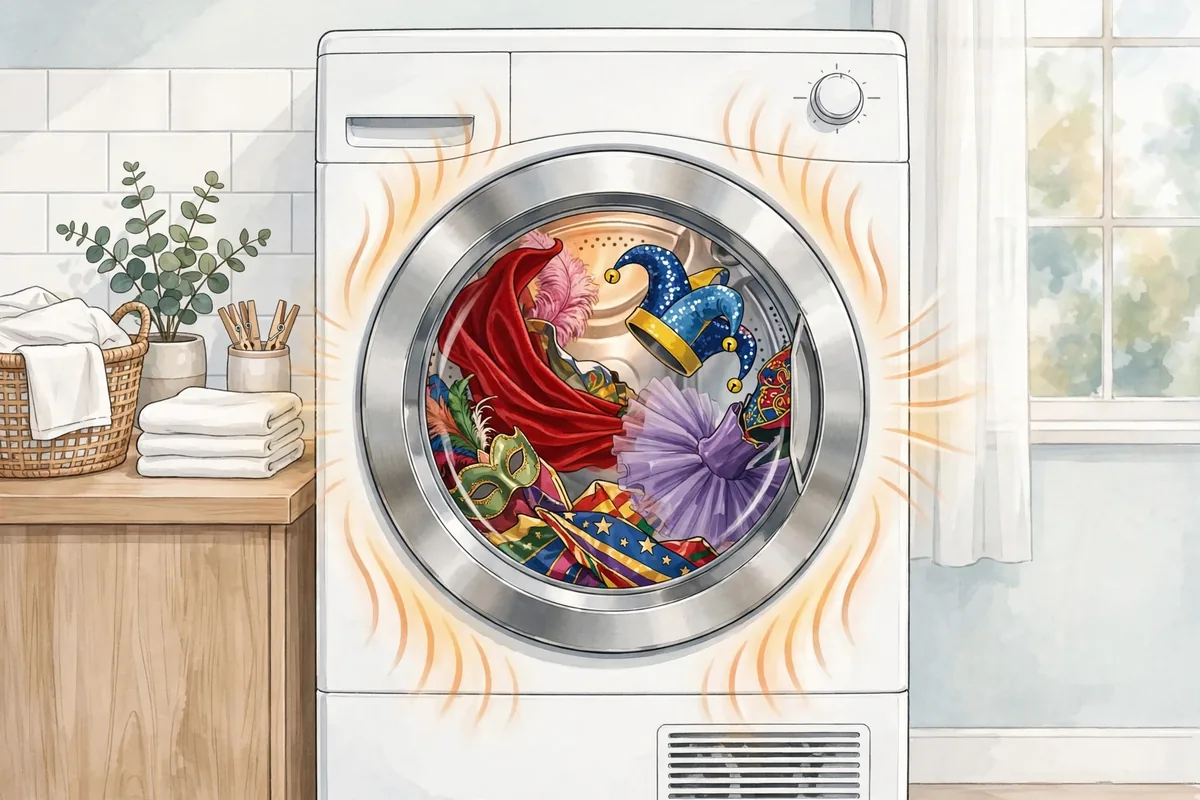
Heat is the great equalizer: bed bugs and their eggs die at temperatures a standard clothes dryer reaches easily. Pest-management research on laundering methods has found that running infested clothing through a dryer on high heat for at least 30 minutes kills all life stages, including eggs. A 10-minute fluff cycle is not enough — eggs survive short exposures. The 30-minute minimum is the number that matters.
Here is the costume-safe version of that treatment:
For sturdy fabrics (polyester costumes, cotton blends, most store-bought capes): bag the costume until laundry time, then run it straight from the bag into the dryer on high heat for 30 to 40 minutes. You do not need to wash it first, the dryer heat is doing the work. Wash afterward if you want it clean, but the disinfestation step is the dryer.
For delicate or heat-sensitive pieces (sequined tops, glued-on appliqués, foam masks, vinyl, feather trim): check the care label first. If high heat would melt, warp, or loosen adhesives, use dry cleaning instead — research has found that professional dry cleaning kills all bed bug life stages too, and it is the standard recommendation for temperature-sensitive fabrics. Put the item in a sealed bag, take it straight to the cleaner, and mention nothing about bugs if you prefer; the process handles it.
For accessories that tolerate neither heat nor dry cleaning (wigs on a delicate cap, cardboard props): inspect them meticulously, then isolate them in a sealed bag for two to three weeks while you monitor for any signs. This is the least certain option, so reserve it for items you can genuinely inspect seam by seam.
One mistake to avoid: do not hang the costume in your closet “until Halloween” and treat it later. Treat it the day you bring it home. Bed bugs that stay in the bag for a week can still be alive and feeding-ready the day you open it — their survival without a blood meal stretches for months. And because costume fabrics press directly against skin, it is worth knowing that bed bugs can and do feed through thin fabric; the question of whether they bite through clothes is settled in the affirmative for most lightweight materials.
Rental Costumes and Costume Swaps: Extra Steps
Thrift stores are not the only source of pre-worn costumes. Rental shops, costume swaps with neighbors, and hand-me-down bins at school all move garments between households — sometimes dozens of households in a single season for a rental.
For rental costumes, assume the shop cleans between customers, but verify with your own treatment anyway. Shops are busy in October, and a garment returned Monday may go out again Friday. When you bring it home, bag it, heat-treat or dry-clean it before the first wearing, and — importantly — treat it again before returning it. That second treatment protects the next family and the shop’s inventory.
For costume swaps, the same inspection-and-treat protocol applies, with one addition: ask casually about storage. A costume that lived in a sealed bin in a spare room is a different prospect than one that sat in an open pile in a garage for two years. Nobody will mind the question if you frame it as fabric care.
For hand-me-downs from family, do not skip the protocol out of politeness. Bed bugs do not care about relationships. A cheerful “I’m dry-cleaning everything before the kids try it on — costume hygiene!” keeps the ritual friendly and the risk at zero.
If You Suspect You Brought Bed Bugs Home
Maybe you skipped the inspection, or a costume your child tried on at a friend’s house came home with a passenger. Do not panic, and do not start throwing furniture away. A costume introduction is the easiest kind of bed bug encounter to contain, because the source is identifiable.
Step 1: Isolate. Put the costume and anything worn with it into a sealed bag immediately. Do not hang it in a closet or toss it on a bed.
Step 2: Heat-treat. Dryer on high heat, 30+ minutes, or dry cleaning for delicates, the same protocol as prevention.
Step 3: Inspect the landing zones. Check the seams of the couch or chair where the costume sat, the car seat it rode in, and the bedroom if it was ever laid on a bed. Use the same seam-inspection technique from the store routine: bright light, inside-out, slow eyes.
Step 4: Monitor. Bed bug bites are hard to identify by appearance — reactions vary and some people do not react at all. Look for environmental evidence (live bugs, skins, spots) rather than diagnosing from bite marks, and give it a few weeks of vigilance.
Step 5: Escalate only with evidence. If you find live bugs or repeated fresh signs after two weeks, call a pest management professional. Do not douse the bedroom with random sprays — misapplied pesticides scatter bed bugs deeper into walls.
When to See a Doctor for a Bug Bite

Bed bug bites are almost never a medical emergency, but certain situations warrant a call to your doctor:
- Signs of an allergic reaction: trouble breathing, swelling of the lips or tongue, dizziness, or hives spreading far beyond the bite sites — call 911.
- Signs of skin infection: increasing pain, spreading redness, warmth, red streaks, swelling that worsens after a few days, pus, or fever. Scratching bites open invites bacteria, so these signs mean the wound, not the bug — needs treatment.
- Bites that do not improve: welts that linger beyond two to three weeks, or a rash that keeps spreading, deserve a professional look.
- Heavy anxiety or sleep loss: this is a real health effect of suspected infestations. If worry about bites is costing you sleep night after night, mention it to your doctor — there is no shame in it.
Doctors cannot diagnose bed bugs from a bite photo alone, and you should be wary of anyone who claims to. Bring the environmental evidence — or better, a captured specimen in a sealed container, and let a pest professional confirm the insect while your doctor treats the skin.
Frequently Asked Questions
Can bed bugs live in a Halloween costume for months?
Bed bugs can survive for months without feeding, especially in cool storage, so a costume sitting in a donation bin or attic is not automatically safe by virtue of time. The eggs glued into seams are even hardier in the short term. Time alone is not a treatment — heat is.
Is it safe to buy a thrift-store costume for a toddler?
It can be, with the full protocol: in-store seam inspection, then a 30-minute high-heat dryer run or professional dry cleaning for delicate pieces. Toddlers’ skin reacts strongly to bites and they cannot report symptoms reliably, so do not skip steps for small children. If a costume is too delicate for any heat treatment and too complex to inspect thoroughly, choose a different one.
Will washing a costume in hot water kill bed bugs?
Hot washing helps, but the dryer is the reliable step. Research on laundering found that wash water needs to reach about 140°F for a full 30-minute cycle to kill all life stages — most home machines do not hold that temperature. A 30-minute high-heat dryer cycle is the more dependable kill step, and it works on dry garments without washing at all.
What if my child already wore an uninspected costume?
Treat the costume now (dryer or dry cleaning), inspect the places it touched — car seat, couch, bedroom, and watch for signs over the next two weeks. One wearing without evidence of bugs is not a confirmed infestation. Resist the urge to spray the house with store-bought insecticide; it usually makes things worse.
Medically reviewed by Dr. Sarah Jones, MD.
This article is for informational purposes only and isn’t medical advice. If you’re worried about a bite or sting, talk to a healthcare professional.