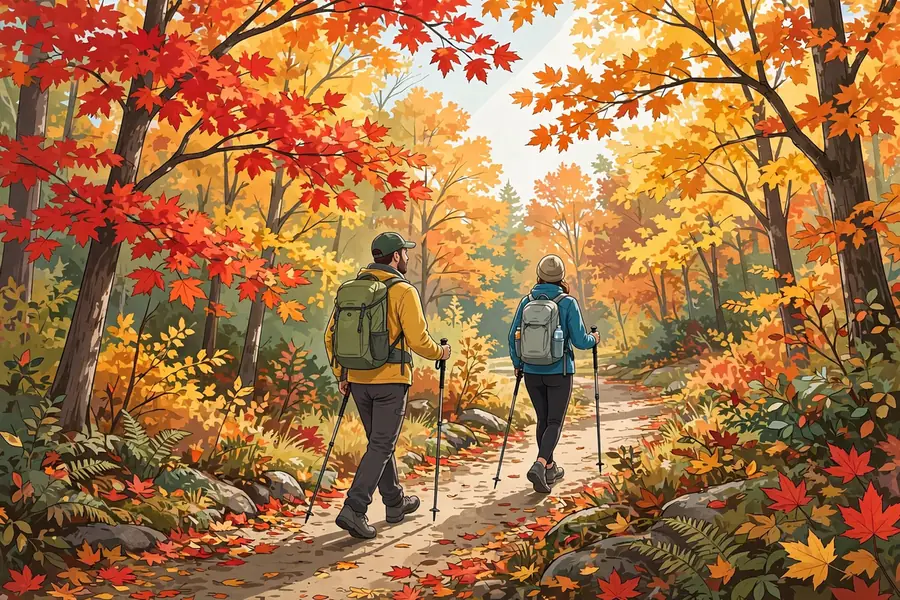
The maples are on fire, the air smells like cider, and the trail ahead winds through the best color you have seen in years. There is one fellow traveler you did not invite. Ticks fall foliage leaf peeping trips share the same woods — adult blacklegged ticks are actively questing through October and into November across the Northeast and Upper Midwest, right when the crowds peak. Fall foliage season is tick season, and the leaf litter you are crunching through is exactly where they wait.
This guide is for autumn day-trippers and hikers: why ticks are still a threat after summer, how their fall behavior differs, what to wear and carry, and the simple after-hike routine that catches the ones that slipped through. The goal is not to scare you off the trail — it is to make sure the only thing you bring home is photographs.
Why Fall Foliage Season Is Tick Season
Most people file ticks under “summer problem” and stop thinking about them after Labor Day. Ticks did not get the memo. Adult blacklegged (deer) ticks — the species responsible for most Lyme disease transmission in the eastern US — have two feeding peaks: spring and fall. The fall peak runs roughly October through November, and in mild years adult ticks stay active until sustained freezing weather arrives. Health departments in New England have issued fall-specific tick warnings in recent years precisely because cases keep climbing after summer ends.
Fall ticks behave a little differently from spring ones. The nymphs that dominate spring and early summer are tiny — poppy-seed sized — and easy to miss. Fall adults are larger, about sesame-seed sized, and somewhat easier to spot on clothing and skin. That is a modest advantage. The disadvantage is sheer opportunity: leaf-peeping puts huge numbers of people into prime tick habitat — forest edges, leaf litter, stone walls, trail margins — during the weeks adult ticks are hungriest.
The habitat overlap is nearly total. Blacklegged ticks quest from leaf litter and low vegetation, waiting to grab passing hosts. A foliage trail is a corridor through that habitat; every time you brush vegetation, step through deep leaves, or sit on a stone wall for a photo, you are sampling it. Understanding this is not cause for alarm — it is the reason the simple precautions below work so well.
Leaf Litter: The Habitat You Are Walking Through
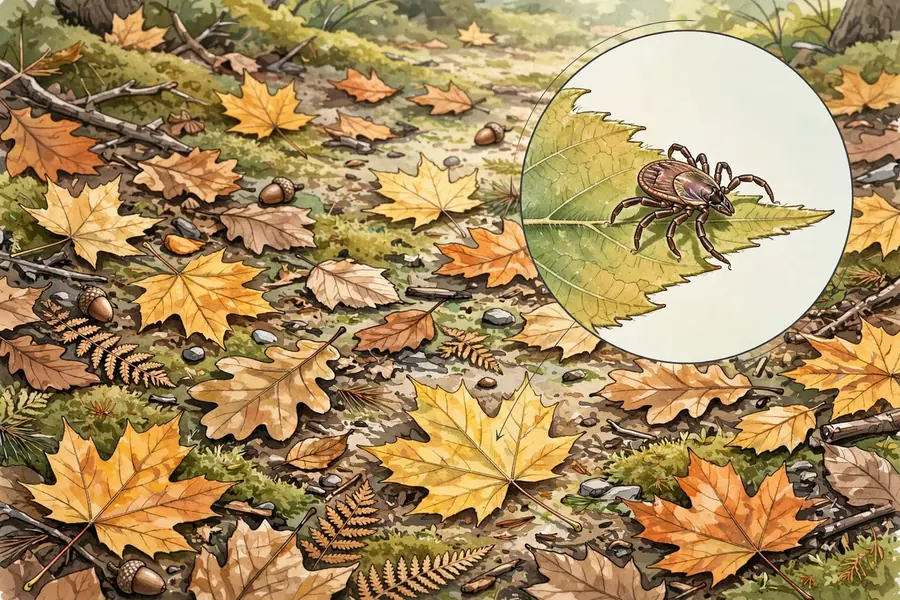
To a tick, a picturesque forest floor is prime real estate. Fallen leaves create a moist, insulated layer that protects ticks from drying out and from temperature swings. Studies of tick ecology consistently find the highest densities of questing ticks in and around leaf litter — more than on open lawn, more than on bare trail. The “leaf litter edge” where woods meet trail or lawn is the single highest-risk micro-habitat most hikers will encounter.
This matters for how you move through the woods. Staying in the center of the trail, where foot traffic has compressed the leaves and vegetation is cleared, meaningfully reduces contact. Wandering off-trail through deep leaves for the perfect photo, sitting directly on the ground, or letting kids roll in leaf piles puts you in the densest tick zone. None of this requires giving up the experience — it just means being deliberate about where your body meets the forest floor.
It also matters for what you bring home. Ticks ride in on clothing, gear, and pets, and leaf litter clinging to boots and pant cuffs can harbor them. Shaking out gear before getting in the car and keeping hiking clothes out of bedrooms are small habits with real payoff. (Note: this is the excursion-travel angle — if you are doing fall yard work with leaf piles at home, that is a different scenario with its own precautions.)
Dressing for the Trail in Tick Country
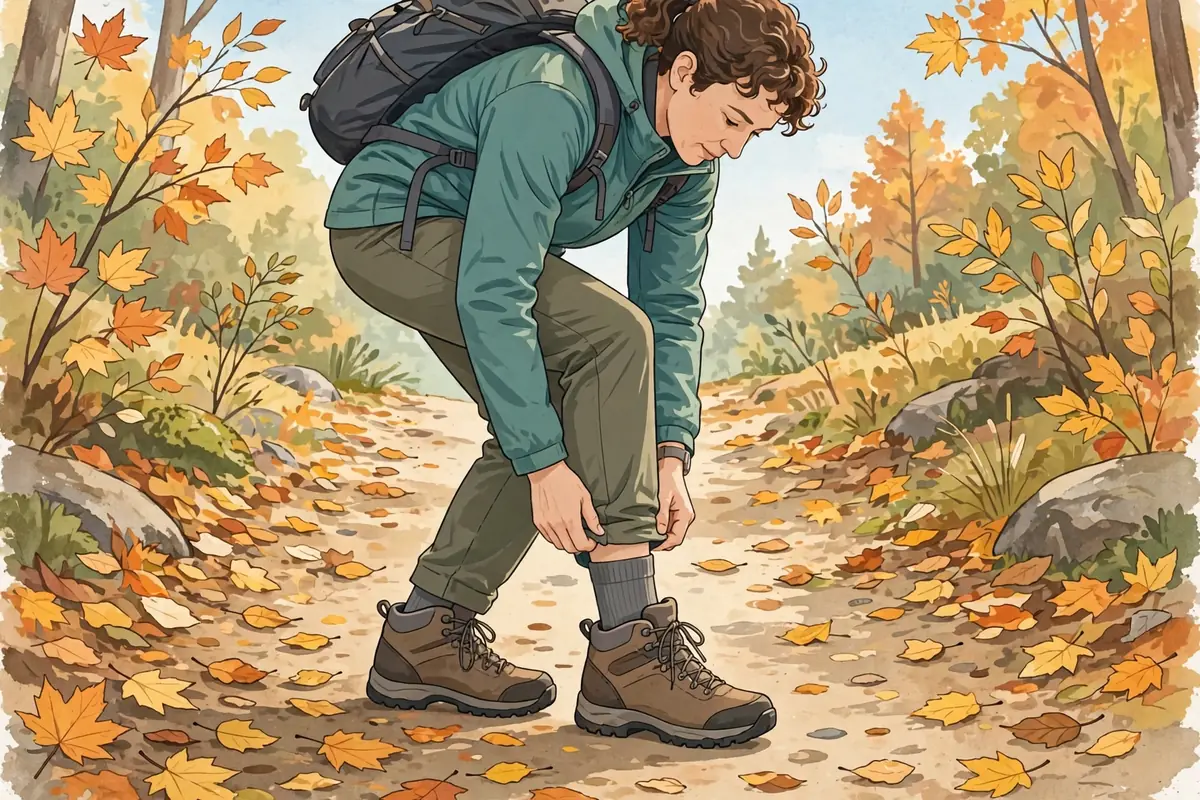
Clothing is your first and most reliable defense, and fall weather actually makes it easier — you are already dressing warmly. Long pants tucked into socks, a long-sleeved shirt, and closed boots or shoes form a physical barrier that stops most ticks before they reach skin. Light-colored clothing helps you spot the dark-bodied adults crawling upward. It is not a fashion statement; it is a detection system.
For the strongest protection, treat your hiking clothes with permethrin before the trip — it kills ticks on contact with fabric and is the single most effective clothing-based measure available. Pair it with an EPA-registered repellent (DEET or picaridin) on exposed skin. Our outdoor bite prevention checklist lays out the full layering system if you want the complete routine in one place.
A few trail-specific tips: gaiters over boot tops seal the most common entry point — the gap where pant cuffs ride up. A hat keeps ticks out of hair when you duck under low branches. And when you stop for lunch or photos, choose a rock, bench, or cleared spot over a log or the leaf-covered ground; the prettiest sitting rock is usually also the safest one.
Timing and Route Choices That Lower Risk
You cannot schedule around ticks entirely, but you can tilt the odds. Ticks quest whenever temperatures are above freezing and humidity is decent — they are not strictly dawn/dusk creatures like mosquitoes. Cool, damp, overcast fall days can actually be peak questing conditions. Bright, dry, breezy afternoons tend to be quieter. If you have a multi-day foliage trip, plan your deepest-woods hikes for the breeziest day in the forecast.
Route choice matters more than most hikers realize. Wide, well-maintained trails with cleared margins expose you to far fewer questing ticks than narrow, overgrown paths where vegetation brushes your legs with every step. Popular scenic overlooks with paved or gravel approaches are lower-risk than bushwhacking to a hidden vista. This is not an argument against adventure — it is an argument for saving the off-trail exploring for winter, when the ticks are dormant.
Group dynamics help too. Hiking single file in the center of the trail, rather than spreading out and brushing both verges, reduces the group’s collective tick harvest. And dogs — beloved trail companions — are tick magnets; keep them on the trail, check them thoroughly afterward, and talk to your vet about tick prevention if you hike in tick country regularly.
The After-Hike Tick Check Routine
Every prevention method leaks a little, which is why the after-hike routine is the true safety net. Make it non-negotiable, like buckling a seatbelt:
At the trailhead: Do a quick buddy check of visible areas — legs, arms, neck — and brush off clothing. Ticks often wander for a while before attaching, so many are still on fabric at this stage.
Clothes in the dryer: When you get home (or back to the rental), put hiking clothes directly in a hot dryer for 10 minutes before washing. Dryer heat kills ticks that survived the ride home; washing alone does not reliably kill them.
Shower within two hours: Showering washes off unattached ticks and gives you a natural opportunity for the full-body check. Scrub well — ticks can be dislodged before they bite.
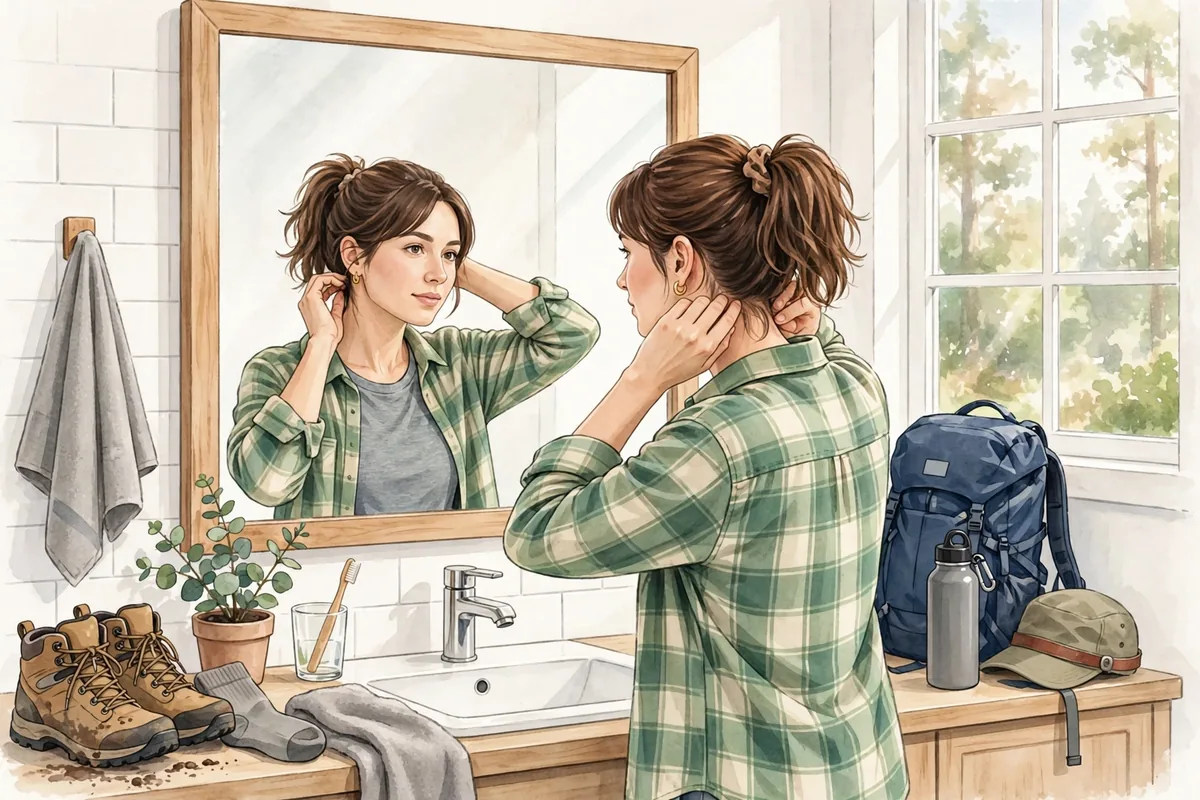
The full-body check: Using a mirror or a partner, inspect the warm, hidden spots ticks prefer: behind the knees, groin, armpits, waistline, belly button, behind the ears, along the hairline, and the scalp. On kids, be thorough — they are lower to the ground and less likely to notice a tick.
If you find an attached tick, remove it promptly with fine-tipped tweezers using proper tick removal technique — steady upward pull, no twisting, no folklore remedies — and save the tick in a sealed bag. Then follow our tick bite aftercare guide for what to watch in the days and weeks after.
When to See a Doctor for a Bug Bite
For tick exposures on a foliage trip, the threshold for calling a doctor is deliberately low:
- Any attached tick of unknown duration — call your doctor; the decision about preventive treatment depends on tick type, attachment time, and local disease rates.
- An expanding rash around the bite in the days to weeks after — especially a circular, spreading redness.
- Fever, fatigue, headache, or joint aches developing within a month of the trip — mention the tick exposure and where you hiked.
- You could not remove the tick cleanly, or the site becomes increasingly red, swollen, or painful.
- Tick bites on children — pediatricians take a more cautious approach; call for any attached tick.
- Multiple attached ticks after a single outing, which raises overall risk and deserves professional input.
Keep the saved tick and note the date and trail location. That information genuinely helps your clinician assess risk — but do not delay care while waiting for any identification.
Frequently Asked Questions
Are ticks really still active in October and November?
Yes. Adult blacklegged ticks feed through the fall and remain active on any day above freezing. Health departments in New England have issued October tick warnings in recent years as fall cases rose. Do not retire your precautions with your shorts.
Can ticks survive the first frost?
Light frosts barely slow them down — they shelter in leaf litter, which insulates remarkably well. It takes sustained hard freezes to shut down adult tick activity. A frosty October morning followed by a sunny 50-degree afternoon can still be an active tick day.
Do I need to worry about ticks on a paved scenic overlook?
Much less. Ticks need vegetation and leaf litter; paved, graveled, or closely mowed areas are very low risk. The risk climbs the moment you step onto grass verges, trails through woods, or stone walls — plan your precautions around where you will actually walk and sit.
What if I find a tick days after the hike?
Remove it promptly — the guidance is the same regardless of delay. Note that you cannot reliably determine attachment time after the fact, so tell your doctor when you found it and when the hike was. Save the tick for possible identification.
Should I treat my yard’s leaves the same way I treat a hike?
Yard leaf management is a related but separate topic — clearing leaf litter from lawn edges and play areas does reduce tick habitat near the home. For the excursion itself, the precautions in this guide (clothing, repellent, staying centered on trails, after-hike checks) are what protect you.
Medically reviewed by Dr. Sarah Jones, MD.
This article is for informational purposes only and isn’t medical advice. If you’re worried about a bite or sting, talk to a healthcare professional.