It’s 2 a.m. Your baby is scratching at a cluster of mosquito bites on her ankle, fussing instead of sleeping. You reach for the familiar pink bottle of calamine lotion — the same one your parents dabbed on your own childhood bites — and then you pause. Is this stuff actually safe for a baby?
The direct answer to is calamine lotion safe for babies is yes, with age rules. Calamine lotion is generally considered safe for short-term use on babies older than 6 months to ease itching from minor skin irritations, including insect bites. For infants under 2, pediatric guidance leans toward checking with your pediatrician first, and a few label cautions matter for every age.
In this article, we’ll cover what’s actually in calamine lotion, the age bands that matter, how to use it safely on a baby, when to skip it entirely, and the gentler alternatives that work well for infant skin.
The Short Answer: Age Bands at a Glance
Pediatric guidance on calamine lotion breaks down by age, because a newborn’s skin isn’t the same as a toddler’s. Here’s the practical framing:
Under 6 months: pediatrician only. Newborn and young-infant skin is thinner, more absorbent, and more reactive than older babies’ skin. Don’t use over-the-counter anti-itch products — calamine included — without your pediatrician’s input. For itching at this age, cool compresses and a call to the doctor are the right first steps.
6 to 24 months: short-term use with label checks, pediatrician consult advised. Calamine lotion is generally considered acceptable in this band for minor itching, but many pediatric sources recommend confirming with your pediatrician first — especially for babies closer to 6 months. Read the label carefully and avoid formulations containing phenol. Keep use short-term, on intact skin only.
2 and up: standard over-the-counter use per label directions. At this age, calamine lotion is a routine drugstore item for itchy bites and minor rashes. The same cautions still apply — never on broken skin, never near the eyes, and short-term use — but no special pediatrician consult is expected for ordinary use.
Short-term means short-term. Calamine is meant for a few days of itch relief, not weeks of ongoing use. If the itching hasn’t settled down, that’s information — call your pediatrician rather than continuing.
What’s Inside Calamine Lotion
Understanding the bottle makes the cautions easier to remember. The active ingredients in classic calamine lotion are simple:
- Zinc oxide — a mild astringent and skin protectant that soothes itching and helps dry out weepy, irritated skin. It’s the same workhorse ingredient found in many diaper creams.
- Ferric oxide — an iron compound that gives calamine its signature pink color. It has no therapeutic job; it’s just pigment.
The inactive ingredients are where the cautions hide. Formulations vary by brand, but some calamine products also contain phenol, alcohol, camphor, or added fragrances. That’s worth a careful label read:
- Phenol-containing formulations should be avoided in infants. Phenol is a stronger antiseptic chemical that young children’s skin absorbs more readily.
- Alcohol can sting on application and dries the skin further.
- Camphor isn’t appropriate for young children in general.
- Fragrances add irritation risk with no benefit.
One more property to know: calamine is inherently drying. That drying action is part of why it soothes weepy itching, but on a baby’s already delicate skin, repeated use can over-dry the area. Another short-term-only argument — and a reason moisturizers sometimes make better follow-up care.
How to Apply It Safely

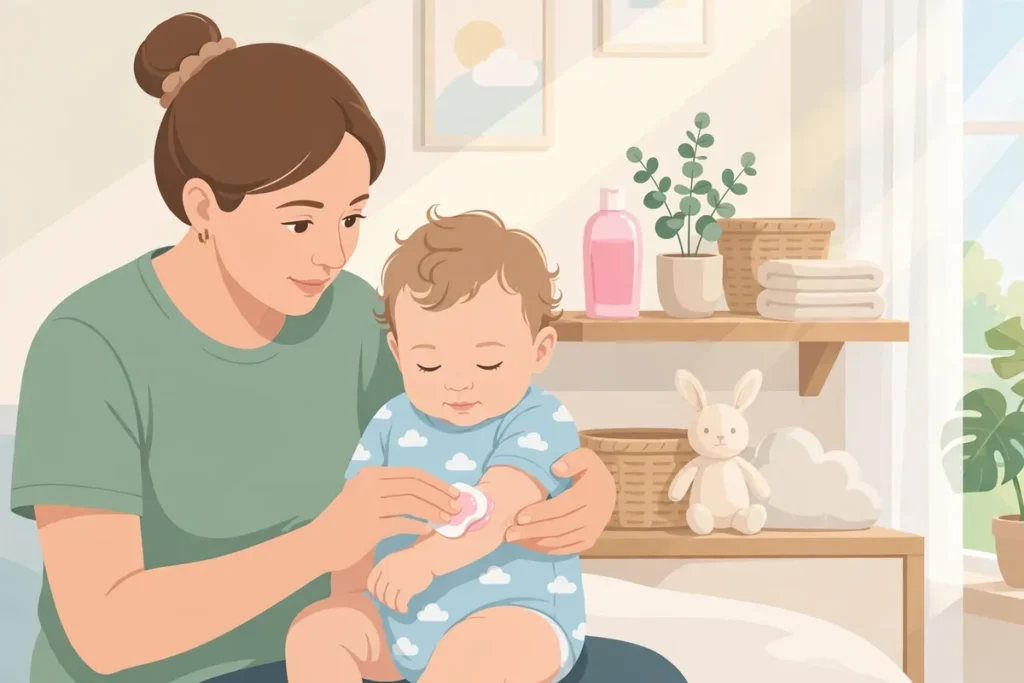
When your baby is in the right age band and the skin is intact, a few simple rules keep calamine use safe:
- Intact skin only. Never apply to broken, scratched-open, or weeping skin — it will sting and irritate.
- Thin layer, small area. Dab a small amount onto the itchy spot; don’t slather it over large areas of the body.
- Keep it away from the face. Avoid the eyes, mouth, and nose entirely.
- Wash your hands before and after applying, and keep the bottle out of your baby’s reach.
- Let it dry before dressing the baby, so it doesn’t transfer to clothes or bedding in clumps.
- Try a small test spot first if your baby has sensitive or eczema-prone skin, and watch for any reaction before applying more broadly.
Skip the diaper area and the face unless your pediatrician specifically says otherwise — those zones have thinner, more absorbent skin, and other products are better suited to them.
When to Skip Calamine and Call the Pediatrician
Calamine lotion is an itch reliever, not a treatment for everything pink and itchy. Skip it and get medical guidance in these situations:
- Broken or open skin. Bites the baby has scratched raw, blistered skin, or any open wound — calamine will sting and can irritate the raw tissue.
- Signs of infection. Spreading redness, warmth, swelling that worsens after a day or two, pus, red streaks, or fever alongside a bite. Here’s a real caution specific to calamine: its opaque pink residue can mask the visible signs of a spreading infection, so it’s harder to notice a bite getting worse underneath. If you do use it, wipe the area gently and check the skin itself regularly.
- Widespread rashes of unknown cause. A few itchy bites are one thing; a rash spreading across the body needs a diagnosis, not a pink coating.
- Chickenpox. Calamine is a traditional itch reliever for chickenpox, but confirm with your pediatrician first — and never apply it to broken blisters.
- Eczema flare-ups. Because calamine is drying, it can make eczema worse rather than better. Fragrance-free moisturizers are usually the better move here, with pediatrician guidance.
- Any baby under 6 months, as covered above — always ask the pediatrician first.
When in doubt about what’s on your baby’s skin, a quick call to the pediatrician beats guessing with any product.
Gentler Alternatives for Baby Itches

For many everyday baby itches — mosquito bites included — the gentlest options work perfectly well, and they’re the right first line for the youngest infants:
- Cool compresses. A clean cloth dampened with cool water, held on the itchy spot for 10 to 15 minutes, several times a day. Simple, safe at every age, and surprisingly effective. See our guide to using a cold compress on bites and stings for the details.
- Lukewarm oatmeal baths. Colloidal oatmeal in a lukewarm (not hot) bath soothes widespread itching. Keep baths short and pat the skin dry afterward.
- Petroleum jelly. A thin layer on intact skin protects the area and reduces the urge to scratch, without any active drug ingredients.
- Hypoallergenic, fragrance-free moisturizers. For dry, itchy skin, plain moisturizers often outperform medicated lotions — and they’re safe for daily use.
- Practical measures. Keep your baby’s nails short (or use soft mittens at night), dress them in loose cotton clothing, and keep the nursery cool — heat makes itching worse.
What to avoid on baby skin: adult anti-itch creams, essential oils, alcohol-based home remedies, and any paste or powder recipe from the internet that hasn’t been through your pediatrician. Baby skin absorbs more and reacts more — “natural” doesn’t mean gentle.
Special Situations: Bites, Rashes, and Chickenpox
A few common scenarios deserve specific notes:
Mosquito bites on babies. The standard approach is a cool compress first, with calamine as a backup for lingering itch on intact skin in babies over 6 months. Note that mosquito bite swelling in children can look dramatic — a large, puffy bump on a toddler is often a normal immune response, not an emergency — but spreading redness or fever changes the picture.
Chickenpox itch. Calamine is the classic remedy grandparents reach for, and pediatricians do still use it — but get your pediatrician’s go-ahead, keep it off broken blisters, and remember the short-term rule.
Eczema. As noted above, calamine’s drying effect usually makes eczema worse. Stick with your pediatrician’s eczema plan — typically fragrance-free moisturizers and any prescribed treatments — rather than improvising with calamine.
Diaper-area rashes. Skip the calamine. Zinc-oxide diaper creams share an ingredient with calamine but are formulated specifically for that delicate area; they’re the right tool for the job.
When to See a Doctor for a Bug Bite

Most bites on babies heal with simple care, but infants deserve a lower threshold for calling the doctor:
- Call 911 for signs of a severe allergic reaction: difficulty breathing, swelling of the face, lips, or tongue, widespread hives, vomiting, or unusual drowsiness after a bite or sting. Review the warning signs of anaphylaxis from a sting or bite so you can act fast.
- Call your pediatrician promptly if redness spreads beyond the bite, the area becomes warm and increasingly swollen after 24 to 48 hours, you see pus or red streaks, or the baby develops a fever — possible signs of infection. Our guide to telling normal healing apart from infection can help you judge what you’re seeing.
- Seek care if bites aren’t improving after a couple of days or the itching is disrupting sleep despite home care.
- Special cases: any bite on a newborn, bites on or near the eyes, a large number of bites at once, or any bite in a baby with a weakened immune system warrant a quicker call.
Frequently Asked Questions
Can I use calamine lotion on a 3-month-old?
Not without your pediatrician’s approval. The under-6-months band is a firm “ask first” zone because young-infant skin is thinner and more absorbent. For a 3-month-old’s itchy bites, cool compresses are the safe default while you check with the pediatrician.
How long can I keep using calamine lotion on my baby?
Think in terms of days, not weeks. Calamine is a short-term itch reliever. If the itching hasn’t settled after a few days of use — or if the skin looks worse — stop and call your pediatrician rather than continuing. Persistent itching is a signal, not a cue to apply more.
Is the pink residue on the skin a problem?
The residue itself is harmless, but it has one real downside: the opaque pink coating can hide what’s happening underneath, including early signs of a spreading infection. If you use calamine, wipe the area gently once or twice a day to look at the actual skin and make sure redness isn’t expanding.
Can I put calamine lotion on bites my baby has scratched open?
No. Never apply calamine to broken, scratched-raw, or weeping skin — it will sting and can irritate the raw tissue. For scratched-open bites, keep the area clean, cover it lightly if the baby keeps picking at it, use a cool compress for the itch, and call your pediatrician if it looks infected.
What’s the best itch relief for babies under 6 months?
Cool compresses — a clean, cool, damp cloth held on the itchy spot — are the safest option at this age. Lukewarm baths can help with widespread itching. For anything beyond that, including any over-the-counter product, check with your pediatrician first.
Medically reviewed by Dr. Sarah Jones, MD.
This article is for informational purposes only and isn’t medical advice. If you’re worried about a bite or sting, talk to a healthcare professional.