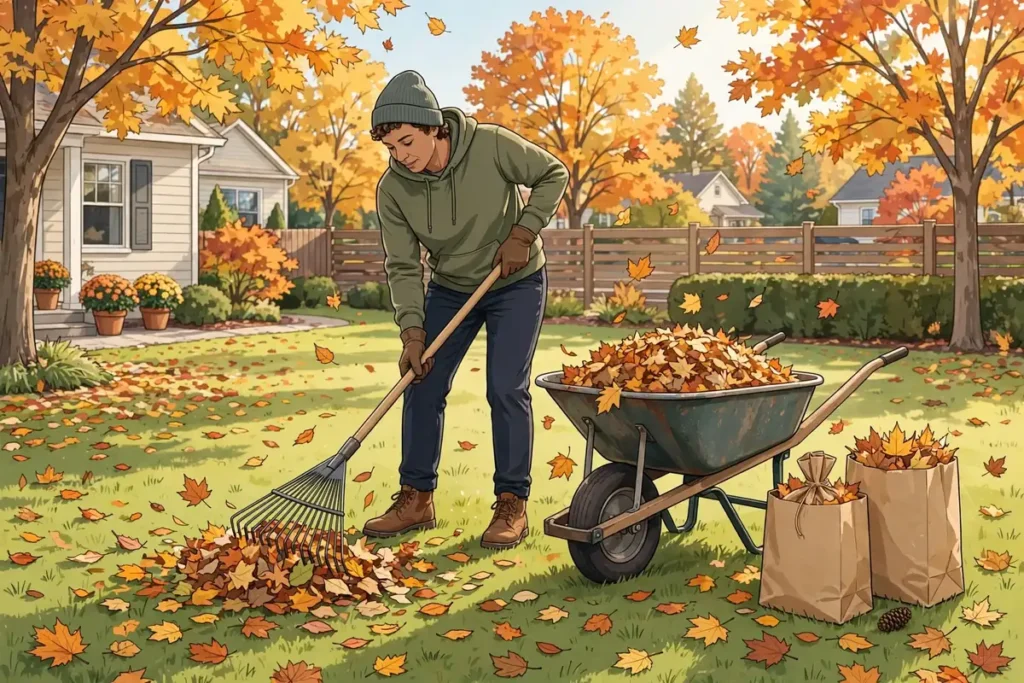
October weekends mean one thing for homeowners: the leaves are coming down, and the yard won’t rake itself. What most people don’t realize is that fall cleanup is also prime tick season. Adult blacklegged ticks — the species behind most tick-borne illness in the eastern U.S. — stay active on mild fall days, and leaf litter is their favorite shelter.
Here’s what you need to know about ticks and fall leaf cleanup: the danger isn’t just the raking, it’s where the leaves end up. Research published in the Journal of Medical Entomology found that piling leaves along the lawn’s edge can triple blacklegged tick numbers there the following spring. This guide covers the science, the safe before-during-after routine, and yard choices that protect your family without turning autumn into a chore you dread.
Why Fall Yard Work Means Tick Exposure
Most people associate ticks with summer, but the blacklegged tick (Ixodes scapularis, also called the deer tick) runs on a different calendar. Adults emerge in the fall, questing aggressively from October into winter whenever temperatures climb above freezing. A crisp 45°F November afternoon — perfect raking weather — is also perfectly fine tick weather.
Leaf litter is ideal tick habitat for simple reasons: it holds moisture, insulates against temperature swings, and shelters the small mammals ticks feed on. When you rake, bag, and haul leaves, you’re spending hours with your hands and legs deep in exactly the microhabitat ticks prefer. Bending, kneeling, and sitting on leaf piles put you in sustained contact that a casual walk never would.
There’s a second, sneakier exposure route: the piles themselves. A leaf pile left sitting for weeks becomes prime habitat — mice and chipmunks move in, ticks feed and drop off, and the moist interior shelters them through winter. The longer a pile sits near play areas, the more the local tick population concentrates there.
Fall is also when nymphs that fed over summer molt into adults, meaning the questing population is at a seasonal high. You’re not imagining it if tick encounters seem to spike during cleanup weekends — the biology backs you up.
The Study That Changed Leaf Advice
For years, the standard advice was simple: clear leaves off your lawn to reduce tick habitat. Then a 2020 study by Robert Jordan and Terry Schulze, published in the Journal of Medical Entomology, revealed that half the advice was missing.
The researchers compared residential properties where homeowners had raked or blown leaves to the lawn-woodland edge against properties where leaves weren’t artificially accumulated. The result: areas with piled leaves at the forest margin held roughly three times as many host-seeking blacklegged tick nymphs the following spring. (Lone star ticks showed no such pattern — this is specifically a blacklegged tick phenomenon.)
The mechanism makes sense. Wind naturally drifts some leaves to woodland edges, but leaf blowers and rakes build far deeper litter layers than nature would. That deep, moist litter creates superior conditions for ticks to quest, survive winter, or both — right at the boundary where kids play, dogs roam, and gardeners work.
The practical fix is straightforward: don’t just move the problem to the property line. The researchers recommend municipal curbside leaf pickup where available, composting, or hauling leaves deep into the woods or well away from high-use areas. Clearing the lawn helps — but only if the leaves actually leave the places your family uses.
Dress for the Job

You wouldn’t rake without gloves. Treat tick protection as the same kind of basic workwear:
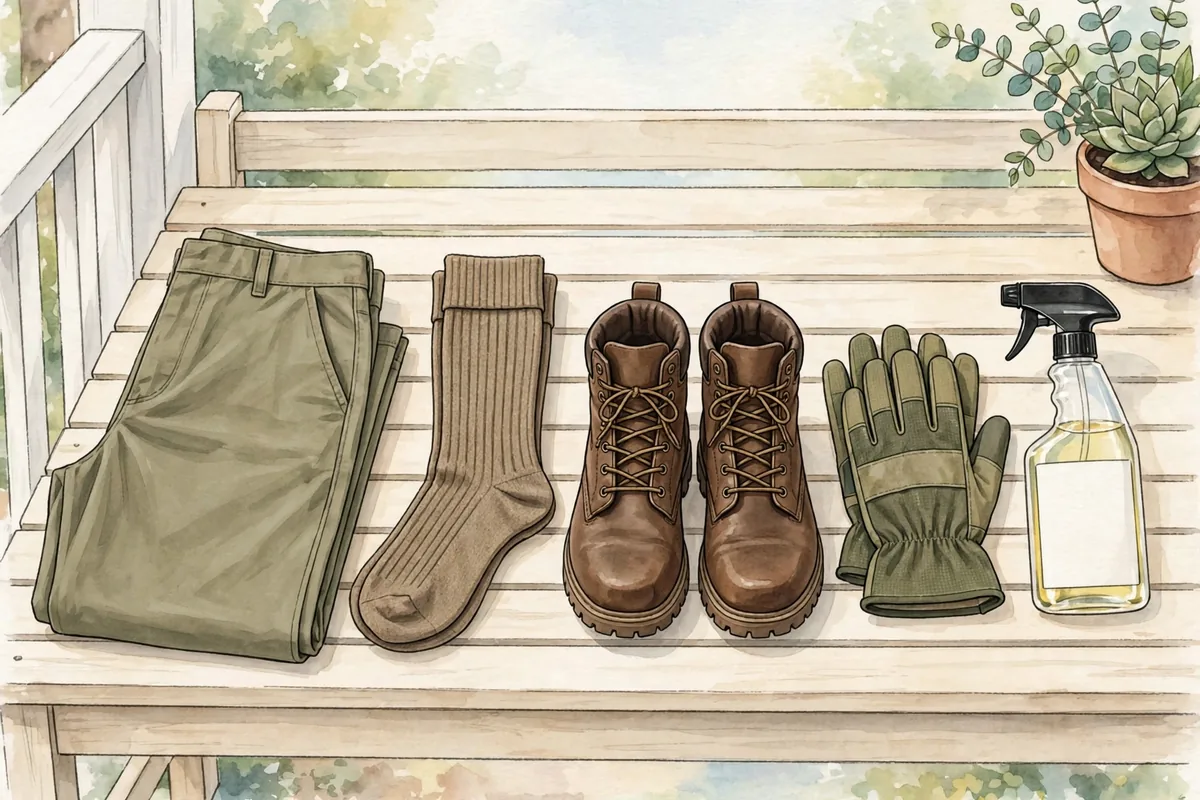
Tuck pants into socks. It looks unfashionable and works beautifully. Ticks quest upward from the ground; tucked cuffs force them onto the outside of your clothing where you can see them, instead of letting them crawl straight to skin.
Wear long sleeves tucked into pants. Arms spend hours reaching into leaf piles. A long-sleeve shirt tucked in closes the waist gap — another favorite tick entry point.
Choose light colors. Ticks are dark. On khaki pants or a light shirt, they’re visible; on black leggings, they’re invisible until attached.
Treat work clothes with permethrin. Permethrin bonded to fabric kills ticks on contact and survives multiple washes. Treat a dedicated set of yard-work pants and socks — never apply it to skin, let treated garments dry fully before wearing, and re-treat after about six washes. For a full breakdown of the method, see our guide to outdoor worker insect bite prevention.
Wear gloves and boots. Gloves keep ticks off your hands during hours of leaf handling; boots (rather than sneakers) seal the ankle zone, especially when paired with tucked pants.
The Before-During-After Routine
Treat leaf cleanup like any job with known hazards — with a deliberate sequence:
Before: repellent and planning. Apply an EPA-registered repellent to exposed skin before heading out. Plan your leaf destinations in advance: bags or bins for curbside pickup, a compost pile sited away from play areas, or a tarp for hauling to the woods. Decide where piles will go before the first rake stroke — improvising at dusk leads to edge-dumping.
During: work smart. Take breaks standing in open sun rather than sitting on leaf piles. Keep kids’ play away from your active work zone. Drink water and pace yourself; fatigue leads to sloppy habits like stripping off protective layers.
After: the tick check. This is the step that actually catches what prevention missed. Shower within two hours of coming indoors — it washes off unattached ticks and forces a full-body inspection. Check the classic hotspots: behind knees, groin, armpits, waistband, behind ears, hairline, scalp, and belly button. Toss work clothes directly into the dryer on high for 10 minutes before washing; the heat kills ticks that hitched a ride on fabric.
Make the routine non-negotiable, like locking up tools when you’re done. The five minutes it takes are trivial compared to weeks of worry after a missed bite.
Landscaping That Discourages Ticks
Fall cleanup is also the right moment to make yard changes that pay off next spring:
Create a barrier at the woodland edge. A three-foot-wide strip of wood chips or gravel between lawn and woods creates a dry, exposed zone ticks are reluctant to cross. It’s one of the most evidence-supported landscaping interventions for residential tick control.
Keep the lawn mowed and sunny. Ticks desiccate in sun and dry air. A short, open lawn is hostile territory; an overgrown, shady one is an invitation.
Move woodpiles and debris away from the house. Like leaf piles, stacked wood shelters the rodents that host ticks. Keep firewood stacked neatly in a sunny spot away from play areas.
Site compost piles thoughtfully. Composting leaves is excellent — the study authors recommend it — but put the pile away from patios, swing sets, and garden beds you work in frequently. A compost bin at the back of the property recycles nutrients without concentrating ticks where your family spends time.
Prune for sunlight. Thinning low branches and clearing underbrush lets sun reach the ground, drying out the moist microclimates ticks need. Fall, with leaves down and structure visible, is the ideal season for this work.
None of this requires turning your yard into a parking lot. The goal is zoning: open, sunny, high-use areas near the house, and wilder habitat pushed to the property margins where people rarely go.
Kids, Pets, and Leaf Piles
The giant leaf pile is a childhood rite of passage — and it doesn’t have to be cancelled. It just needs siting.
Pile location matters more than pile existence. A leaf pile in the middle of an open, sunny lawn is far lower-risk than one at the woodland edge or against a brushy fence line. Build the jumping pile where sun hits it, play in it the same day, and disperse or bag it promptly — don’t let it sit for weeks.
Dress kids for the pile. Long pants, tucked shirts, and a post-play tick check turn the tradition into a safe one. Make the tick check part of the fun’s cooldown — hot cocoa and a quick once-over.
Check pets every time. Dogs that romp through leaf piles pick up ticks efficiently. Run hands against the fur after every yard session, checking ears, between toes, under the collar, and around the tail. Cats that roam need the same attention.
Rake play areas first and promptly. If the swing set or sandbox area collects leaves, clear it early in the season and keep it clear — don’t let deep litter accumulate where small children play daily.
Found a Tick After Yard Work?

Despite good habits, it happens. Here’s the protocol:
Remove it correctly. Fine-tipped tweezers, grasp as close to the skin as possible, pull straight up with steady pressure. No twisting, no squeezing the body, no folk remedies — don’t burn it or smother it in petroleum jelly hoping it backs out.
Save the tick. Seal it in a bag or small container with the date. If symptoms develop, having the actual tick helps your doctor assess species and local disease patterns.
See a doctor rather than diagnosing yourself. Note when the bite likely occurred and how long the tick may have been attached. Whether any preventive steps are appropriate depends on the tick species, local disease prevalence, and timing — a medical judgment call. Watch the bite site over the coming weeks and report any expanding rash, fever, or flu-like symptoms promptly. Basic wound care from a bite and sting first-aid checklist — cleaning the area and leaving it alone — applies in the meantime.
When to See a Doctor for a Bug Bite
Tick bites warrant a lower threshold for medical care than most insect bites:
- An expanding rash in the days to weeks after a tick bite — especially a spreading circular pattern. Not all tick-related rashes look like a bull’s-eye, so any new expanding rash after a bite deserves evaluation.
- Flu-like symptoms after tick exposure: fever, chills, headache, fatigue, muscle or joint aches. Describe the bite and bring the saved tick if you kept it.
- A tick attached for a prolonged or unknown duration. Longer attachment generally means higher transmission risk for some tick-borne diseases.
- Incomplete removal or infection signs: increasing redness, warmth, swelling, pus, or red streaks around the bite.
- Severe allergic symptoms — difficulty breathing, facial swelling, widespread hives. Call 911. Uncommon with ticks, but any anaphylaxis signs are an emergency; know the anaphylaxis warning signs.
Frequently Asked Questions
Do ticks live in leaf piles?
Leaf litter is prime tick habitat — it holds the moisture and shelter ticks need, and it harbors the small mammals they feed on. Piles near woodland edges are the highest-risk; piles in open sun, dispersed promptly, are much less concerning.
Should I stop raking leaves because of ticks?
No. Raking with proper protection — tucked clothing, permethrin-treated work clothes, repellent, and a post-work tick check — keeps risk low. The key change is where the leaves go: curb, compost, or deep woods, not the lawn’s edge.
Are ticks active in late fall?
Yes. Adult blacklegged ticks quest on any mild fall or winter day above freezing. A 45°F November afternoon is active tick weather, which is exactly when most leaf cleanup happens.
Can I just mulch-mow the leaves instead of raking?
Mulch-mowing is great for the lawn and avoids pile-building entirely — shredded leaves decompose faster and harbor fewer ticks than deep whole-leaf litter. It’s one of the lowest-risk leaf strategies available.
How long after a tick bite should I watch for symptoms?
Watch the bite site and your general health for at least 30 days after a bite. Expanding rashes can appear days to weeks later, and flu-like symptoms may take one to two weeks to develop. When in doubt, call your doctor — early evaluation is always better than waiting.
Medically reviewed by Dr. Sarah Jones, MD.
This article is for informational purposes only and isn’t medical advice. If you’re worried about a bite or sting, talk to a healthcare professional.