
Bed Bugs at the Gym: Locker Room Safety
You've just finished a great workout when a thought stops you cold: that pile of gym bags heaped together in the locker room —…
If you don't have a washer and dryer at home, the laundromat is a weekly fact of life — and so is a nagging worry. Dozens of strangers' laundry tumbling…

If you don’t have a washer and dryer at home, the laundromat is a weekly fact of life — and so is a nagging worry. Dozens of strangers’ laundry tumbling through the same machines, bags piled on the same folding tables, carts shared by everyone. It’s natural to wonder what’s hitching a ride.
Here’s the direct answer: can you pick up bed bugs at laundromats? It’s uncommon, but it happens — which is exactly why prevention matters more than panic. The EPA thought the question important enough to publish a dedicated factsheet on avoiding bed bugs at laundromats. The risk doesn’t come from the machines the way most people imagine, and a simple seal-bag, hot-dryer, fold-at-home routine reduces it to near zero. This guide walks through the real transfer points and the habits that keep your laundry — and your home — clean.
Let’s be honest about the odds. Laundromats are not bed bug factories. The machines themselves run hot water and high-heat dryer cycles all day — conditions bed bugs don’t survive. Documented cases of laundromat-acquired infestations are rare compared to the usual culprits: travel, used furniture, and multi-unit buildings.
But “rare” isn’t “impossible,” and the exposure points are real. Other customers bring laundry from infested homes. A bug or egg can ride in on someone’s bedding, drop onto a folding table or into a cart, and wait for the next person’s bag. Wisconsin’s Department of Agriculture, Trade and Consumer Protection distributes laundromat-specific bed bug laundry guidance, and the EPA’s factsheet (EPA 740-F-17-009) exists precisely because shared laundry facilities are a recognized — if minor — transfer point.
The key perspective: millions of laundromat visits happen every week without incident. The goal isn’t to fear the laundromat — it’s to adopt habits that make the already-small risk smaller still. Renters without in-unit washers deserve practical protection, not anxiety. If you’re trying to figure out whether those itchy marks are even bed bugs, start with a bed bug bite identification guide rather than blaming the laundromat.
Understanding the real transfer points keeps your prevention focused where it counts — and stops you from worrying about the wrong things.
Folding tables and carts, not the machines. The highest-risk surfaces are the shared staging areas: folding tables where someone shook out infested bedding, carts that held an infested load, benches where bags sat. Bed bugs don’t infest machines (the heat and agitation see to that), but they can linger briefly on the surfaces around them.
Bags on the floor. Setting your laundry bag on the floor — especially near walls, under folding tables, or beside someone else’s bags — is the classic transfer moment. A bug wandering from a neighboring bag or from a crack in the baseboard can climb straight into yours.
The ride home. An unsealed bag of clean, warm laundry in a car trunk or on a back seat is vulnerable if that vehicle previously carried infested items. The transfer doesn’t have to happen inside the laundromat at all.
What doesn’t transfer them. Bed bugs don’t fly or jump, and they don’t survive the wash or dry cycles themselves. Nobody “catches” bed bugs the way you’d catch a cold from shared air. Every transfer requires physical contact between an infested item or surface and your belongings — which means every transfer is preventable with barriers.

The safest laundromat trip starts at home, before a single sock leaves the house:
Sort laundry at home. Separate lights, darks, and delicates in your own space. The less handling you do at the laundromat, the less time your clothes spend exposed on shared surfaces.
Bag everything in sealed plastic. Use sturdy trash bags or zippered laundry bags, tied or zipped fully shut. One bag per load keeps things organized and contained. The bags are your barrier — treat them as protective gear, not just carriers.
Tie dirty-laundry bags separately from clean. Bring empty clean bags (or a clean laundry basket with a liner) for the trip home. Never put clean clothes back into the bag that held dirty laundry — if that bag picked up a hitchhiker at the laundromat, you’ve just given it a ride into your closet.
Check what you’re bringing. A quick shake-out of bedding at home lets you spot obvious signs — live bugs, shed skins, dark spotting — before you share machines with strangers. If you find evidence, launder on the hot protocol below and consider whether the infestation source is your home, not the laundromat.
Once you’re inside, a few deliberate habits replace worry with control:
Give machines a quick look. Before loading, glance inside the washer drum and around the dryer door seal. You’re unlikely to see anything — bed bugs avoid the hot, exposed interiors — but a two-second check costs nothing and builds the habit of awareness.
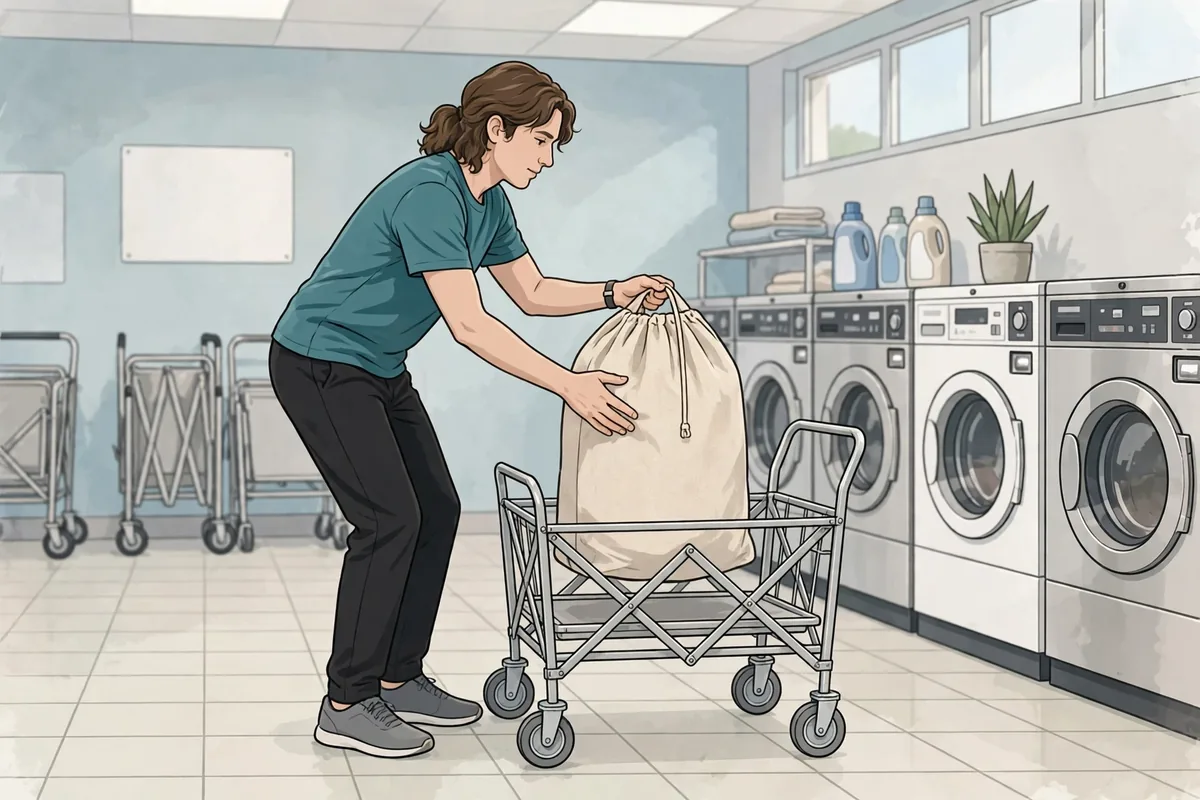
Keep bags off the floor. This is the single most impactful habit. Use a cart for your bags, hang them on hooks if available, or keep them on top of the machines you’re using. Floors — especially along walls and under tables — are where wandering bugs travel.
Minimize shared-surface contact. Use a cart rather than piling clothes on folding tables when possible. If you must use a table, give it a quick wipe first and keep your time on it short. Don’t set your bag on a table someone else just vacated without a glance.
Don’t shake bedding out vigorously. If a previous customer left a bug in the area, aggressive shaking aerosolizes nothing — but it does fling your clothes across shared surfaces and onto the floor. Load calmly and directly.
Stay with your laundry. Beyond theft prevention, staying nearby means you notice if a neighboring customer’s items spill onto yours, and you can transfer loads the moment cycles end rather than leaving clothes sitting in shared machines.
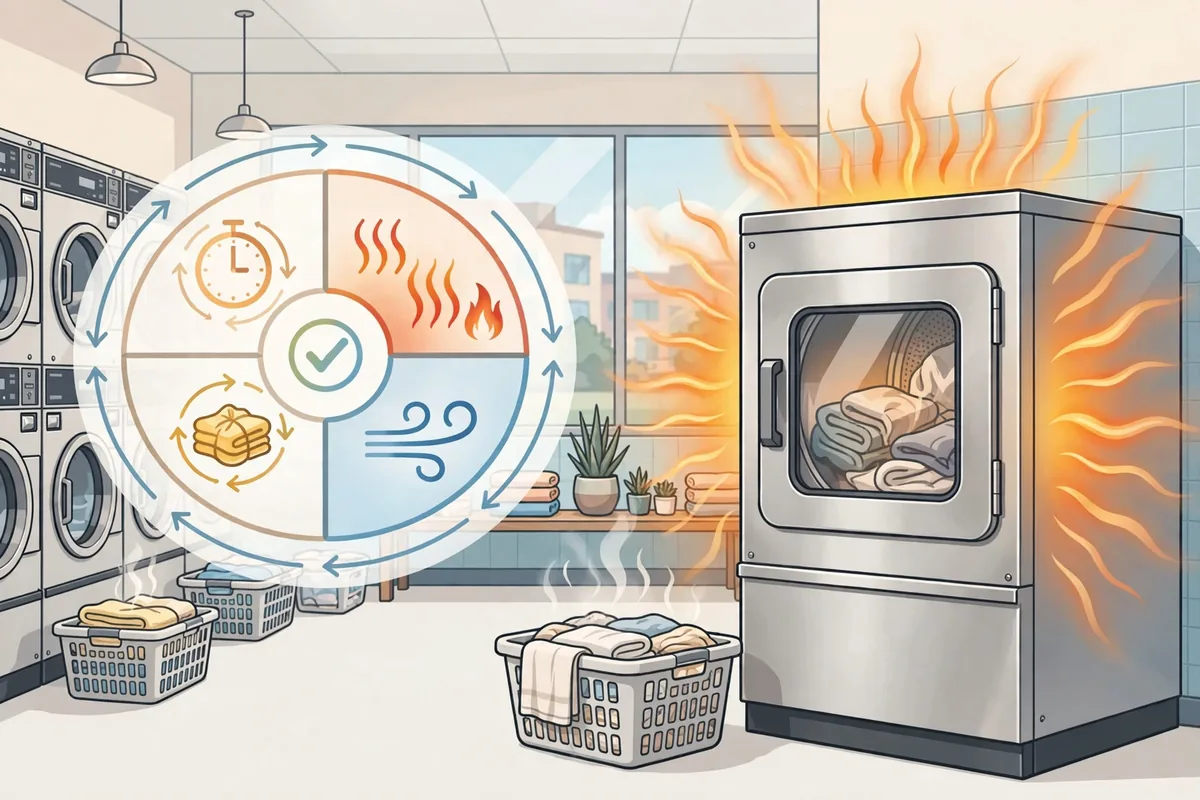
Here’s your ultimate safety net: the dryer on high heat for at least 30 minutes kills all bed bug life stages, including eggs. Research published in the Journal of Economic Entomology confirmed 100 percent mortality across adults, nymphs, and eggs with a full 30-minute hot tumble. Shorter cycles are unreliable — a 10-minute hot tumble left significant survivors.
This means that even in the unlikely event a bug hitched a ride into your bag at the laundromat, a proper hot dryer cycle at the end of your visit neutralizes it. Make the dryer your last step, not an optional one:
Your clean laundry is only as safe as its trip home. Keep these habits:
Use the clean bags you brought. Transfer dried clothes directly into the fresh bags or lined basket — never back into the dirty-laundry bags. Seal them shut for the ride.
Fold at home. Skip the laundromat folding tables for the final fold. A clean table or bed at home is a controlled surface; a shared table is not. This one habit eliminates the highest-risk contact point entirely.
Put clothes away promptly. Don’t let sealed bags sit in the hallway for days. Unpack into drawers and closets, then discard the transport bags or store them sealed.
If you suspect exposure, act fast. Found a suspicious bug on your bag at the laundromat? Don’t panic — isolate. Keep the bag sealed, and when you get home, run the contents through the hot dryer for 30 minutes before putting anything away. Check your bag seams with a flashlight. One intercepted hitchhiker is a success story, not an infestation.
For ongoing protection between laundromat visits, the same habits that prevent bed bugs at home — mattress encasements, decluttering, inspecting secondhand items — keep your apartment from becoming a place where a single transferred bug can establish itself.
A word that needs saying plainly: using a laundromat says nothing about you, your hygiene, or your home. Bed bugs don’t discriminate by income, cleanliness, or character — they feed on blood, and they infest five-star hotels and spotless suburbs as readily as anywhere else. Some of the worst infestations pest professionals see are in high-end buildings.
Yet the stigma keeps people from taking sensible precautions — nobody wants to be seen inspecting a dryer or bagging laundry like it’s hazardous material. Reframe it: these are just smart laundry habits. Sealed bags keep clothes clean and organized. Folding at home is faster and more comfortable. The hot dryer cycle makes everything fresher. You’re not performing anxiety; you’re running a good system.
And if a neighbor at the laundromat is dealing with an infestation, that’s a housing problem, not a moral one. Bed bugs spread through buildings via wall voids and plumbing chases regardless of anyone’s housekeeping. Compassion costs nothing; shaming helps no one — and it certainly doesn’t kill bugs.
Bed bugs are not known to spread disease to humans, but bites can still need medical attention:
Can you get bed bugs from a laundromat?
It’s uncommon but possible. The machines themselves kill bed bugs with heat, but shared folding tables, carts, and bags set on the floor can transfer a wandering bug from someone else’s laundry to yours. Sealed bags and a hot dryer cycle reduce the risk to near zero.
Should I avoid laundromats if my building has bed bugs?
No — you still need clean clothes. Just run the full protocol: bag at home, keep bags off floors and shared tables, dry everything on high for 30 minutes, and fold at home. The laundromat dryer is actually one of your best tools.
Can bed bugs live in washing machines?
No. The combination of water, detergent agitation, and especially heat makes machines inhospitable. Bugs are occasionally found on the exterior surfaces around machines — never establish colonies inside them.
Do I need to tell the laundromat if I have bed bugs at home?
It’s considerate, and many owners appreciate knowing so they can inspect. There’s no legal requirement in most places, but a discreet heads-up is good citizenship — and they may already have a protocol for it.
How will I know if a bug actually came home with me?
Monitor. Check mattress seams and bag storage areas with a flashlight over the following two to three weeks, and watch for new bites. A single transferred bug that you intercept in the dryer is the end of the story; only an established, breeding population becomes an infestation.
Medically reviewed by Dr. Sarah Jones, MD.
This article is for informational purposes only and isn’t medical advice. If you’re worried about a bite or sting, talk to a healthcare professional.
Dr. Jones oversees StingHelp’s clinical verification process. Every guide is systematically evaluated against active Centers for Disease Control and Prevention (CDC), Environmental Protection Agency (EPA), and American Academy of Allergy, Asthma & Immunology (AAAAI) medical consensus standards to ensure symptom distinctions and care recommendations are clinically sound.
Explore physician-reviewed first-aid procedures, identification clues, and symptom comparisons for other common outdoor bites and stings.

You've just finished a great workout when a thought stops you cold: that pile of gym bags heaped together in the locker room —…
Finding bed bugs triggers an immediate instinct: strip the bed, gather every stitch of fabric, and wash it all as hot as possible. Laundry…

Bed bug treatment, measured: 20,000x deltamethrin resistance ratios, the 54.8 °C egg lethal temperature, fogger trial results and field elimination rates — every figure from a primary source.