
Bed Bugs at the Gym: Locker Room Safety
You've just finished a great workout when a thought stops you cold: that pile of gym bags heaped together in the locker room —…
Finding bed bugs triggers an immediate instinct: strip the bed, gather every stitch of fabric, and wash it all as hot as possible. Laundry feels like the one part of…
Finding bed bugs triggers an immediate instinct: strip the bed, gather every stitch of fabric, and wash it all as hot as possible. Laundry feels like the one part of the battle you can control yourself, right now. But does that instinct actually work?
The direct answer: does hot water kill bed bugs? Yes — but only when it’s genuinely hot enough, for long enough. Research published in the Journal of Economic Entomology found that wash water at 140°F (60°C) for 30 minutes killed 100 percent of bed bugs at every life stage, eggs included. At cooler temperatures, eggs largely survived. And the real hero of the laundry room isn’t the washer at all — it’s the dryer. This guide breaks down exactly what the science says, the step-by-step protocol that works, and the safety mistakes to avoid.
The clearest evidence comes from a 2010 study by entomologists R. A. Naylor and C. J. Boase of the University of Sheffield, published in the Journal of Economic Entomology (“Practical solutions for treating laundry infested with Cimex lectularius,” 103(1): 136–139). They tested practical laundering methods against all bed bug life stages — adults, nymphs, and eggs — and the results were refreshingly specific.
Washing at 60°C (140°F) on a 30-minute cycle killed 100 percent of everything, eggs included. That detail matters enormously, because eggs are the reason most DIY treatments fail — miss them and the infestation reboots two weeks later.
But the same study drew a sharp line below that temperature. At 40°C (about 104°F), all adults and nymphs died, but only roughly 25 percent of eggs did. So the common advice to “just wash everything hot” only works if your machine and water heater can actually deliver and sustain true hot temperatures for the full cycle.
There’s an important caveat for American households: many home water heaters are set to 120°F for scald safety, and washing machines mix in cold water. Your washer’s “hot” setting may not reach 140°F at all. That’s why pest professionals consistently emphasize the dryer over the washer — which brings us to the real star of this story.
A persistent myth holds that detergent or bleach does the killing. It doesn’t. The Naylor and Boase research tested soaking laundry in plain water for 24 hours: it killed all adults and nymphs through drowning, but had zero effect on eggs. The researchers didn’t test soapy soaks against eggs, so no honest claim can be made there — but the pattern is clear. Bed bug eggs are sealed, cemented into hiding spots, and remarkably resistant to chemical and physical assault. Heat is what defeats them.
This is also why “wash twice” or “use extra detergent” advice misses the point. If your wash water can’t hold 140°F for 30 minutes, no amount of soap fixes the egg problem. Think of yourself as running a heat treatment that happens to also clean clothes, not the other way around. If you’re unsure whether mysterious bites are even bed bugs, confirm with a bed bug bite identification guide before committing to a full hot-laundry campaign.
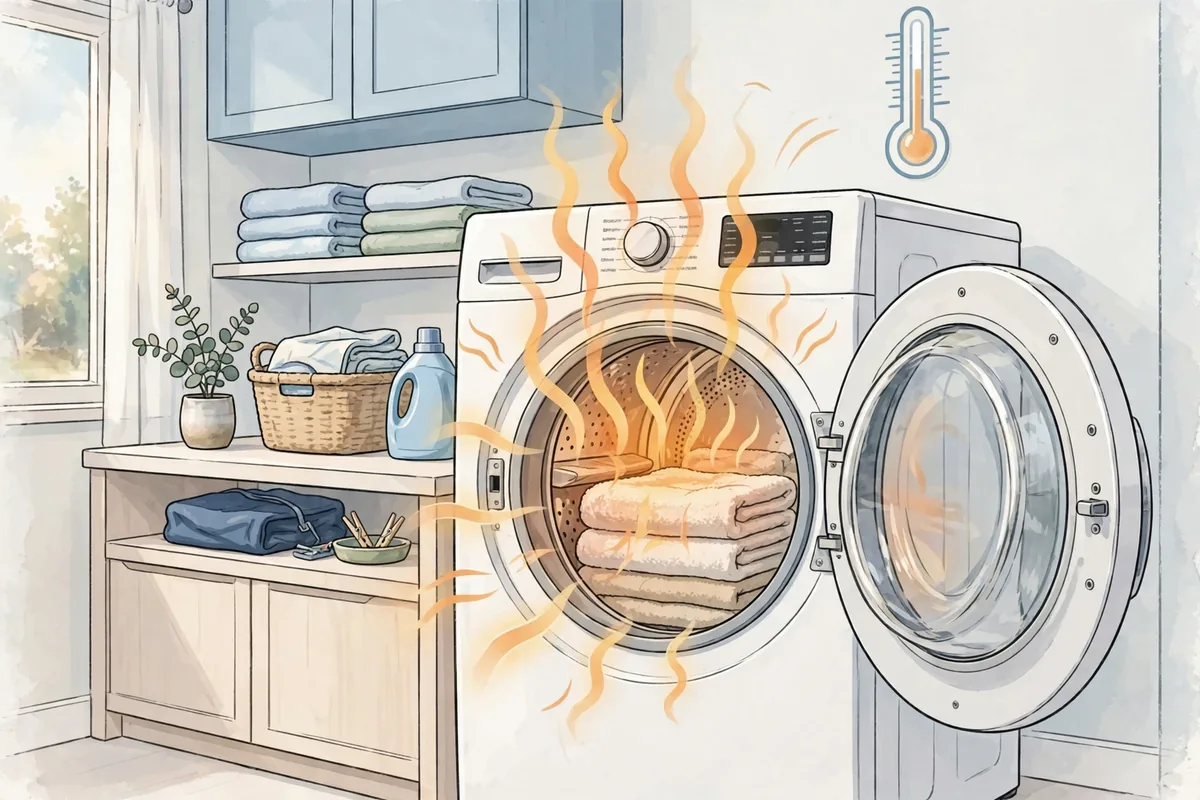
Here’s the finding pest professionals quote most: tumble-drying infested laundry on the hot cycle for at least 30 minutes killed 100 percent of all bed bug life stages, including eggs. The study found lethal results once dryer temperatures exceeded about 104°F internally — easily achieved on a standard high-heat setting.
The dryer has three advantages over the washer. First, it reliably gets hotter than most wash cycles — residential dryers on high typically run 125–135°F at the drum. Second, heat penetrates evenly as clothes tumble, with no cold pockets. Third, it’s simpler: no water-heater adjustments, no guessing about fill temperatures.
But the 30-minute minimum is non-negotiable, and this is where people go wrong. Shorter hot tumbles left many bugs and eggs alive — a quick “freshen up” cycle gives dangerous false confidence. Set a timer, run the full 30 minutes on high, and don’t open the door early. The cool/fluff cycle killed almost nothing, so don’t assume any dryer time counts.
For items that can’t be washed at all — pillows, stuffed animals, backpacks, shoes — the dryer alone is the answer. Toss them in dry on high for 30 minutes. The heat does the work regardless of whether the item went through the washer first.
Doing laundry during an infestation isn’t the same as a normal wash day. The goal is to kill bugs without spreading them through your home in the process. Follow this sequence:
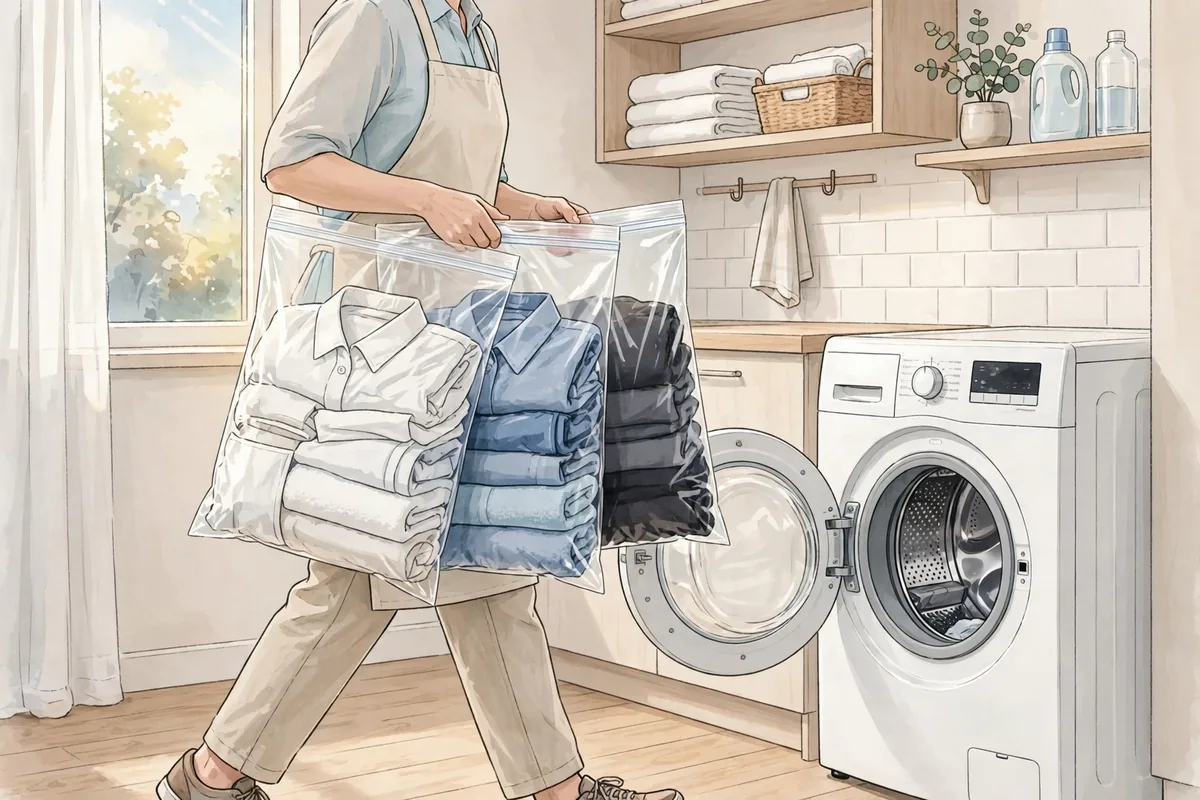
1. Bag before you move. Strip beds and gather suspect laundry directly into sealed plastic bags or tied trash bags. Never carry an armload of potentially infested bedding through the house — every hallway is a chance for bugs to drop off and colonize a new room.
2. Sort at the machine. Open bags only at the washer or dryer and sort by fabric care as usual.
3. Wash on the hottest setting the fabric tolerates. If your machine reliably delivers hot water, great. If not, a normal wash is fine as a cleaning step — the dryer is doing the killing.
4. Transfer immediately to the dryer. Don’t let damp loads sit in the washer or in baskets, where surviving bugs could wander off.
5. Dry on HIGH for at least 30 minutes. This is the critical step. For heavy items like comforters, consider 40 minutes to be safe, since dense loads heat more slowly.
6. Fold at home — or on a clean surface. If you’re using a laundromat, fold clothes at home rather than on shared folding tables. At home, fold on a freshly cleaned table or bed, then seal items in clean bags or bins until the infestation is resolved.
7. Treat the bags as contaminated. The bags you carried dirty laundry in should go straight into an outdoor trash bin — don’t reuse them for clean clothes.
One more practical note: declutter as you go. Bed bugs thrive in cluttered bedrooms, and every item you permanently remove, seal in plastic, or heat-treat is one less hiding spot. Broader bed bug prevention habits at home — mattress encasements, bed-leg interceptors, reduced clutter — multiply the value of your laundry efforts.
Not everything survives high heat, and the research offers options for the rest of your wardrobe. Professional dry cleaning with perchloroethylene killed all bed bug life stages in the Naylor and Boase tests — so “dry clean only” items can go to the cleaners with confidence. Mention the bed bug concern to the cleaner so they handle the items appropriately on intake.
For delicates that can’t take the dryer, the freezer is a proven alternative — with patience. The study found that 2.5 kg of loosely packed dry laundry needed about 8 hours in a freezer at 1.4°F (-17°C) for the center of the load to reach killing temperature. A chest freezer works best; plan on 10–12 hours minimum for larger loads.
What about steam? A commercial steamer applied slowly to mattress seams kills on contact at around 175°F surface temperature, and pest professionals use steam as a standard tool. Consumer handheld steamers can help as a supplement, but they’re slow and can’t replace whole-room treatment.
The pursuit of hotter laundry creates real hazards, and bed bug panic makes people take risks they normally wouldn’t. Keep these guardrails in mind:
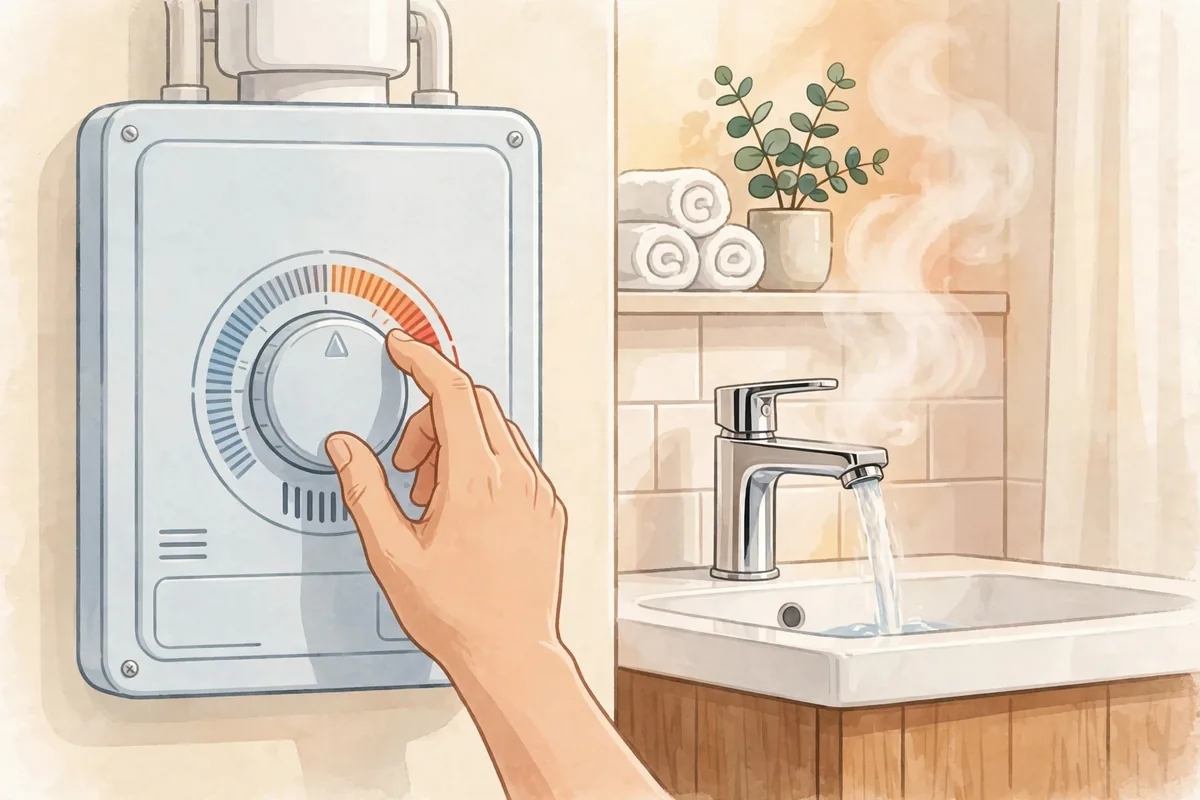
Don’t crank your water heater to 140°F and leave it there. Water at 140°F causes third-degree burns in seconds, and children and elderly family members are most vulnerable. Safety agencies recommend 120°F as the standard setting precisely to prevent scalding. If you temporarily raise the temperature for bed bug laundry, turn it back down the same day — and never do this in a household with small children without extreme caution.
Never pour boiling water on mattresses or furniture. This folk remedy appears in forums regularly. It doesn’t penetrate deeply enough to kill hidden bugs and eggs, but it can scald you, warp wood, and create mold-friendly moisture inside mattresses. The damage is guaranteed; the bed bug kill is not.
Respect the dryer. Clean the lint trap before every bed bug load — heavy, hot, long cycles with lint buildup are a fire risk. Don’t overload the drum; clothes need room to tumble for heat to penetrate evenly.
Ventilate and protect yourself while handling infested laundry. Wear gloves if your skin is irritated from bites, and wash your hands after handling suspect items.
Laundry handles the bugs on your fabrics. It does nothing for the ones inside box spring joints, behind the headboard, or along the baseboards. If you’re seeing live bugs or fresh spotting after a thorough laundry campaign, the infestation extends beyond what any washing machine can reach.
That’s the point to call a licensed pest management professional. Ask about their bed bug protocol — reputable companies combine inspection, targeted treatment, and follow-up visits, and whole-room heat treatment remains the gold standard for severe infestations. Be wary of anyone promising elimination in a single spray visit with no follow-up; bed bug work almost always requires monitoring and retreatment. Tracking how long bed bug bites last can help you judge whether your efforts are actually breaking the cycle — new bites appearing more than two weeks after thorough treatment suggest surviving bugs.
Bed bugs are not known to transmit diseases to humans, but bites can still require medical attention:
Does hot water kill bed bugs in the washing machine?
Yes, if the water truly reaches 140°F and holds it for 30 minutes — that combination killed 100 percent of all life stages, including eggs, in published research. Many home washers don’t reach that temperature, which is why the dryer step matters more.
Can bed bugs survive the dryer?
They survive short or cool cycles — shorter hot tumbles left many nymphs, adults, and eggs alive in testing. But 30 minutes on high heat killed everything, including eggs. Time and temperature together are what matter.
Will washing in cold water with extra detergent work?
No. Soaking in water for 24 hours killed adults and nymphs but had no effect on eggs, and detergent doesn’t change the egg problem. Heat is the lethal factor, not soap.
Can I just put infested clothes in the freezer?
Yes, with patience. Loosely packed laundry needs roughly 8–12 hours at around 1.4°F for the center of the load to reach killing temperature. A chest freezer works; a standard fridge-freezer compartment may not get cold enough.
How do I know the laundry actually worked?
Monitor for new bites. If fresh bites stop appearing for two to three weeks after your laundry campaign plus room treatment, you’re likely clear. New bites beyond that window suggest surviving bugs elsewhere.
Medically reviewed by Dr. Sarah Jones, MD.
This article is for informational purposes only and isn’t medical advice. If you’re worried about a bite or sting, talk to a healthcare professional.
Dr. Jones oversees StingHelp’s clinical verification process. Every guide is systematically evaluated against active Centers for Disease Control and Prevention (CDC), Environmental Protection Agency (EPA), and American Academy of Allergy, Asthma & Immunology (AAAAI) medical consensus standards to ensure symptom distinctions and care recommendations are clinically sound.
Explore physician-reviewed first-aid procedures, identification clues, and symptom comparisons for other common outdoor bites and stings.

You've just finished a great workout when a thought stops you cold: that pile of gym bags heaped together in the locker room —…

Bed bug treatment, measured: 20,000x deltamethrin resistance ratios, the 54.8 °C egg lethal temperature, fogger trial results and field elimination rates — every figure from a primary source.
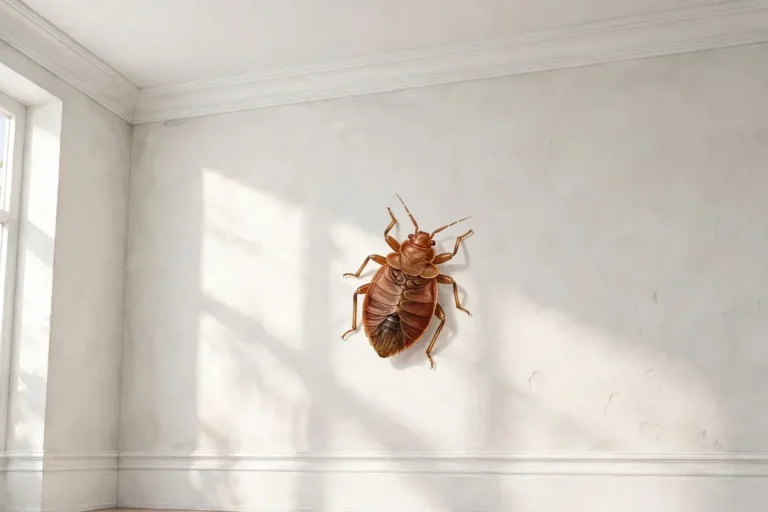
You spot a small, flat, reddish-brown bug crawling up your bedroom wall, or worse, on the ceiling, and the question hits you immediately: can…