
Does Hot Water Kill Bed Bugs? Laundry Guide
Finding bed bugs triggers an immediate instinct: strip the bed, gather every stitch of fabric, and wash it all as hot as possible. Laundry…
You've just finished a great workout when a thought stops you cold: that pile of gym bags heaped together in the locker room — could you be bringing bed bugs…

You’ve just finished a great workout when a thought stops you cold: that pile of gym bags heaped together in the locker room — could you be bringing bed bugs home? It’s a question that sends plenty of gym-goers down an anxious spiral, and it deserves an honest answer rather than pest-company scare tactics.
Here’s the calm truth: bed bugs gym locker rooms is a low-risk combination, but not a zero-risk one. Bed bugs don’t infest gyms the way they infest bedrooms, because gyms lack what bed bugs want most — sleeping people who stay still for hours. The real transfer points are bags and belongings pressed together in crowded locker rooms, not the equipment you train on. With a few simple habits, you can work out without carrying anything home but sore muscles.
This guide explains where the real risk lives, how to protect your gym bag, and the post-workout routine that closes the loop — with no gym-shaming.
Let’s start with perspective. Bed bugs are hitchhikers, not hunters — they don’t fly or jump, and they travel almost exclusively by crawling into bags, coats, and belongings and riding along. For a gym to give you bed bugs, a bug must be present in the locker room, crawl into your bag during your workout, survive the trip home, and establish itself in your house. Every step in that chain is possible but unlikely, which is why gym-acquired infestations are rare compared to hotel- or apartment-acquired ones.
That said, “rare” isn’t “impossible” — pest companies do field gym-related calls, and real incidents at athletic facilities have happened. The anxiety is understandable; the response just needs to be proportionate: manage a small risk with simple habits.
One reassuring fact: bed bugs don’t spread disease. Health agencies like Iowa’s HHS note that bed bugs are a nuisance because they feed on blood, but they aren’t known to transmit infections to people. The stakes of a gym encounter are itchy bites and the hassle of an infestation, not illness — which is worth remembering when the worry starts spiraling.
If bed bugs are going to travel through a gym, the route runs through the locker room, not the weight floor. Bed bugs hide in cracks and crevices near where people rest — and in a locker room, that means wooden benches with joints and cracks, the seams and corners of lockers, and the cluttered bottoms of cubbies. A locker that’s rarely cleaned out, with a cracked bench beside it, is the closest thing a gym has to a bedroom hiding spot.
The highest-risk scenario is bags heaped together. When dozens of gym bags sit in a pile on the floor or get crammed into shared cubbies, a bed bug in one person’s bag can crawl into a neighbor’s in minutes — bugs move fast and the distances are tiny. This is also why the risk concentrates in certain situations: an overcrowded locker room at peak hour, bags left overnight in a locker, or a facility that has had a known incident.
A true gym infestation is unusual — there’s no consistent nighttime host. What happens more often is transient introduction: someone unknowingly brings bugs in, and those bugs hitch rides out on other people’s bags. Your protection strategy is about your belongings, not the building.

Let’s clear up the biggest misconception: treadmills, dumbbells, and weight benches are not the risk. Bed bugs want dark, undisturbed hiding places near sleeping hosts — the exact opposite of a busy, well-lit, constantly wiped-down weight floor. No pest professional will tell you that gym equipment is a meaningful bed bug vector, and worrying about the leg-press machine is misplaced energy.
The same goes for the workout itself. Bed bugs don’t live on people; they feed and retreat. You can’t “catch” bed bugs from another person like a cold, and a bug won’t leap from someone’s hoodie onto yours across the gym floor. They crawl, they hide, and they need your belongings to sit still near theirs for a while. That’s a locker-room problem, not a workout problem.
This is genuinely good news: you don’t need to change how you train or avoid the gym. Focus precautions on the bag and the locker, and the gym floor takes care of itself.
Your gym bag is the entire battleground, and the strategy is simple: minimize contact, maximize isolation. First, keep the bag off the floor. Floors are where bags pile together and where a wandering bug has the easiest access. Use a locker, a high shelf, or a wall hook — anywhere your bag isn’t pressed against other people’s belongings. If the locker room is packed and there’s truly no raised spot, keep your bag zipped and on a bench rather than in the pile.
Second, consider what your bag is made of. Smooth, hard-to-climb materials with few seams and pockets give bugs fewer hiding places than a bag with a dozen zippered compartments and fabric folds. A simple duffel beats a labyrinthine backpack. Some gym-goers store the bag inside a sealed plastic bin or large zip-top bag in the locker — not overkill, just cheap insurance that physically blocks transfer.
Third, think about what goes in the bag. Only bring what you need: workout clothes, shoes, toiletries, water bottle. Every extra item is another hiding place and another thing to inspect. And leave the bag zipped shut while you’re training — an open bag is an invitation. People often ask whether bugs bite through fabric; bed bugs feed on exposed skin, so our guide to whether bed bugs bite through clothes is worth a read if you’re wondering about your gym outfit.
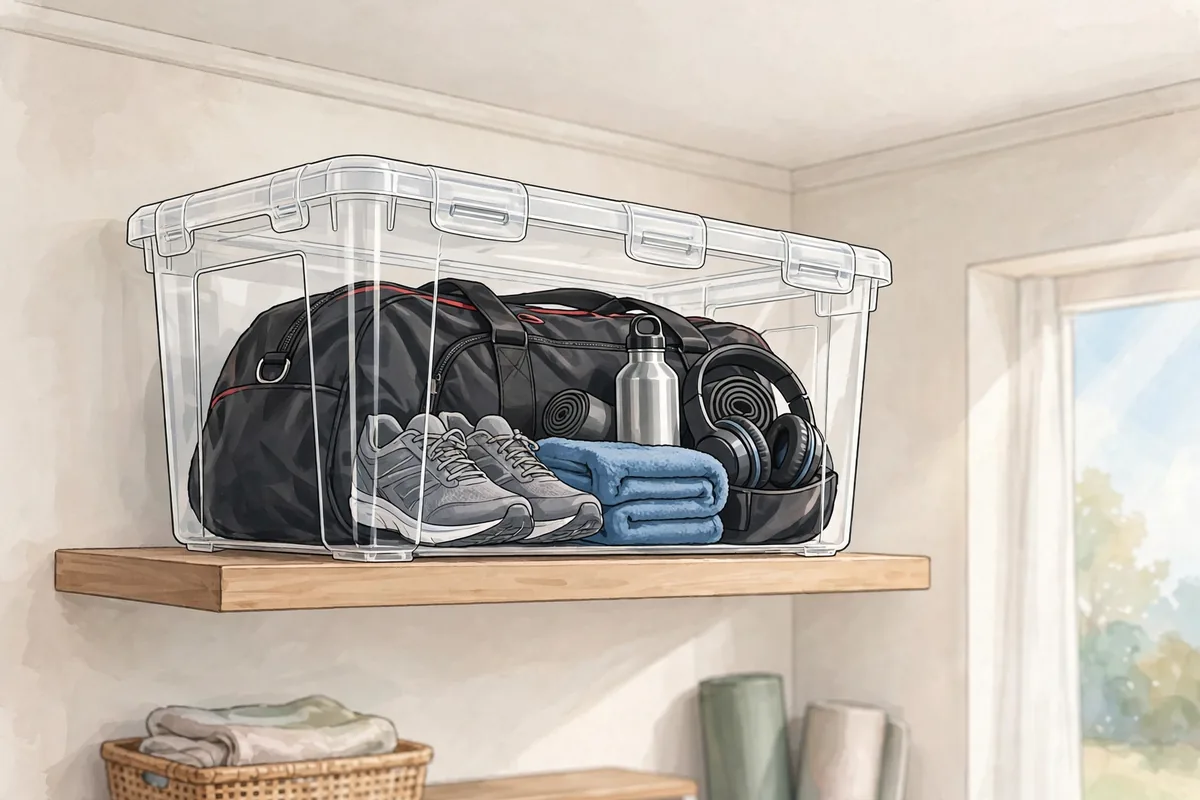
The routine that actually protects your home happens after the workout, and it’s straightforward. At home, don’t toss your gym bag on the bedroom floor or bed — designate a spot in the garage, laundry room, or entryway, away from sleeping areas. Unpack it there, not in the bedroom.
Gym clothes go straight into the laundry. Heat is the reliable bed-bug killer: dryers on high heat kill all life stages, and public-health guidance notes that temperatures around 120–140°F sustained for 20–30 minutes do the job. You don’t need to boil anything or buy special products — just run your workout clothes through the dryer on the hottest setting the fabric allows. When in doubt, the dryer is doing more work than the wash.
Give your bag a periodic inspection too: empty it completely, shake it out outdoors or over a bathtub, and look along the seams and in the pockets with a bright light for bugs, shed skins, or the dark spotting bed bugs leave behind. Do this monthly, or after any gym visit where you noticed the locker room was unusually crowded or messy. For the bigger picture of keeping your home protected once you’ve managed the gym vector, a household bed-bug prevention routine covers the rest of the equation.
Suppose you wake up with itchy red bumps and the gym is your prime suspect. First, don’t panic and don’t blame the gym publicly — bite marks alone can’t identify the culprit. Bed bug bites look like many other insect bites: small red bumps, sometimes in lines or clusters, that itch. Our what-bit-me guide walks through what to look for, but even experienced eyes can’t diagnose from bites alone — other insects and skin conditions cause similar marks.
Instead of guessing, inspect. Check your gym bag thoroughly — seams, pockets, lining — for live bugs, shed skins, or dark rust-colored spotting. Check your mattress seams and box spring too, since that’s where an established population would actually live. If you find a suspect insect, capture it in a sealed container or bag: a confirmed ID from a pest professional changes everything, turning worry into a plan.
If you do confirm bed bugs, the response is methodical, not frantic: heat-treat the affected belongings in the dryer, isolate the bag, and consider a professional inspection. And tell the gym — discreetly, to a manager, not as an accusation. A quick heads-up lets them check the locker room, which protects everyone. No gym-shaming, no social media blast; just a calm report, the same way you’d want to hear it.

Bed bug bites are a nuisance, not a medical emergency, but get advice for these situations:
For severe reactions to any sting, review the anaphylaxis warning signs so you can act fast.
Can you actually get bed bugs from a gym?
It’s possible but uncommon. Bed bugs need to crawl from someone’s belongings into yours, which happens most easily when bags pile together in a crowded locker room. The equipment and workout floor aren’t the risk — your bag in the locker room is the transfer point. Simple habits (bag off the floor, zipped shut, dryer routine at home) cover it.
Should I tell my gym if I suspect bed bugs?
Yes — calmly and privately, to a manager. Frame it as a heads-up, not an accusation, so they can check the locker room. Facilities can’t fix what they don’t know about, and a discreet report protects other members too.
Does putting my gym clothes in the dryer really kill bed bugs?
Yes. Heat is one of the most reliable bed bug killers — sustained high dryer heat kills all life stages, including eggs. Run gym clothes on the hottest dryer setting the fabric allows for at least 20–30 minutes. The dryer does the real work; the wash cycle alone is less certain.
Are wooden benches in locker rooms risky?
They’re the likeliest hiding spots in a gym setting, since bed bugs favor cracks and joints in wood near where people sit. That doesn’t mean every bench has bugs — it means keeping your bag off the bench and on a shelf or hook is smarter. You can’t control the bench; you can control your bag.
How do I inspect my gym bag for bed bugs?
Empty it completely and shake it out over a bathtub or outdoors. With a bright flashlight, check along every seam, inside every pocket, and around zippers for live bugs (apple-seed sized, reddish-brown), shed skins, or dark rust-colored spots. Do this monthly, and any time the locker room seemed unusually crowded or you heard about an incident.
Medically reviewed by Dr. Sarah Jones, MD.
This article is for informational purposes only and isn’t medical advice. If you’re worried about a bite or sting, talk to a healthcare professional.
Dr. Jones oversees StingHelp’s clinical verification process. Every guide is systematically evaluated against active Centers for Disease Control and Prevention (CDC), Environmental Protection Agency (EPA), and American Academy of Allergy, Asthma & Immunology (AAAAI) medical consensus standards to ensure symptom distinctions and care recommendations are clinically sound.
Explore physician-reviewed first-aid procedures, identification clues, and symptom comparisons for other common outdoor bites and stings.

Finding bed bugs triggers an immediate instinct: strip the bed, gather every stitch of fabric, and wash it all as hot as possible. Laundry…

Bed bug treatment, measured: 20,000x deltamethrin resistance ratios, the 54.8 °C egg lethal temperature, fogger trial results and field elimination rates — every figure from a primary source.
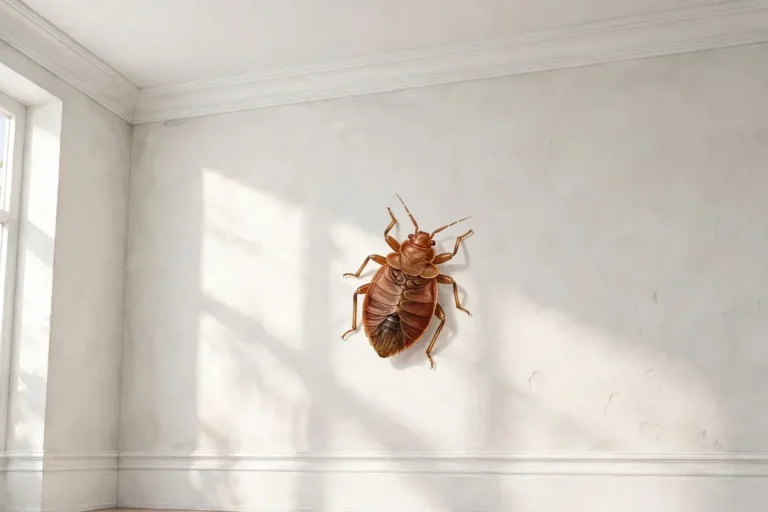
You spot a small, flat, reddish-brown bug crawling up your bedroom wall, or worse, on the ceiling, and the question hits you immediately: can…