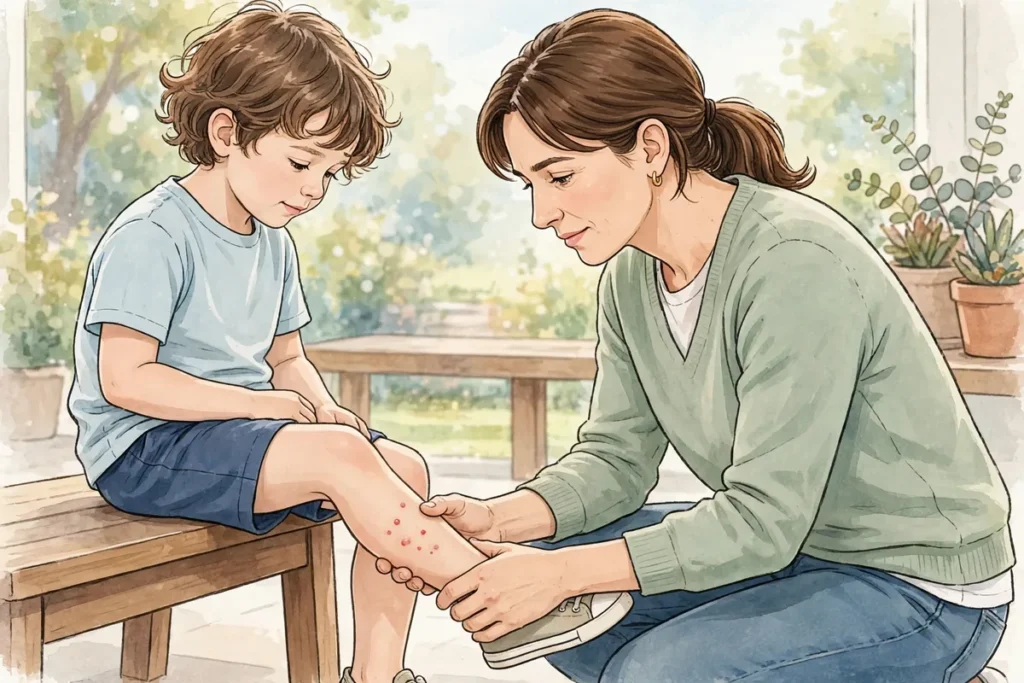
Every morning the same scene: a fresh crop of red, itchy bumps on your child’s arms or legs. No mosquitoes in sight, no bugs in the bed — yet the bites keep coming. Many parents assume a hidden infestation and spend weeks deep-cleaning and inspecting the mattress. Sometimes the explanation is a delayed immune overreaction, not a new wave of biters.
The short answer to papular urticaria vs bug bites: ordinary bites are single events — one bite, one bump, fading within days. Papular urticaria is a hypersensitivity reaction to insect bites that produces recurring crops of itchy papules, with new waves and old sites flaring after fresh exposures. Below: what it is, how it differs from a normal bite, why children outgrow it, comfort measures, and when to see the pediatrician. Educational information only — not a diagnosis.
What Papular Urticaria Actually Is
Papular urticaria, sometimes called insect bite hypersensitivity, is an allergic-type skin reaction to protein antigens in insect saliva. When a blood-feeding insect — most commonly fleas, bed bugs, or mosquitoes — feeds on skin, it injects a little saliva. In sensitized children, the immune system mounts immediate-type and delayed-type hypersensitivity responses against those salivary proteins, producing a papular eruption that arrives in crops rather than isolated marks.
It is most common in childhood, peaking between roughly ages 2 and 10, then declining as tolerance develops. It is not contagious and not caused by poor hygiene — it is an immune pattern, distinct from ordinary hives despite the name.
One reason it worries parents: only one family member may react this way, even when everyone faced the same insects. If you’ve hunted for an infestation because “nobody else has a single bite,” that mismatch is what makes papular urticaria so confusing. Guidance on bug bites on babies follows the same principle: every child’s skin responds on its own terms.
If your child keeps developing crops of itchy bumps, bring the pattern to a pediatrician or dermatologist rather than naming it yourself — a clinician weighs distribution, timing, and history together.
The Classic Pattern: Crops, Symmetry, and Flare-Ups
The hallmark is the crop: clusters of small, firm, red papules — a few millimeters across — that erupt together, sometimes with tiny blisters or crusted centers. Crops favor areas insects can reach: lower legs, feet, forearms, sometimes the face and neck. Habitually covered areas, like the diaper region, tend to be spared.
Eruptions often appear roughly symmetric — both legs, both forearms — and individual bumps can linger for days to weeks. New crops can surface every few days in insect season, convincing parents the child is bitten nightly. The confusing twist is sensitization-driven reactivation: once sensitized, a new exposure can reactivate older, partially healed sites, because immune memory responds body-wide to a new trigger.
Eruptions peak in warmer months when outdoor insects are active, but indoor fleas from a household pet can produce chronic, year-round crops — leading parents to reason “it can’t be insects in winter” and chase other explanations. Because the reaction needs a sensitization period of repeated exposures, it often blooms in toddlerhood rather than infancy, seeming to appear from nowhere.
This is why papular urticaria vs bug bites trips up attentive parents: ordinary bites look like local accidents; this looks like a body-wide campaign. Keep a simple log — dates crops appeared, body locations, recent outdoor play, pet contact, or travel — so a pediatrician has real material to work with.
How Ordinary Bug Bites Look and Resolve
An ordinary insect bite is a single, localized event. One mosquito feeds once, and within hours a small raised bump appears — round, modest in size, confined to the feeding spot, settling over a few days. Occasionally it leaves a faint mark that fades over the following weeks; see our bite dark mark fading guide for what that residual discoloration usually means.
Bed bug and flea bites can arrive in small linear clusters — the classic “breakfast, lunch, and dinner” pattern — which resembles a crop at first glance. The difference shows over time: ordinary clusters fade together and stop once exposure ends, while papular urticaria keeps producing new waves and flaring old sites. If you suspect bed bugs, a bed bug bite identification guide can help you document what you’re seeing.
Ordinary bites follow a predictable arc: the itch peaks, then eases. When a bump instead spreads, becomes hot and markedly more painful, oozes pus, or develops honey-colored crusts, those signal secondary skin infection such as impetigo or cellulitis — a clinician’s office, not home care. The timeline is the honest test: a bump that peaked and faded within a week or two behaves like a bite; a child producing fresh, itchy crops month after month deserves evaluation.
Papular Urticaria vs Bug Bites: A Side-by-Side Comparison
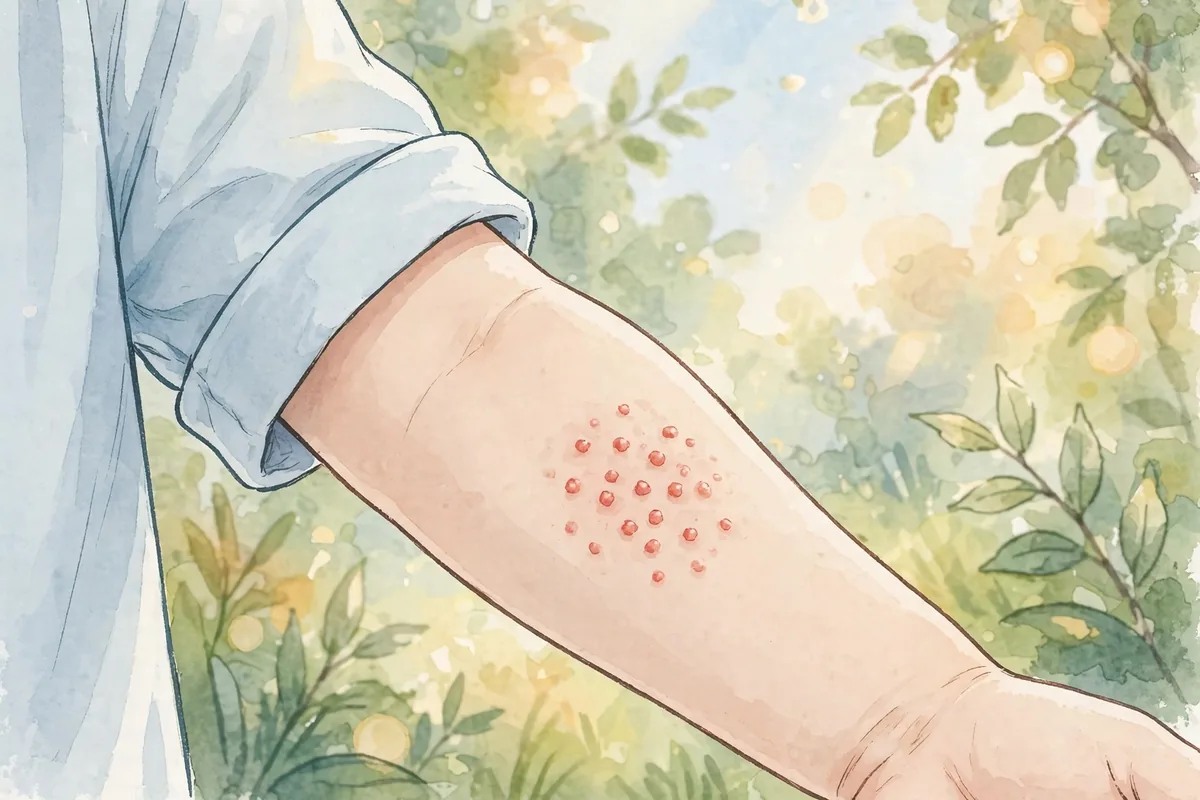
Onset and rhythm. Ordinary bites are isolated events tied to an exposure — each following a short arc from red and itchy to flat and gone. Papular urticaria arrives in crops: multiple papules emerging together, sometimes repeatedly over weeks, with new waves even when no new bite is found.
Distribution. A normal bite sits wherever the insect happened to feed. Papular urticaria clusters on exposed areas — lower legs, feet, forearms — and lands roughly symmetrically on both sides, while habitually covered skin stays clear. Symmetric, exposed-area crops are one of the details clinicians weigh most.
Longevity. Ordinary bites fade in days; the stubborn ones take a couple of weeks. Papular urticaria lesions can last days to weeks each, and the cycle of recurring crops can continue across a whole season — or year-round if indoor fleas are the driver.
The flare phenomenon. With ordinary bites, old bumps stay faded. With papular urticaria, new exposures can reactivate partially healed sites — sensitization works body-wide, not bite-by-bite.
Who reacts. Everyone in a mosquito swarm gets bitten; only sensitized children develop papular urticaria crops. If siblings share a bed and only one breaks out, that asymmetry points away from a current infestation and toward an immune pattern.
The bottom line: ordinary bites are small local events that resolve; papular urticaria is a recurring hypersensitivity that keeps producing bumps long after any single exposure — and recurring crops belong with a pediatrician or dermatologist.
Why Children Outgrow It
One reassuring fact: most children develop tolerance over years of repeated exposure. The immune system that once treated insect saliva proteins as an emergency gradually recalibrates, and the crop response quiets down. Dermatology sources describe tolerance commonly developing by around age 10, though timelines vary — some outgrow it earlier, a minority carry sensitivity longer.
This explains why many parents report the first seasons were worst and each year slightly less dramatic — and why the condition peaks in toddlerhood, when the sensitization window opens as kids play outdoors.
No at-home shortcut speeds up tolerance. Everyday bite prevention — covering skin outdoors, using repellent as directed, keeping pets on flea prevention — lowers the frequency of new triggers and new crops, which is reason enough to do it. But the underlying mechanism resolves on its own schedule; a pediatrician can set expectations for your child’s timeline.
Comfort Measures Parents Can Try at Home
While awaiting a clinician’s guidance, aim to reduce itch, prevent scratching damage, and lower new triggers.
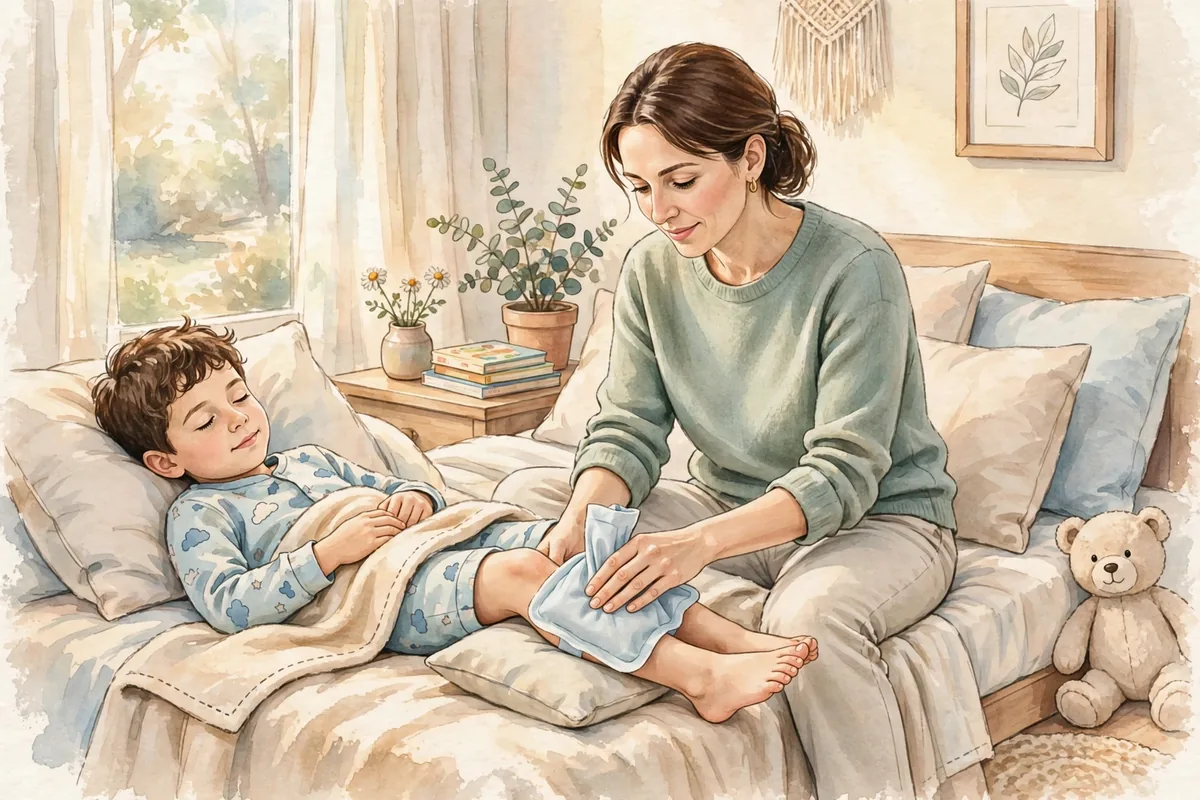
- Cool the itch. A cool, damp cloth pressed gently against an itchy crop calms the sensation without medication. Short, lukewarm baths followed by plain, fragrance-free moisturizer can help too.
- Protect the skin. Keep nails short and smooth, and consider light cotton gloves at bedtime for toddlers who scratch in their sleep. Remind older kids that scratching crusted papules invites infection.
- Reduce new triggers. Dress kids in long sleeves and pants for evening outdoor play, and follow directions for any insect repellent — ask your pediatrician first which products fit your child’s age. Vacuum rugs, wash bedding regularly, and keep pets on veterinarian-recommended flea prevention if fleas are a suspected driver.
- Watch, don’t squeeze. Don’t pop, drain, or peel papules or blisters. Cover open spots with a clean bandage and keep them clean while they heal.
Any medication — over-the-counter antihistamines, hydrocortisone, or antiseptic creams — should be discussed with your child’s pediatrician first. Our general bite and sting first-aid checklist offers a safe, medication-free starting point for most insect-related skin irritation.
When It Might Be Something Else
Recurring itchy bumps in children have a differential list, and papular urticaria is only one entry. Impetigo — a bacterial skin infection — announces itself with honey-colored crusts and spreading sores that need medical treatment, not home care. Scabies tends to strike the hands, finger webs, wrists, and soles with intense nighttime itching, and it runs through household contacts rather than sparing them. Eczema produces dry, scaly, recurring patches in classic locations like the elbow and knee creases rather than discrete bite-like papules.
The overlap is real — clinicians distinguish these by combining distribution, timing, exposure history, and sometimes a skin exam. Don’t self-diagnose from a symptom list. If the bumps don’t match the pattern described here, involve crusting or pus, affect the whole family, or simply don’t add up, bring your child in.
When to See a Doctor for a Bug Bite
Most bites are minor, but these signs mean the situation has moved past home care:
- Call 911 for anaphylaxis signs: trouble breathing, wheezing, throat tightness, swelling of the face or lips, dizziness, or collapse. Learn the full picture in our guide to anaphylaxis sting warning signs — minutes matter.
- Infection signs: rapidly spreading redness or warmth, swelling that worsens after two days, increasing pain, pus, red streaks, honey-colored crusts.
- Timeline violations: a single bite that keeps worsening instead of improving, or “bites” arriving in fresh crops for many weeks with no clear exposure.
- Recurring crops: any child who repeatedly breaks out in itchy crops, especially with old sites flaring alongside new ones, should see a pediatrician — with dermatologist referral if the pattern is unclear.
- Systemic symptoms: fever, swollen lymph nodes, or a child who seems generally unwell alongside the skin changes.
When in doubt, call your pediatrician’s office or nurse line. Describing the pattern — where bumps appear, how often new crops arrive, whether old ones flare — beats trying to name the insect.
Frequently Asked Questions
Can papular urticaria appear without any new bites?
Often, yes. Crops arise from an immune response to earlier exposures, and new waves can surface days after the triggering bite — long after the insect is gone. Old, partially healed sites can also flare when a new exposure reactivates immune memory. A dated log of crops and possible exposures helps a clinician more than a bite count.
Is papular urticaria contagious?
No. It is one child’s immune reaction to insect saliva proteins, not an infection, and it cannot spread child to child. The triggering insects — pet fleas, bed bugs — can affect others in the home, but each person reacts according to their own immune history.
How long does each outbreak last?
Individual papules last days to weeks, sometimes leaving a darker mark that fades more slowly. The pattern of recurring crops can continue for weeks to months — across an insect season, or year-round with indoor triggers like fleas. Most children develop tolerance, commonly by around age 10.
Does scratching make papular urticaria worse?
Scratching doesn’t cause new crops, but it breaks papules into open sores vulnerable to bacterial infection. Keep nails short, use cool compresses, and bandage broken spots. See a clinician for crusting, oozing, or spreading redness.
Should I get my house inspected for bugs if my child has recurring crops?
A sensible check is reasonable — pet flea prevention, mattress inspection, laundering bedding — since fewer triggers mean fewer crops. But this is an immune pattern, and crops can continue from minimal or long-past exposures. If basic checks turn up nothing and crops persist, see a pediatrician or dermatologist rather than escalating the extermination campaign.
Medically reviewed by Dr. Sarah Jones, MD.
This article is for informational purposes only and isn’t medical advice. If you’re worried about a bite or sting, talk to a healthcare professional.