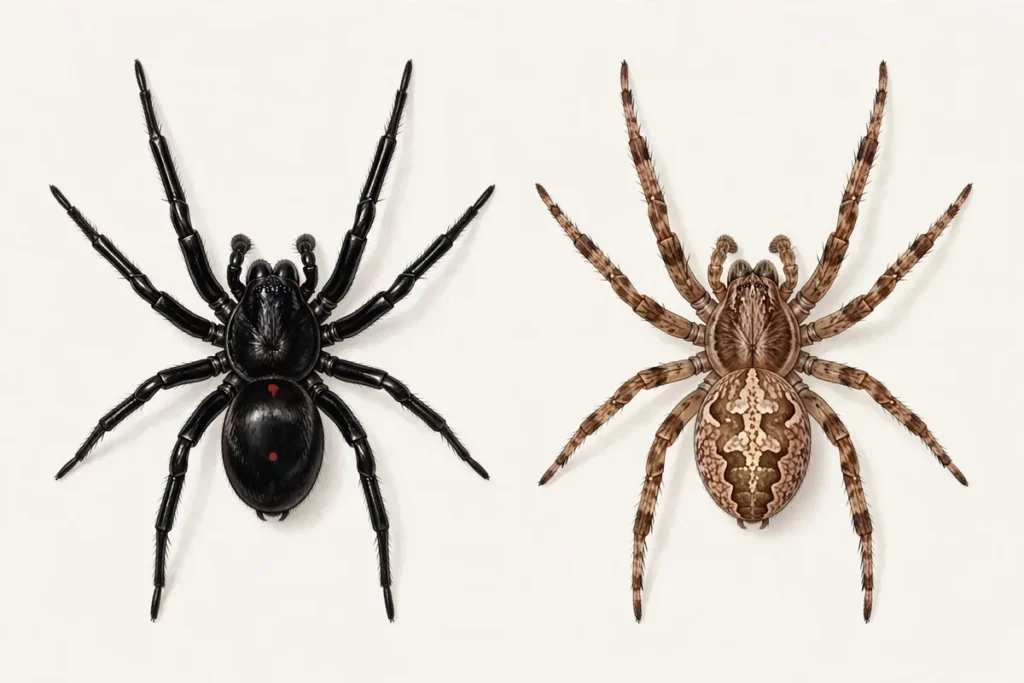
A shiny, dark, round-bodied spider in the garage triggers instant alarm in anyone raised on black widow warnings. But the spider you are looking at may be a case of mistaken identity: the false widow spider vs black widow confusion is one of the most common in American homes, because Steatoda false widows share the black widow’s cobweb habits and globe-shaped silhouette while carrying far milder venom.
This guide covers the field marks that separate the two, where each lives in the US, what their bites do, and what to do when you find one.
Why These Two Spiders Get Confused
The resemblance starts with family. Both are cobweb spiders (Theridiidae), building the same messy three-dimensional webs low to the ground and hanging belly-up waiting for prey — a silhouette close enough to fool almost anyone.
Color does most of the misleading. The false widow most Americans encounter, Steatoda grossa (the cupboard spider), ranges from purplish brown to nearly black — and in dim garage light, a dark specimen looks alarmingly close to the black widow’s glossy jet-black body. The noble false widow, Steatoda nobilis, now spreading in coastal California, is larger with bold pale markings that make it look even more dramatic. None of that changes the one decisive field mark, covered below: suggestive appearance is never enough on its own.
Geography feeds the fear too. Steatoda grossa is common in homes across the southern and western coastal states, living in garages, sheds, and crawlspaces year-round — and Penn State Extension notes females can live up to six years, so one spider can become a long-term resident.
The reassuring reality: true black widows deserve real caution, while false widows are shy spiders whose rare bites produce only brief local discomfort. Learn the differences and respond proportionally.
Appearance: The Hourglass Is the Deciding Clue
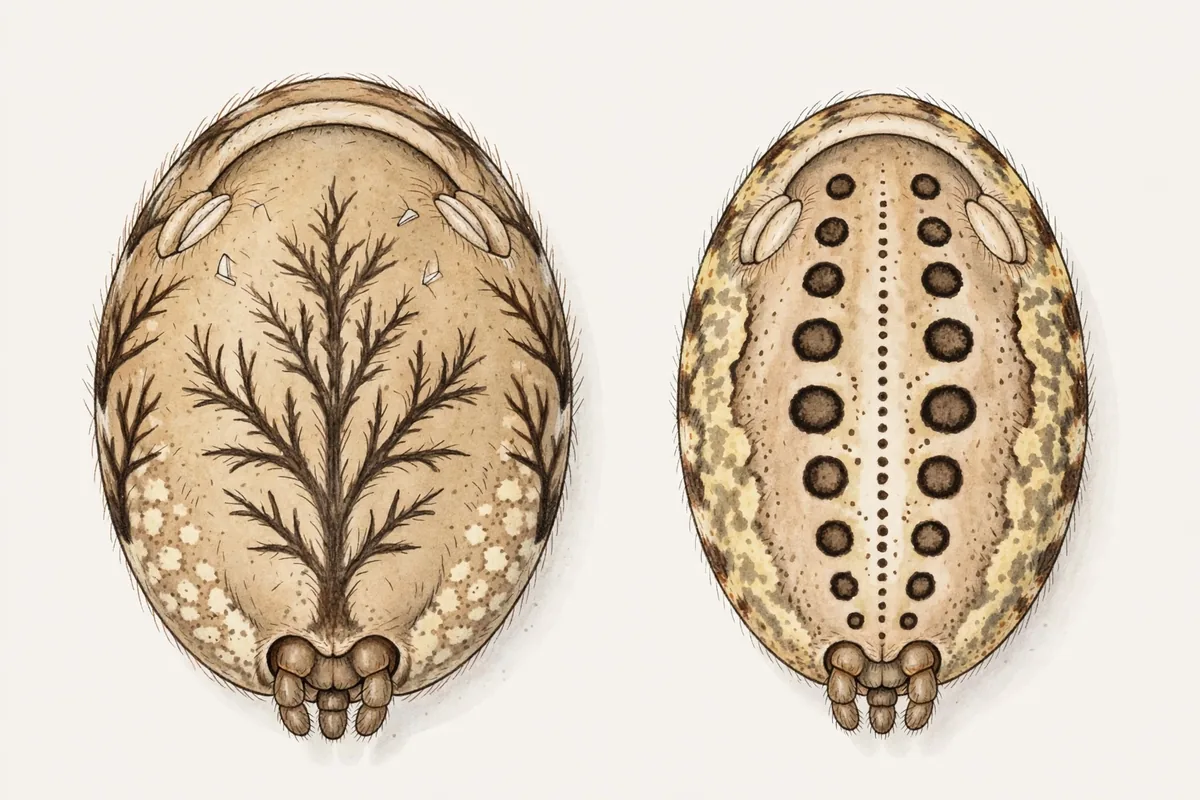
Everything comes back to one field mark: the underside of the abdomen. A true black widow (Latrodectus species — southern, western, and northern black widows occur across the US) carries a distinct bright red marking on the belly side of its round abdomen, classically hourglass-shaped, sometimes appearing as two separate spots. It is vivid, saturated red, and unmistakable. False widows never have it. That absence is the single most reliable way to rule out a black widow.
From above, look for these secondary clues from a safe distance. True black widows are deep, glossy, almost lacquered black. False widows are usually duller dark brown or purplish-brown, and most show pale yellowish-to-grayish marbled or chevron markings on the upper abdomen — patterns black widows lack. Penn State Extension describes the false widow’s abdomen as more oval and purplish-brown, though markings can fade in old or very dark specimens. The front body section is typically reddish-brown with slightly darker legs.
Size will not help you: female false widows measure 6 to 10.5 millimeters, essentially identical to female black widows. Males of both are much smaller and rarely a concern.
Two practical cautions. Never flip a spider over or trap it against skin to inspect the belly — the hourglass sits exactly where the fangs point when the spider is disturbed. If you can clearly see a red hourglass from a safe angle, treat it as a black widow and stop there. If you cannot see the underside and the spider is brown rather than glossy black, odds favor a false widow — but when in doubt, photograph it from a safe distance and have a pest professional confirm. Our what-bit-me identification guide covers what to do when the culprit is unknown.
Size, Webs, and Where Each Spider Lives
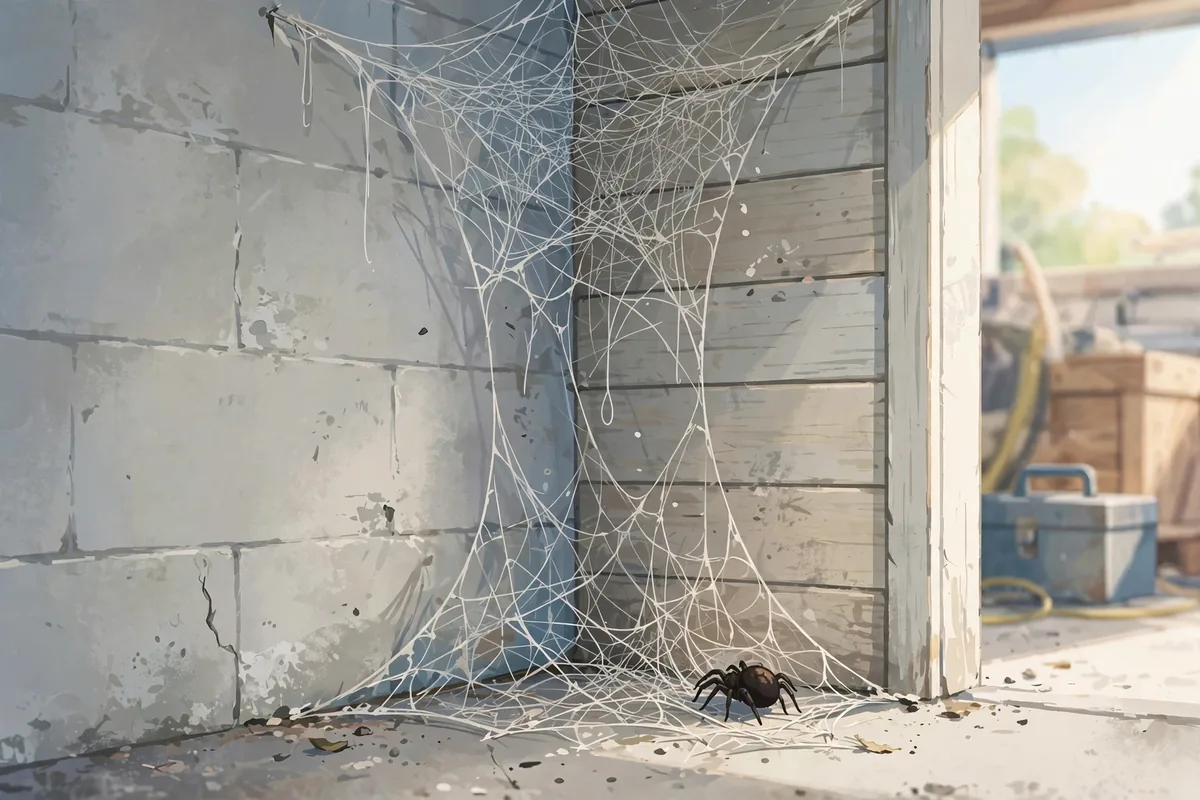
Both species build irregular, sticky, three-dimensional cobwebs — no neat geometric pattern — at or near ground level: under shelves, behind boxes, in wall-floor corners, under outdoor furniture, around woodpiles, and beneath rocks or logs. A low, messy web with the spider hanging belly-up puts you in Steatoda/Latrodectus territory, and the color-and-marking check becomes the decider.
Habitat overlap is extensive. Steatoda grossa lives in human structures year-round through the southern and western coastal states; Steatoda nobilis is expanding in California around homes, gardens, and sheds — which is why California drives much of the “is this a black widow?” search traffic. True black widows favor the same undisturbed ground-level spots: woodpiles, garages, crawlspaces, sheds, and cluttered basements. In the South and West, both species can genuinely share one garage, making the hourglass test worth learning.
Behaviorally, both are reclusive. Neither hunts people; bites from either almost always happen when a spider is pressed against skin — inside a shoe, glove, folded towel, or clothing left on the floor. The classic prevention advice (shake out shoes and gloves, wear gloves moving firewood, don’t reach blindly into clutter) protects against both. For the warning signs pointing to a true black widow bite, see our black widow bite guide.
Bite Risk: Venom, Symptoms, and What to Expect
This is where the comparison matters most. True black widow venom contains latrotoxins that attack the nervous system, causing latrodectism. A bite often starts as a slight pinprick or goes unnoticed, then over one to three hours develops into intense cramping muscle pain — frequently abdominal, chest, or back — with muscle rigidity, sweating, nausea, headache, and elevated blood pressure. The abdominal cramping can mimic appendicitis, and victims frequently end up in the emergency department. Severe cases are most dangerous for small children, older adults, and people with heart conditions.
False widows tell a far milder story: weaker venom, small fangs, and bites that are uncommon because the spider prefers retreat. A bite typically means a brief sharp sting followed by localized redness, mild swelling, and tenderness fading within hours to a couple of days — comparable to a bee sting in a non-allergic person. Serious effects from Steatoda bites are rare in the medical literature.
Two caveats: any puncture can become secondarily infected if scratched and neglected, and spider bites are famously over-diagnosed — most reported “spider bites” are actually skin infections or other conditions, especially when no spider was seen.
The critical takeaway: black widow bites are a “get help” situation, not “wait and see.” A witnessed bite from a glossy black spider with a red hourglass — or severe cramping, spreading pain, nausea, or sweating after any suspected spider bite — warrants emergency care. Antivenom exists for severe cases, and supportive hospital care is very effective.
First Aid After a Spider Bite You Can’t Identify
Usually you will not have a confirmed species, so use sensible middle-of-the-road first aid. Get away from the spider safely — brush it off with a quick flick rather than slapping, since crushing it against skin is the surest way to get bitten. Capturing it in a jar from a safe distance helps later identification, but never risk a second bite to do it.
Wash the area thoroughly with mild soap and water, then apply a cold compress or ice pack wrapped in a thin cloth for ten minutes at a time. Raise the bitten limb if practical, and avoid scratching, squeezing, or picking at the site. An over-the-counter pain reliever is reasonable for mild symptoms; follow package directions.
Mark redness edges with a pen and note the time. Expanding redness, radiating red streaks, increasing pain or heat after day one, or pus signal possible infection — see our infection warning signs guide and get care promptly.
Watch the whole body, not just the bite. Severe muscle cramps, abdominal rigidity, spreading pain, heavy sweating, nausea, vomiting, headache, or breathing difficulty in the hours after a suspected bite are red flags for black widow envenomation — get emergency care. When uncertain, call Poison Control at 1-800-222-1222; they handle spider-bite questions routinely.
Keeping Spiders Out of Garages and Sheds
You cannot spider-proof a garage, but you can make it far less inviting. Start with ground-level clutter — cardboard boxes on concrete, old newspapers, unused planters, firewood stacked against the wall — which creates the dark, undisturbed pockets these spiders love. Swap cardboard for sealed plastic bins, put storage on shelving, and move firewood at least twenty feet from the house.
Seal easy entry points: weatherstripping under the garage door, intact vent screens, and caulk around pipe and cable penetrations cut both spider entry and the insect prey that draws them in. Fewer insects means fewer reasons for spiders to settle.
Change bite-risk habits: shake out shoes, gardening gloves, and towels before use; wear gloves reaching into woodpiles or moving stored items; use a flashlight in dark corners instead of reaching blindly. Teach kids never to pick up dark round spiders and to tell an adult instead.
For confirmed black widows in living spaces, call a pest professional rather than improvising. Sticky traps along walls help you monitor what actually lives in the garage, turning vague fear into concrete information. And a false widow sighting has an upside: a Steatoda in its web is a working, low-risk predator eating insects you don’t want — relocation with a cup and card to a shed or woodpile is a perfectly reasonable response.
When to See a Doctor for a Bug Bite

Most spider bites resolve with basic home care, but certain signs mean professional help promptly.
- Call 911 or go to the emergency department for severe reaction signs after a bite: difficulty breathing, throat tightness, dizziness or fainting, rapid heartbeat, severe muscle cramps or abdominal rigidity, spreading intense pain, heavy sweating with nausea or vomiting. These can indicate black widow envenomation or, rarely, anaphylaxis. Learn the full anaphylaxis warning signs.
- Seek same-day care if redness, swelling, warmth, or pain worsens after 24 hours, if red streaks spread, pus develops, or fever or chills appear — possible cellulitis.
- Get medical advice promptly if a small child, older adult, pregnant person, or someone with a heart condition was bitten by a suspected black widow, even if symptoms seem mild; envenomation can escalate over hours.
- See a clinician if a bite has not improved after a week, keeps reopening, or you never saw a spider and the lesion is worsening — many “spider bites” turn out to be skin infections needing proper diagnosis.
Frequently Asked Questions
Can a false widow spider kill you?
No. False widow bites are rare and typically cause only short-lived local pain, redness, and swelling. True black widows (Latrodectus species) deserve real caution — their venom can cause serious systemic illness.
Do false widows have the red hourglass?
Never. The bright red hourglass or paired red spots on the underside of the abdomen belong to true black widows. False widows may show pale markings on the top of the abdomen but never the vivid red ventral marking. No red hourglass means not a black widow.
What does a black widow bite feel like?
Often a slight pinprick or nothing at first. Within one to three hours, many victims develop intense cramping pain spreading from the bite to the abdomen, chest, or back, sometimes with muscle rigidity, sweating, nausea, and headache. Suspected black widow bites with developing symptoms deserve prompt medical evaluation.
Are false widows aggressive?
No. They are shy and defensive, biting only when trapped against skin — in clothing, shoes, or bedding. You are far more likely to watch one sit motionless in its web for months than to be bitten by it.
Should I kill a false widow in my house?
Not necessary for safety. Many people relocate the spider to a shed or woodpile with a cup and stiff card. For a confirmed black widow in living space — or an unidentified spider where someone vulnerable lives — calling a pest professional is the safer choice.
Medically reviewed by Dr. Sarah Jones, MD.
This article is for informational purposes only and isn’t medical advice. If you’re worried about a bite or sting, talk to a healthcare professional.