Pull into a state park in Texas, Louisiana, Florida, or Georgia, pick a shady campsite, and step out barefoot to level your trailer — and you may step into one of the South’s most notorious campsite hazards: a red imported fire ant mound. Fire ants at southern campgrounds are a real and common camper safety issue. Campground reviews and RV forums are full of stories about mounds hidden under picnic tables, trailers parked over active colonies, and kids stung dozens of times before anyone realized what was happening.
This guide covers how fire ants behave at campsites, how to pick a safer site, what to do in the first minutes after stings, and how to care for the classic fire ant pustules afterward. Whether you’re in an RV, a pop-up, or a tent, a few minutes of mound-spotting at setup can save your whole trip.
Why Southern Campgrounds Are Fire Ant Territory
Red imported fire ants thrive in exactly the environment campgrounds provide: warm, sunny, frequently disturbed ground with plenty of food scraps. Campsites are essentially ideal habitat — compacted soil pads, grassy edges, trash bins, and grills all attract them. Unlike undisturbed pasture, a busy campground gets constantly mowed, graded, and re-seeded, and fire ants love re-colonizing disturbed ground.
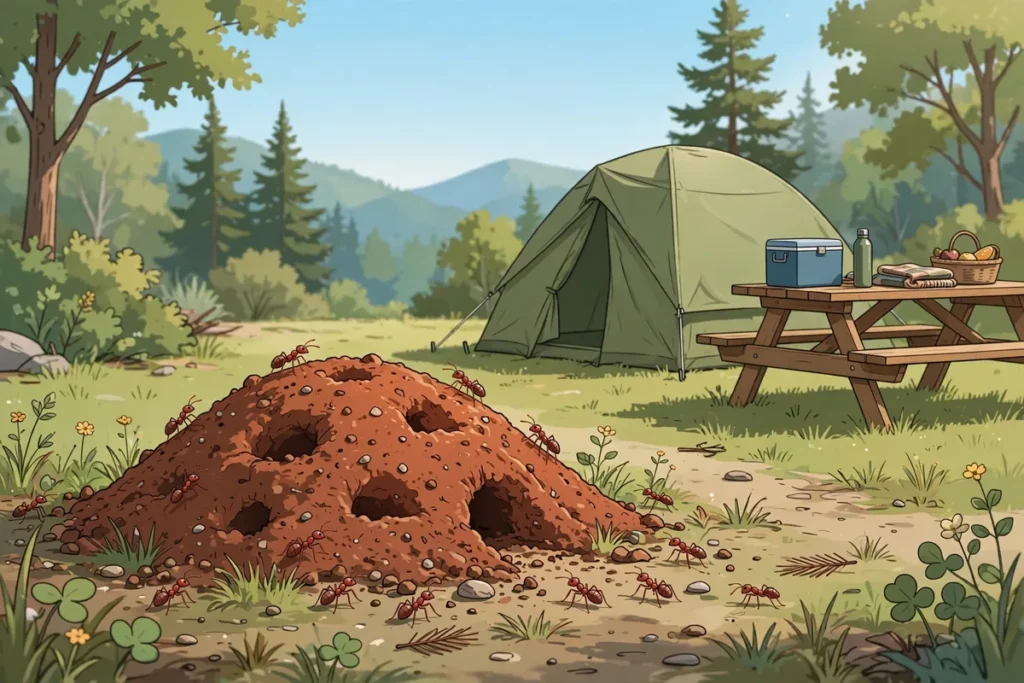
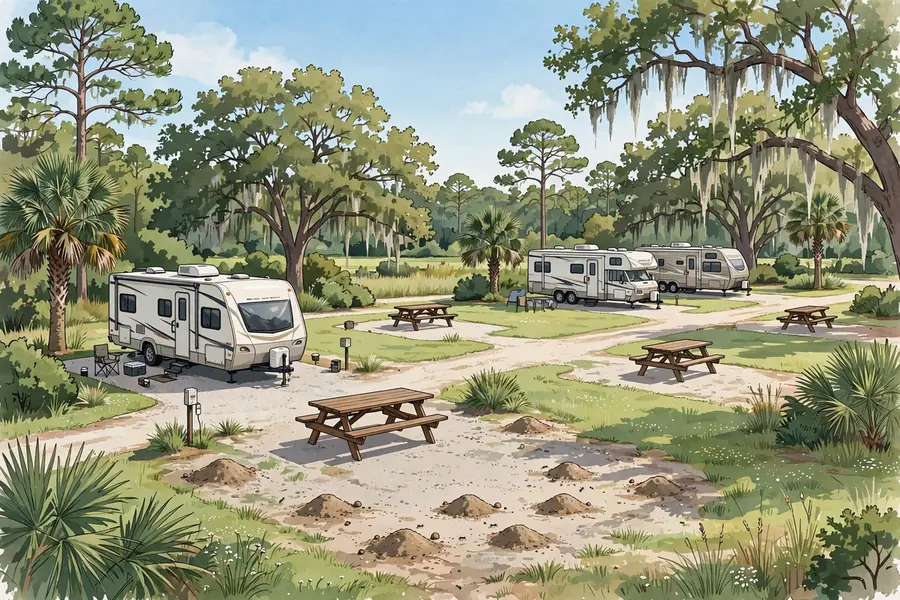
Mounds are often not the tall, obvious piles people picture. At busy campsites, mowing and foot traffic flatten them into low, spread-out humps or irregular patches of loose soil. They commonly appear:
- Along the edges of gravel or concrete RV pads, where the soil is undisturbed
- Under and around picnic tables, fire rings, and grill stands
- Near trash receptacles and dumpster pads
- Along utility pedestals (water and electric hookups), where ants nest in the warmth
- Under your trailer or RV itself, where they climb up tires and leveling jacks
Timing matters too. Fire ants are most active on mild, humid days and tend to forage aggressively in the morning and evening. After a rain, mounds become more obvious — and ants more active — because colonies rebuild and relocate. If you’re setting up camp on a warm, humid evening in the Southeast, you’re arriving right at prime fire ant time.
Scout before you commit. Walk your site before you park, level, or let kids and pets out. Look for loose, reddish soil mounds, small entry holes in grass, and ant trails moving along pad edges. If the ground is dotted with mounds, ask the camp host for a different site — in heavily infested parks, they know which loops are worst.
Fire Ant Behavior: Why One Sting Means Many
Fire ants are different from most stinging insects in one critical way: they don’t sting once and leave. Here’s what actually happens, and why campers get caught off guard:
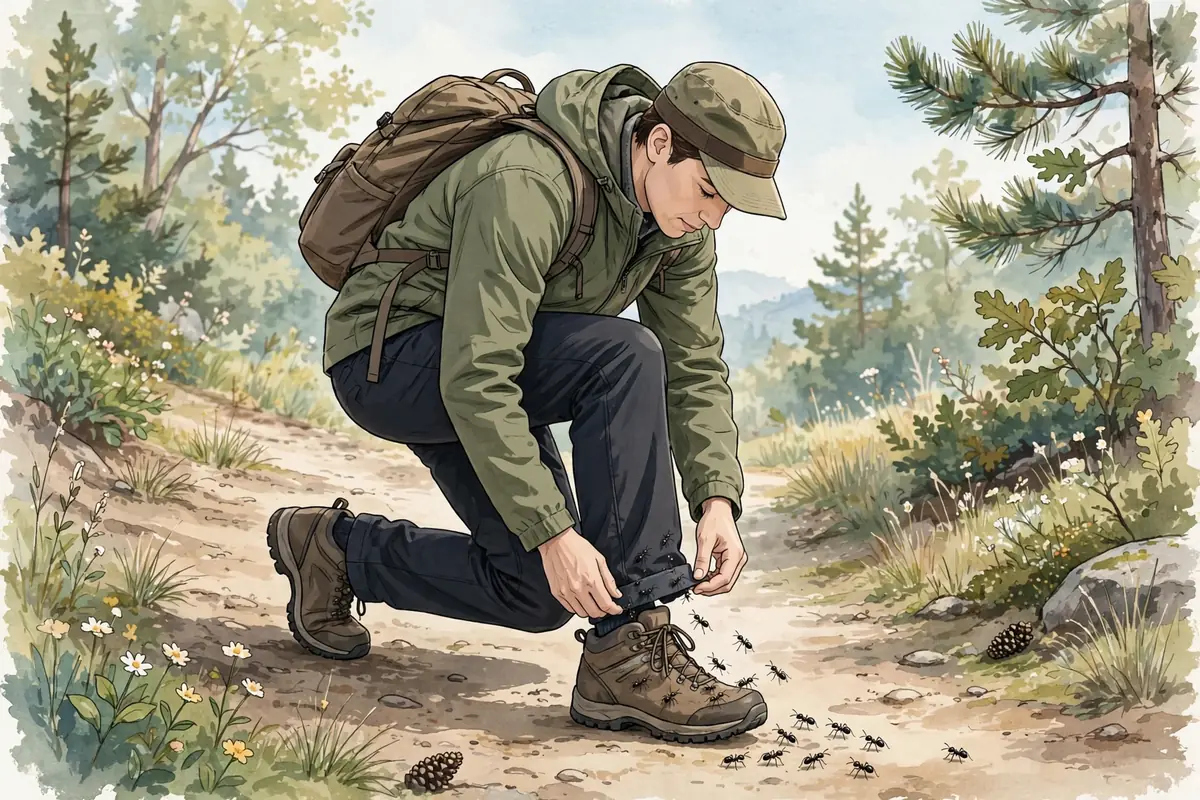
- They swarm silently. When you disturb a mound or stand near one, worker ants rush up your shoes, pant legs, or bare feet without you noticing. They can be on you by the dozens before a single sting lands.
- They grip, then sting. Each ant bites down with its jaws to anchor itself, then pivots and stings repeatedly with the stinger at the other end of its body. One ant can deliver multiple stings.
- They sting in sync. When the colony is alarmed, many ants sting at once — which is why victims typically report being stung 20, 50, or more times in a few seconds.
This is why the standard camper instinct — slapping at the ants — backfires. Slapping alarms more ants and presses the ones already on you harder into your skin. The right response is to brush them off quickly and firmly with your hand or a towel, then get away from the mound area. If you’re wearing clothes where ants have crawled underneath, strip and shake the clothing out — fire ants will keep stinging through fabric contact.
What to Do in the First Minutes After Stings
Minutes matter with fire ant stings because of the sheer number. Follow this sequence:
- Move away from the mound — at least 20–30 feet — so no more ants climb on.
- Brush ants off fast. Use your hand or a cloth in quick sweeping motions. Don’t slap. Flick them off shoes and cuffs too.
- Check clothing and gear. Ants hide in socks, under waistbands, and inside shoes. Shake everything out. If you were bitten through clothing, take it off and inspect the skin beneath.
- Wash the area. Once you’re ant-free, wash stung skin with soap and cool water. This removes any remaining ants and reduces the chance of secondary infection.
- Apply something cold. A cold compress for 10–15 minutes calms the burning and swelling. Campground hack: a bag of ice from the camp store, wrapped in a bandana.
- Watch the whole body, not just the sting sites. Because fire ant stings can trigger allergic reactions in sensitive people, keep an eye out for symptoms away from the sting area — hives elsewhere, swelling of the lips or face, or any breathing difficulty — for at least 30 minutes.
Painkillers for soreness: over-the-counter pain relievers are commonly used for sting pain, but check the label and talk to your pharmacist if you have health conditions or take other medications. For itch that shows up later, oral antihistamines are a standard option — again, follow the label and ask a pharmacist about what’s appropriate for you.
The Pustule Problem: What NOT to Do

Within about a day of fire ant stings, most people develop the classic sign: small, white-headed pustules at each sting site. These look alarming but are a normal, expected part of fire ant sting healing — they’re a sterile reaction to the venom, not infection. Here’s what matters:
- Don’t pop them. Squeezing or popping pustules breaks the skin and invites real bacterial infection, which is far worse than the pustule itself. This is the number-one mistake campers make, and it’s worth drilling into kids before the trip. Our guide on fire ant sting pustules and what not to do covers this in depth.
- Keep them clean and covered. Wash gently with soap and water, pat dry, and cover with a bandage if clothing rubs against them.
- Leave them alone for about a week. Pustules typically dry up and flake off within 7–10 days. They may leave small dark marks that fade over weeks.
- Watch for the exceptions. If a pustule area becomes increasingly red, warm, swollen, or painful — or if you develop fever — that may signal a secondary skin infection (cellulitis), which needs medical care.
Pustule care applies equally to kids. Fire ant stings on children often cluster around ankles and feet (they run through grass in sandals), and the itch-plus-burn can be miserable. A cool bath, loose clothing, and a clear “no picking” rule go a long way.
Camper-Specific Prevention: RVs, Tents, and Pets
At setup: Park tires, stabilizer jacks, and leveling blocks away from visible mounds. Spray the perimeter of your site with nothing — instead, ask the camp host whether the park treats mounds; many southern parks do periodic bait treatments, but coverage is uneven. Treat the campsite perimeter as ant territory: keep food sealed, take trash to bins promptly, and wipe down picnic tables.
Footwear rules. The classic camper fire ant injury is the barefoot stroll to the bathhouse. Wear closed-toe shoes or sturdy sandals at all times — especially after dark, when mounds are hard to see. Kids playing in grass should wear shoes, period.
Tent campers should pitch on clear, mound-free ground, keep tent doors zipped, and shake out shoes every morning — ants are drawn to the warmth of the tent at night. RV owners should inspect where utility hoses and power cords touch the ground; ants use them as highways into the rig. Some campers run a line of diatomaceous earth or ant barrier around tires and jacks — check park rules first, and never use it where pets or kids play.
Dogs are prime victims. Dogs sniff mounds, lie on warm ground, and can’t tell you they’re covered in ants. Keep dogs leashed and away from mounds, check paws and bellies after walks, and know that bee stings to dogs follow similar first-aid logic — though any sign of facial swelling or breathing trouble in a pet warrants an emergency vet visit.
When to See a Doctor for a Sting
Fire ant stings are usually a painful nuisance, but get medical help promptly in these situations:
- Signs of a severe allergic reaction (call 911): difficulty breathing, swelling of the lips, tongue, or throat, dizziness, fainting, nausea, or hives spreading across the body. Fire ant venom can trigger anaphylaxis in sensitized people — review the anaphylaxis warning signs before your trip and consider asking your doctor about carrying an epinephrine auto-injector if you’ve had severe reactions before.
- Signs of infection: a sting site that becomes increasingly red, warm, swollen, or painful after the first day; red streaks spreading outward; pus with fever. Learn the signs of cellulitis from bug bites.
- Dozens of stings on a small child, which can cause significant pain, swelling, and occasionally systemic symptoms — call your pediatrician or urgent care for guidance.
- Stings near the eyes or inside the mouth, which need professional evaluation.
- Stings that aren’t healing after 10–14 days or keep getting worse instead of better.
Frequently Asked Questions
Can fire ants climb into an RV or tent?
Yes. They climb tires, leveling jacks, power cords, and water hoses to reach warm, food-scented interiors. Keep cords and hoses from lying in ant-traffic areas when possible, seal food tightly, and sweep the rig’s entry steps and thresholds regularly during your stay.
How do I tell a fire ant mound from a regular ant hill?
Fire ant mounds are usually irregular, flattened piles of fine, loose soil with no single visible entrance hole — the ants enter and exit through underground tunnels. They often appear in sunny, open areas. Regular ant hills may have a distinct central opening. When in doubt at a campsite, treat any mound as a fire ant mound and keep your distance.
My child stepped in a mound — how many stings is too many?
There’s no exact number, but dozens of stings on a young child warrant a call to your pediatrician or a visit to urgent care, especially if the child is in significant pain, develops widespread swelling, or shows any sign of an allergic reaction. Keep the child calm and still while you brush ants off — panicking makes it harder to remove them quickly.
Do campgrounds treat for fire ants?
Many southern parks do some level of treatment, often with bait products applied periodically, but it’s rarely complete — new mounds appear between treatments, and heavy rain can wash treatments away. Never assume a campground is fire-ant-free. A quick visual inspection of your site is always worth the two minutes.
Can fire ant stings cause an allergic reaction on the first exposure?
Severe allergic reactions are more likely in people who have been stung before and become sensitized, but any sting can provoke one. If you’ve ever had a severe reaction to any insect sting, talk to your doctor before camping in fire ant country about whether you should carry an epinephrine auto-injector and how to use it.
Medically reviewed by Dr. Sarah Jones, MD.
This article is for informational purposes only and isn’t medical advice. If you’re worried about a bite or sting, talk to a healthcare professional.
Authoritative Fire Ant and Sting Guidance
Fire ant stings can produce a burning sensation followed by small red bumps; fluid-filled pustules may develop over the next day or two. Do not pop or scratch the pustules. Keep the area clean, use a cool compress for comfort, and watch for worsening pain, spreading redness, warmth, drainage, or fever. The appearance of a pustule is not proof of a specific insect by itself, so use the campsite location and observed insects as clues rather than a diagnosis.
The CDC’s National Institute for Occupational Safety and Health (NIOSH) advises people exposed to fire ants to brush ants off promptly, avoid disturbing mounds, and seek immediate care for serious symptoms such as breathing difficulty, severe swelling, chest pain, nausea, or slurred speech. Although this guidance was written for outdoor workers, its first-aid principles are relevant to outdoor exposure; a camper with a history of severe sting allergy should follow their clinician-provided emergency plan and keep prescribed epinephrine accessible.
For a campground, prevention is mainly about avoiding contact: inspect the ground before setting chairs, sleeping pads, pet bowls, or tent equipment down; do not place hands into grass, leaf piles, or soil openings; keep food waste contained; and tell campground staff if a mound is near a shared path, restroom, playground, or campsite pad. Do not pour fuel, boiling water, or unlabelled chemicals onto a mound at a busy campsite. These methods can create fire, burn, exposure, or environmental hazards and may not safely solve the infestation. Ask site management or a qualified pest professional to choose a treatment appropriate for the location.
For additional symptom guidance, Poison Control recommends washing insect-bite or sting sites, using a cool compress, and seeking advice when symptoms worsen or extend beyond the local skin area. If someone develops trouble breathing, swelling of the tongue or throat, faintness, or rapidly spreading whole-body symptoms, call 911 in the United States. Do not wait to identify the ant before seeking emergency help.
Sources
- CDC/NIOSH: Protecting Yourself from Stinging Insects — fire ant first aid, prevention, and severe-reaction warning signs.
- Poison Control: Insect and Spider Bites — When to Worry — basic care and signs that need medical advice.
- Mississippi State University Extension: Control Fire Ants in Your Yard — fire ant behavior and safer control context.
This article offers general safety information, not a diagnosis or a substitute for emergency care. Symptoms can overlap across stings and skin conditions; seek professional assessment when the reaction is severe, worsening, or uncertain.