After a hurricane floods the Southeast, the stories start: mosquitoes the size of small birds, bites like bee stings, swarms of giants rising from the floodwater. People who spot one of these monsters assume the worst — a bigger mosquito must mean a more dangerous mosquito. But gallinipper vs elephant mosquito is a comparison with a twist: one is a genuinely fearsome biter, and the other doesn’t bite people at all. Confusing the two means either unnecessary panic or killing an insect that’s actually on your side.
Here’s how to tell these two giants apart, what each one actually does, and why one of them deserves your protection rather than your swatter.
The Gallinipper: The Giant That Bites
The gallinipper (Psorophora ciliata) is a real mosquito, native to much of the eastern United States including Florida — not an invasive species, despite what panicked headlines suggest after every hurricane. It’s simply a floodwater mosquito: females lay drought-resistant eggs in soil around wet meadows, floodplains, and low fields, where the eggs can survive desiccation for years, forming a buried “egg bank.” When heavy rains or hurricanes flood the landscape — as Tropical Storm Debby did in Florida in 2012 and Hurricane Florence did in the Carolinas in 2018 — the eggs hatch en masse, and a generation of giants takes to the air.
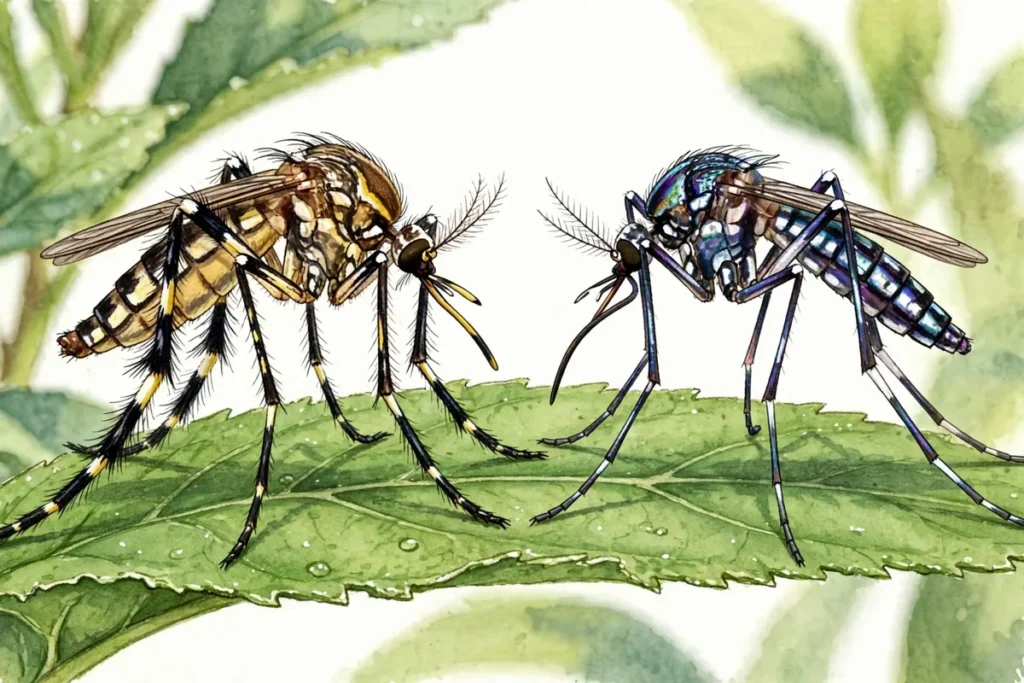
Gallinippers are two to three times the size of a typical mosquito, with distinctive zebra-striped legs. Females need blood meals to develop their many eggs, and they are aggressive, persistent feeders on mammals. Their bite is famously painful — victims notice it immediately, which is why gallinipper outbreaks generate so much attention. The larvae are predators, actively hunting other mosquito larvae in the floodwater pools, which may partly explain the adults’ large size.
The reassuring news: as far as entomologists know, gallinippers don’t transmit any diseases to people. Specimens have tested positive for various viruses, including some that affect horses, but no definitive evidence has linked a gallinipper bite to human disease. They likely take only one good blood meal in their short adult lives — probably no more than a couple of weeks — which limits their ability to pass pathogens between hosts even in theory. A gallinipper bite hurts, itches, and can swell impressively in sensitive individuals, but it’s not a disease event.
The Elephant Mosquito: The Giant That Doesn’t
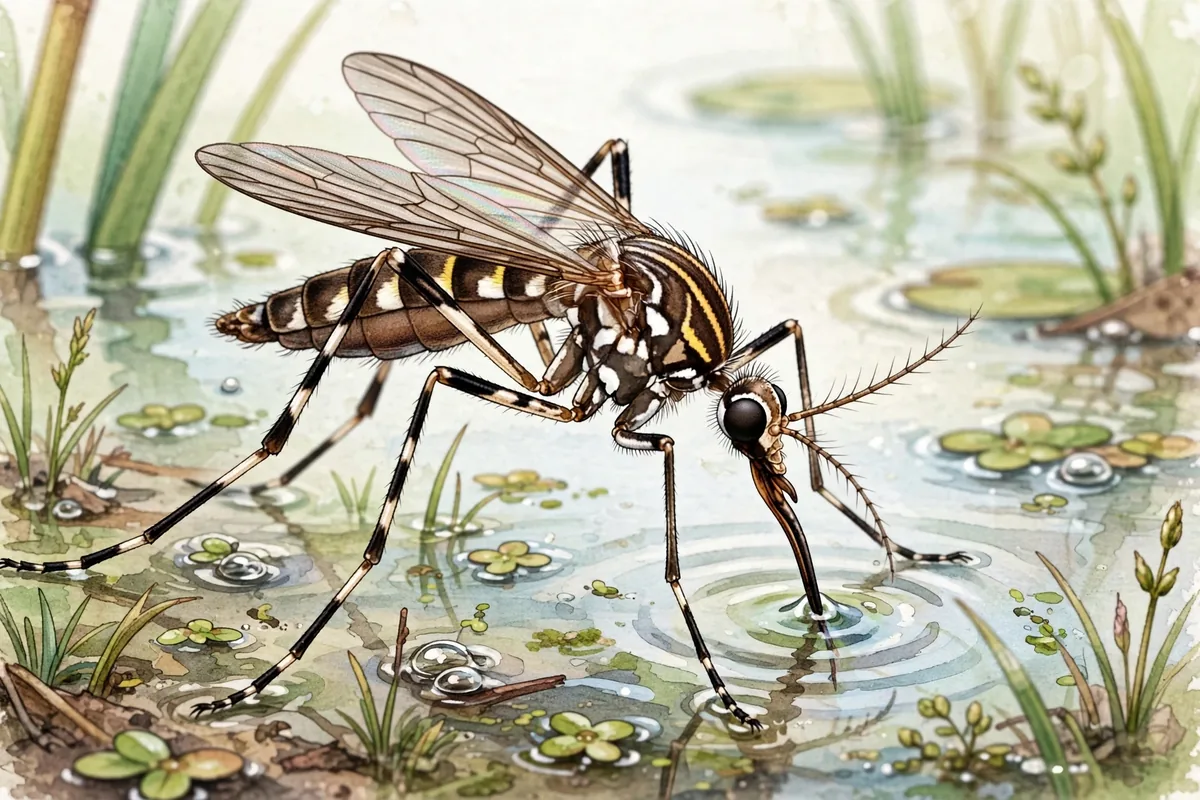
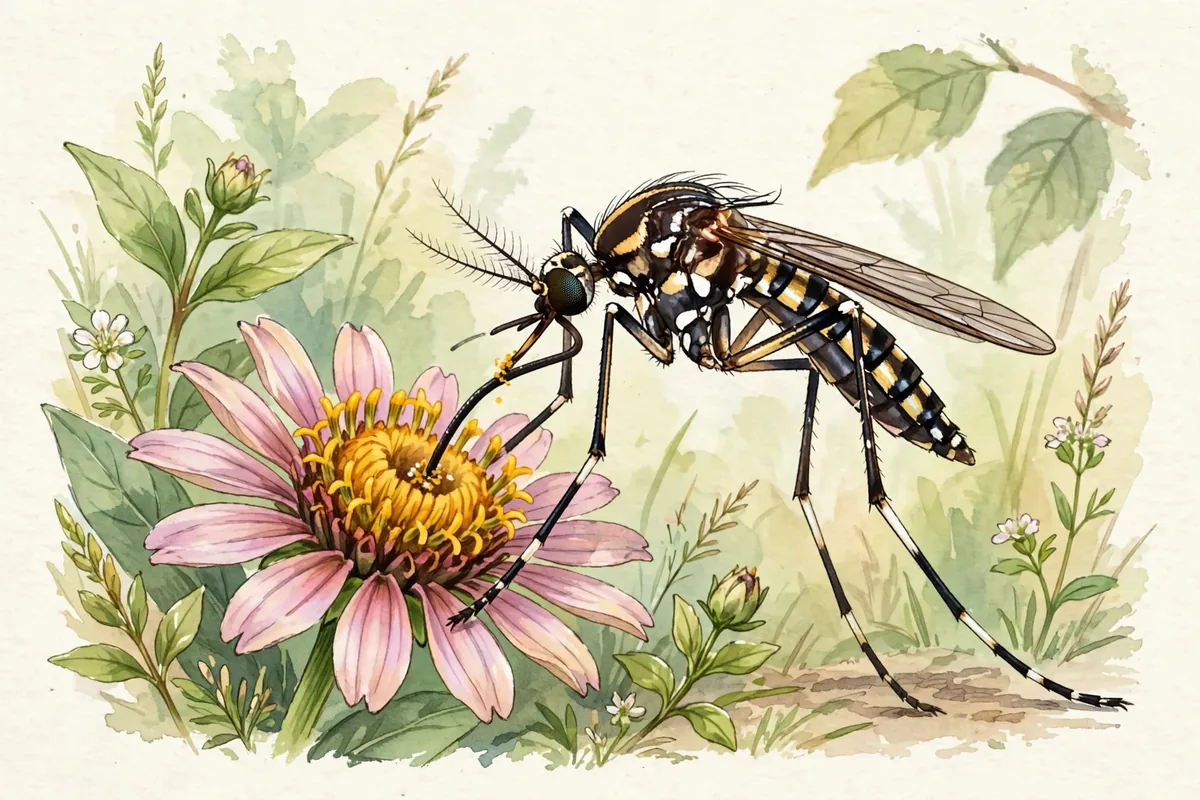
The elephant mosquito (Toxorhynchites, several species) is also a true mosquito — and also large, which is where the confusion begins. But its lifestyle is completely different. Adult elephant mosquitoes don’t drink blood at all. Both males and females feed on nectar and plant juices; the females’ curved proboscis, which looks intimidating, is built for sipping flowers, not piercing skin. An elephant mosquito physically cannot bite you.
The larvae are where this insect earns its keep. Like gallinipper larvae, Toxorhynchites larvae are fierce predators — but they specialize in hunting other mosquito larvae in small water containers: tree holes, discarded tires, plant axils, the exact breeding sites of the mosquitoes that spread disease. A single elephant mosquito larva can consume hundreds of other mosquito larvae during its development. Scientists have studied Toxorhynchites for decades as a potential biological control agent against disease-carrying mosquitoes, precisely because they’re harmless to people and lethal to the mosquitoes we fear.
In short: the elephant mosquito is one of the good guys. Killing one doesn’t protect you from bites — it removes a predator that was eating the mosquitoes that do bite.
Side-by-Side: Telling Them Apart
In practice, most people encounter these insects as “a huge mosquito-like thing,” so here’s the practical ID guide:
| Feature | Gallinipper | Elephant mosquito |
|---|---|---|
| Scientific name | Psorophora ciliata | Toxorhynchites spp. |
| Size | 2–3× a normal mosquito | Large, similar scale |
| Legs | Distinctive zebra-striped (banded) legs | Less strikingly banded |
| Proboscis | Straight, piercing (females) | Noticeably curved downward |
| Behavior | Aggressive, seeks mammals, bites | Visits flowers, ignores people |
| Bites people? | Yes — painfully | No — physically cannot |
| Disease risk | Not known to transmit human disease | None (doesn’t bite) |
| Larvae | Predatory on other mosquito larvae | Predatory on other mosquito larvae |
| When abundant | After floods and hurricanes | Year-round in warm climates |
The behavior test is the most reliable: if the giant insect is actively hunting you, landing on skin, and trying to feed, it’s a gallinipper (or another biting species). If it’s hovering around flowers or porch lights and showing zero interest in you, it’s likely an elephant mosquito — leave it alone.
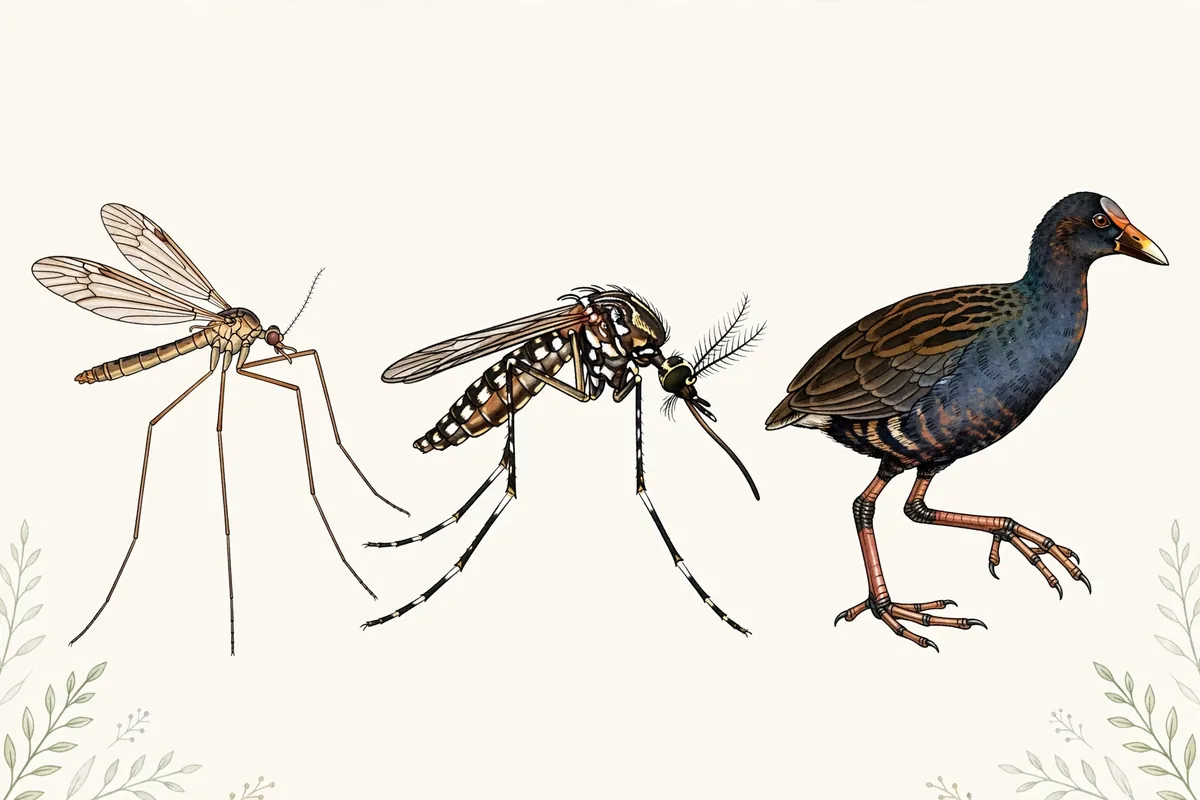
Don’t forget the third giant: the insect most people actually see is often neither — it’s a crane fly, a harmless, gangly non-mosquito that doesn’t bite and isn’t a mosquito at all. Crane flies are clumsy fliers with extremely long, fragile legs, and they’re completely harmless.
The Upside of Giants: Mosquitoes That Eat Mosquitoes
Here’s the part of the story that rarely makes the headlines: both of these giants spend their childhoods eating other mosquitoes. Gallinipper larvae and elephant mosquito larvae are both active predators of other mosquito larvae — including the larvae of species that transmit diseases to people.
Gallinipper larvae hunt in floodwater pools, consuming the larvae of smaller floodwater mosquitoes that hatch alongside them. Elephant mosquito larvae work the smaller, permanent water sources — tree holes, discarded tires, bromeliad axils, clogged gutters — which happen to be the preferred breeding sites of container-breeding mosquitoes like Aedes aegypti and Aedes albopictus, the species behind Zika, dengue, and chikungunya transmission. A single Toxorhynchites larva can consume hundreds of other mosquito larvae during its development, making it one of the most efficient natural predators in the mosquito world.
This is why entomologists have studied elephant mosquitoes for decades as biological control agents. The concept is appealing: release a mosquito that can’t bite people and whose young devour the young of mosquitoes that can. Field trials have explored Toxorhynchites releases in various tropical settings with mixed but genuinely interesting results — the practical challenges involve mass-rearing a predator that needs live prey and ensuring released populations establish in the right container habitats. It’s not a silver bullet, but it’s legitimate science, not folklore.
There’s even a wry entomologist’s argument in favor of gallinippers: since their larvae eat other mosquito larvae, and the adults likely take only one blood meal in a short life without transmitting disease, one painful gallinipper bite might be “worth” ten itchy bites from the smaller mosquitoes its larvae consumed. That’s cold comfort when one is drilling into your ankle — but it reframes the giants as part of a natural mosquito-suppression system rather than pure villains.
The practical takeaway for homeowners: indiscriminate insecticide fogging after a flood kills elephant mosquitoes, dragonflies, and pollinators along with the biters, while doing little about the next wave hatching from the gallinipper egg bank. Targeted larval control (dumping containers, treating standing water you can’t dump with larvicides), personal repellents, and screens protect you without wiping out the predators working in your favor. When you see a large mosquito that shows no interest in you, consider that it may be doing more for your yard’s mosquito problem than any spray can.
If a Gallinipper Gets You: Bite Care
A gallinipper bite is essentially a mosquito bite turned up to eleven: more painful at the moment, a larger welt, more intense itching. Treat it like any significant mosquito bite, with a little extra attention:
- Clean the area with soap and cool water.
- Cold compress for 10–15 minutes to reduce pain and swelling — the most effective immediate step.
- Don’t scratch. The itch-scratch cycle is real: scratching triggers inflammatory pathways that prolong swelling and itching. Our guide on why scratching makes bites worse explains the mechanism.
- Hydrocortisone cream or calamine lotion for the itch; an oral antihistamine if the reaction is strong.
- Watch for infection, as with any bite: spreading redness, warmth, increasing pain, or pus needs medical attention.
Because gallinippers emerge in large numbers after flooding, people in affected areas can collect many bites at once. Multiple simultaneous bites warrant antihistamines and a lower threshold for calling a doctor if the reaction is severe.
Living With Giants: Prevention After Floods
Gallinipper outbreaks follow floods, so prevention is really about flood-aftermath mosquito control:
- Dump standing water. Once floodwaters recede, empty every container, tire, bucket, and tarp fold holding water. Gallinippers breed in floodwater pools, but the regular mosquitoes that follow breed in your yard’s containers.
- Use EPA-registered repellent. DEET, picaridin, or oil of lemon eucalyptus on exposed skin when outdoors in outbreak areas. Reapply as directed.
- Cover up at peak hours. Long sleeves and pants, especially during the day — gallinippers are daytime-active aggressive feeders.
- Protect the yard. Fans on patios disrupt mosquito flight; window screens keep them out of the house. Dumping containers, treating standing water you can’t dump with larvicides, and using repellents protect you without wiping out the predators working in your favor.
- Don’t spray indiscriminately. Broad insecticide fogging kills elephant mosquitoes, pollinators, and other beneficial insects alongside the biters — and does little against the next wave hatching from the egg bank. Targeted larval control and personal protection work better.
And remember: that big, gentle giant sipping nectar from your flowers is doing free pest control. The standard mosquito-bite habits — avoiding peak biting hours, wearing repellent and long sleeves — apply to gallinippers too. They’re mosquitoes, just supersized.
When to See a Doctor for a Bug Bite
Gallinipper bites don’t transmit disease, but any bite can cause problems. See a clinician if:
- Anaphylaxis signs (call 911): difficulty breathing, swelling of the lips, tongue, or throat, dizziness, or hives spreading far beyond the bite. Review anaphylaxis warning signs.
- Infection signs: spreading redness, red streaks, warmth, swelling that worsens after 24–48 hours, pus, or fever.
- Very large local reactions: welts several inches across or significant swelling, especially with many simultaneous bites.
- Systemic symptoms after flooding: fever, headache, or body aches following heavy mosquito exposure in a flood zone — floodwater mosquitoes can include species that do transmit disease, so post-flood illness deserves evaluation.
Frequently Asked Questions
Are gallinippers a new invasive species?
No. Psorophora ciliata is native to the eastern United States and has been here all along. Outbreaks follow major flooding because their drought-resistant eggs hatch en masse when floodwaters arrive — the mosquitoes aren’t new, the conditions are.
Can elephant mosquitoes bite me if they’re hungry enough?
No. Adult elephant mosquitoes feed only on nectar and plant juices; their mouthparts are structured for sipping flowers, not piercing skin. They physically cannot take a blood meal, no matter how hungry they are.
Should I kill crane flies?
There’s no reason to. Crane flies don’t bite, don’t spread disease, and aren’t mosquitoes at all. Like elephant mosquitoes, they’re harmless — swatting them just removes a benign insect from your yard.
Do gallinippers transmit West Nile or Zika?
There is no definitive evidence linking gallinipper bites to any human disease, including mosquito-borne viruses. That said, post-flood mosquito populations include many species, some of which can carry disease — so personal protection during outbreaks is still wise.
How long do gallinipper outbreaks last?
Adults likely live only a couple of weeks, so a single outbreak wave fades relatively quickly. But the egg bank in the soil persists for years, meaning the next major flood can trigger another emergence. Winter ends the immediate threat each year.
Medically reviewed by Dr. Sarah Jones, MD.
This article is for informational purposes only and isn’t medical advice. If you’re worried about a bite or sting, talk to a healthcare professional.