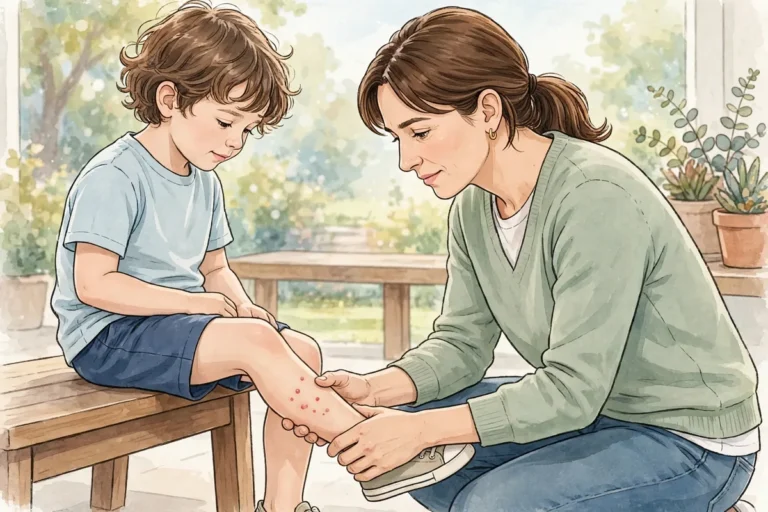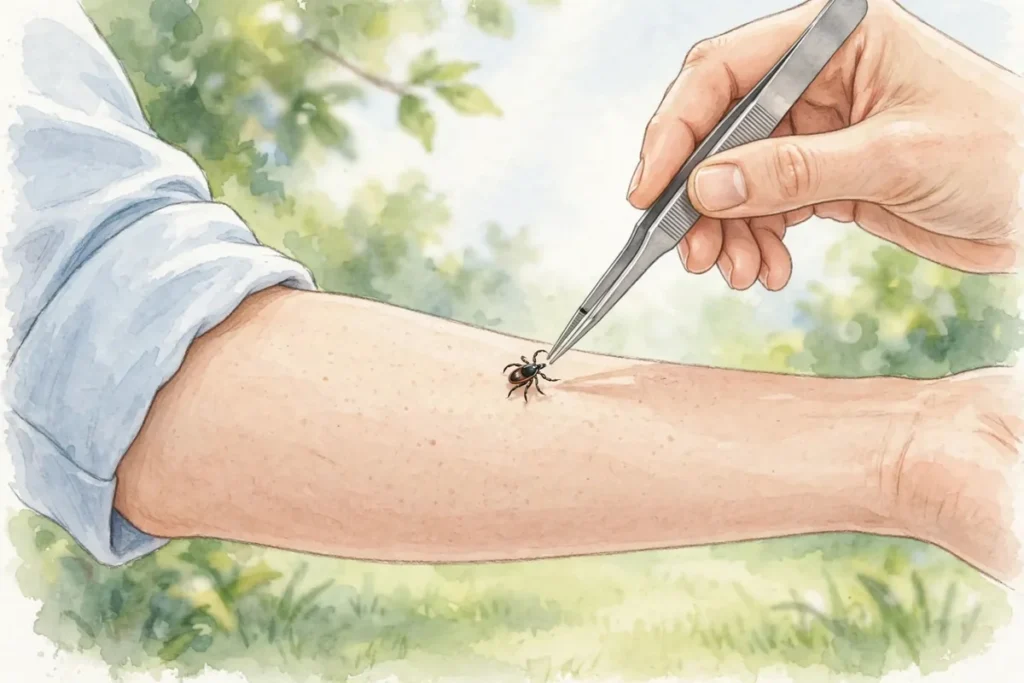
Finding a tick buried in your skin triggers an instant urge to get it out with whatever is closest. That is exactly why the Vaseline trick spread so far. A viral social-media trend — covered by the New York Post in July 2026 after tick-removal hacks took off on TikTok — suggested smearing petroleum jelly over the tick to “suffocate” it until it backs out on its own. The idea sounds gentle and easy, which is what makes it dangerous.
Here is the direct answer to does vaseline remove ticks: no, it does not — and health authorities say you should not try it. The CDC explicitly warns against using petroleum jelly, heat, nail polish, or other substances to detach a tick, noting that these tricks can cause the tick to force infected fluid into your skin. The right tool is a pair of fine-tipped tweezers and a steady pull, not a jar of petroleum jelly.
This article explains why the Vaseline method fails, the removal steps the CDC recommends, and how to handle the aftermath. If you have a tick attached right now, skip to the removal section — the sooner a tick comes off, the lower your risk.
The Short Answer: Vaseline Doesn’t Remove Ticks
The theory is simple: coat the tick in petroleum jelly, cut off its air, and wait for it to loosen its grip and crawl out. In practice, ticks do not cooperate. An attached tick has inserted its barbed mouthparts and secreted a cement-like substance that glues it in place. Suffocating the tick does not dissolve that glue, and a stressed tick is less likely to release than to react defensively.
That defensive reaction is the real problem. Smothering methods — petroleum jelly, nail polish, rubbing alcohol painted on the body, a hot match — usually do not work and can make things worse. The widely cited mechanism is that a distressed tick may squeeze, break apart, or regurgitate, pushing potentially infectious material deeper into the bite site. The CDC’s guidance tells people directly not to use petroleum jelly, heat, nail polish, or other substances on attached ticks for this reason.
Why Smothering a Tick Backfires
To understand why Vaseline fails, it helps to know what an attached tick is doing. Ticks are not splinters that can be coaxed out. A feeding tick’s mouthparts include a harpoon-like structure lined with backward-facing barbs, and as it feeds it secretes a cement compound that anchors it into the skin. Petroleum jelly has no effect on this mechanical and chemical attachment. There is no reflex that makes a suffocating tick back out politely — instead, a tick under attack tends to cling harder or behave erratically.
That is where the disease risk climbs. Ticks can transmit the bacteria behind Lyme disease, Rocky Mountain spotted fever, ehrlichiosis, and anaplasmosis. Many of these pathogens live in the tick’s gut or salivary glands, and transmission generally requires hours of attached feeding. Anything that agitates the tick during removal — squeezing its body, crushing it, stressing it with chemicals or heat — risks pushing gut contents toward the bite site. Every expert removal guide converges on the same principle: remove the tick quickly, cleanly, and with as little disturbance to the tick’s body as possible.
What the CDC Recommends Instead
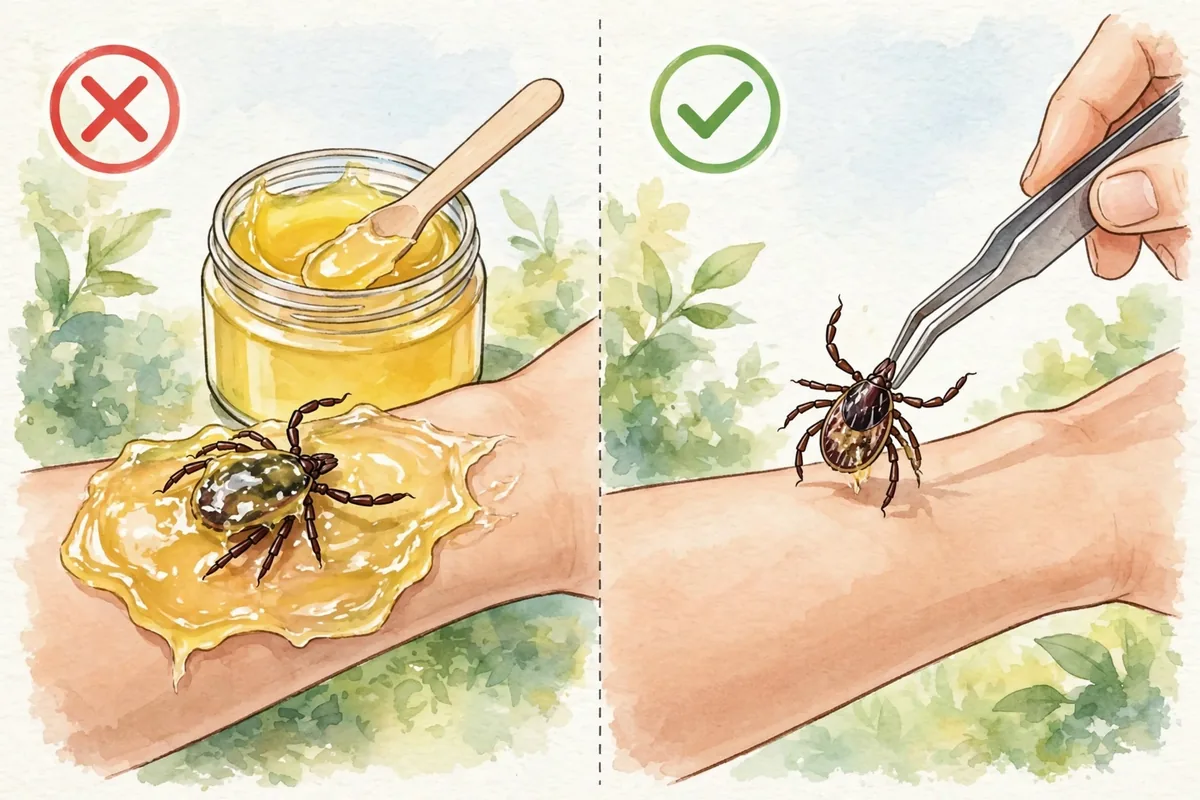
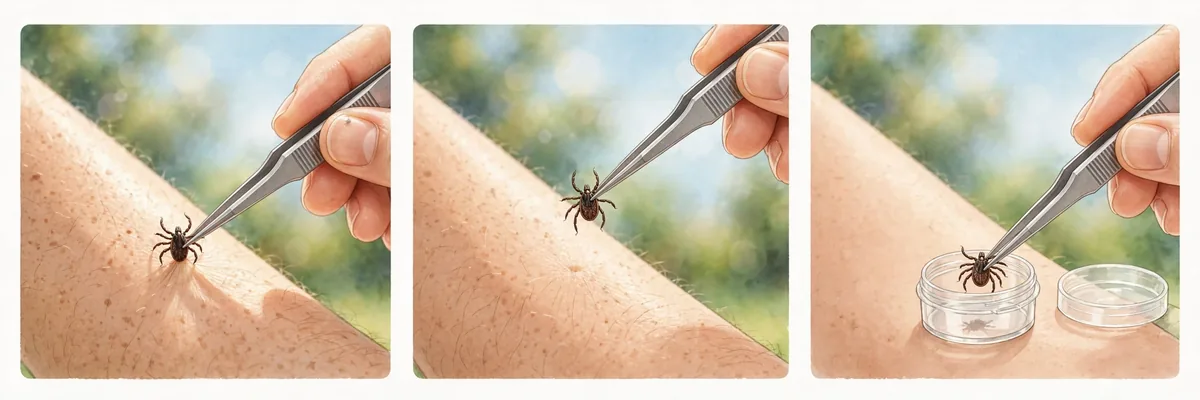
The CDC’s tick-removal guidance is short and specific. You do not need a specialty gadget — ordinary fine-tipped tweezers are the recommended tool:
Grasp the tick with fine-tipped tweezers, as close to the skin’s surface as possible. Get the mouthparts, not the belly. Squeezing the swollen abdomen is exactly what you want to avoid, since pressure on the body can force fluid into the bite.
Pull upward with steady, even pressure. Do not twist or jerk — twisting can snap the mouthparts off under the skin. If the mouthparts do break off, try to remove them with the tweezers; if they will not come out easily, leave them alone and let the skin heal.
Clean the bite area and your hands with rubbing alcohol, an iodine scrub, or soap and water.
Dispose of the tick — down the toilet, into alcohol, or into a sealed bag in the trash. Do not crush it with your fingers.
Monitor yourself for rash or fever in the weeks after the bite, and tell your doctor about the tick bite, when it happened, and where you likely picked it up.
If fine-tipped tweezers are not available, regular tweezers or fingers with a tissue barrier (grasping close to the skin) are acceptable — but do not delay removal hunting for the perfect tool. The CDC is unambiguous: remove attached ticks as soon as possible and do not wait for a healthcare visit to do it. A prompt removal with ordinary tweezers beats a delayed perfect removal every time. Keep fine-tipped tweezers in your first-aid kit and hiking pack; that preparation does more for tick safety than any internet hack.
After the Tick Is Out: Cleaning, Saving, and Monitoring
Getting the tick off is the first half. What you do in the following days and weeks is what actually protects you.
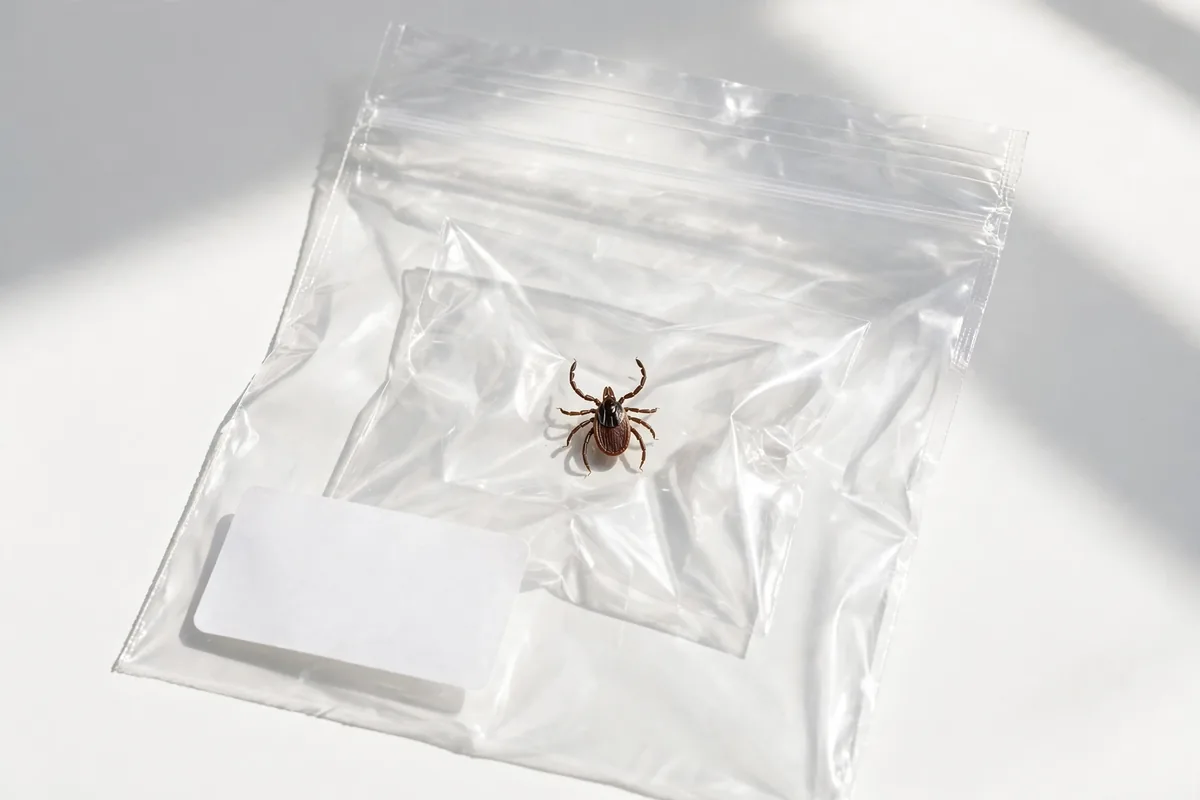
Consider saving the tick. Place it in a sealed bag or container with a lightly moistened paper towel, refrigerate it, and label it with the date, your name, and where you think you picked it up. Saving the tick makes species identification possible if you develop symptoms — and knowing the species tells your doctor which diseases are plausible in your area.
Know the timeline. Most tick-borne pathogens need hours of attachment before transmission. The commonly cited figure for Lyme disease is that the black-legged tick typically must be attached 36 to 48 hours before the bacterium transmits — which is why a tick found and removed within a day is far less likely to have caused infection. Other diseases have their own timelines, but the practical takeaway is universal: fast removal is your best defense.
Watch for symptoms over the next few weeks. Call your doctor if you develop a rash at the bite site (including the expanding bull’s-eye pattern associated with Lyme disease), fever, headache, fatigue, or muscle and joint aches. Not every tick bite produces a rash, so flu-like symptoms after a known bite deserve a call even without one. Photograph the bite site on removal day so you can judge subtle changes against a baseline. Our bite and sting warning signs guide covers the broader signs that any bite needs medical attention.
Common Tick-Removal Myths That Won’t Die
The Vaseline trick belongs to a large, stubborn family of folk remedies. Here are the others worth retiring:
Burning it off with a match. Arguably the worst of the bunch — it can burn your skin, shocks the tick (same regurgitation risk as smothering), and usually breaks the tick apart rather than detaching it neatly.
Nail polish or nail polish remover. A chemical assault that does not release the mouthparts and may stress the tick. The CDC lists nail polish alongside petroleum jelly as a substance not to use.
Twisting counterclockwise to “unscrew” it. Tick mouthparts are not threaded, so unscrewing is fiction. Twisting risks snapping the mouthparts off. Pull straight and steady.
Smothering with essential oils, butter, or grease. Every variation on “suffocate it out” fails for the same reasons as Vaseline, and essential oils can irritate broken skin.
These myths persist because they are old, intuitive, and passed down through families — and because a tick that happened to detach around the same time gets credited to the trick. For a fuller checklist of what to do in the first minutes after any bite or sting, see our first-aid checklist.
Keeping Ticks Off You in the First Place
The safest tick removal is the one you never perform. Treat clothing with permethrin — the backbone of the US military’s tick guidance, since ticks that contact treated fabric die. Consumer permethrin sprays are widely available; apply to pants, socks, and shoes (not skin) and let them dry fully. Use EPA-registered repellents with DEET, picaridin, or oil of lemon eucalyptus on exposed skin, as the label directs. Dress for tick country: long pants tucked into socks and light-colored clothing that makes ticks easy to spot.
Do a full tick check after being outdoors — behind the ears, along the hairline, under the arms, inside the belly button, around the waist, and behind the knees. Shower within a couple of hours of coming inside; it washes off unattached ticks and prompts the check. Protect pets too: dogs and cats carry ticks indoors, where unattached ticks may then find a human host. Ask your veterinarian about year-round tick prevention, and check pets after outdoor play. The same no-smothering rule applies to animals.
When to See a Doctor for a Bug Bite
Most tick bites, removed promptly, cause no illness. But tick-borne diseases are real, and early treatment works far better than late treatment. Contact your healthcare provider if:
- You could not remove the entire tick, or remaining mouthparts look inflamed
- A rash develops at the bite site, including an expanding circular rash, within days to weeks
- You develop fever, chills, headache, fatigue, or muscle and joint aches within a few weeks of the bite
- The bite area becomes increasingly red, swollen, warm, or painful after the first day or two
- You develop facial drooping, severe headache with neck stiffness, or heart palpitations (rare but serious signs associated with disseminated Lyme disease)
Call 911 or seek emergency care for signs of a severe allergic reaction after any bite or sting: difficulty breathing, throat tightness, swelling of the face or lips, dizziness, fainting, or a rapid heartbeat. Learn the full warning signs in our anaphylaxis sting warning signs guide.
Frequently Asked Questions
Does Vaseline actually suffocate a tick and make it back out?
No. Coating a tick in petroleum jelly stresses it but does not release its barbed mouthparts or the cement anchoring it to your skin. The CDC explicitly warns against petroleum jelly on attached ticks because a distressed tick may force infected fluid into the skin. Use fine-tipped tweezers and a steady pull instead.
What if I already put Vaseline on a tick before reading this?
Do not panic. Wipe the petroleum jelly away gently and remove the tick promptly with fine-tipped tweezers. The smothering attempt has not guaranteed any harm — it has only failed to help. Clean the area, save the tick if you can, and monitor for symptoms over the next few weeks.
The tick’s head broke off under my skin. What now?
Try to remove the remaining mouthparts with clean tweezers. If they will not come out easily, the CDC advises leaving them alone and letting the skin heal — the body usually expels fragments on its own. Watch for infection signs (increasing redness, warmth, swelling, or pus) and call your doctor if those appear.
How long does a tick need to be attached to transmit Lyme disease?
The commonly cited estimate is 36 to 48 hours of attachment for the black-legged tick, though other diseases have different timelines. The practical takeaway never changes: remove attached ticks as soon as you find them, and do not wait for a healthcare visit to do it.
Can I get a tick tested for disease?
Some state health departments and university extension programs accept ticks for species identification, and some commercial labs offer pathogen testing. Identification is often the more useful step, since it tells your doctor which diseases are plausible. Check your state health department’s website — availability varies by state and year.
Medically reviewed by Dr. Sarah Jones, MD.
This article is for informational purposes only and isn’t medical advice. If you’re worried about a bite or sting, talk to a healthcare professional.