You’ve just come inside from a summer evening, and there it is: the unmistakable itch of a fresh mosquito bite blooming on your ankle. Your fingernails hover, and the urge to scratch feels almost irresistible. So does scratching make mosquito bites worse, or is it just something your grandmother warned you about?
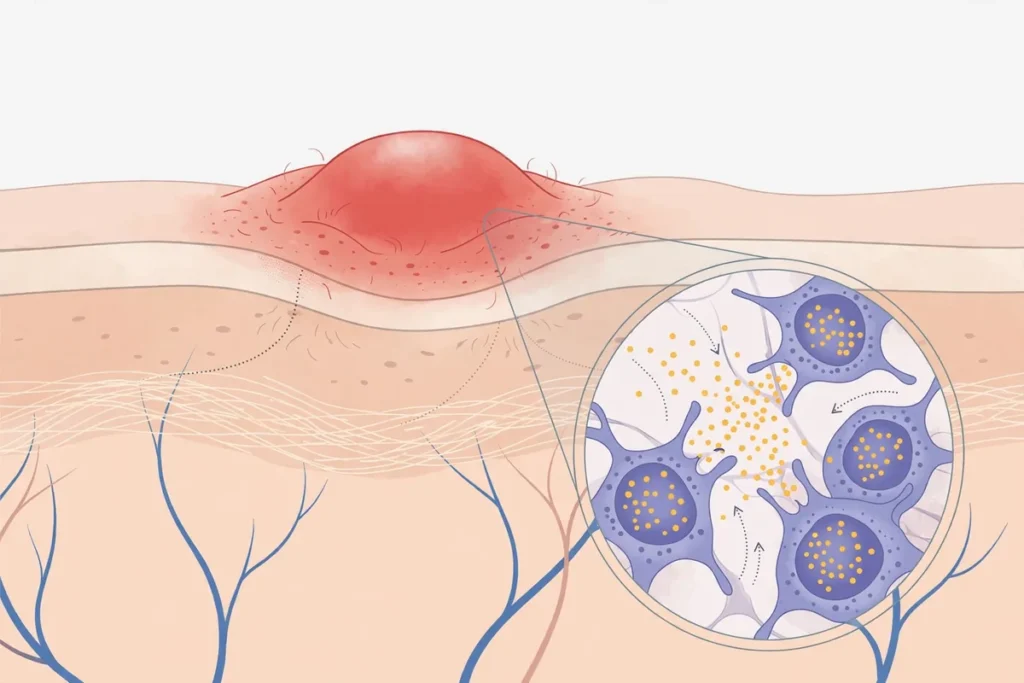
The short answer is yes — scratching makes mosquito bites worse. Scientists have long known that scratching increases skin inflammation and can aggravate conditions like eczema, but research published in early 2025 in the journal Science finally explains the biological mechanism behind it. When you scratch, pain-sensing nerve cells release a chemical messenger called substance P, which activates mast cells in your skin through a pathway distinct from allergens. The result is a double hit of inflammation: more swelling, a longer-lived itch, and in some cases a bite that lingers for days instead of minutes.
This article breaks down the science of why scratching feels so good in the moment, why it backfires, and what actually works to calm an itchy bite.
Why Mosquito Bites Itch in the First Place
A mosquito bite itches because of your immune system’s reaction to the insect’s saliva, not because of the puncture itself. When a female mosquito feeds, she injects saliva containing proteins that keep your blood flowing and numb the puncture site so she can feed undetected. Your immune system recognizes these foreign proteins and responds the way it responds to any invader.
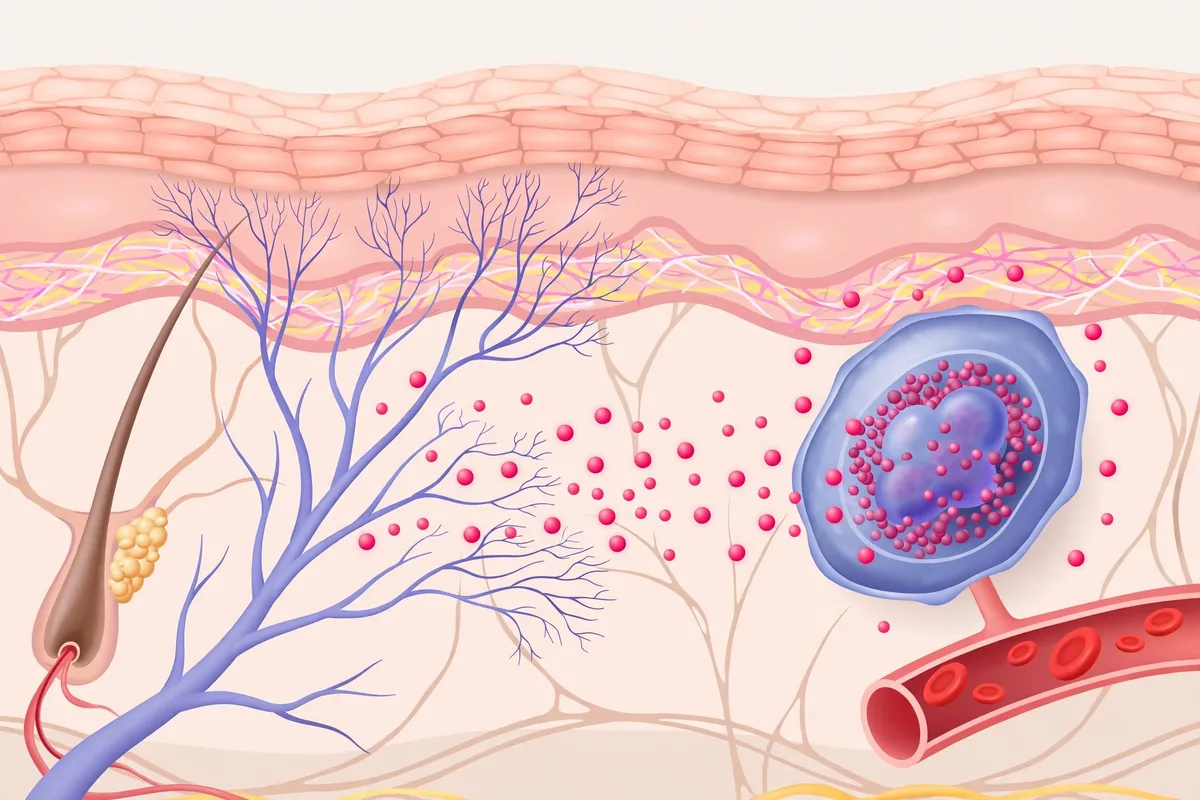
Mast cells, among the immune system’s first responders, are among the first to the scene. When activated, they release inflammatory compounds — most famously histamine — that trigger the classic bite symptoms: redness, swelling, warmth, and itch. The familiar raised welt is essentially a tiny, localized allergic reaction.
Not everyone reacts the same way. Some people develop large, dramatic welts while others barely notice a bite. Children, people with certain immune profiles, and those who react strongly to insect saliva (a condition sometimes called Skeeter syndrome) can experience outsized responses. Individual sensitivity also changes over time; people who are bitten frequently may become less reactive, while others seem to get more sensitive with each season.
The itch peaks within the first day or so and normally fades as the immune response resolves. Left alone, most bites calm down within a few hours to a couple of days. Scratching is what converts that brief annoyance into a week-long problem — and the science finally shows exactly how.
What the New Research Actually Found
The research that made headlines — published in Science in January 2025 — came from the University of Pittsburgh, led by dermatology and immunology professor Dr. Daniel Kaplan, whose laboratory studies immune reactions in skin. The team was originally investigating a common type of itch called allergic contact dermatitis — the kind of reaction triggered by irritants such as poison ivy or the nickel in costume jewelry.
In the experiment, researchers applied a rash-inducing irritant to the ears of mice. One group of normal mice was allowed to scratch freely. Another group, fitted with small cone-like collars, itched but could not scratch. A third group was genetically modified to lack itch-sensing nerve cells entirely.
The results were clear: mice that scratched developed significantly more swelling and accumulated far more inflammatory immune cells at the site than mice that could not scratch. The mice wearing collars — still itchy, but unable to scratch — had much milder reactions. This isolated scratching itself, rather than the underlying itch, as the driver of the extra inflammation.
Then came the mechanism. When the team examined the skin more closely, they found that scratching activated mast cells — the same alarm-system immune cells involved in the initial bite reaction. But the trigger was different. Scientists have long known that allergens can activate mast cells. The Pittsburgh team found that pain signals can summon mast cells too. In further experiments, the team showed that scratching causes pain-sensing nerve cells to release substance P, which activates mast cells through a molecular pathway — the mast-cell receptor MrgprB2 — distinct from the allergen pathway. Because people tend to scratch until it starts to hurt, scratching fires up pain-sensing nerve cells, which release substance P, creating a double hit that explains why scratching further inflames itchy skin.
In interviews about the study, Dr. Kaplan offered an everyday takeaway: ignore a mosquito bite and the itch fades quickly for most people — but start scratching it, and it becomes your companion for days, growing itchier and more inflamed. The mouse study suggests there may even be an evolutionary trade-off at work: in the experiments, scratching brought more inflammatory and antimicrobial cells to the site, hinting at a small germ-fighting benefit — but not one that comes close to justifying the damage in everyday life.
One honest caveat: this was animal research on a dermatitis model, not a clinical trial on human mosquito bites. Still, the substance P–mast cell pathway is real human biology, and the findings line up squarely with decades of clinical experience in dermatology. It’s the strongest mechanistic evidence yet for something doctors have told patients forever.
Why Scratching Feels So Good (Briefly)
If scratching is so counterproductive, why does it feel like pure relief? Because scratching activates pain-sensing nerve fibers that temporarily override the itch signal. Mild pain travels along some of the same neural pathways as itch, and the brain can only fully process one sensation at a time. Scratch until it hurts a little, and the pain essentially drowns out the itch.
That relief is genuine — but it’s also the trap. The moment the pain signal fires, it triggers the substance P release described above, which activates more mast cells, which release more histamine and inflammatory chemicals, which cause more itching. You’ve bought thirty seconds of relief at the price of hours more itch. The itch-scratch cycle is a feedback loop, and every scratch feeds it.
There’s also a behavioral layer: scratching becomes a habit. The hand drifts to the bite without conscious thought, especially during sedentary moments — watching television, falling asleep. Recognizing the pattern is the first step to breaking it.
The Real Costs of Scratching
Beyond prolonging the itch, scratching carries concrete risks worth taking seriously:
Broken skin and infection. Fingernails break the skin’s barrier, creating tiny openings where bacteria — including the staph and strep bacteria that live on your own skin — can enter. An infected bite shows spreading redness, warmth, increasing pain, swelling that grows instead of shrinks, and sometimes pus. Infection of the deeper skin layers is called cellulitis, and it needs prompt medical treatment, sometimes with antibiotics.
Scarring and dark marks. Repeated scratching damages the skin’s pigment cells and can leave behind dark marks or raised scars that persist for weeks or months after the itch is gone. People who scratch aggressively sometimes end up with marks that outlast the bite itself by months.
Delaying healing. Every scratch re-injures tissue your body is trying to repair. What would have been a small welt resolving in a day or two can stay raw and inflamed for a week, and the longer skin stays broken, the greater the window for secondary infection.
Itch sensitization. People who habitually scratch itchy skin may develop heightened sensitivity in the area, making subsequent bites in the same spot seem itchier than they otherwise would be.
None of this means a single absent-minded scratch is a medical emergency. It means the habit compounds the problem, and the science now gives you a concrete biological reason to resist the urge rather than just folk wisdom.
How to Stop Scratching a Bite
Knowing the mechanism helps, but the urge is physical. These strategies actually work:
- Occupy the hands. Keep the bite covered with a bandage or your sleeve. Covering it removes both the temptation and the visual reminder.
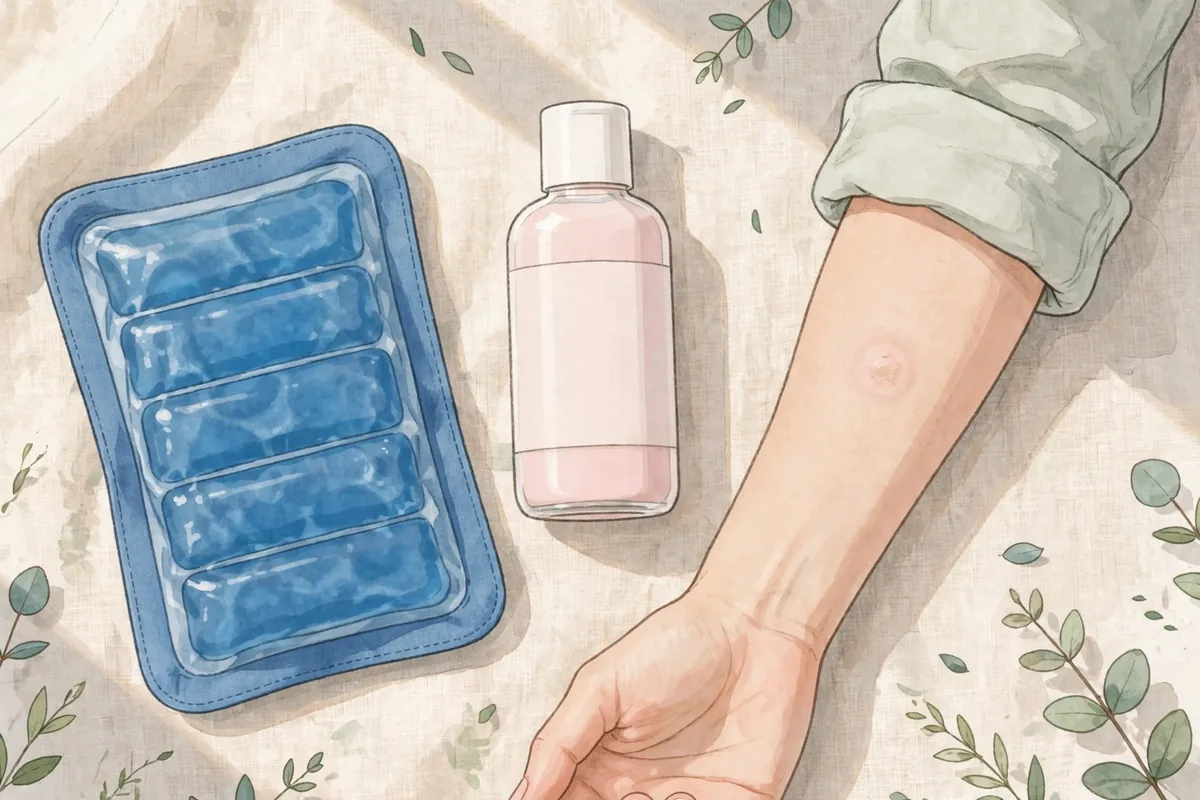
- Switch the sensation. Press the bite firmly, hold an ice cube wrapped in cloth against it, or run cool water over it. Counter-stimulation soothes without triggering the substance P pathway.
- Use the right topical. Over-the-counter options like 1% hydrocortisone cream or calamine lotion calm inflammation directly. Applied early, they short-circuit the itch before the urge builds.
- Consider an oral antihistamine. For people with strong reactions, a non-drowsy antihistamine can take the edge off the histamine-driven itch during the day.
- Mind the night. Most people scratch in their sleep. Keeping nails trimmed short reduces damage, and a bandage over the bite adds a physical barrier.
- Name the loop. When the urge hits, remind yourself: scratching feels like relief but is more inflammation. The research gives you a mental lever — you’re not just being disciplined, you’re outsmarting a mast-cell cascade.
For a broader overview of first-aid options that help without the risks of scratching, a cold compress is one of the simplest, safest tools available.
What Actually Helps Instead
The goal is to reduce inflammation and block the itch signal without scratching:
- Cold compresses constrict blood vessels and numb the area, reducing both swelling and the itch sensation. Apply for 10–15 minutes at a time.
- Topical corticosteroids such as hydrocortisone cream reduce the immune response directly at the site.
- Baking soda paste (a few teaspoons of baking soda mixed with water) is a long-standing home remedy that many people find soothing for the itch.
- Oral antihistamines help when multiple bites are itching at once or when the reaction is strong.
- Avoid heat at first. Hot water on an itchy bite can feel good for a moment — same masking effect as scratching — but heat increases blood flow and can worsen inflammation.
- Leave it alone. The least-intervention option is genuinely effective: protected from scratching, most mosquito bites resolve on their own within a day or two.
If you want the full step-by-step first-aid sequence for any bite or sting, our bite and sting first-aid checklist walks through it in order.
When to See a Doctor for a Bug Bite
Most mosquito bites are harmless and resolve on their own. Seek medical care if you notice any of these red flags:
- Signs of anaphylaxis (call 911 immediately): difficulty breathing, swelling of the lips, tongue, or throat, dizziness, rapid pulse, hives spreading beyond the bite, or nausea and vomiting after a bite or sting. Learn the full warning signs at anaphylaxis warning signs.
- Signs of infection: spreading redness or red streaks radiating from the bite, increasing warmth, swelling that worsens after 24–48 hours instead of improving, pus, or fever. These suggest cellulitis, which usually needs antibiotics.
- Timeline violations: a bite that keeps growing after two days, or one that hasn’t improved at all after a week.
- Skeeter syndrome–type reactions: very large welts (several inches across), especially with significant swelling or blistering — worth discussing with a doctor to rule out infection.
- Bites on sensitive areas: bites near the eye, on the eyelid, or inside the mouth or throat warrant a clinician’s look.
- Systemic symptoms: fever, headache, body aches, or rash appearing days after bites, particularly if you’ve traveled — some mosquito-borne illnesses present this way, and only a clinician can evaluate that.
Never try to diagnose yourself from the bite’s appearance alone. When in doubt, get checked.
Frequently Asked Questions
Does scratching a mosquito bite spread the venom?
Mosquitoes don’t inject venom — they inject saliva containing anticoagulant proteins. Scratching doesn’t spread anything through your bloodstream; it worsens inflammation locally by triggering the substance P–mast cell pathway and risks breaking the skin, which can introduce bacteria from the surface.
Why do mosquito bites itch more at night?
Nighttime itchiness has several drivers: fewer distractions make you more aware of sensations, body temperature rises slightly under bedding, and the anti-inflammatory hormone cortisol dips overnight. That’s why bites you barely noticed at noon can feel unbearable at midnight. Read more about why bug bites itch at night.
Is it ever okay to scratch a mosquito bite?
A light touch won’t cause harm, but scratching until it relieves the itch means scratching until pain fibers fire — exactly the threshold that triggers the inflammatory cascade. If you need sensation on the bite, use pressure or cold instead of nails.
How long does a mosquito bite last if I don’t scratch it?
Typically the itch peaks within the first 24 hours and fades over one to three days, with the welt shrinking as inflammation resolves. Scratching can extend that to a week or more and leave marks that linger far longer.
Does the “X” with a fingernail trick work?
Pressing a fingernail cross into a bite provides brief counter-irritation — the same pain-masking-itch effect as scratching. It may feel like it helps for a minute, but it can break the skin and doesn’t address the underlying inflammation. A cold compress or hydrocortisone cream is a better bet.
Medically reviewed by Dr. Sarah Jones, MD.
This article is for informational purposes only and isn’t medical advice. If you’re worried about a bite or sting, talk to a healthcare professional.