You found the bites — itchy welts in lines or clusters, maybe a rust-colored smear on the sheets — and now you are standing in the hardware-store aisle staring at a wall of bed bug sprays. The labels promise a lot: “kills bed bugs and eggs,” “weeks of protection,” “kills pyrethroid-resistant bed bugs.” The question typed into Google thousands of times a month deserves a straight answer.
Here is the honest verdict on do store bought bed bug sprays work: yes, they kill the bed bugs they directly contact — and no, they almost never eliminate an infestation on their own. A spray is a contact weapon in a war that is mostly about hiding places. The EPA warns that spraying over and over whenever you see a bug is unlikely to eliminate the infestation and can make things worse by driving resistance.
The Honest Answer Up Front
Store-bought bed bug sprays are contact killers. When wet spray lands directly on a bed bug, most products kill it. A few products with residual claims keep killing bugs that cross the dried residue for days or weeks — though results vary by surface, application, and the local population’s resistance.
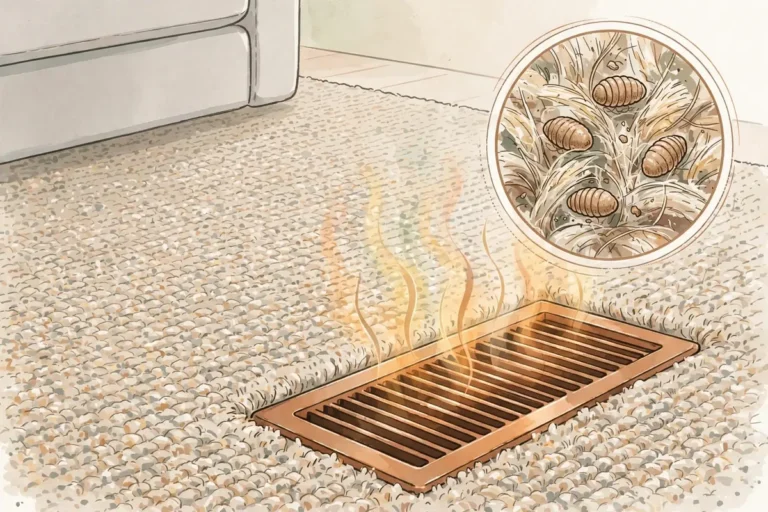
What the spray cannot do is reach the bugs you cannot see. Bed bugs are flat-bodied, roughly the thickness of a credit card when unfed, and squeeze into spaces nearly impossible to treat: inside electrical outlets, under wallpaper edges, deep in mattress seams and box-spring joints, along baseboards, inside furniture cracks, behind headboards. An established infestation is mostly hidden bugs. Spraying the visible ones kills those individuals and changes nothing about the hundreds tucked millimeters out of reach. Those survivors feed, breed, and repopulate.
This is why professionals describe bed bug control as a process, not a product. If your infestation is small and very recently introduced — a few hitchhikers from a trip, caught within days — a spray used correctly as part of a broader response can help. If you are seeing bugs regularly, finding shed skins and fecal spots in multiple locations, or getting bitten nightly, a spray alone will not finish the job. No label’s marketing copy changes that.
What Over-the-Counter Bed Bug Sprays Actually Do
The EPA lists about 300 registered pesticide products for bed bugs across seven chemical classes: pyrethrins, pyrethroids, desiccants, biochemicals, pyrroles, neonicotinoids, and insect growth regulators. Store shelves carry a subset, mostly in three forms:
Contact sprays kill bed bugs the wet spray touches. Pyrethrin and pyrethroid products dominate — the most common compounds used against bed bugs, per the EPA. They can also flush bugs out of hiding, which has a catch: flushed bugs that do not die may relocate to a new hiding spot, sometimes deeper in the room or next door.
Residual sprays claim to keep killing after drying, some advertising weeks of protection on hard surfaces. Residual performance varies enormously by surface — research has shown the same product killing well on vinyl but poorly on fabric or wood — and by resistance. Treat residual claims as a bonus, not a plan.
“Natural” and essential-oil sprays (geraniol, cedar oil, sodium lauryl sulfate bases) are heavily marketed, but evidence for them is thinner and more variable than for conventional insecticides; some kill on direct contact in lab tests but show little residual effect. “Natural” does not mean effective, and it does not automatically mean safe to spray on a mattress and sleep on.
The Resistance Problem
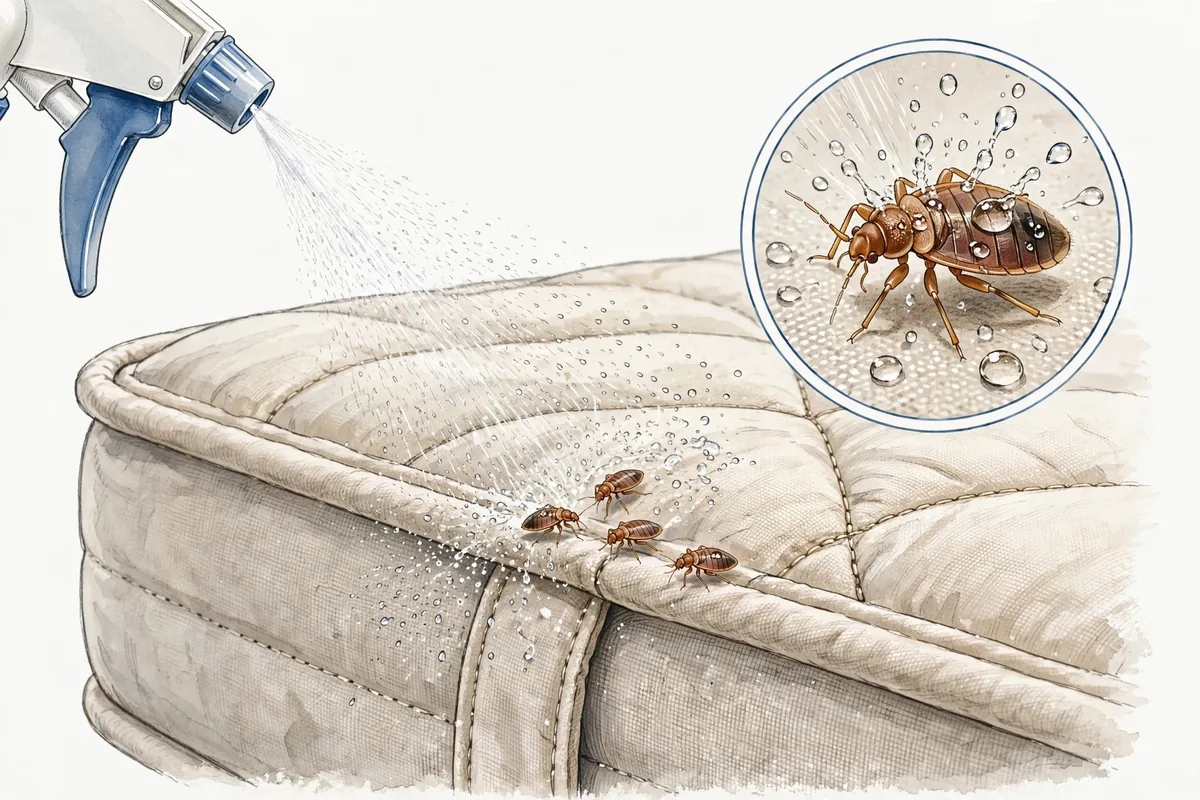
Here is what the labels mention least and what matters most: many US bed bug populations are resistant to pyrethrins and pyrethroids, the most common active ingredients in store-bought sprays. The EPA states this directly — where resistant strains exist, these treatments may cause bugs to move to a new hiding place rather than die.
Resistance works through several mechanisms. The best-documented is target-site resistance: mutations in the insect’s nerve-cell sodium channels (knockdown resistance, or kdr) change the shape of the very target the insecticide attacks, so the chemical cannot do its job. Other populations show metabolic resistance, producing increased levels of enzymes that break insecticides down before they reach the nervous system. Some populations are even developing resistance to neonicotinoids, the class once considered the promising pyrethroid alternative. Lab testing has shown products achieving near-total kill on susceptible strains while leaving resistant field populations largely alive after a week on dried residues.
For your spray can, resistance means three bad outcomes at once: it fails to kill, it flushes survivors into new hiding places, and — per the EPA — repeated applications can select for even more resistant bugs. This is why newer products combine multiple active ingredients or pair a pyrethroid with a different chemical class: combinations can improve control against resistant populations, and switching to an entirely different class is the EPA’s recommended response when pyrethroids fail.
The Mistakes That Make Sprays Backfire
Spraying on a schedule instead of on evidence. “Spray every time I see one” feels productive but is unlikely to eliminate the infestation and promotes resistance, per the EPA. Treat confirmed harborages — mattress seams, box-spring edges, bed-frame joints, baseboards near the bed — not the whole room on a timer.
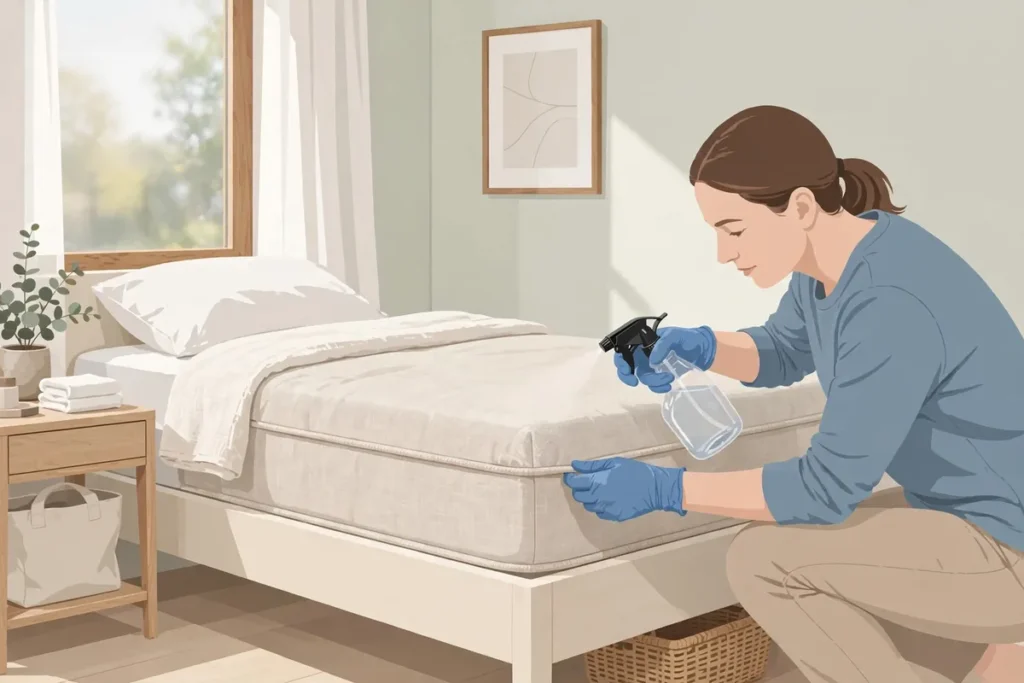
Using the product where the label forbids. Spray labels are legal documents, and misusing pesticides around beds, children, and pets has caused real harm — the EPA notes incidents of overexposure illness. Never spray a mattress and sleep on it the same night unless the label explicitly permits it and gives a dry time. Never use outdoor or agricultural pesticides indoors. Never mix products. Read the entire label before the first spray.
Treating the bed but not the room. People focus on the mattress because that is where the bites happen. But bed bugs harbor in nightstands, behind headboards, in baseboards, under carpet edges, inside outlets. A mattress-only treatment leaves the rest of the population untouched, and survivors recolonize the bed within days.
Skipping the non-chemical work. Spraying without vacuuming, decluttering, laundering, and encasing is like mopping without fixing the leak. Vacuuming physically removes bugs and eggs; hot laundering and high-heat drying kill all life stages in bedding and clothing; mattress and box-spring encasements trap bugs inside and simplify future inspections. These steps do not expire, do not select for resistance, and cost little.
Ignoring the neighbors. In multi-unit buildings, bed bugs travel through walls, along pipes, and under doors. Treating your unit while an adjacent unit seethes is a treadmill. Notify your landlord or property manager — in many jurisdictions they are legally responsible for professional treatment, and coordinated treatment of adjacent units is often necessary.
What Works Better: An Integrated Approach
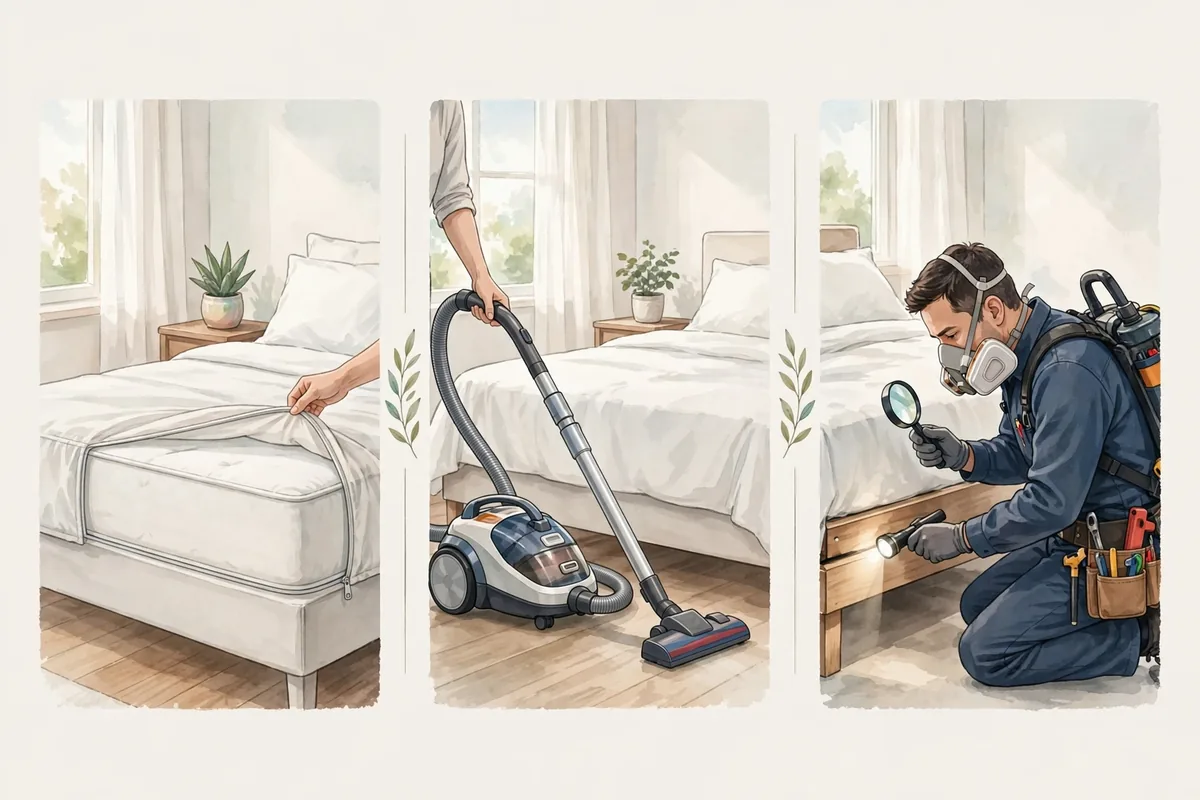
Professionals use Integrated Pest Management (IPM) — inspection, monitoring, non-chemical controls, and targeted pesticide use combined. Borrow the framework:
1. Confirm and map. Confirm you actually have bed bugs before treating. Our bed bug bite vs flea bite comparison helps with the bite side; for the bug side, look for live reddish-brown insects, shed skins, and dark fecal spots in mattress seams and nearby cracks.
2. Reduce and remove. Declutter around the bed. Vacuum mattress seams, box springs, bed frames, baseboards, and furniture joints, then empty the vacuum outside. Launder bedding and clothing on hot and dry on high heat. Install mattress and box-spring encasements.
3. Use targeted chemistry as one tool. If you use a store-bought spray, apply it as a spot treatment on confirmed harborages per the label — not as a broadcast. Consider desiccant dusts for cracks and voids; they kill physically by damaging the insect’s waxy coating, so resistance is not an issue, though they must be applied lightly where people and pets will not disturb them.
4. Monitor and follow up. Bed bug eggs hatch in roughly a week to ten days, so one treatment never catches the next generation. Re-inspect on a schedule, keep interceptors in place, and treat again only where fresh evidence appears.
5. Know when to call a professional. The EPA advises relying on an experienced pest-management professional for pesticide application, especially for bed bugs. Call one when the infestation spans multiple rooms, DIY efforts have failed after a few weeks, you live in multi-unit housing, or health conditions make pesticide use risky. Ask whether the company practices IPM and includes follow-up inspections. For keeping them out afterward, the prevention habits that matter most are mattress encasements, inspecting luggage and used furniture, and acting fast at the first sign of a comeback.
If You Still Want to Buy a Spray: Reading the Label
Choose it like a professional:
- EPA registration number on the label. Non-negotiable. Unregistered products — including some imported or homemade concoctions sold online — have unknown contents and no verified efficacy or safety data.
- “Bed bugs” named on the label. The product must be labeled for bed bugs specifically; those directions are the only legal use pattern.
- Contact vs. residual claims, stated plainly. Prefer products that clearly state both. Vague “kills on contact!” with no residual data marks the weakest products.
- Active ingredients from more than one class. Given widespread pyrethroid resistance, products combining a pyrethroid with a neonicotinoid, a pyrrole, or a synergist offer better odds than a single pyrethroid alone.
- Formulation matched to the site. Aerosols and trigger sprays for spot-treating seams and joints; dusts for voids and cracks. Do not substitute one for the other.
- Realistic expectations. Be skeptical of any product promising to “eliminate your infestation” single-handedly. Honest products describe themselves as part of a treatment program.
A final note on cost: a $15 can of spray is cheap; the weeks it costs while an infestation grows are not. Bed bug populations expand fast — a few bugs become hundreds in a couple of months. If professional treatment was always going to be necessary, the cheapest path is usually the earliest one.
When to See a Doctor for a Bug Bite
Bed bugs are not known to transmit diseases to humans, but see a healthcare provider if:
- Bite reactions are severe: large swelling, blistering, or intense pain beyond typical itching
- You develop skin-infection signs from scratching: increasing redness, warmth, swelling, pus, or red streaks
- You have trouble sleeping or significant anxiety related to the infestation — a legitimate reason to seek help
- You experience allergic-reaction signs: widespread hives, facial swelling, difficulty breathing — call 911 for breathing difficulty or throat tightness. Our anaphylaxis sting warning signs guide covers the emergency signs
Frequently Asked Questions
Do store-bought bed bug sprays kill bed bug eggs?
Some labels claim egg kill, but eggs are the hardest life stage to reach — cemented into cracks where spray does not penetrate, with shells that protect against many chemicals. Assume no spray reliably kills all eggs. That is why follow-up treatment timed to egg hatching (about a week to ten days later) is essential.
Why did the spray kill some bugs but the infestation came back?
You killed the exposed bugs and missed the hidden ones — in outlets, wall voids, deep furniture joints, neighboring units. Survivors repopulate quickly. This is the fundamental limit of contact sprays, compounded by pyrethroid resistance. A comeback after spraying signals the need for an integrated approach, not more of the same can.
Should I use a bug bomb fogger for bed bugs?
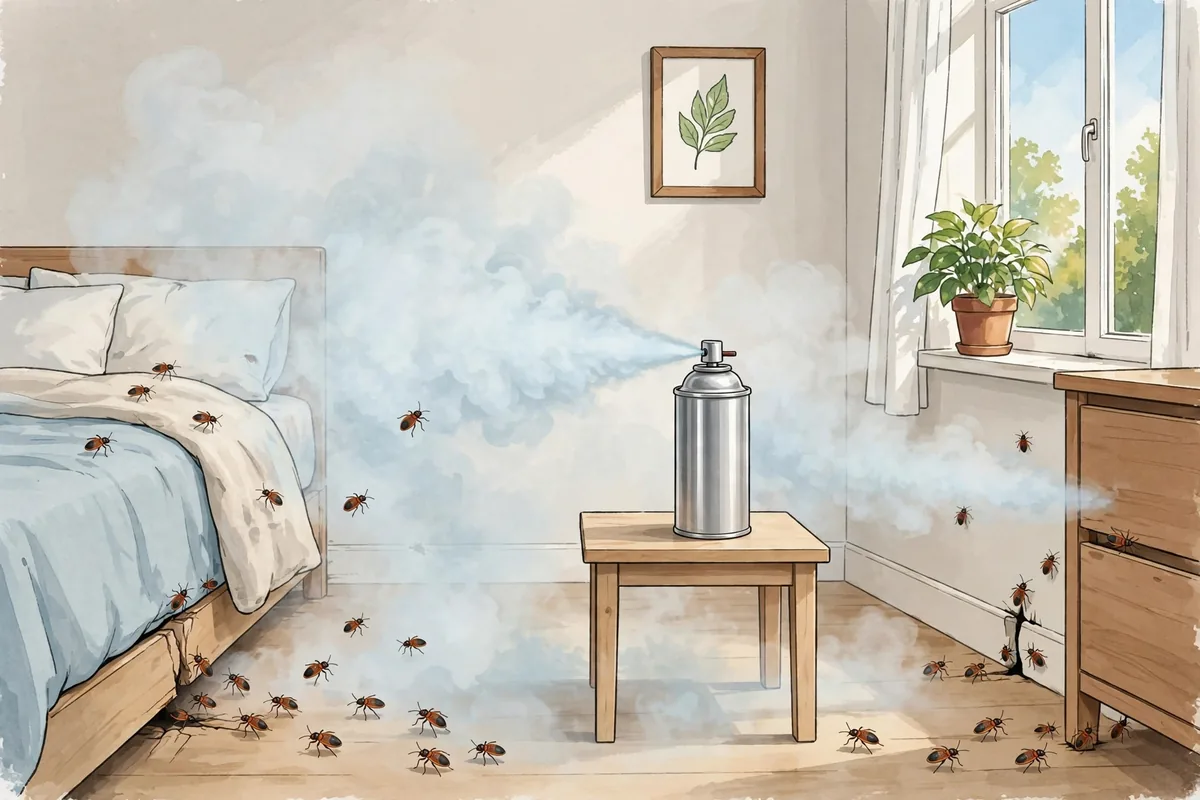
No. The EPA advises against foggers for bed bugs: the mist does not penetrate hiding places, it can scatter bugs deeper into walls and adjacent units, and misuse has caused injuries and illnesses. Foggers are one of the few DIY measures that can actively make an infestation worse.
How do I know if I need a professional instead of DIY?
Call a professional if you find evidence in multiple rooms, if correctly applied treatments have not reduced activity after a few weeks, if you live in multi-unit housing, or if health considerations make pesticide use risky. Ask whether the company practices Integrated Pest Management and includes follow-up inspections — the markers of a serious operator.
Medically reviewed by Dr. Sarah Jones, MD.
This article is for informational purposes only and isn’t medical advice. If you’re worried about a bite or sting, talk to a healthcare professional.