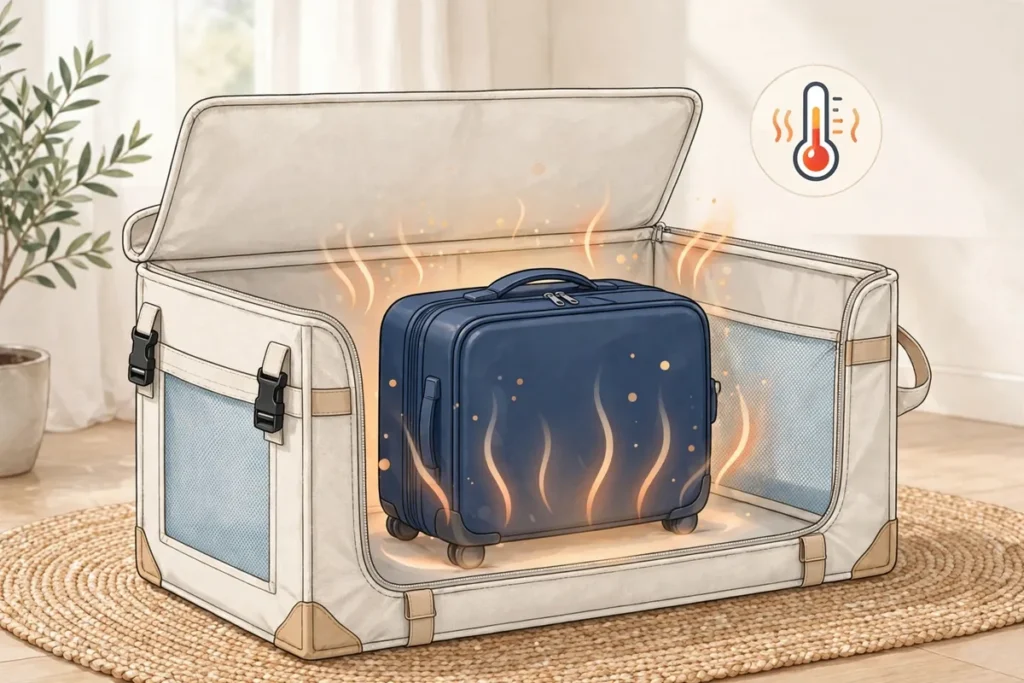
You just got home from a trip, and somewhere between the airport and your front door, the worry set in: did a bed bug hitchhike home in your suitcase? Portable bed bug heaters — fabric chambers like the ZappBug Heater, ThermalStrike Ranger, and PackTite units — promise to solve that exact fear. You load your luggage in, heat it up, and kill any bed bugs before they can start an infestation.
So do portable bed bug heaters work? The honest verdict: the underlying science is solid — sustained heat reliably kills bed bugs and their eggs — but portable units have real limits in capacity, treatment time, and user error that buyers need to understand. They’re a legitimate tool for treating luggage and personal items, not a substitute for professional treatment of an actual infestation. Here’s the full, honest breakdown.
The Science: Why Heat Kills Bed Bugs
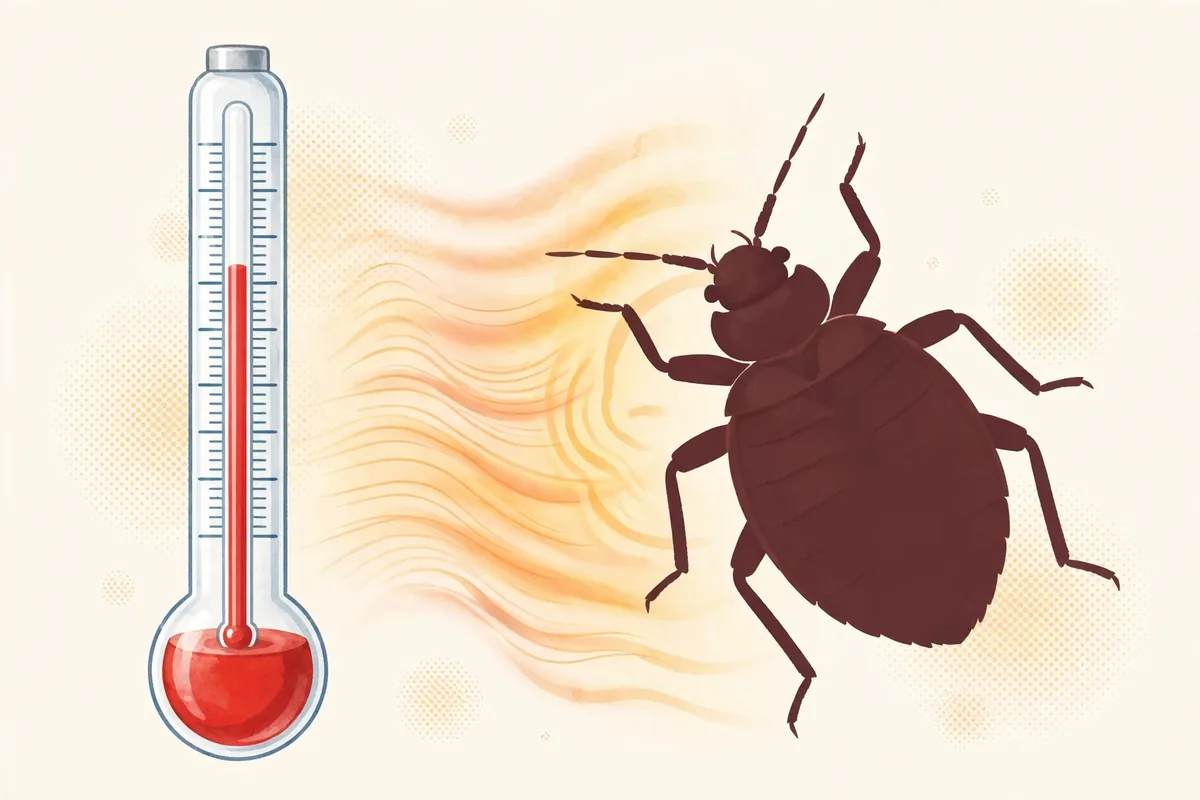
Heat is one of the few bed bug treatments that works on every life stage, including eggs, which many insecticides struggle to kill. The biology is straightforward: bed bugs are cold-blooded, and their proteins denature — unravel and stop working — at high temperatures, causing rapid death.
The lethal thresholds are well established. Adult bed bugs begin dying around 113°F with sustained exposure, while eggs require about 118°F for roughly 90 minutes. The commonly cited practical target is 120°F (about 49°C) sustained for at least 90 minutes, which the EPA references for professional heat treatments to ensure eggs are killed. Professional whole-room treatments typically raise rooms to 120–145°F and hold those temperatures for several hours, using fans and sensors to make sure heat penetrates every hiding spot.
This is why heat has a real advantage over chemical sprays for luggage: it’s non-toxic, leaves no residue on your belongings, and kills eggs — the stage most likely to survive a quick inspection or a spray. When a portable heater genuinely holds 120°F+ throughout the chamber for the full recommended time, it kills what it heats. The question is always whether it heats everything, everywhere, for long enough.
How Portable Heaters Are Supposed to Work
Portable bed bug heaters are essentially insulated fabric chambers — think of a collapsible oven bag large enough for a suitcase. You place infested or suspect items inside (luggage, backpacks, shoes, clothing, books), zip it closed, and the unit’s heating element raises the internal temperature to the lethal range. Most manufacturers recommend treatment times of several hours, and the better units include thermometers or temperature probes so you can verify the heat actually reached the target.
The intended use case is narrow and specific: treating portable belongings, especially after travel. You return from a hotel, suspect exposure, and instead of hoping for the best, you heat-treat your luggage and its contents. Used this way, they’re a sensible layer of defense — considerably more reliable than visually inspecting a suitcase (bed bugs and their eggs are expert hiders) and safer than spraying your belongings with insecticide.
Some travelers also use them proactively in hotel rooms, treating their bag at the start of a trip. That’s reasonable too, though it doesn’t protect the bag from exposure during the rest of the stay.
What Portable Heaters Can and Can’t Do
Here’s where the honest verdict gets nuanced. Portable heaters work within their design limits — and fail outside them.
What they can do:
- Kill bed bugs and eggs on and inside luggage, clothing, shoes, books, and other portable items — if the heat fully penetrates.
- Provide a chemical-free treatment for items you don’t want to spray or wash.
- Handle items that can’t go in a washing machine, like suitcases, backpacks, and electronics-adjacent accessories (with care).
- Serve as a strong preventive step after travel, especially after staying somewhere with a questionable reputation or a confirmed sighting.
What they can’t do:
- Treat a room or an infestation. A portable chamber treats what’s inside the chamber. It does nothing for bed bugs hiding in your mattress, bed frame, baseboards, or walls. Anyone selling you a portable heater as a whole-home solution is misleading you. An established infestation needs professional treatment — heat, targeted insecticide, or both.
- Work instantly. Heat must be sustained. Research on abbreviated heating showed that bugs and eggs pulled out after short exposures — even where temperatures had briefly reached the lethal range — often survived. The lethal temperature must be held long enough for heat to penetrate every fold and seam. Rushing the cycle is the most common user error.
- Treat everything. Items that can melt, warp, or catch fire at high temperatures don’t belong in a heat chamber: aerosols, pressurized cans, candles, certain plastics, vinyl records, some medications, and anything with batteries that shouldn’t be heated. Check manufacturer guidance and use common sense.
- Overcome overpacking. Cramming the chamber full of densely packed items creates cool spots where heat doesn’t reach. Air needs to circulate. Fewer items per cycle, loosely arranged, treat more reliably than a stuffed chamber.
- Replace inspection. A heater treats what you put in it. Bed bugs also hide in the car you drove home in, the coat you wore, and the bag you didn’t treat. Heat chambers are one tool in a routine, not the whole routine.
The bottom line: portable heaters are an effective luggage and belongings treatment when used patiently and correctly. They are not an infestation treatment, and marketing that blurs that line should be read skeptically.
Choosing and Using One Safely and Effectively
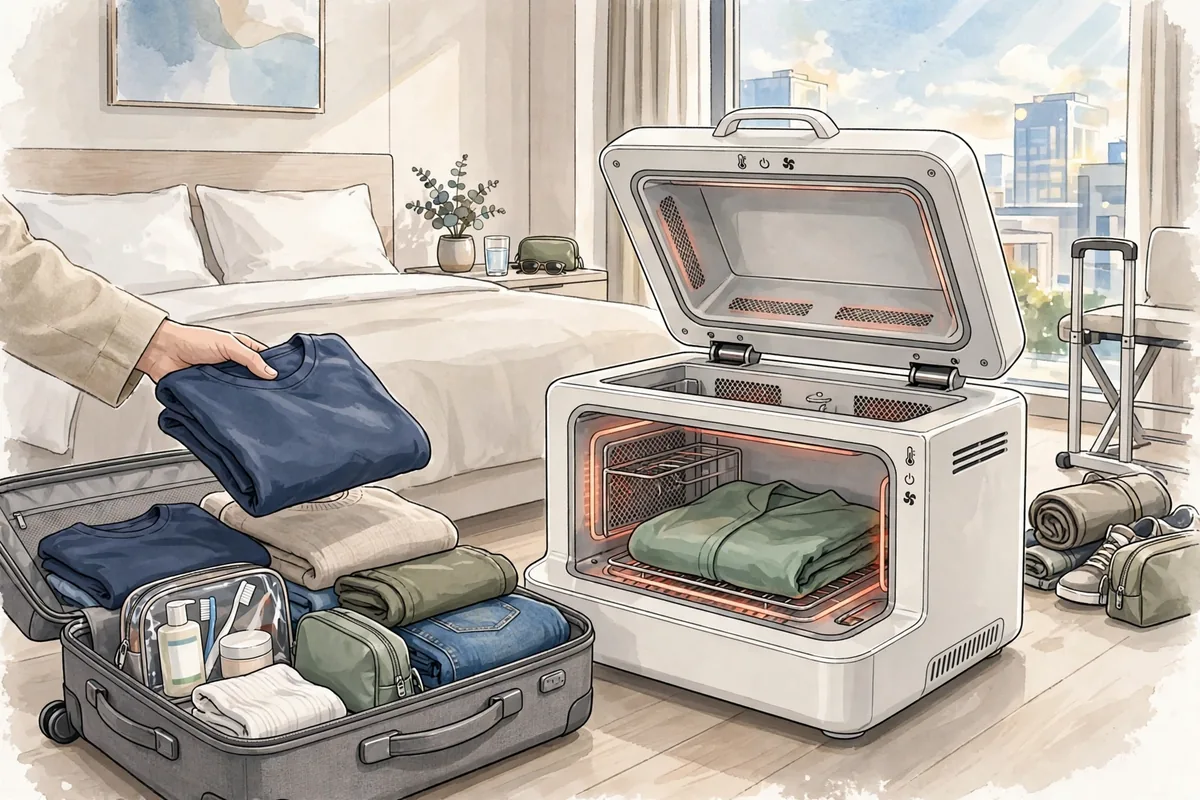
If you decide a portable heater fits your travel routine, here’s how to get real value from it:
- Size it honestly. Measure your largest suitcase and buy a chamber that fits it with room to spare. An undersized unit you’ll have to cram is worse than none at all.
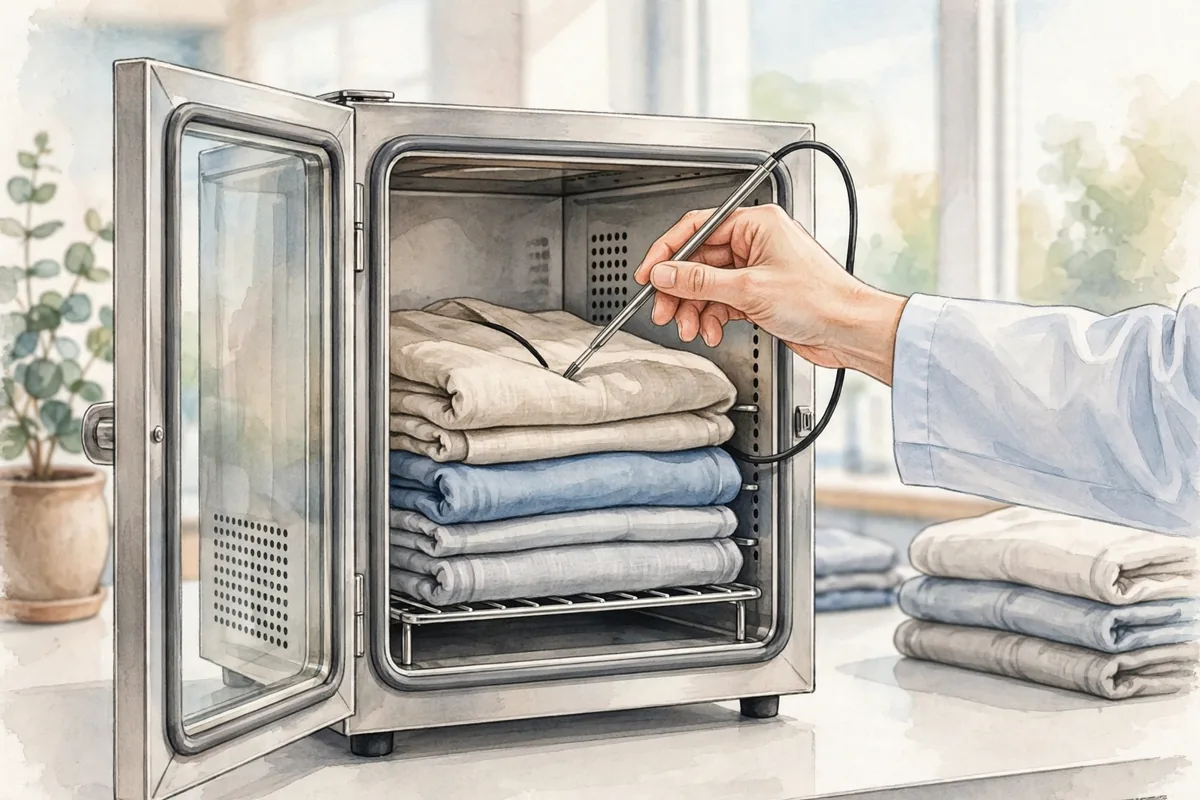
- Verify temperature. Prefer units with a built-in thermometer or probe, and spot-check that the interior actually reaches and holds 120°F or higher. Don’t trust a timer alone — trust the temperature reading.
- Give it the full time. Follow the manufacturer’s recommended cycle completely, and err on the longer side for densely packed loads. The research is unambiguous: abbreviated heating leaves survivors.
- Arrange items loosely. Unzip luggage compartments, open bags, spread clothing. Heat penetrates still air poorly; circulation is what carries it into seams and folds.
- Treat everything from the trip. The suitcase, the carry-on, the shoes, the jacket you tossed on the hotel chair. Partial treatment leaves gaps.
- Mind fire and heat safety. These units run hot for hours. Place them on a hard, heat-safe surface away from flammables, never leave them running unattended in a way the manufacturer warns against, and keep children and pets away during the cycle.
- Know what not to heat. Remove aerosols, lighters, pressurized containers, candles, heat-sensitive medications, and electronics with batteries before every cycle.
And keep perspective on cost: portable heaters are a meaningful purchase, typically running into the low hundreds of dollars. For frequent travelers who stay in varied accommodations, that can be worthwhile insurance. For someone who travels twice a year to the same clean hotel, a simpler routine — inspection plus a hot dryer cycle for washables — may be all you need. Running washable clothing through a hot dryer for 30 minutes kills bed bugs and eggs just as reliably, for free.
The Bigger Picture: Heat in a Full Bed Bug Strategy
Portable heaters sit in a specific slot in bed bug management: post-travel belongings treatment. They’re not pest control for your home. If you find bed bugs established in your bedroom — recurring bites, live bugs in mattress seams, fecal spots on bedding — skip the gadgets and call a licensed pest professional. Professionals use industrial heaters, fans, and sensor networks to treat whole rooms, plus residual insecticides where appropriate, with follow-up inspections. No consumer device replicates that.
For travelers who want the complete playbook, pair a portable heater with the basics: inspect hotel beds and headboards on arrival (our what-bit-me identification guide shows what to look for), keep luggage on racks rather than beds, and run our hotel bed-bug check routine wherever you stay. For ongoing home defense, pair the heater routine with the full home-prevention basics: sealed mattress encasements, bed-leg interceptors, and regular checks of mattress seams and headboards.
One more honest note: no portable heater, dryer cycle, or inspection routine is 100%. Bed bugs are among the most resilient household pests precisely because they exploit tiny gaps in any routine. The goal isn’t perfection — it’s stacking enough reliable layers that a hitchhiker almost never survives the trip home.
When to See a Doctor for a Bug Bite
Bed bug bites themselves don’t transmit disease, but they can still warrant medical attention:
- Anaphylaxis signs (call 911): difficulty breathing, swelling of the face, lips, or throat, dizziness, or widespread hives. See anaphylaxis warning signs.
- Infection signs: spreading redness, warmth, increasing pain, pus, or fever after scratching bites — possible cellulitis.
- Severe reactions: unusually large welts, blistering, or significant swelling are worth a clinician’s assessment.
- Recurring bites: clusters of itchy bites appearing overnight over multiple nights point to an active infestation — see a doctor for the bites and a pest professional for the source.
Frequently Asked Questions
How hot does it need to get to kill bed bugs?
About 120°F (49°C) sustained for at least 90 minutes reliably kills bed bugs and their eggs. Adults start dying around 113°F with sustained exposure, and eggs need roughly 118°F for 90 minutes — so 120°F-plus with margin is the practical target. Brief spikes to high temperatures without sustained hold are not reliable.
Can I just use my car’s trunk in summer instead?
It’s tempting, but unreliable. Car interiors heat unevenly, temperatures fluctuate with clouds and shade, and you can’t verify sustained lethal temperatures in every fold of your luggage. A proper heat chamber with temperature verification is far more dependable.
Will a portable heater kill bed bug eggs?
Yes — if the heat fully penetrates to where the eggs are and holds long enough. Eggs are actually the stage most vulnerable to under-treatment, since they’re tucked into seams and need sustained heat. This is why full cycle times and loose packing matter so much.
Are portable bed bug heaters safe to use?
When used as directed — on heat-safe surfaces, with heat-sensitive items removed, and never left in conditions the manufacturer warns against — they’re generally safe. The main risks are fire (it’s a heater running for hours) and heat damage to belongings. Always follow the manufacturer’s safety instructions.
Do I still need to inspect my hotel room if I own a heater?
Yes. A heater treats your belongings after exposure; inspection helps you avoid exposure in the first place — and, more importantly, lets you request a room change before you sleep in an infested bed. Prevention beats treatment every time.
Medically reviewed by Dr. Sarah Jones, MD.
This article is for informational purposes only and isn’t medical advice. If you’re worried about a bite or sting, talk to a healthcare professional.