
Does Vinegar Kill Bed Bugs? What Works
Vinegar shows up in nearly every do-it-yourself bed bug discussion online. It is cheap, it is already in the kitchen, and countless forum posts…
Nobody goes to a hospital expecting to think about bed bugs. But hospitals are some of the busiest buildings in any city — hundreds of people cycling through emergency rooms,…
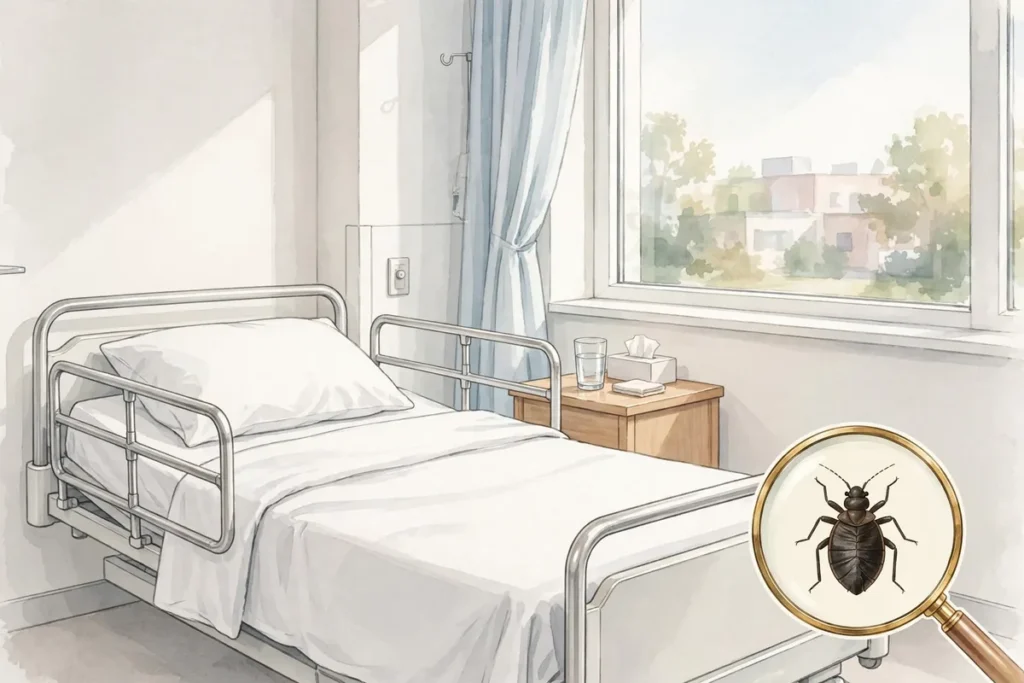
Nobody goes to a hospital expecting to think about bed bugs. But hospitals are some of the busiest buildings in any city — hundreds of people cycling through emergency rooms, waiting areas, and inpatient beds every day. Sooner or later, a hitchhiking bed bug rides in on a patient’s belongings, and local news runs the story — which is why searches for bed bugs hospitals emergency rooms patients visitors spike every time: alarming patients and visitors alike.
Here’s the practical truth. A hospital is an unusual setting for a bed bug infestation to establish itself — healthcare facilities have aggressive housekeeping protocols, high-temperature laundering, and pest management contracts. But individual bed bugs absolutely show up, usually carried in by a patient or visitor. This guide is written for you — the patient, the family member, the friend sitting in the waiting room. It covers what to do if you spot one, how to keep from bringing one home, and why this isn’t a reason to panic or a reflection on the hospital.
The honest answer is that the risk is low but not zero. Bed bugs don’t live on people — they live in furniture, bedding seams, and cracks, and they hitchhike in bags, coats, and belongings. A brief visit makes you a less attractive target than an overnight patient, but your belongings can still pick up a hitchhiker if they’re set on the wrong chair or the floor.
Hospitals differ from hotels or apartments in ways that cut both ways. On one hand, hospital rooms are cleaned aggressively between patients, linens are laundered at high temperatures that kill bed bugs and their eggs, and many facilities run routine inspections. On the other hand, emergency departments in particular see extremely high turnover, and patients sometimes arrive with belongings that harbor bed bugs — especially when people come from homes or shelters with existing infestations. Some facilities, including dialysis centers and EMS services, have published formal protocols for managing bed bugs brought in by patients, which tells you this is a recognized, routine operational issue rather than a scandal.
What this means for you: don’t fear the visit, but treat it like any public space where belongings sit unattended — with a few simple precautions that take almost no effort.
If you spot an insect you think might be a bed bug — a flat, oval, reddish-brown insect about the size of an apple seed — here’s how to handle it calmly and helpfully:
If you’re the patient and staff confirm a bed bug sighting, they may move you to another room while the area is inspected and treated. That’s standard procedure, not an emergency, and it’s designed to protect you as much as anyone else.
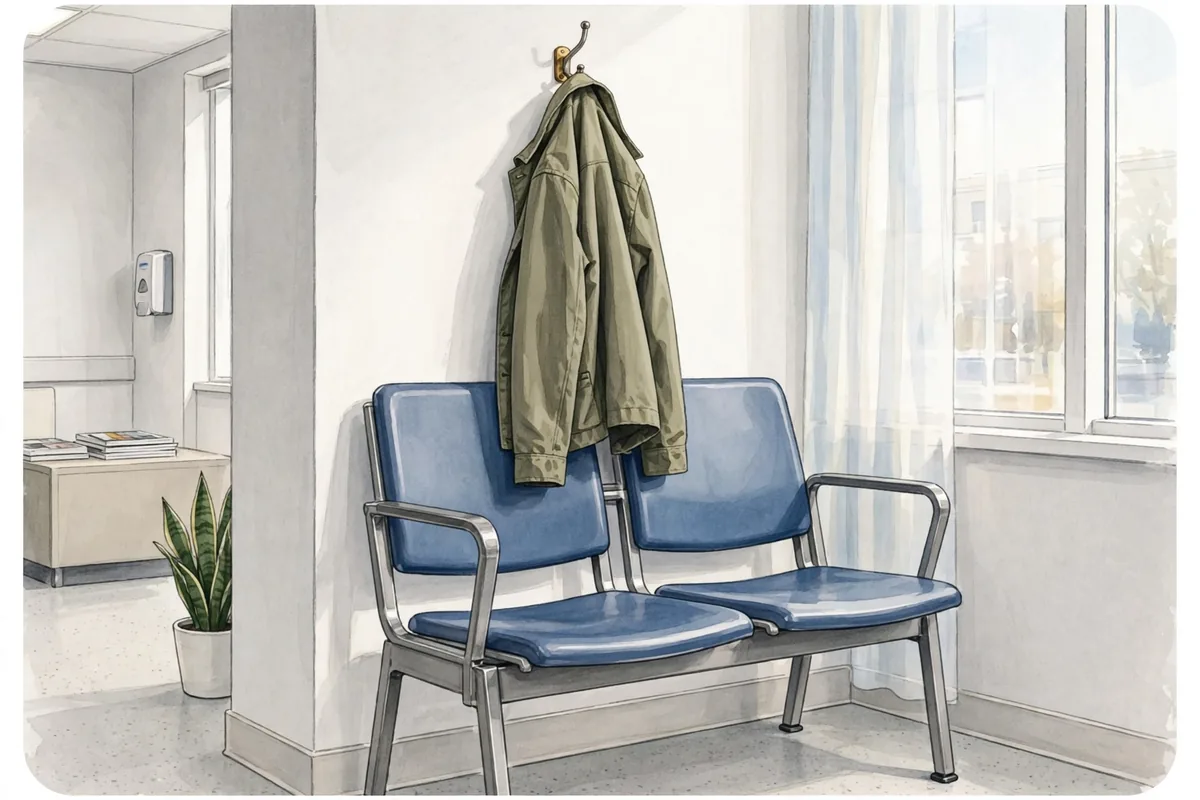
You might wonder why a hospital would have bed bugs at all — and the answer is simple arithmetic. People bring them in. Bed bugs arrive with patients’ luggage, clothing, and personal items, and occasionally with visitors’ belongings. Emergency departments, homeless-service-linked clinics, and facilities that serve vulnerable populations see them more often simply because their patient populations are more likely to have encountered bed bugs in the community.
Facilities manage this the way they manage any infection-control challenge: with protocols. Common measures include inspecting incoming patients’ belongings when bed bugs are suspected, isolating the room for treatment, high-temperature laundering of all linens and the patient’s clothing, heat treatment or targeted pest control in the affected room, and follow-up inspections. Bed bugs don’t care how clean a building is — they thrive in spotless five-star hotels too — so a sighting says nothing about a hospital’s hygiene. Bed bugs feed on blood, not grime.
One thing worth knowing: hospitals are among the most difficult places for a bed bug population to establish itself long-term, precisely because beds are stripped, rooms are cleaned, and linens are heat-laundered constantly. What you see in hospitals is almost always transient — a bug that arrived with someone’s belongings — rather than an entrenched infestation.
Before worrying, make sure you know what you’re looking at. Adult bed bugs are:
Common lookalikes in a hospital or waiting room include carpet beetles, booklice, and spider beetles. If you’re unsure, catching the specimen for staff identification is far more useful than trying to identify it yourself from memory. For a detailed walkthrough, our what-bit-me identification guide covers what bed bugs and their signs look like.
Also learn the signs beyond the insect itself: tiny rust-colored spots (fecal matter) on bedding, shed translucent skins, and a faint musty-sweet odor in heavy infestations. These are harder to spot in a hospital setting, but they’re worth knowing for checking your own home afterward.
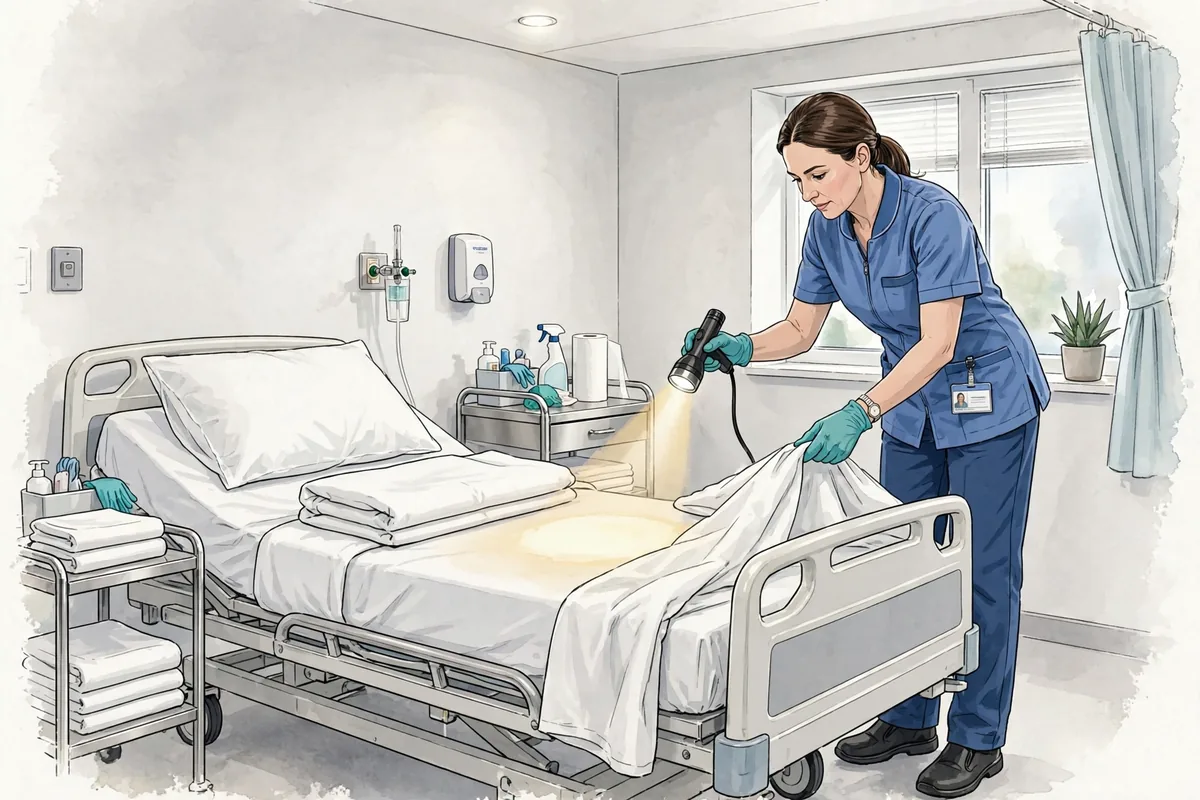
You don’t need special equipment — just a few habits that make hitchhiking nearly impossible:
If you’re an overnight patient, the same rules apply to anything you bring in: keep personal items contained, use the provided lockers or hard surfaces, and let staff handle your clothing through their laundering process if they offer.
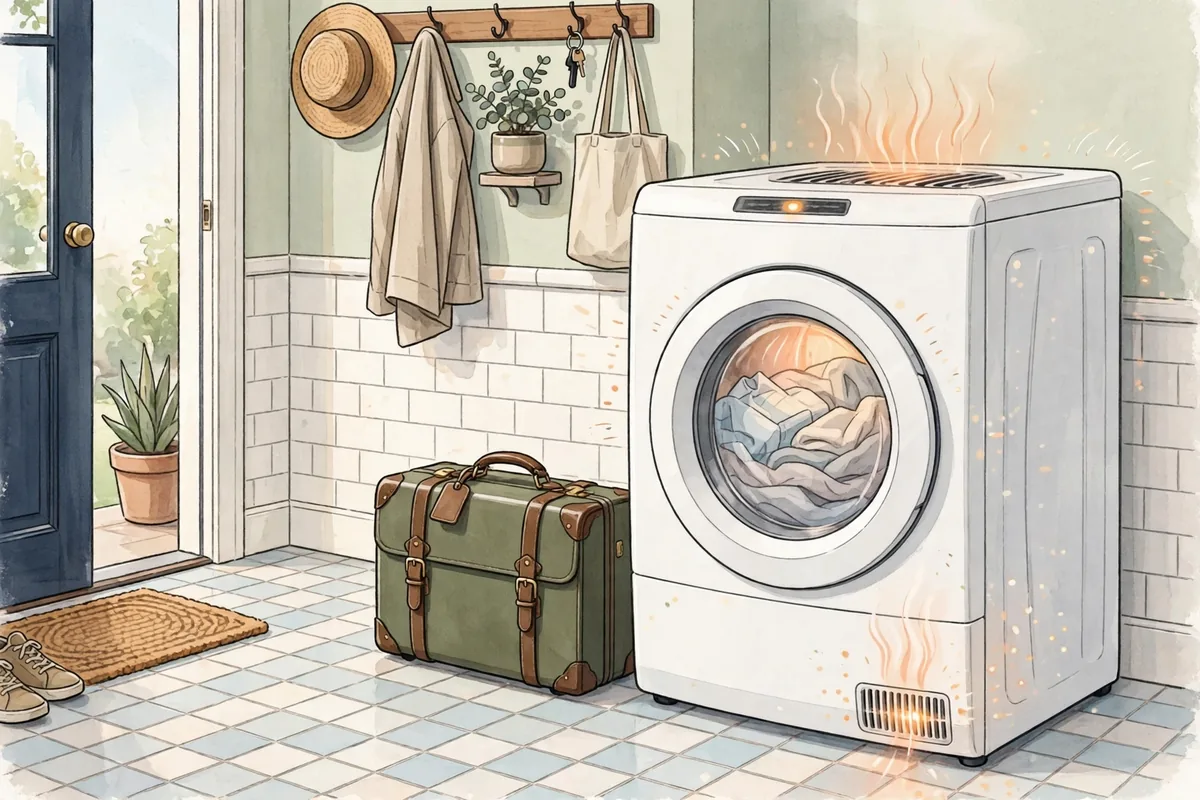
This is the part that matters most. A single bed bug brought home in a bag can become an infestation in weeks. After any hospital visit — especially an overnight stay or ER visit where your belongings sat around for hours — take these steps:
These precautions are quick, cheap, and effective — and they work for travel generally, not just hospitals. Many travelers run through the same routine when checking a hotel room, which our hotel bed-bug check guide covers in detail.
Bed bugs are not known to transmit diseases to humans, which is genuinely good news. But their bites can still cause problems worth a clinician’s attention:
A single confirmed bite after a hospital visit is not a medical emergency — it’s a prompt to check your belongings and watch for more. Keep the specimen if you find one; identification is everything.
Most bed bug bites are a nuisance, not a medical crisis. Get medical care if you notice:
Can bed bugs live on a person like lice?
No. Bed bugs don’t live on human bodies — they hide in furniture, bedding, and belongings, emerging at night to feed for a few minutes before retreating. You can’t “catch” bed bugs from hugging a patient, but your coat or bag could pick up a hitchhiker.
Should I avoid visiting someone in the hospital because of bed bugs?
No. The risk from a visit is low, and simple precautions — keeping belongings off upholstered furniture, inspecting before you unpack at home, heat-drying clothes — reduce it to near zero. Don’t let bed bug anxiety keep you from visiting someone who needs you.
Do hospitals check for bed bugs?
Most hospitals have pest management contracts and protocols for bed bug sightings, including room inspection and treatment, high-temperature laundering, and sometimes K-9 or visual inspections in higher-risk areas. If you report a sighting, staff will follow their procedure.
What should I do if I find a bed bug on my belongings after leaving?
Isolate the item in a sealed bag, heat-dry anything washable on the hottest setting for at least 30 minutes, and inspect your home’s bed and bedroom furniture for signs. Catching it early — before it can reproduce — is the entire game.
Can I sue a hospital over a bed bug?
This guide can’t give legal advice. What we can say is that transient bed bugs are a known, documented challenge in healthcare facilities everywhere, managed through standard protocols — not evidence of negligence. If you believe you were harmed, consult an attorney in your state rather than relying on internet articles.
This article is for informational purposes only and isn’t medical advice. If you’re worried about a bite or sting, talk to a healthcare professional.
A skin mark alone cannot confirm that bed bugs caused it. Reactions vary: some people show no visible marks, while other insect bites and skin conditions can look similar. The CDC’s bed bug overview explains that bite reactions differ from person to person, and CDC’s clinical-care guidance notes that most suspected bed bug bites need symptom relief and good skin hygiene rather than a diagnosis based on appearance alone. If a patient or visitor notices a suspected insect, avoid crushing it into bedding; if safe, preserve a specimen or clear photograph and notify the nurse, environmental-services team, or facility’s pest-management contact so the insect and environment can be assessed.
Hospitals should follow their own infection-prevention, housekeeping, and pest-management procedures. Visitors and patients should not spray pesticides in a patient room or apply household insecticides to skin, bedding, or medical equipment. The Illinois Department of Public Health’s guidance for health-care facilities emphasizes confirming the pest and coordinating the response rather than assuming that a report of bites proves an infestation. The U.S. Environmental Protection Agency recommends an integrated pest-management approach for bed bug control; treatment choices should be handled by trained facility personnel or qualified pest professionals.
Seek prompt clinical advice for spreading redness, warmth, increasing pain, pus, fever, or other signs that could indicate a secondary infection. Get emergency help for trouble breathing, throat or tongue swelling, fainting, or a rapidly worsening whole-body allergic reaction. These warning signs require medical assessment regardless of whether bed bugs are ultimately confirmed.
Editorial note: This guide provides general information, not a diagnosis. A clinician should assess concerning symptoms, and a qualified pest professional or facility team should confirm suspected bed bug activity.
Dr. Jones oversees StingHelp’s clinical verification process. Every guide is systematically evaluated against active Centers for Disease Control and Prevention (CDC), Environmental Protection Agency (EPA), and American Academy of Allergy, Asthma & Immunology (AAAAI) medical consensus standards to ensure symptom distinctions and care recommendations are clinically sound.
Explore physician-reviewed first-aid procedures, identification clues, and symptom comparisons for other common outdoor bites and stings.

Vinegar shows up in nearly every do-it-yourself bed bug discussion online. It is cheap, it is already in the kitchen, and countless forum posts…
The logic feels airtight. Salt kills slugs in the garden by drawing the moisture out of them, so sprinkling salt around the bed should…
The reasoning is tempting. Professional exterminators use heat to kill bed bugs, and a hair dryer produces heat, so why not aim one at…