It is a classic summer mystery: you wake up with an intensely itchy, bumpy rash spread across your neck, waistband, and the insides of your elbows — yet you never saw a single insect. Browntail moth rash vs bug bites is the comparison that solves this puzzle in much of coastal New England, where the culprit is not a bite at all. Browntail moth caterpillars shed microscopic, toxin-coated hairs that drift on the wind, settle on clothes and skin, and trigger a poison-ivy-like rash in people who never touched a caterpillar.
The key difference is simple: bug bites are feeding marks from an insect that pierced your skin, while a browntail moth rash is a chemical-plus-mechanical reaction to barbed airborne hairs — not contagious, and not treatable like a bite. This article walks you through what each looks like, the exposure clues that point to the moth rather than a biter, practical steps to calm the itch and reduce exposure, and the red flags that mean it is time to see a doctor.
What a Browntail Moth Rash Looks Like and Why It Happens
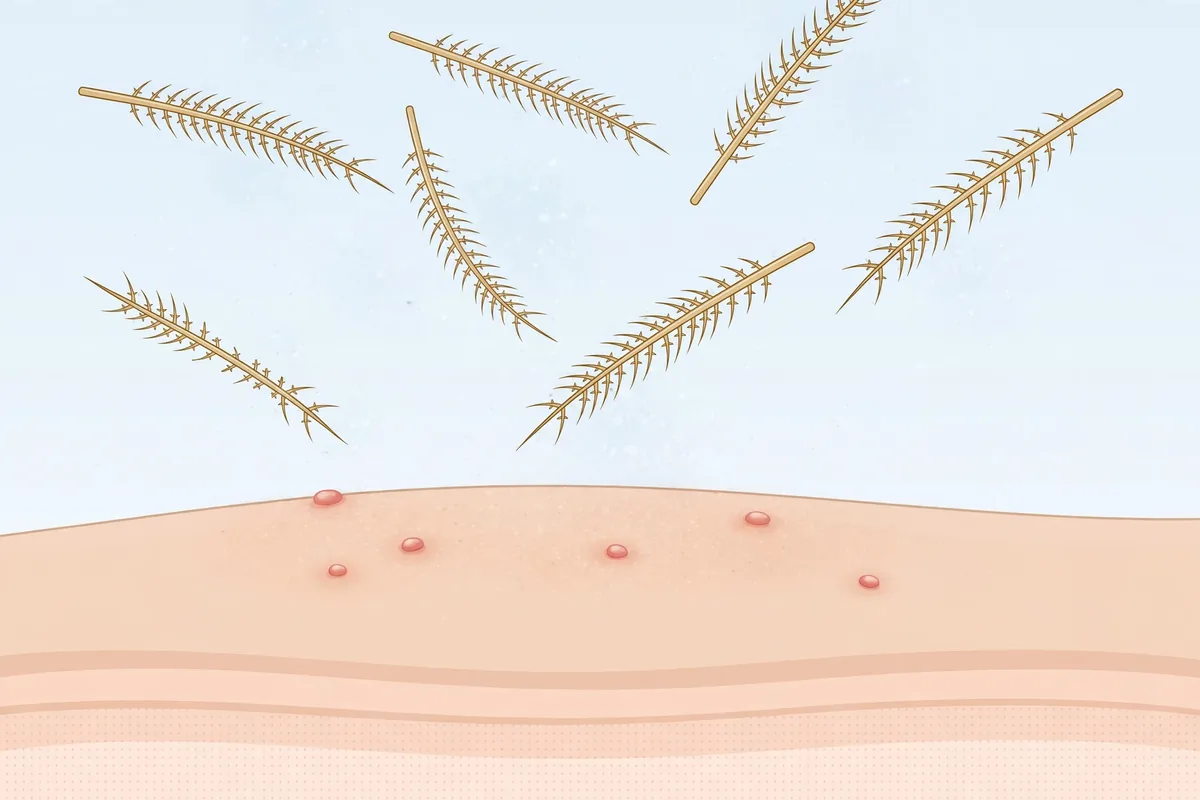
The browntail moth (Euproctis chrysorrhoea) is an invasive species accidentally introduced into Massachusetts from Europe in 1897. Per a Maine CDC public health advisory, Maine is the only U.S. state currently experiencing widespread problems with it (the moth is still found on Cape Cod, Massachusetts, but not at outbreak levels), according to the Maine Department of Agriculture, Conservation and Forestry’s ongoing monitoring. The damage to humans does not come from the adult moth. It comes from the caterpillar, which is covered in tiny (about 0.15 mm) poisonous hairs called setae. Those hairs break off the caterpillar, its cast skins, and its cocoons, becoming airborne on windy days or settling onto grass, plants, laundry, and patio furniture.
The rash comes from both a chemical toxin in the hairs and the physical irritation of barbed hairs embedding in skin. Most people develop a localized, red, bumpy, intensely itchy rash that resembles poison ivy. Maine’s public health advisories note that symptoms in most people last a few hours to several days, while sensitive individuals can develop severe rashes lasting several weeks. The rash often shows up where clothing fits snugly or hairs get trapped: the inside of the elbows, the neck, the waistline, the armpits. Because the hairs can also be inhaled, some people develop trouble breathing — Maine CDC notes that inhaling the hairs can cause respiratory distress, including coughing and trouble breathing.
Bug Bites vs Browntail Moth Rash: Key Differences
Comparison charts help, but real cases are messier than charts. Still, several clues consistently separate the two.
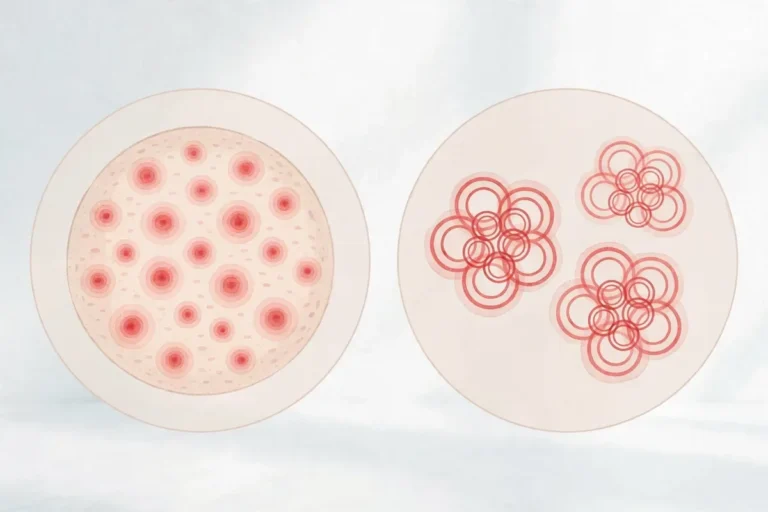
Pattern and shape. Bed bug bites famously cluster in lines or tight groups on exposed skin. Mosquito bites are isolated, raised, itchy welts where you were exposed. Chigger bites concentrate where clothing pinches — ankles, waistband, bra lines. Browntail moth rash is usually more diffuse and scattered, often across the neck, torso, and inner arms, without the tight “breakfast, lunch, dinner” line pattern of bed bugs.
The exposure story. Bug bites tie to a clear event: a night in a hotel, an evening outdoors, sitting in grass. Browntail moth rashes tie to places and seasons instead of events — gardening, mowing, raking, hanging laundry outdoors, or simply living downwind of infested trees in Maine from late spring through summer. If your household has an outbreak but you cannot find a single bug, and no one has traveled recently, moth hairs climb the suspect list.
Timing. Mosquito bites usually appear within hours and calm down within a day or two. A moth-hair rash can arrive hours after yard work and linger for days or weeks in sensitive people. Respiratory symptoms — coughing, wheezing, shortness of breath after raking or mowing — essentially never come from ordinary bug bites and are a strong pointer toward airborne hairs.
Contagiousness and household spread. Bed bugs and scabies can spread from person to person or room to room. A browntail moth rash cannot spread person to person; if everyone in the house itches, it means everyone was exposed to the same hairs, not that anyone caught it from anyone else. For a methodical side-by-side comparison of other bite clues, our bite-sting clue checklist can help you organize what you are seeing.
How Exposure Happens Without Ever Touching a Caterpillar

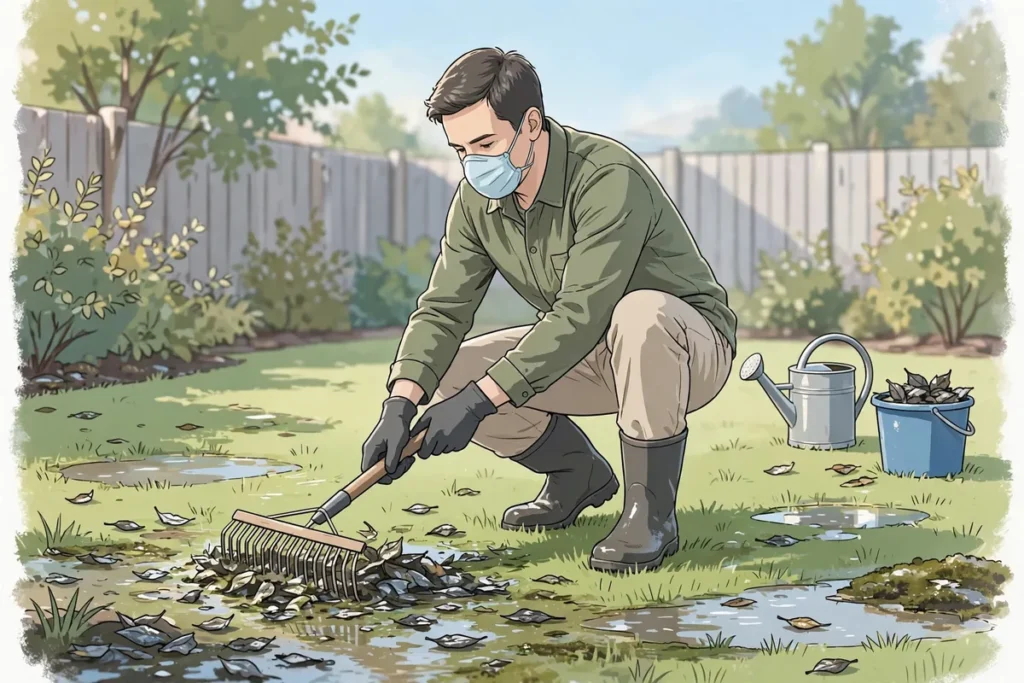
This is the fact that surprises most people. Maine’s agencies are explicit: you do not have to touch a caterpillar to get the rash. Hairs break off from cast skins when caterpillars molt, blow through the air on windy days, and land on skin, clothing, and anything you later touch. Activities that stir them up are the classic triggers: mowing, raking, weed-whacking, sweeping porches, handling firewood, pulling pupal webbing off eaves and boats, and opening a summer cottage that has been closed all year.
Laundry is a quiet exposure route that state guidance specifically calls out: drying clothes outside during the hair-shedding season lets hairs embed in fabric, which then presses against skin for hours. Maine health officials recommend drying laundry inside during June and July, and taking a cool shower and changing clothes promptly after any outdoor activity that might have involved contact with the hairs. You can lower your risk around other summer hazards too — see our outdoor bite prevention checklist for a broader seasonal checklist.
Where and When Browntail Moth Rash Shows Up
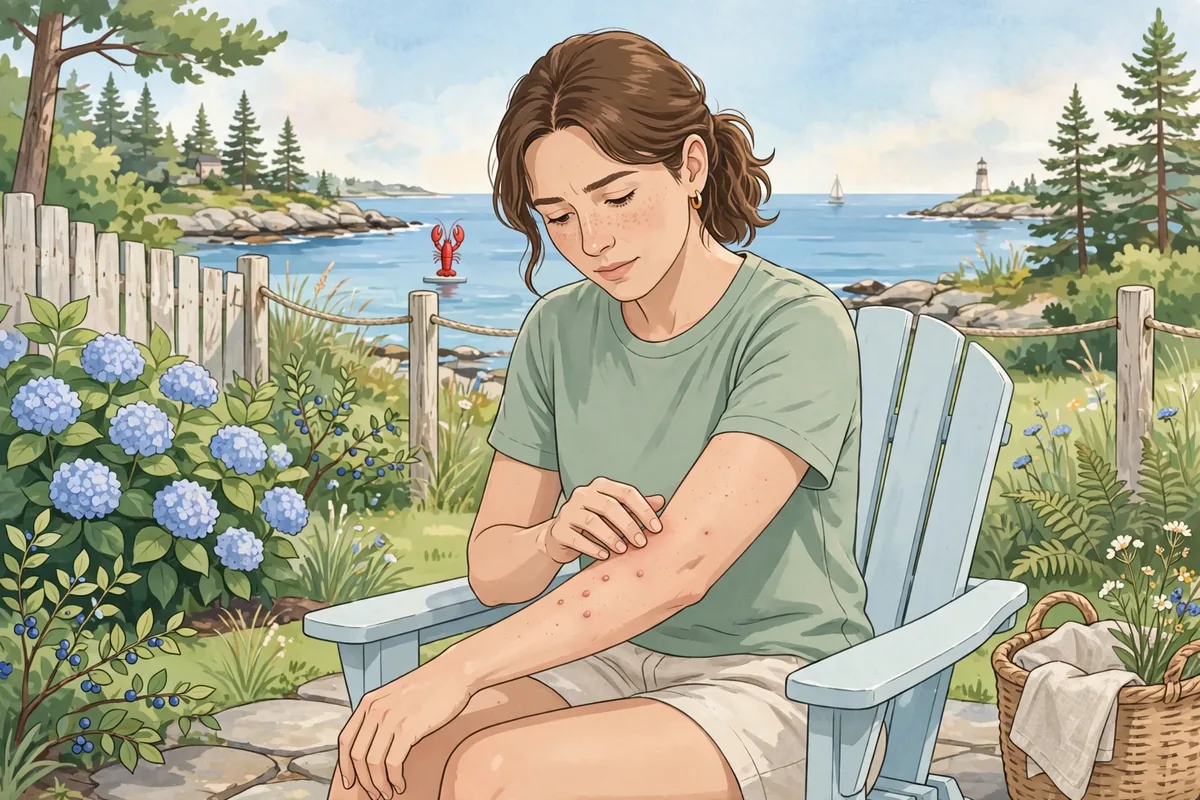
Geography is itself a diagnostic clue. Widespread browntail moth problems are concentrated in Maine — coastal areas and up to roughly 60 miles inland — with populations historically centered in mid-coastal Maine and the capital region. If you are dealing with a mystery rash in Arizona, it is not this. If you are in Maine or visiting coastal Maine in summer, it belongs near the top of the list.
The rash tends to appear on skin that was exposed or where hairs get trapped: neck, forearms, the inner elbow crease, the waistline under a belt, and areas covered by clothing that picked up hairs outdoors. Heat and sweating can make the itching worse, so rashes often feel most intense at night under blankets, which leads some people to wrongly suspect bed bugs.
Seasonality also helps: bug bites happen year-round indoors (bed bugs) or peak with mosquito season; the moth rash tracks the caterpillar calendar and yard-work season. The caterpillars are most active from April to late June, with adult moths emerging in July — yet because old nests and cocoons keep their hairs for years, fall yard work can still trigger rashes. If the same rash returns every time someone mows the lawn or opens the camp for the season, that repeating pattern is informative — note it down, because your clinician will find it useful.
Cooling, Comfort, and Safe Care Steps
There is no antidote for the hairs themselves, and per state guidance there is an important caution built into this section: this is not a bite, so bite-style “draw out the venom” remedies do not apply. Treatment focuses on relieving symptoms and stopping further exposure. These are general comfort measures, not medical advice for your specific case:
- Get the hairs off first. Shower in cool water and change clothes right after suspected exposure. Wash exposed clothing separately so hairs do not re-contaminate other laundry.
- Calm the itch with cool compresses. A clean, cool, damp cloth held on itchy areas for 10–15 minutes at a time can take the edge off. Our cold compress guide covers the technique in detail.
- Avoid scratching and picking. Scratching embeds hairs deeper and breaks skin, which invites bacterial infection — a separate problem on top of the rash. Keep nails short.
- Protect broken skin. If you have scratched areas raw, keep them clean, covered with a light bandage, and watch for spreading redness, warmth, or pus, which can signal infection (see the doctor section below).
- Mind your airways. If exposure included coughing, wheezing, or a tight chest after stirring up hairs, move to fresh air and seek care rather than waiting it out.
Resist the urge to “treat” the rash with bleach, rubbing alcohol, or home chemical peels — those damage skin without removing embedded hairs.
Lowering Your Exposure Around the Home
Because there is no vaccine and no repellent for airborne caterpillar hairs, prevention is about exposure control, and Maine’s official guidance is quite specific:
- Time yard work smartly. Do hair-stirring chores (mowing, raking, leaf blowing, sweeping) on damp days, or wet down leaves and debris with a hose first — moisture keeps hairs grounded instead of airborne.
- Dress like you mean it. Long sleeves, long pants, a hat, goggles, and a dust mask or respirator for heavy cleanups; secure clothing at the neck, wrists, and ankles so hairs cannot work their way inside. Disposable coveralls for big jobs are worth the small cost.
- Dry laundry indoors during the hair season, and shake out outdoor gear and camping equipment before bringing it inside.
- Clean smart. Use caution clearing old caterpillar debris, cocoons, and webbing from eaves, sheds, and boats — the toxin stays hazardous for years. Wet debris down first, wear protection, and bag the waste rather than burning it, since smoke can carry hairs.
One more caution from the YMYL rulebook: this article describes a rash from caterpillar hairs, not bites, so skip bite-specific home treatments (suction tools, “draw the poison” poultices) here — they do not address hairs and waste your time while the itching continues.
When to See a Doctor for a Bug Bite
See a doctor promptly — or call your local poison center (1-800-222-1222) — if any of the following apply to a browntail moth rash or a suspected insect bite:
- Breathing trouble: wheezing, shortness of breath, tight chest, or persistent coughing after exposure to hairs — this can indicate a respiratory reaction that needs medical evaluation.
- Signs of severe allergy: swelling of the lips, tongue, or face; dizziness; or a rapidly spreading rash. Call 911 for signs of anaphylaxis. Our anaphylaxis warning signs page lists what to watch for.
- Infection signs: increasing redness, warmth, swelling, red streaks spreading from the rash, pus, fever, or pain that is getting worse — these suggest cellulitis or another skin infection.
- Rash that lasts weeks or keeps returning despite avoiding exposure, or rashes in young children that are severe or spreading.
- You are unsure what caused it. A dermatologist or your primary-care clinician can examine the pattern directly; bring notes about timing, activities, and travel.
Never try to self-diagnose a persistent rash from photos alone, and do not use other people’s prescription creams on it.
Frequently Asked Questions
Can you get a browntail moth rash without touching a caterpillar?
Yes. The microscopic toxic hairs break off the caterpillars, their cast skins, and cocoons, then blow through the air or settle on surfaces, laundry, and plants. Maine’s health agencies state plainly: you do not have to touch a caterpillar — wind, yard work, and contaminated objects are enough.
How long does a browntail moth rash last?
For most people, a few hours to several days. In sensitive individuals the rash can be severe and last for weeks, according to Maine CDC advisories. The hairs remain toxic in the environment for up to three years, so repeated exposures can keep restarting the cycle until the source is addressed.
Is a browntail moth rash contagious?
No. It is a reaction to hairs, not an infection and not an infestation. If several people in a household develop the rash, they were all exposed to the same hairs — no one “caught” it from anyone else.
What is the difference between browntail moth rash and bed bug bites?
Bed bug bites are feeding marks that often appear in lines or tight clusters on exposed skin after sleeping somewhere. A browntail moth rash is a diffuse, itchy, poison-ivy-like reaction to airborne hairs with no biting insect involved, often tied to outdoor activities in Maine during the caterpillar season.
Sources
- Maine Department of Agriculture, Conservation and Forestry — Browntail Moth information page: https://www.maine.gov/DACF/mfs/forest_health/invasive_threats/browntail_moth_info.htm
- Maine CDC — insect-borne diseases / browntail moth guidance: https://www.maine.gov/dhhs/mecdc/diseases-conditions/insect-borne-diseases
Medically reviewed by Dr. Sarah Jones, MD.
This article is for informational purposes only and isn’t medical advice. If you’re worried about a bite or sting, talk to a healthcare professional.