Direct answer: Outdoor workers have more opportunities to encounter mosquitoes, ticks, bees, wasps, hornets, fire ants, and other biting or stinging arthropods. CDC/NIOSH recommends a layered prevention plan: employer training, worksite hazard reduction, protective clothing, EPA-registered repellents, tick checks, safe nest avoidance, and a clear response plan for bites, stings, and severe allergic reactions.
The best prevention plan is job-specific. A landscaper working in tall grass has a different risk profile from a roofer working near wasp nests or a utility worker standing around drainage water. The common principle is to reduce exposure before a worker is bitten or stung and to make sure everyone knows what to do when an incident occurs.
Which outdoor workers face higher risk?
CDC identifies outdoor workers as a group at increased risk for mosquito- and tick-borne disease. Examples include landscaping crews, surveyors, park and wildlife staff, utility workers, railroad workers, oil-field workers, construction crews, groundskeepers, forestry workers, agricultural workers, delivery workers, road crews, and others who spend substantial time outside.
Indoor workers can also have exposure when job duties take them outdoors, into vegetation, crawl spaces, loading areas, dumpsters, roofs, storage yards, or buildings with insect nests.
Start with a worksite insect-risk assessment
Before relying on personal repellent alone, look at the work environment. Useful questions include:
- Is there tall grass, brush, leaf litter, woods, or wildlife habitat that supports ticks?
- Are there containers, tires, clogged drains, ruts, buckets, or equipment that hold standing water?
- Are workers eating near open trash, sugary drinks, or food waste that attracts yellowjackets?
- Are there visible nests under eaves, on equipment, in trees, shrubs, wall voids, or the ground?
- Does the job require workers to kneel, sit, or reach into vegetation or soil?
- Are shifts scheduled during times when local mosquito activity is high?
- Is anyone on the crew known to have a severe insect-sting allergy?
Mosquito prevention at outdoor worksites
CDC/NIOSH recommends reducing standing water because many mosquitoes lay eggs in or near water. Worksites can accumulate water in tires, buckets, barrels, ditches, tarps, equipment, bottles, drainage structures, and wheel ruts. Removing, turning over, covering, draining, or storing these items reduces breeding opportunities.
Workers should use EPA-registered insect repellents according to label directions and wear long sleeves and pants when practical. Screened or enclosed break areas can also reduce exposure during mosquito-heavy periods.
Tick prevention for landscaping, brush, and wooded jobs
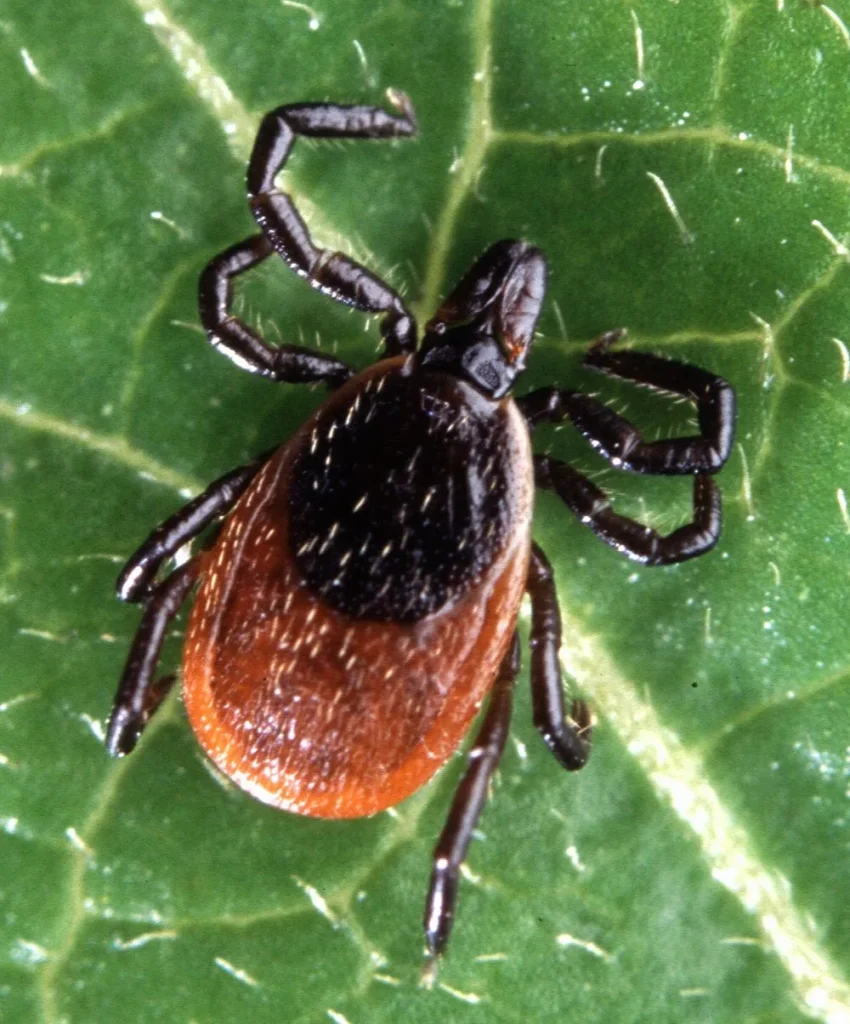
Tick exposure increases around woods, bushes, tall grass, and leaf litter. CDC/NIOSH recommends light-colored long-sleeved shirts, pants, socks, and hats when feasible because light clothing makes crawling ticks easier to see. EPA-registered repellents can add protection.
Permethrin can be used on clothing and gear when the product is labeled for that purpose, but it should not be applied directly to skin. Treated boots, pants, socks, and work gear can be useful for employees who repeatedly enter tick habitat.
Build tick checks into the end of the shift
A tick check works best when it is routine rather than something workers remember only after seeing a tick. Before leaving the worksite or immediately after returning home, check clothing and exposed areas. Showering soon after potential exposure can help find unattached ticks and creates a natural time for a full-body check.
Common places to inspect include the scalp and hairline, behind the ears, under the arms, around the waist, groin, behind the knees, and other skin folds. Work gear and pets that accompany workers outdoors can also transport ticks.
What to do if a tick is attached at work
Remove it promptly with clean fine-tipped tweezers. Grasp the tick close to the skin and pull upward with steady, even pressure. Clean the area and hands afterward. Record the date and likely work location, especially if the employee later develops fever, rash, severe headache, muscle aches, neurologic symptoms, or another significant illness.
Do not burn, twist, smother, or coat the tick with chemicals. See StingHelp’s tick-removal guide for a step-by-step checklist.
Bee, wasp, and hornet risks around equipment and structures
CDC/NIOSH notes that nests may occur in trees, under roof eaves, or on equipment such as ladders. Workers doing roofing, tree trimming, utility work, construction, inspection, pest control, or grounds maintenance should look before grabbing, climbing, cutting, or moving equipment in areas where a nest could be present.
Do not deliberately disturb an active social-wasp nest without the training, equipment, and job assignment to manage it. When a nest is near a doorway, ladder route, work platform, or high-traffic area, isolate the hazard and use qualified pest management rather than asking an unprotected worker to “knock it down.”
How workers should react when a stinging insect is nearby

NIOSH advises remaining calm when a single stinging insect is flying nearby and avoiding swatting. If several insects attack, get away from the area quickly and seek shelter. Do not jump into water to escape because some stinging insects may remain nearby.
Once clear of the area, assess for stings and allergic symptoms before returning to work.
Fire-ant prevention for crews working on the ground
Fire-ant exposure is particularly relevant in parts of the southern United States. Crews should watch for mounds before kneeling, setting equipment down, or starting excavation. Closed shoes, gloves, and long pants can reduce skin exposure but do not eliminate risk.
If ants begin stinging, move away from the mound and brush ants off promptly. Fire ants can sting repeatedly, so staying in the area increases the number of stings.
Repellent selection for workers
CDC/NIOSH lists EPA-registered repellents containing ingredients such as DEET, picaridin, IR3535, OLE/PMD, and 2-undecanone. Employers should provide or recommend products appropriate for the local pest and expected duration of exposure.
The label controls how the product is used. More is not automatically better. Workers should avoid eyes, mouth, cuts, and irritated skin and should not spray aerosol products in enclosed spaces.
Protective clothing should match heat-stress realities
Long sleeves and pants reduce exposed skin, but outdoor work in hot weather also creates heat-stress risk. Employers should integrate insect protection into the broader heat plan rather than treating the hazards separately. Lightweight, breathable, work-appropriate clothing can help balance coverage with heat control.
Workers still need hydration, shade or cooling, acclimatization, rest breaks, and heat-illness training as required by the job and environment.
Severe sting allergy: have a workplace response plan
Workers with a history of severe allergic reactions should follow their clinician’s emergency plan and carry prescribed epinephrine when advised. Coworkers and supervisors should know how to summon emergency help and where first-aid supplies are located.
Call 911 for trouble breathing, throat or tongue swelling, fainting, collapse, severe dizziness, or a rapidly progressive generalized allergic reaction. Do not send a worker to drive themselves to care during a severe reaction.
Multiple stings require extra caution
A disturbed bee, wasp, or hornet colony can result in multiple stings. AAD recommends medical attention when someone is stung multiple times, particularly a child. At work, a large sting burden, systemic symptoms, or a known venom allergy should trigger prompt medical evaluation.
First aid supplies worth keeping at the worksite
- Soap and clean water access or appropriate wound-cleaning supplies
- Cold packs
- Fine-tipped tweezers for tick removal
- Basic bandages and gauze
- Disposable gloves
- Emergency contact and Poison Control information
- Worker-specific prescribed emergency medication carried according to policy
- A way to document incident time, location, symptoms, and exposure
Incident documentation can improve prevention
When a bite or sting occurs, record the worksite location, task being performed, visible insect or nest, time, number of bites or stings, immediate symptoms, first aid, and whether medical care was required. Patterns can reveal preventable hazards: repeated wasp encounters near one loading dock, tick exposure on a specific route, or mosquito breeding in one drainage area.
Use the information to change the worksite rather than treating every incident as unavoidable.
Employer training topics

- Local mosquito and tick risks
- How to recognize likely tick habitat and insect nests
- Correct repellent and permethrin use
- Tick checks and prompt removal
- How to respond to a swarm or multiple stings
- Signs of anaphylaxis
- How and when to call emergency services
- How to report an exposure or illness
When a worker should get medical care after a bite or sting
Seek prompt medical assessment for significant fever, severe headache, neurologic symptoms, rapidly worsening pain, suspected infection, repeated vomiting, many stings, eye or mouth involvement, or symptoms that are worsening instead of stabilizing. Call emergency services for airway symptoms, collapse, severe allergic reaction, or other life-threatening signs.
Common workplace mistakes
- Relying on repellent while ignoring standing water or nest hazards.
- Using permethrin directly on skin.
- Sending an allergic worker alone to seek care.
- Ignoring a tick because the bite site looks small.
- Swatting at social wasps near a nest.
- Allowing food waste and open trash to accumulate near crews.
- Failing to document repeat exposure in the same location.
Daily pre-shift checklist
- Review weather, work location, vegetation, and known insect alerts.
- Check for standing water and visible nests.
- Confirm repellents and protective clothing are available.
- Review any task that places workers in tall grass, brush, leaf litter, trees, roofs, or ground nests.
- Know how emergency communication will work if someone has an allergic reaction.
Related StingHelp guides
- Bite and sting prevention
- Outdoor bite-prevention checklist
- Emergency warning signs
- Bite and sting first aid
- Insect repellent safety guide
Authoritative sources
- CDC/NIOSH: Insects and Scorpions at Work
- CDC/NIOSH: Tickborne Diseases in Workers
- CDC/NIOSH: Mosquito-Borne Diseases in Workers
- American Academy of Dermatology: Bee/Wasp/Hornet Sting First Aid
Bottom line
Outdoor-worker bite and sting prevention is a worksite system, not just a bottle of repellent. Reduce standing water and nest hazards, match clothing and repellent to the job, build tick checks into the shift, train crews to recognize severe allergic reactions, and document incidents so repeat hazards can be fixed.
This article is educational workplace-health information for a U.S. audience and does not replace employer-specific safety requirements, occupational-health advice, or emergency care.
Seasonal planning is part of occupational prevention
Insect pressure changes through the year. Tick activity often rises in spring, summer, and fall, while some regions with mild winters can have activity much longer. Mosquito risk varies with temperature, rainfall, standing water, time of day, and local species. Social wasp colonies typically become more noticeable as the warm season progresses. A company with recurring outdoor work should review its prevention plan seasonally rather than using one static checklist year-round.
Vehicle and equipment checks can prevent exposures

Work trucks, trailers, ladders, utility boxes, stored materials, tarps, and rarely used equipment can provide sheltered areas for nests or can collect water. Add insect-hazard checks to routine equipment inspections. Workers should not reach blindly into cavities, move a nest-bearing item without a plan, or stand directly under an active nest while deciding what to do.
Shift scheduling can reduce mosquito exposure
Some mosquito species bite more aggressively during particular parts of the day. When a local public-health agency reports high mosquito activity or disease transmission, employers may be able to reduce exposure by adjusting certain tasks, moving breaks indoors or into screened areas, increasing protective clothing, or reinforcing repellent use. Operational needs vary, but awareness of local alerts is part of a serious prevention program.
Post-exposure protocol for fever or rash
A worker who develops fever, rash, severe headache, unusual fatigue, muscle aches, neurologic symptoms, or another significant illness after a documented tick or mosquito exposure should tell the healthcare professional about the work location and date. The bite mark itself may be gone by the time illness develops. This is why incident documentation is useful even when the original bite seemed minor.
Supervisor response after a severe sting reaction
After emergency care, review the event without blaming the worker. Identify whether the nest or exposure source can be removed or isolated, whether the crew knew how to call for help, whether the affected worker’s emergency plan was accessible, and whether jobsite training needs improvement. A near miss or medical emergency should lead to a prevention change when a controllable hazard is identified.
Contractors and temporary workers need the same hazard information
Short-term workers may be less familiar with the site and its nests, tick habitat, or standing-water problems. Include insect hazards in onboarding and pre-task briefings. A worker who does not know that a ground nest is beside a trench or that a particular field has heavy tick activity cannot take informed precautions.
Personal protective equipment does not replace medical planning
Gloves, boots, long clothing, and repellents reduce exposure but cannot eliminate it. A worker with a known severe venom allergy still needs the emergency plan provided by their clinician. Employers should follow applicable workplace policies and emergency procedures and should not assume that protective clothing makes a sting-allergy plan unnecessary.
Simple monthly worksite audit
- Check for standing water and correct drainage problems.
- Inspect high-traffic structures and equipment for nests.
- Review whether repellents and tick-removal tools are stocked and in date.
- Confirm workers know emergency communication procedures.
- Review recent incident reports for repeat locations or tasks.
- Check whether seasonal or local public-health alerts require a change in controls.
Why a prevention program can reduce lost work time
Most bites and stings are minor, but severe allergy, infection, tickborne disease, mosquito-borne illness, or repeated exposures can lead to urgent care, emergency treatment, or days away from work. Prevention reduces both health risk and operational disruption. The strongest program combines environmental control, worker behavior, protective equipment, training, and rapid response rather than relying on one measure alone.