Direct answer: A suspected wolf spider bite is usually managed with gentle wound care, a cool compress, and symptom monitoring. Wolf spiders are not considered medically important venomous spiders like black widows or brown recluses, but any painful skin lesion can become infected or be misidentified. Seek care for severe, worsening, systemic, or unusual symptoms.
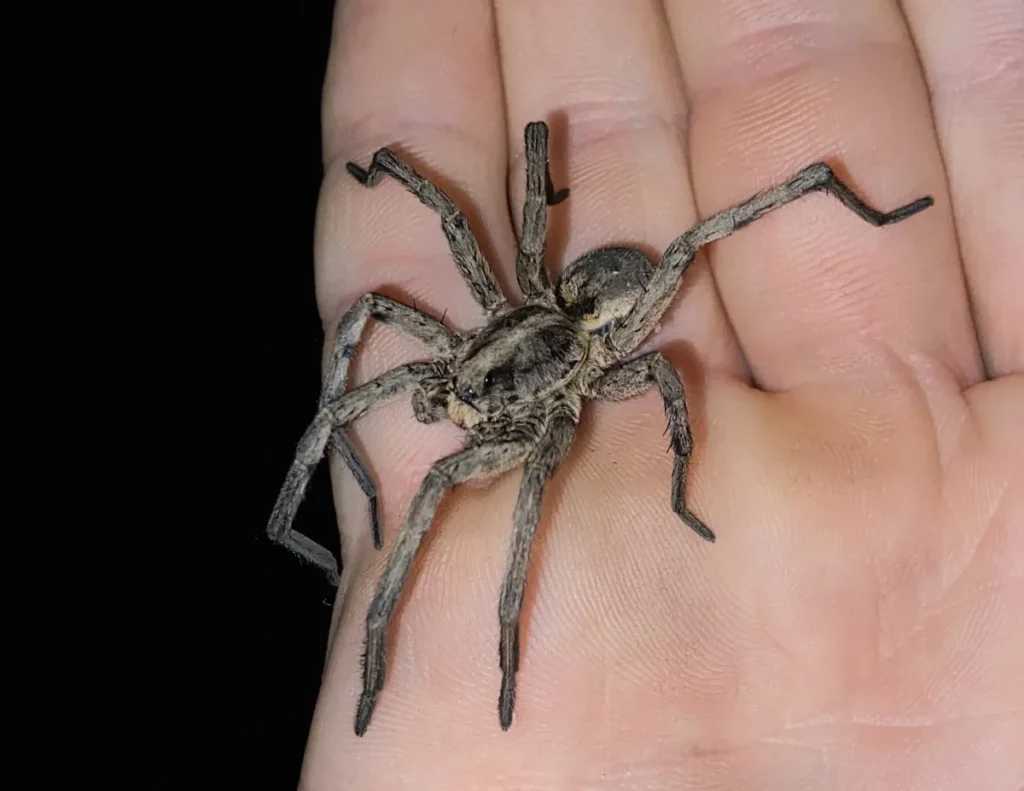
Wolf spiders are active hunting spiders commonly found outdoors and sometimes indoors. They do not build capture webs like many house spiders and generally avoid people. Bites are uncommon and usually happen when a spider is trapped against the skin or handled.
Why this exposure is different
A credible wolf-spider bite is strongest when the spider was actually seen biting or was safely captured for identification. A lesion discovered later without a spider is weak evidence because bacterial infection and many inflammatory skin conditions are frequently mislabeled as spider bites.
What a skin mark can—and cannot—prove
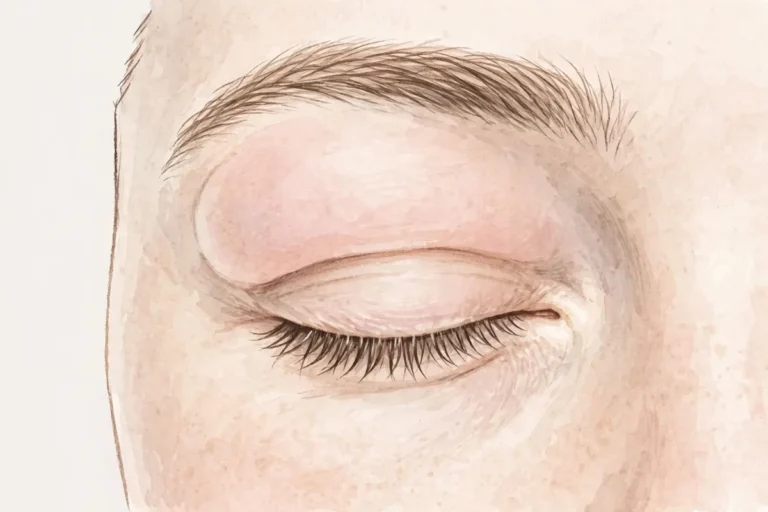
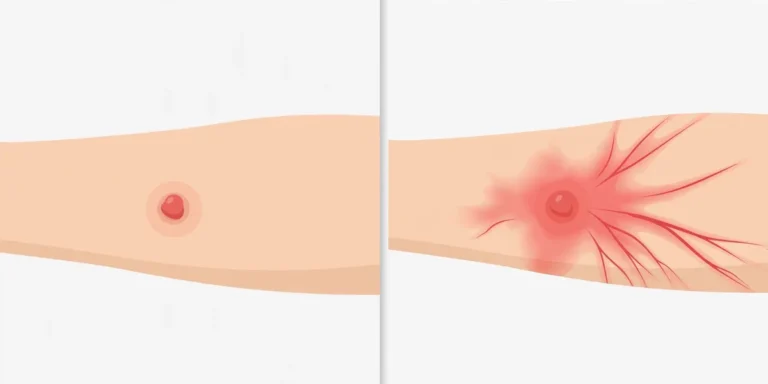
A bite may cause immediate pain, redness, swelling, or itching. Two puncture marks are not a reliable diagnostic sign. Necrosis, rapidly progressive tissue injury, or severe systemic illness should prompt reassessment rather than being automatically attributed to a wolf spider.
Immediate first aid
- Move away from the spider and avoid handling it bare-handed. If safely possible, take a photograph for identification rather than trying to crush it on the skin.
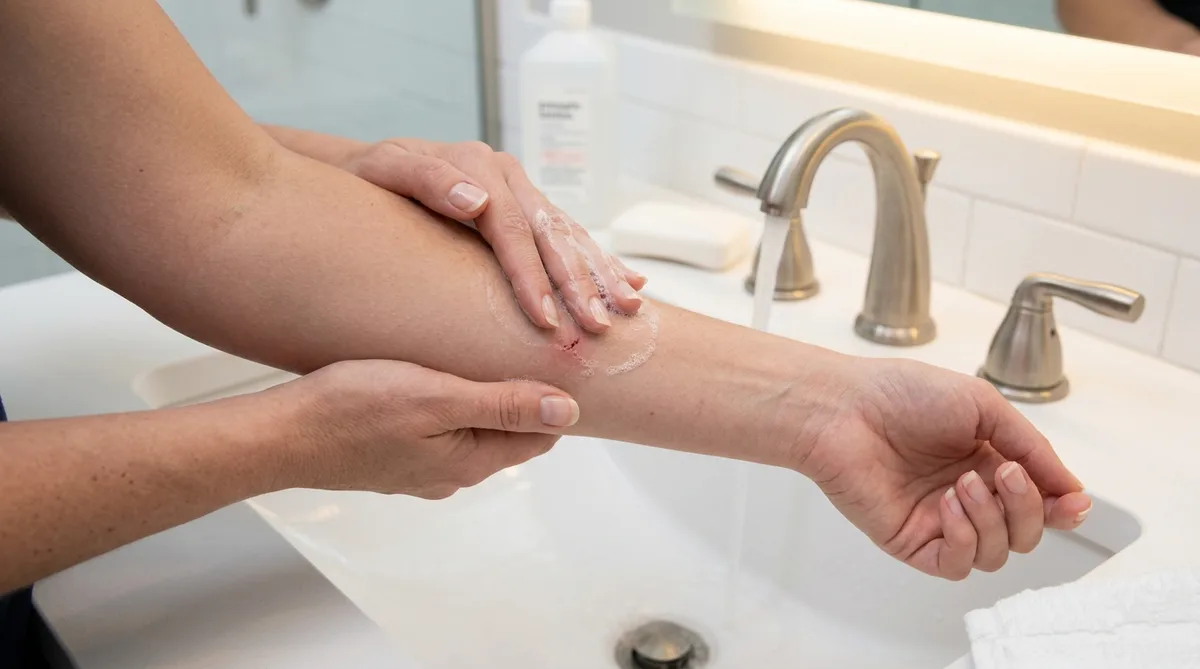
- Wash the area gently with soap and clean water.
- Use a wrapped cool compress for short intervals if it improves pain or itching.
- Avoid scratching, squeezing, cutting, burning, suction, bleach, ammonia, or other caustic home remedies.
- Move away from the exposure source so additional bites do not occur.
Managing pain, itching, and swelling
Use a cool compress and protect the site from rubbing. Pharmacist-guided pain or itch treatment may be appropriate. Do not apply tourniquets, cut the wound, or attempt suction.
Medication choices depend on age, pregnancy, allergies, kidney or liver disease, other medicines, and product labeling. A pharmacist can help select an appropriate option. Do not exceed label doses or combine products that contain the same active ingredient.
What a routine local reaction may do
A mild local reaction should trend toward improvement over the next few days. Persistent worsening is a reason to reconsider the diagnosis.
When symptoms need medical assessment
Seek prompt care for severe increasing pain, rapidly spreading redness with illness, fever, drainage, muscle symptoms, repeated vomiting, neurologic symptoms, or significant eye or mouth involvement.
When to call 911
Call emergency services for trouble breathing, throat tightness, fainting, severe weakness, confusion, rapidly developing tongue or facial swelling, or widespread hives accompanied by vomiting, dizziness, or breathing symptoms. If prescribed epinephrine is available under an existing emergency plan, use it as directed and still seek emergency care.
Infection versus ordinary inflammation
Redness, warmth, and swelling can be part of inflammation and do not automatically mean infection. Infection becomes more concerning when pain progressively increases, redness keeps spreading while the person feels ill, pus appears, red streaking develops, or fever occurs. Scratching can damage the skin barrier and increase secondary infection risk.
Exposure history that helps more than a photo
Record where the spider was encountered, whether the bite was witnessed, and how quickly pain began. A photograph of the spider is more valuable than magnifying the skin lesion.
What clinicians may consider
Clinicians often consider bacterial skin infection, abscess, contact dermatitis, other arthropod bites, and medically important spider species based on geography and history. A presumed wolf-spider bite should not prevent evaluation of these alternatives.
Children, pregnancy, and complex medical conditions
Children can scratch intensely and may need age- and weight-appropriate medication guidance. Pregnancy, immune compromise, diabetes, poor circulation, severe allergy history, or complex medication use can lower the threshold for professional advice. Internet dosing advice cannot account for all of these factors.
Common mistakes
- Do not diagnose a spider species from two puncture marks.
- Do not cut or suction the wound.
- Do not apply a tourniquet.
- Do not delay care for a rapidly worsening lesion because a harmless spider was seen nearby.
Prevention and source control
Wear gloves when moving boxes, firewood, or stored items; shake out shoes and clothing that have been stored; reduce clutter; and use simple exclusion around doors and windows.
How to document change
Take a dated photograph in similar lighting if the reaction is changing. Record pain, itch, swelling, fever, drainage, and whether new lesions continue to appear. Note the exact exposure location and whether the arthropod was seen. A short timeline is more clinically useful than many extreme close-up photographs.
Practical scenario 1: a witnessed exposure
A spider seen and photographed after being trapped inside a glove gives stronger evidence than an unexplained bump. Clean the skin and monitor the symptom trend.
Practical scenario 2: no arthropod was seen
A red painful spot discovered on waking without a spider should remain an undiagnosed skin lesion until evidence supports a cause.
Practical scenario 3: symptoms worsen the next day
If pain, fever, or drainage increases after initial improvement, infection or another diagnosis becomes more plausible.
Practical scenario 4: repeated exposures
Repeated indoor spider encounters are best addressed with exclusion and reducing prey insects, not routine pesticide application to sleeping areas.
Frequently asked questions
Can the bite be diagnosed from a picture?
No. The exposure history and, when safely available, the actual arthropod are stronger evidence than the skin mark.
How long should mild symptoms last?
Mild local reactions generally improve in several days. Persistent or progressive symptoms deserve medical reassessment.
Should antibiotics be used just in case?
No. Antibiotics do not treat an uncomplicated inflammatory reaction. They are reserved for bacterial infection when clinically indicated.
Is a large swollen area automatically an emergency?
No. Large local reactions can occur without anaphylaxis. Breathing, circulation, consciousness, rapidly progressive systemic symptoms, or critical-location swelling determine urgency.
What if symptoms do not match the expected pattern?
Keep the diagnosis open and seek professional evaluation if symptoms are severe, persistent, unusual, or progressively worsening. Many skin conditions can be mistaken for bites.
Related StingHelp guidance
- What Bit Me? identification hub
- Bite and sting first-aid hub
- Emergency and warning signs
- Prevention hub
Authoritative references

- American Academy of Dermatology: bug bites and stings
- NHS: insect bites and stings
- CDC: what to do after a tick bite
- CDC: mosquito-bite prevention
Bottom line
Wolf-spider bites are usually local and self-limited, but certainty requires a witnessed exposure. Manage the wound safely and keep alternative diagnoses open when symptoms do not follow a mild course.
This StingHelp article is educational and does not diagnose a bite or replace individualized medical care.
Why reaction size varies between people
Immune sensitivity, prior exposures, bite location, amount of local trauma, scratching, age, and underlying skin conditions can all change how dramatic a reaction looks. A larger mark does not necessarily mean a more dangerous exposure. Conversely, a small skin mark does not rule out a systemic problem when fever, neurologic symptoms, breathing changes, or severe pain develop.
A 48-hour monitoring plan
During the first two days, focus on direction of change. Is pain easing or intensifying? Is swelling stable or expanding? Are there genuinely new lesions, or are older lesions simply more visible? Is the person eating, drinking, sleeping, walking, and breathing normally? This functional check often gives a clearer picture of severity than the color of one photograph.
When environmental evidence changes the diagnosis
Wolf spiders are ground hunters. Finding them in garages, basements, sheds, gardens, or stored materials supports exposure but does not prove any nearby skin lesion came from the spider.
Why cautious wording matters
Unless the arthropod was witnessed or identified, use phrases such as “possible” or “suspected” rather than declaring the species from the skin. This reduces false reassurance and prevents a guessed diagnosis from delaying evaluation of infection, dermatitis, allergy, or another medical problem.
Additional decision point
When a lesion is worsening, treating the correct medical problem matters more than proving a spider species.
Additional decision point
When a lesion is worsening, treating the correct medical problem matters more than proving a spider species.
Additional decision point
When a lesion is worsening, treating the correct medical problem matters more than proving a spider species.
Additional decision point
When a lesion is worsening, treating the correct medical problem matters more than proving a spider species.
Additional decision point
When a lesion is worsening, treating the correct medical problem matters more than proving a spider species.
Additional decision point
When a lesion is worsening, treating the correct medical problem matters more than proving a spider species.
Additional decision point
When a lesion is worsening, treating the correct medical problem matters more than proving a spider species.
Additional decision point
When a lesion is worsening, treating the correct medical problem matters more than proving a spider species.
Additional decision point
When a lesion is worsening, treating the correct medical problem matters more than proving a spider species.
Additional decision point
When a lesion is worsening, treating the correct medical problem matters more than proving a spider species.
Additional decision point
When a lesion is worsening, treating the correct medical problem matters more than proving a spider species.
Additional decision point
When a lesion is worsening, treating the correct medical problem matters more than proving a spider species.
Additional decision point
When a lesion is worsening, treating the correct medical problem matters more than proving a spider species.
Additional decision point
When a lesion is worsening, treating the correct medical problem matters more than proving a spider species.
Additional decision point
When a lesion is worsening, treating the correct medical problem matters more than proving a spider species.
Additional decision point
When a lesion is worsening, treating the correct medical problem matters more than proving a spider species.
Additional decision point
When a lesion is worsening, treating the correct medical problem matters more than proving a spider species.
Additional decision point
When a lesion is worsening, treating the correct medical problem matters more than proving a spider species.
Additional decision point
When a lesion is worsening, treating the correct medical problem matters more than proving a spider species.
Additional decision point
When a lesion is worsening, treating the correct medical problem matters more than proving a spider species.
Additional decision point
When a lesion is worsening, treating the correct medical problem matters more than proving a spider species.
Additional decision point
When a lesion is worsening, treating the correct medical problem matters more than proving a spider species.
Additional decision point
When a lesion is worsening, treating the correct medical problem matters more than proving a spider species.
Additional decision point
When a lesion is worsening, treating the correct medical problem matters more than proving a spider species.
Additional decision point
When a lesion is worsening, treating the correct medical problem matters more than proving a spider species.
Additional decision point
When a lesion is worsening, treating the correct medical problem matters more than proving a spider species.
Additional decision point
When a lesion is worsening, treating the correct medical problem matters more than proving a spider species.
Additional decision point
When a lesion is worsening, treating the correct medical problem matters more than proving a spider species.
Additional decision point
When a lesion is worsening, treating the correct medical problem matters more than proving a spider species.
Additional decision point
When a lesion is worsening, treating the correct medical problem matters more than proving a spider species.
Additional decision point
When a lesion is worsening, treating the correct medical problem matters more than proving a spider species.
Additional decision point
When a lesion is worsening, treating the correct medical problem matters more than proving a spider species.
Additional decision point
When a lesion is worsening, treating the correct medical problem matters more than proving a spider species.
Additional decision point
When a lesion is worsening, treating the correct medical problem matters more than proving a spider species.
Additional decision point
When a lesion is worsening, treating the correct medical problem matters more than proving a spider species.
Additional decision point

When a lesion is worsening, treating the correct medical problem matters more than proving a spider species.
Additional decision point
When a lesion is worsening, treating the correct medical problem matters more than proving a spider species.
Additional decision point
When a lesion is worsening, treating the correct medical problem matters more than proving a spider species.
Additional decision point
When a lesion is worsening, treating the correct medical problem matters more than proving a spider species.
Additional decision point
When a lesion is worsening, treating the correct medical problem matters more than proving a spider species.
Additional decision point
When a lesion is worsening, treating the correct medical problem matters more than proving a spider species.
Additional decision point
When a lesion is worsening, treating the correct medical problem matters more than proving a spider species.
Additional decision point
When a lesion is worsening, treating the correct medical problem matters more than proving a spider species.
Additional decision point
When a lesion is worsening, treating the correct medical problem matters more than proving a spider species.
Additional decision point
When a lesion is worsening, treating the correct medical problem matters more than proving a spider species.
Additional decision point
When a lesion is worsening, treating the correct medical problem matters more than proving a spider species.
Additional decision point
When a lesion is worsening, treating the correct medical problem matters more than proving a spider species.
Additional decision point
When a lesion is worsening, treating the correct medical problem matters more than proving a spider species.
Additional decision point
When a lesion is worsening, treating the correct medical problem matters more than proving a spider species.
Additional decision point
When a lesion is worsening, treating the correct medical problem matters more than proving a spider species.
Additional decision point
When a lesion is worsening, treating the correct medical problem matters more than proving a spider species.
Additional decision point
When a lesion is worsening, treating the correct medical problem matters more than proving a spider species.
Additional decision point
When a lesion is worsening, treating the correct medical problem matters more than proving a spider species.
Additional decision point
When a lesion is worsening, treating the correct medical problem matters more than proving a spider species.
Additional decision point
When a lesion is worsening, treating the correct medical problem matters more than proving a spider species.
Additional decision point
When a lesion is worsening, treating the correct medical problem matters more than proving a spider species.