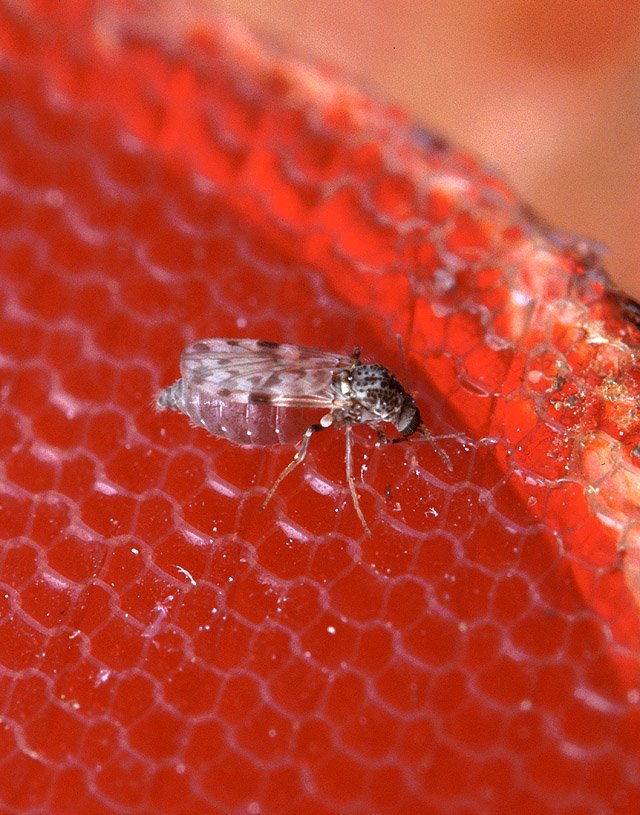
Direct answer: No-see-um bites are usually managed with simple skin care: wash the area, cool it, reduce itching, and avoid scratching. No-see-ums are tiny biting midges, not invisible mosquitoes. In the United States they are especially common around coastal, marshy, wet, and humid environments. Their bites can cause a sharp stinging or burning sensation followed by small red itchy areas, and sensitive people may itch for several days.
Most useful clue: If you were outdoors near a beach, marsh, estuary, mangrove, lake edge, campground, or other damp habitat and felt tiny repeated bites from insects too small to see clearly, biting midges are a strong possibility.
What are no-see-ums?
“No-see-um” is a common name used for very small biting midges, including species in the genus Culicoides. University of Florida IFAS Extension notes that many biting midges are around 1 millimeter long—small enough to pass through standard window screening. They are true flies, not mites, fleas, or mosquitoes.
Only some biting midge species feed on people, but when they do, the bites can be intense because multiple insects may attack exposed skin at once. This is why people sometimes wake up with many red spots after sitting outdoors near water even though they never noticed a visible insect.
How no-see-um bites usually feel
The bite can produce localized stinging or burning. Redness and itching may follow. University of Florida IFAS reports that discomfort can last from minutes to hours, while people who are more sensitive may itch for two to three days.
Because many midges can be active at the same time, the pattern may be multiple small bites rather than one isolated lesion. Common exposed areas include ankles, lower legs, arms, neck, and face.
No-see-um bite treatment: what to do first
- Leave the biting area. Continued exposure can add many more bites.
- Wash exposed skin. Gentle soap and water can remove dirt, sweat, and irritants.
- Use a cool compress. Cooling can help with burning, swelling, and itch.
- Avoid scratching. Scratching can turn tiny bites into open sores.
- Use appropriate itch relief if needed. Follow product labels and check with a pharmacist or clinician when you are uncertain about safety.
What not to put on no-see-um bites
Avoid bleach, gasoline, undiluted essential oils, strong acids, or other harsh household chemicals. These products can irritate the skin and may create a chemical burn that looks worse than the original bites.
Also avoid repeatedly applying many different creams at once. If the skin becomes more inflamed after a new product, you may be seeing contact dermatitis rather than worsening insect bites.
Why the bites can look worse the next day
The immune response can continue after the insects are gone. This means you may have left the beach, campsite, or yard hours earlier but still wake up with more obvious redness or itching.
That delayed visibility does not necessarily mean new insects are emerging from the skin or that the bites are “spreading.” Compare the same areas over time and focus on whether new lesions are appearing after new exposure.
No-see-um bites versus mosquito bites
Mosquitoes are much larger and are usually visible. No-see-ums are tiny enough to be difficult to see and can pass through ordinary screens. Biting midges may produce multiple closely spaced bites during a short outdoor exposure.
Both can cause red itchy welts, so a photo of the skin is rarely enough to distinguish them. Habitat, insect size, time outdoors, and whether standard screens failed are more useful clues.
No-see-um bites versus chigger bites
Chiggers are mite larvae associated with grass and vegetation and often produce intensely itchy bumps around tight clothing such as socks or waistbands. No-see-ums are flying insects and commonly attack exposed skin. A person may feel a brief sting or burning while outdoors near wetlands or coastal areas.
If bites cluster beneath tight clothing after walking through brush, chiggers become more plausible. If exposed arms and legs were repeatedly bitten near water by tiny flying insects, no-see-ums become more plausible.
No-see-um bites versus flea bites
Flea bites are often linked to pets, animal bedding, carpets, or indoor infestation. No-see-um exposure is usually environmental and outdoor. If new bites keep appearing inside a home when windows are closed and there has been no outdoor exposure, fleas, bed bugs, or another indoor source should be considered.
No-see-um bites versus sand fly bites
The common names overlap in different regions, which can be confusing. In U.S. pest-control language, “no-see-um” often refers to Culicoides biting midges. In travel medicine, “sand fly” often refers to phlebotomine sand flies that can transmit Leishmania parasites in endemic regions.
That distinction is important. A routine cluster of biting-midge welts after a Florida coastal evening is not the same exposure history as a persistent ulcer developing after travel in a region where leishmaniasis occurs.
When itching is still within the expected range
Itch that lasts a few days can occur in a hypersensitive person. The useful question is whether the reaction is gradually calming. Redness and swelling should trend down, even if the area remains itchy.
Take a photo once or twice daily in similar lighting if you are unsure. Constant touching, squeezing, or scratching makes the reaction harder to assess.
When to worry about infection
Biting midge bites themselves are small, but scratched skin can become infected. Seek medical advice for increasing pain, warmth, tenderness, pus, drainage, fever, or redness that continues to spread with worsening symptoms.
A bite that is simply itchy but slowly improving is different from a lesion that becomes increasingly painful and hot.
Do no-see-ums transmit disease?
Most U.S. encounters are nuisance biting events rather than human disease transmission. University of Florida IFAS notes that biting midges can transmit human pathogens in some parts of the world, including parts of South America and Africa. Travel history therefore matters.
If you develop fever or other systemic illness after international travel, tell a healthcare professional exactly where you traveled and what insect exposure occurred. Do not assume every fever after a bite is caused by the bite, but do not omit the exposure history either.
Why regular window screens may not work
No-see-ums are small enough to pass through ordinary window screening. University of Florida IFAS specifically notes that screen opening size matters and that standard screens may not exclude biting midges.
Fine-mesh no-see-um screening can be more effective in heavily affected areas. Air movement can also help because very small flies are weak fliers compared with larger insects.
When are no-see-ums most active?
Activity varies by species and location, but many biting midges are troublesome around dawn, dusk, and humid low-wind conditions. Coastal residents often notice worse activity when weather and tides create favorable breeding conditions.
If bites repeatedly happen at the same time of day or in the same outdoor area, adjusting your schedule can be one of the simplest prevention strategies.
How to reduce bites outdoors
- Use an EPA-registered insect repellent according to label directions.
- Wear long sleeves, long pants, socks, and closed shoes when exposure is heavy.
- Avoid sitting directly beside marsh edges or other obvious breeding habitat when insects are active.
- Use fans on patios or porches when practical.
- Cover strollers and sleeping areas with appropriately fine mesh where needed.
- Check that screens are designed to exclude very small biting insects.
DEET and repellents
University of Florida IFAS identifies DEET-based repellents as a common mainstay for protecting people from biting midges. Other EPA-registered repellents may also be useful when used according to the label.
For children, follow age restrictions and application instructions carefully. Do not allow young children to apply repellent themselves, and do not apply products to hands if a child is likely to put hands in the mouth.
Why yard spraying may disappoint
Biting midges can breed in wet organic material, mud, marsh edges, and other habitats that may be outside the property being treated. Even when an adulticide reduces insects briefly, new adults may arrive from nearby habitat.
That is why personal protection, screening, timing, and local habitat management are often more reliable than expecting one spray to eliminate every no-see-um.
Beach and coastal exposure
Beachgoers often blame “sand fleas” for any small itchy bite near the shore. That name can refer to several unrelated organisms. Biting midges are one possible cause, especially around marshy coastal zones and protected bays.
If the insects were almost impossible to see, bites occurred while standing or sitting outdoors, and several exposed areas were affected within a short time, biting midges fit the history better than an attached tick or chigger concentrated under clothing.
What to do if a child has dozens of bites
Wash the skin, cool itchy areas, keep fingernails short, and reduce scratching. A child with facial swelling, breathing difficulty, faintness, repeated vomiting, or other systemic symptoms needs urgent evaluation.
For medication questions, use age-appropriate labeled products and ask a pediatric clinician or pharmacist if you are unsure about the dose or product.
What to do during pregnancy
Simple non-drug measures such as washing, cooling, and avoiding scratching are reasonable first steps. Ask an obstetric healthcare professional or pharmacist before using a medication you are uncertain about during pregnancy.
What if the rash lasts more than a few days?
Persistent itching does not always mean the diagnosis was wrong, but the longer a rash continues, the more important it becomes to consider alternatives. Contact dermatitis, eczema, scabies, fleas, bed bugs, folliculitis, and other conditions can mimic insect bites.
If lesions keep appearing without new outdoor exposure, rethink the source rather than repeatedly treating “no-see-ums.”
When to seek medical care
Contact a healthcare professional for severe itching that is not improving, signs of skin infection, a persistent unexplained rash, fever or systemic illness after travel, or uncertainty about the cause.
Call emergency services for breathing difficulty, swelling of the tongue or throat, fainting, severe dizziness, or other signs of a serious allergic reaction after any bite or sting.
How to document a recurring no-see-um problem
- Note the exact time of day bites occur.
- Record whether exposure was near marsh, beach, standing water, or damp vegetation.
- Note whether standard screens were in use.
- Take a photo of skin reactions before heavy scratching changes them.
- If possible, photograph or capture the insect without exposing yourself to more bites.
How weather and wind change no-see-um exposure
Biting midges are tiny and are less powerful fliers than many larger insects. Calm, humid conditions can make outdoor exposure noticeably worse, while stronger air movement can reduce how effectively they reach people on patios or porches. This is one reason fans can be useful in problem areas even though they do not eliminate the insects from the property.
Why coastal homes may need different screening
Standard mesh is designed to stop larger insects such as mosquitoes and houseflies. No-see-ums can be much smaller. In areas with persistent biting-midge problems, finer screening can reduce entry, but it may also reduce airflow. Homeowners often need to balance ventilation with insect exclusion and may benefit from local extension guidance about the species common in their region.
How to separate a one-night exposure from an ongoing source
If all bites appeared after one evening near a marsh or beach and no new lesions develop after staying indoors, the source was probably temporary outdoor exposure. If new lesions continue despite avoiding the area, look for another explanation rather than assuming midges remain on the skin. No-see-ums do not live under human skin.
For recurring outdoor bites, keep a simple log of time, wind, temperature, location, repellent used, and clothing. Patterns often emerge within a few days and can help identify when prevention efforts are most useful.
Related StingHelp guides
- What Bit Me? identification guide
- First aid for bites and stings
- Bite and sting prevention
- Emergency and warning signs
Frequently asked questions
Are no-see-ums the same as mosquitoes?
No. They are tiny biting midges, although both are small flying insects that can bite people.
Can no-see-ums get through window screens?
Yes. Many species are small enough to pass through standard screening.
How long can the bites itch?
Sensitive people may itch for several days, although the exact duration varies.
Do no-see-ums live under the skin?
No. They are flying insects and do not burrow into human skin.
Are no-see-um bites dangerous?
Most U.S. bites are nuisance reactions, but scratching can cause infection and biting midges can transmit human pathogens in some parts of the world. Travel context matters.
Authoritative references
- University of Florida IFAS Extension: Biting Midges / No-See-Ums
- Mayo Clinic: Insect Bites and Stings First Aid
- U.S. EPA: Insect Repellents
Educational information only. StingHelp does not diagnose a rash from a photograph or provide individualized medication dosing. Seek medical care for severe, infected, persistent, travel-associated, or systemic symptoms.